A cinematic kaleidoscope of memories dances before me on my birthday, spiraling back through time like the whirlpool which opened before Edgar Allen Poe and cast him into worlds unknown, wonderful and strange, fictionalized in his 1845 story A Descent Into The Maelstrom, which prefigures chaos theory, Jungian psychology, and Surrealism and references the historical literature of a universal field of being and forge of existence in dreams; the Logos of John the Evangelist and Neo-Platonic philosophy, Ibn Arabi’s Alam al Mythal, Coleridge’s Primary Imagination.
In this respect Poe like Emerson and the Transcendentalists is an American consequence of British Romantic Idealism, which unfolds from Goethe and Schiller, who harkens back to Emerson’s direct model Hawthorne to explore a world which lives behind the world we see, whose endless chasms of darkness and light are filled with ancient terrors and nameless horrors which give the lie to our fragile illusions of law and order by which we seek to control the chaos of nature and the wildness of ourselves, as well as moments of beauty and wonder made of wishes and dreams as Keats teaches us. Fascinans et tremendum, rapture and terror conjoined, as Otto Rudolf names the exaltation and defilement of immersion in the Infinite and encounters beyond the illusion of the world. “Break through the mask” as Melville’s glorious Ahab declares.
I am a child of the Nights of Falling Stars, born as our world passes through the Leonid meteor trail each year. On the palm of my right hand is a scar where an infinitesimal meteor passed through it; I had reached up to catch one, standing on the rock above a ravine on Cavedale Road overlooking Sonoma where during World War Two an artillery battery sat to defend against an invasion that never came, above secret caves inscribed with hieroglyphs from a lost antiquity, an event witnessed by friends including Jim Shafer, Jennifer Damico-Wendt, Kimberly Wine, and others, and something reached down to embrace my hand, engulfing me in a nimbus of light. Ahab’s harpoon I became in that moment, lit with St Elmo’s Fire. From this moment I have never despaired nor abandoned hope, for upon my flesh is written the signature of the Infinite.
Death has now fastened her talons hard upon my flesh, flesh become a tapestry of lamentations, lost causes, forlorn hopes, and nameless loves, nor can I escape the horrors I have witnessed in dreams wherein they live again, in whispers of disturbing truths and ghosts which shadow my joy like things out of their proper time, past and future and now all jumbled together like a snow globe shaken by unknown forces, as I become a kind of Tralfamadorian, lost in time among unknowns and the limitless possibilities of becoming human.
Such is the palace of memory, history, and identity, the Well of Time, the Labyrinth of the Gates of Dreams which is terrifyingly ambiguous with the Wilderness of Mirrors as surfaces which reflect, capture, distort, and falsify can also open as gates of the Unknown, the flaws of our humanity and these forms our bodies in which we must live as an imposed condition of struggle.
In this there is nothing to fear; as I said to my mother when I returned from death, Most Sincerely Dead from the pressure wave of a police grenade which hurled me from my body, in her arms as police opened fire on the students, Bloody Thursday 1969 Peoples Park Berkeley, and I a child of nine bearing a vision of our myriad possible futures from a moment of supraconsciousness outside of time; “Don’t be afraid. Death is nothing; nothing but Awakening from an illusion.”
And so we shall journey into the Unknown together, Death and I, singing.
I will not go quietly, old tiger that I am.
Of dreams and our possibilities of becoming human I sing, a sea of transpersonal consciousness and potentialities which in classical Platonic philosophy and its reimagination in the Biblical Book of John the Evangelist and subsequent neo-Platonism including that of Iris Murdoch is called the Logos, found strange forms in Gnosticism and the alchemical faith of the Sapientia Dei on which Jung constructed his psychology and called the Collective Unconscious, Coleridge the Primary Imagination, Ibn Arabi the Alam al-Mithal, and in Hindu and Buddhist philosophy, especially the work which I translate from Tibetan as the Book of Liberation rather than of the Dead, is called the Bardo, to name a few of the informing and motivating sources and historical lineages in which I may claim membership and represent herein.
My life has been a grand journey into such states of transpersonal being and imaginal realms of the limitless possibilities of becoming human, of which I am become a cypher shaped in the forge of Time. We each of us bear such marks without number, signs of our journeys to discover possible selves; I call these sacred wounds Defining Moments, in which we may read the history of our forging like the beautiful flowing lines of a Damascus sword or as the calligraphy of our souls, and of truths immanent in nature and written in our flesh.
Our lives are charted by our Defining Moments; history, memory, identity, the protean self in constant processes of adaptation and change, and the dynamic creative tension between the reimagination and transformation of ourselves and of humankind in titanic revolutionary struggle and seizures of power versus the boundaries of the Forbidden and the tyranny of normality and of other people’s ideas of virtue, of the masks that others make for us and those we create for ourselves.
How do I count them?
By Visions of Reimagination and Transformation, of truths which awaken and change us when realized, truths which like all true art exalt and defile us in the ecstasy of rapture and terror, fascinans et tremendum as Rudolf Otto named them.
But these are different stories for other days, and herein my subject is poetic vision as a primary human act of self-creation and seizure of power, as the reimagination and transformation of ourselves and of human being, meaning, and value as an answer to the terror of our nothingness, the flaws of our humanity, and the brokenness of the world.
We are all made of these things and many more; their categories are arbitrary and relative, and change over time as do we. What matters is to recognize the kinds of things that matter to us, and to cherish and hoard them as our treasures.
Of Visions wherein I was taken up into the gaps and beheld wonderful things, terrible things; here I speak of poetic vision and the realm of the liminal.
Before all else my Awakening and Vision of Possible Futures of Humankind as a nine year old survivor of Bloody Thursday, Berkeley 1969, as the police fired on student protestors which included my mother, as she sang of peace and offered flowers to a policeman who pumped and aimed a shotgun at her in reply, saved by the sudden chaos of a grenade thrown into the crowd by the police who then opened fire, and as we fled and the pressure wave of the blast hurled me from my body I escaped the limits of my form and had a unitary moment of awareness outside of time.
Yes, by this I mean Most Sincerely Dead and without signs of life according to my mother, before my eyes refocused and fixed this world in place as an image among endless unspooling loops of possible worlds. “Don’t be afraid” I said to her; “Death is nothing, nothing but an awakening from illusions.”
In such moments we are destroyed and recreated, to reference the mad doctor’s line in The Fly; “You’re just afraid to be destroyed and recreated”. Let us embrace Chaos and our monstrosity, and not fear it. For change is ongoing always, and the trick is to use it as seizures of power, autonomy, liberation, and self-creation.
Though I have struggled to create meaning and value from the life disruptive event of my death and rebirth on that day at the age of nine, I speak to you now not as the bearer of any special wisdom tradition but merely as a man who has been dead; death is nothing more or less terrible and wonderful than liberation from the limits of our form.
So also for grief, despair, and fear, the trauma of loss, the torment of loneliness, and the guilt of survivorship; the realm of our darkest and most negative passions immerses us in atavistic states with totalizing and tidal force.
Life disruptive events can destabilize identity and realign personality, transform meanings and values, send shockwaves through our network of relationships, shift our worldview and unmoor us from the anchorages of our ideological paradigms and historical contexts.
Such traumas confront us with the unfiltered face of our shadow self as a healing process, a transformative journey filled with dangers but also with the limitless possibilities of rebirth.
Among the chiaroscuro of darkness and light of which we are shaped as negative spaces of each other, I turn now to the wisdom of our darkness.
The Dream of the Toad, Nietzsche’s Toad which he feared he must swallow and could not, a spirit which had possessed William S. Burroughs since childhood, cursed by his Welsh nanny, and been transferred to me as a lineage of succession through his storytelling as rituals of initiation and transformation, from Nietzsche to Bataille to Burroughs interwoven with a secondary successorship of transmission from Crowley to Lovecraft to Burroughs, and from Burroughs to myself, what Jung called shadow work in which I embraced my darkness and became whole. As Shakespeare said of Caliban in The Tempest, “This thing of darkness I acknowledge mine”; the quote with which Burroughs’ ended many such ceremonies.
This was the signal event of my year during eighth grade, when I read the entire works of Plato and then discovered someone who spoke for me in Nietzsche’s Thus Spake Zarathustra; years earlier through his stories the man I called Uncle Bill, among my father’s circle of counterculture artists and writers, created a personal connection for me with my chthonic Underworld guardian and guide Tsathoggua, and with its previous bearers and avatars. Together we change boundaries into interfaces, we human beings with our ephemeral persona adrift upon the endless seas and chasms of darkness of our limitless unconscious selves, as a dual or bicameral consciousness and unitary field of being which extends through the dreaming and waking realms; I who deny nothing and the timeless and oracular daemon who speaks for those truths immanent in nature and written in our flesh.
What was William S. Burroughs to me? A trusted and kind family friend who helped me to process my trauma of Bloody Thursday, in which I awakened to a highly contingent and meaningless world in which death can come at any time and for no reason whatever, and wherein Authority, especially that of the state and its instruments of force and control the police whose purpose is to protect the wealth, power, and privilege of hegemonic elites and those who would enslave us, and like the mad rapacious gods of Lovecraft, is not merely a Nietzschean one who has abandoned us or been dethroned but an existential threat of utterly alien motives.
Here also was my apprenticeship as a storyteller, for by seventh grade I had covered one entire wall of my bedroom with a collage of nightmare images from Hieronymus Bosch and others as gateways into other worlds. This was my Dream Gates wall, which functioned as mandalas for me throughout my teenage years, passages into imaginal realms I call the Labyrinth of the Gates of Dreams. Through them I explored myriads of possible universes, futures, and alternate histories as revealed to me on Bloody Thursday in the moment of my death and rebirth.
William S. Burroughs used to draw figures on it during his visits and make it even more strange and bizarre; through this art, his stories which reimagined Grimm’s fairytales as a mythology, and his ceremonial magic and demonology as an initiation cycle referencing Crowley and medieval sources, Nietzsche and his friend Bataille’s cult of Acephale, his model Lovecraft, and influences from my father’s Gordian Knot of Voodoo, lycanthropy, and family history coded as fairytales by the Brothers Grimm, he and my father together forged an Absurdist faith of Chaos. One day I intend to write a book entitled Gods of My Father: the Art of Fear.
Such was the context in which I discovered the works of my literary first love Herman Hesse during seventh grade, and his hybrid Gnostic-Buddhist faith which uses as its symbol and controlling metaphor the dual-gendered figure of Abraxas in the novel Demian, appropriated by Jung in The Red Book and systematized according to his studies of alchemy as a universal faith and psychology, and described gloriously by Virginia Woolf in Orlando. From this basis my teenage obsession with magic coalesced, and my studies of Jungian psychology at university.
Among his many useful methods, Burroughs taught me to read Tarot cards as reordering, creating, and destroying possible realities and selves; I have and greatly treasure the deck he gave me in seventh grade with the words; “With these you can see truths and futures, but you can also create them.”
So for darkness, and now for light, rapture, transcendence, illumination.
Sailing the Lake of Dreams in Srinagar, where I studied Sufism as a scholar of the Naqshbandi order which as a warrior brotherhood spread Islam and martial arts of silat throughout south Asia, was wooed by Beauty but claimed by Vision; and my Journeys through the Gates of Possibilities in Kathmandu as a Dream Navigator of the Kagyu Vajrayana Buddhist order. Here were parallel systems of dreamwork, sharing many elements, and having assimilated elements of Hinduism as yoga in Sufism and as Tantra in Buddhism, which I studied together during a sabbatical between graduate programs as I entered my thirties and began my decade long Great Trek, complex philosophies written in different languages, Classical Tibetan on the one hand and Classical Quranic Arabic, Classical Persian, and Ottoman Turkish on the other, but whose techniques could be used interdependently in the context of Jungian psychology and dreamwork.
Like the dreams to which they are akin, such visions can be read as symbols, metaphors, and allegories; they are also stories woven into our lives which connect us with the universe and with other people, and through which we create ourselves. Are we not the stories we tell about ourselves, to ourselves and to others?
I am looking at the scar on my hand from where a Fallen Star touched me one night during a meteor shower, decades ago, when I reached up to pull the stars from the heavens and something reached down to enfold my hand in a nimbus of light, and for a moment I was sublimed and exalted in the Kiss of the Fallen Star, riding the light among the spheres, the earth a vanishing orb, then lost among the solar system, a sea of stars, a whirling dance of galaxies, and return to the hill where I stood transfigured by the embrace of Infinite. Stunned not by our smallness next to a universal scale, but by the eternity and timeless immensity of Being in which we share.
If ever I need to be reminded of our true nature, of the presence of the transcendent and the immanence of truths written in our flesh, of the vast and limitless sea of being and consciousness of which we are part, I need only open my hand to see written there the signature of the Infinite Unknown and the sign of our hope, for from the moment I touched a star I have been without despair, fear, or doubt, a bearer of hope.
So many adventures down the rabbit hole that a full narrative would fill volumes; but one especially do I wish to share here.
Humans are beautiful not in spite of our flaws, but because of them. This teaching was given to me by a tribal elder while crossing the Thar desert in a camel caravan near Jaisalmer in Rajasthan, India. There was a huge clay pot given pride of place in a dark tent, unremarkable and worthless, and shown to me by these penniless nomads with the absurd claim that it was the great treasure of their people. Then someone put a lamp inside, and illuminated the thousands of hairline fractures through it, and began to recite the history of the tribe following its lines, not only beautiful and a symbol of the immanence of the Infinite as truths written in our flesh, but also, like the songlines of the Australian aborigines, a map of tribal history and migrations reaching back hundreds of years, each with its own stories, like our bodies a mnemonic instrument of oral history. I call this vision the Illumination of Our Beautiful Flaws.
From this primary insight I forged my Narrative Theory of Identity; we are the stories we tell about ourselves, to ourselves and to others. And the first question we must ask of them is; Whose story is this?
Always there remains the struggle between the masks that others make for us and those we make for ourselves; this is the first revolution in which we all must fight.
What general principles can we learn from the creative processes of poetic vision as reimagination and transformation?
First, that no matter how much we learn, the unknown remains as vast and infinite as before; this I call the Conservation of Ignorance. For further explication, see Nicholaus of Cusa’s De Docta Ignorantia, and Rudy Rucker’s magisterial study of Godel’s Theorem, Infinity and the Mind.
Second, the universe is fundamentally irrational and Absurd, and moreover is ephemeral, transitory, subjective, and relativistic, characterized by processes of change. Being, meaning, and value defy universalization and our attempts to impose order on living systems which are chaotic, uncontrollable, and wild, including ourselves.
Third, human attempts to abstract us from nature birth monsters, pathologies of control and disconnectedness. The wonder and terror of vision and immersion in the realm of the liminal and the transpersonal has inspired some of the greatest achievements of civilization and the limitless possibilities of becoming human, and some of the most fearsome terrors of our historical atrocities, madness, and degradation.
The liminal bears creative and destructive forces in equal measure, and not reductive to the interplay of darkness and light, but ambiguous, contingent, and relative. We who are its witnesses and bearers of poetic vision are the arbiters of this power among humankind and of its consequences for the material universe and the order and fate of the cosmos. Who bears the fire of the gods becomes an agent of transformation, insight, and the reshaping of human being, meaning, and value; this is true of all art and of creativity in general.
Revolutions are born of such insight, in sciences and arts of understanding and in our creation of ourselves. With this inner fire and vision we may forge new truths, and in this mission I offer guidance and warning as you sail into the unknown; transgress boundaries, violate norms, abandon limits, and seize your power to create yourself anew, for nothing is Forbidden and all Authority is illusion and lies; but always know what you are trying to achieve, for force always operates in both directions at once.
Act without fear, and in action be fearless; but with awareness of the consequences of your actions. Life and liberty, as well as good and evil, may depend on the smallest of changes in our lives and our world, both for ourselves and for others.
Best wishes, and may you find joy, freedom, healing, and love in your reimagination of yourself and our possibilities of becoming human.
My friends and I at play, Or
The Temptation of St Anthony, Matthias Grunewald
October 19 2025 Week Three of the Mad Hatter Festival: Madness As a Faith of Poetic Vision
In the gathering darkness which attends my birthday tomorrow in the year of the Fall of America as a democracy and a free society of equals and the recapture of the state by the Fourth Reich under the Second Trump Regime, and in the midst of great horror and cruelty as the ICE white supremacist terror force perpetrates ethnic cleansing in America and the federal Occupation of our sanctuary cities, and of the Israeli ethnic cleansing and genocide of the Palestinians, blood sacrifices of the innocent to state power authorized by an America made complicit as our taxes buy the deaths of children and other civilians and the institutional rape and torture of prisoners, I return to thoughts regarding hope and its role in revolutionary struggle and Resistance, such as that now unleashed in the many theatres of World War Three which include America, Palestine, and Ukraine.
As I wrote in my post of August 23 2022, Neil Gaiman’s The Sandman: Allegories of Hope and the Ambiguity of Love and Desire in Games of Power; Last night I saw episode five of the Netflix series The Sandman, wherein a mad god seizes a diner as its tyrant and dooms everyone in his quest for a world in which there are no lies, and only truths are spoken. A project very like my own in the valorization of truth telling, which I regard as the defining characteristic of faith as a sacred calling in pursuit of truth; but here the liberator and the tyrant are the same, and as Dream points out humans live by hope and the stories they tell about themselves, as living fictions which are not the same as lies though they share some characteristics.
I had forgotten how beautiful Gaiman’s interrogation of the necessity of hope, the ambiguity of truth, and the nature of human being as living stories is.
The ambiguity of desire as a moral force is a major theme of Gaiman’s works; all of his works. He first signifies the vast categorial differences between love and desire; both are kinds of madness which can reveal the truths written in our flesh, but where love exalts, desire can defile, objectify, brutalize as well as confer rapture as a form of poetic vision, for desire is wholly selfish, and a space of free creative play without limits. As a thing which lives beyond the boundaries of the Forbidden, topologies of The Good, of authorized identities, of normality, and the limits of other people’s ideas of virtue, desire is a force of liberation. But it can also be shaped and motivated by the legacies of our history and by systems of oppression as imposed conditions of struggle, and so remains a primary ground of struggle between the masks we make for ourselves and those made for us by others.
Desire, like Order, appropriates; Love, like Chaos, autonomizes. Desire takes where loves gives. Love creates where Desire destroys. Both are forces of liberation and oppression, depending on how they are used.
Love is a redemptive force which exalts us, a negative space of the gaze of Medusa whose power appropriates that of the Male Gaze, for to love is to see the truth of others and set them free. Desire, however, is always transgressive as a glorious surrender to forces beyond ourselves, violations of boundaries of the Forbidden and the tyranny of other people’s ideas of normality and virtue.
Love autonomizes; Desire totalizes. Yet they are interdependent as creative and destructive powers of our humanity, and we cannot escape them or the consequences of their actions as motives and shaping forces.
Truths immanent in nature and written in our flesh are both forces of liberation and an imposed condition of struggle.
Just so. What unites the powers of creation and destruction is power; and seizures of power are at the root of the origins of evil in unequal power and the use of social force and violence in liberation struggle and its antithesis, tyranny.
This is why utopian idealism so often becomes authoritarian tyranny, and why it is the central problem humankind faces as we choose how to be human together.
It is doing so now, in the atrocity which is like no other called ethnic cleansing and genocide, as Israel butchers tens of thousands of civilians as if they were nothing, and more to come, and dehumanizes both their own citizens and the people they demonize as enemies. Precisely as Israel was founded to offer refuge and safety to its own people from.
Why is becoming the tyrants we have overthrown a predictable phase of liberation struggle, and how can we escape the legacies of our history?
As the character of John Dee is described by Marco Vito Oddo in Collider, in an article entitled The Sandman’s John Dee Explained: Dreams Do Come True.
And so do nightmares; “After decades of heavy medication and being lied to about the Dreamstone’s existence and powers, John developed a pathological aversion to any kind of lies. Of course, as we all know, lying is part of adult life and an important tool to use in everyday life. Unable to understand this, John uses the Dreamstone to remove lies from the waking world. And that, of course, leads to humans giving into their deepest desires without thinking about the consequences, which in turn leads to a lot of destruction.
Removing every kind of lie from the world also removes dreams. So, John’s childish visions of truths and lies result in the disappearance of hope, fantasy, and wishful thinking. It’s no wonder he becomes one of Morpheus’ greatest enemies, as the King of Dreams’ responsibility is to ensure people in the waking world can keep dreaming, so that life can be bearable.”
The character of John Dee, who like H.P. Lovecraft suffers disfiguration of the soul by being raised in isolation as a prisoner of his mother to keep him safe and innocent in a childlike state, as what Jung called a puer aeternus, and unlike the Surrealist author stole the power to recreate reality and used it to free humankind from lies, especially those of authority which falsify us as theft of the soul, has been compared in the FB group Sandman to the magnificent Hannibal Lecter.
As figures of the psychopathy of the state as embodied violence and the debasement and nihilism of the Wagnerian Ring of fear, power, and force as the origin of evil and the generative engine of fascism, I would also compare him to the character of Martin Chatwin in the Netflix series The Magicians, and to his historical parallels Adolf Hitler as described in Robert G.L. Waite’s magisterial work The Psychopathic God and to Our Clown of Terror, Traitor Trump, as analyzed in Trump on the Couch by Dr Justin Frank.
Of all these figural studies of fascism and tyranny only those who define the limits of the human like Hitler and Trump, Hannibal Lecter and Gaiman’s John Dee are truly useful to us, for they are monsters in whom we can see ourselves as in a dark mirror; Hannibal because he is an avenger, Dee because he is pathetic as well as terrible, victim as well as perpetrator.
I cheered when Hannibal escaped at the end of the great film, at its premiere so many years ago, not because he is a Nietzschean superman but because like myself he is a monster who hunts other monsters, an avenger of injustice in a world which has replaced morality with law. Hannibal has as its primary theme the critique of authority written by Nikos Kazantzakis in his thesis on Nietzsche, The Philosophy of Right and the State, which interrogates the historical claim that man is evil and broken, and that without the restraining force of law devolves to a subhuman state and a world where the most ruthless wins. Its the basis for all our laws, this reimagination of the doctrine of Original Sin, and like Kazantzakis I believe this fig leaf for the centralization of power to a carceral state of force and control must be abandoned along with the use of social force.
Recall that Hannibal begins as a doctor into whose care the state has given monstrous criminals who are too wealthy and powerful to punish justly, a primary strategy of tyranny and Authority being co-optation. Law serves power and the hegemony of elites, and there is no just authority. So Hannibal, like Dee and so many of history’s liberators who become tyrants by seizures of power in revolutionary struggle, ventures beyond the boundaries of the Forbidden and the law in defense of the powerless and the dispossessed, the silenced and the erased; but in doing so such avengers become devoured by the power they have seized and the violence they must use. Here is a central theme of Neil Gaiman’s more fully worked out in the series Lucifer, but also present in his tales of the Sandman.
It is a dichotomy which he embodies personally, exemplar of the recursive forces of fear, power, and force, Neil Gaiman the brilliant author who champions the human transcendent and imaginal in fictions which also interrogate the consequences of violence and the nature of power, and here has set the two sides of himself in stark relief and titanic struggle to become human as Dream versus Dee with admirable self-awareness, and whose career foundered on the shoals of revelations concerning his sexual enslavement of a homeless fan.
In a final confrontation between the messianic and tragic figure of a mad god who would condemn us to be free in Sartrean authenticity and Sadeian transgression, and save humankind from its lies, illusions, falsifications, and leave us revealed in the truths immanent in nature and written in our flesh, bearer of a sacred wound which opens him to the pain of others but also creates the fatal flaw and illusion of moral equivalence of good and evil in the sacred calling to pursue the truth, the Original Lie of the tyrant that only power and fear have meaning and are real, and his adversary the Lord of Dreams, who champions the fictions by which we reach beyond ourselves, the legacies of our history, and the limits of the human, a figure of poetic vision and the reimagination and transformation of human being, meaning, and value as an inherent capacity of self-creation and the limitless possibilities of becoming human, Neil Gaiman gives us a chiaroscuro of darkness and light, truth and lies, and a dialectics of becoming human which is ambiguous, relativistic, changing, and negotiates seizures of power as revolutionary struggle between the stories we tell about ourselves and those told about us by others, between liberty and tyranny.
Are we not the stories we tell about ourselves, to ourselves and to others? Always there remains the struggle between the masks that others make for us and those we make for ourselves. This is the first revolution in which we all must fight; the struggle for ownership of ourselves.
Here I find a mirror of my conversations with myself whenever I must choose a course of action and make another Last Stand, as I did in Mariupol Ukraine April 2022, Panjshir Afghanistan September 2021, in the defense of Al Aqsa May 2021, and in so many other times and places I cannot list them all, and will in future.
John Dee speaks his cruel truth, in reference to de Sade, Nietzsche and Bataille, Artaud and Pirandello, Beckett and Kobo Abe; “I offered you a world where you could be yourselves without having to suffer for it, but it seems you enjoy your suffering. And if that is your truth, then perhaps your suffering will set you free.
The truth is a cleansing fire… which burns away the lies we’ve told each other… and the lies we’ve told ourselves So that love and hate, pleasure and pain……can all be expressed… without shame. Where there is no good or bad… there is only the truth.”
To which Morpheus asks; “What is it you think you’re doing?”
“Saving the world from its lies. This is the truth of mankind.”
“No. You’re wrong.”
“This is the truth of mankind. They’re lying to themselves. It’s all lies.”
“Not lies, John. Dreams. Their dreams kept them alive. But if you rob them of their dreams, if you take away their hope, then… yes, this is the truth of mankind.”
For if the fictions of those who would enslave is can capture our souls, the stories of our own creation which belong to us can make impossible dreams become real and true.
Here are some of my previous interrogations of the idea of hope, which I preface with a brief history of the praxis or action of the value of hope in my life mission to discover and engage the origins of evil and in the reimagination and transformation of myself and the possibilities of human being, meaning, and value as transgressions of the boundaries of the Forbidden, seizures of power from authority, violations of normality, and freedom from the tyranny of other people’s ideas of virtue.
As I wrote in my post of July 26 2020, Explaining Badly What I Do, For Even I Am Not Altogether Certain: a Confession; As a student of the origins of evil I studied everything, but especially the nexus of literature, history, psychology, and philosophy, and wrote, spoke, taught, and organized always, for democracy and liberation from systems of unequal power and elite hegemonies of wealth, power, and privilege, for our universal human rights and against dehumanization, tyranny, and fascisms of blood, faith, and soil, and for the values of a free society of equals; among them liberty, equality, truth, and justice. During vacations from graduate school and teaching English, Forensics, and Socratic seminars in various subjects through the Gifted and Talented Education program at Sonoma Valley High School and my practice as a counselor I wandered the world in search of windmills that might be giants at which to tilt.
One day I crossed beyond our topologies of meaning and value and transgressed the boundaries of the Forbidden into the unknown, the blank places on the maps of our becoming human marked Here Be Dragons, and never returned. I live now where the dragons dwell, and I wouldn’t trade a moment of the life I have lived for any treasure on earth, for I am free.
It happened like this; one day I was driving from my day job teaching high school as a sacred calling to pursue the truth to my very elegant office in San Francisco where I practiced the repair of the world as a healer of the flaws of our humanity, things I loved but had begun to feel determinative of my scope of action, when the lightning of insight struck. In that moment of illumination I realized that I was literally in Hell, trapped in Nietzsche’s Eternal Return, for I had lived the same day more times than I could remember and was about to do so yet again. And I thought, Why am I doing this? I don’t need to do this.
I recalled a line of poetry from a book on the game of Go, handwritten variously in Chinese, Japanese, and English which had mysteriously been left at the front door of our home when I was in seventh grade; “This is a message from your future self; I return from living fifty thousand years rapturous in sky, to find you living in a box. Seize the heavens and be free.”
We had just brought down the Berlin Wall, and all things had become possible. So I wondered, what if we brought down all the other walls, beginning with my own?
So like Lucifer I escaped from Hell and took a wrong turn to the airport where I bought a ticket to the Unknown; the agent asked me where I wanted to go, and I said the other side of the world. I had no idea where I was flying to, and when I arrived in Kuala Lumpur, Malaysia, where in its glittering business district the possibilities were ones I could have explored at home in San Francisco had I wished, I once again found a Forbidden Door to the Unknown in a bus station beside a temple of Ganesha with a map that showed where all the roads ended in nothingness, an enormous empty space along the spine of the Malay Peninsula. I took a bus there and got off at the end of the road, where a dirt track led into the forest of the Cameron Highlands, and with nothing but whatever happened to be in my pockets began walking into an unmapped wilderness.
So began a journey from which I have never truly returned, which may be described with the words of Obi Wan to Luke Skywalker as “some damn fool idealistic crusade.”
Sometimes my quest found only death and loss, sometimes triumph and illumination, but the struggle itself was always a seizure of power in which something of our humanity might be wrested back from the claws of our nothingness.
Among the prizes and exhibits of my memory palace are heroes and rogues, allies and enemies of whom only I, like Ishmael, live to tell the tale; others became legends. So also with the causes for which we fought.
What if we told students what life is really like, that its full of blood and horror and in the end means nothing at all, and the best you can do is survive another day in refusal to submit and maybe save someone from the darkness before it swallows us all? I’ve looked into the darkness since 1982 in Beirut, when Jean Genet swore me to the Oath of the Resistance, and as Nietzsche warned it has begun to look back at me.
It may have begun in Mariupol when the horror was given form as I spent hours crawling through partially collapsed tunnels after artillery shelling, through the bloody piles of entrails and savaged parts of the dead among echoes of the sounds of the dying whom I could not help; this bothered me not at all, having survived far worse and more desperate chances, but I spent days throwing up and working through the stages of shock when later I discovered what the Russian Army was doing with some of the children it had stolen.
These days its mostly the oracle of a disembodied head that bothers me, in the wake of my expedition to Beirut from September 23 2024 to the second week of October; when a family searching for a missing child found only his head, Israel having erased the rest of him with their bombs. It feels like a pomegranate in your hands, such a tiny head, and I fear what its seeds may one day bear. In my dreams it tells me things, and I do not like the truths it speaks.
Yet I will struggle with the darkness and cease not, and so remain Unconquered in defiance of unjust authority and in refusal to submit, though I have sometimes forgotten why. At moments of doubt such as this I read again Camus’ The Myth of Sisyphus, Hemingway’s The Old Man and the Sea, Henley’s Invictus, I.F. Stone’s The Trial of Socrates; myths, stories, poetry, and history of the grandeur of resistance which confers freedom, beyond hope of victory or even survival.
Refusal to submit is the primary human act. We can be killed, tortured, starved and imprisoned; but we cannot be defeated so long as we refuse to obey. This is our victory, in which we seize ownership of ourselves and create ourselves anew, and nothing can take this from us. In our refusal to submit, disobedience, and defiance of authority we become unstoppable as the tides, for force fails at the point of disobedience and authority has no power which is not granted to it by those it claims, and once questioned, mocked, exposed, and challenged as illegitimate the illusions with which it seduces us vanish into the nothingness from which they came.
Always pay attention to the man behind the curtain.
Pandora’s Box bears a last gift which is also a curse; we cling to it when it is all we have, and because it cannot be taken from us. I have never been able to decide if this is a good thing or not. Why has this strange gift been given to us?
Maybe it’s only this; that so long as we get back to our feet for yet another last stand, there is hope.
As to my art of war and revolutionary struggle, in a very long life lived in many fields of battle, grounds of struggle, and arenas where there are no rules, I have found two truths and principles of action regarding winning fights; first, who achieves surprise wins regardless of all else, and second, never staying down also wins fights.
And so I open the Forbidden Door to the unknown and step through as I have many times before, a nameless shadow among countless others who await in welcome all those who dare to transgress the limits unjustly imposed on us, a realm of shadows and of the unconquered, and like lions we roar our defiance into the fathoms of emptiness beyond.
Such is the only possible response to the terror of our nothingness and its weaponization by those who would enslave us; the roar of defiance, as wild things who are masterless and free.
As the Oath of the Resistance given to me by Jean Genet in Beirut 1982 goes; “We swear our loyalty to each other, to Resist and yield not, and abandon not our fellows.”
Tonight the shadows dance, wild and free, bound by no rules but our own; come and dance with us.
Summer of Fire 2022 Letter to a Suicide Squad
To fascism there can be but one reply; Never Again. And to the tyranny and terror of those who would enslave us, let us give reply with the immortal words of Shakespeare in Julius Caesar, the play which Nelson Mandela used as a codex to unify resistance against Apartheid among the political prisoners of Robben Island; Sic Semper Tyrannis, Ever Thus to Tyrants.
Known as the Robben Island Bible, this copy of Shakespeare was passed around as the key to a book code for secret messages which referred to page and line; it was also underlined. On December 16th 1977, Nelson Mandela authorized direct action by underlining this passage from Julius Caesar;
“Cowards die many times before their deaths.
The valiant never taste of death but once.
Of all the wonders that I yet have heard,
It seems to me most strange that men should fear,
Seeing that death, a necessary end,
Will come when it will come.”
Tonight the shadows dance, wild and free, bound by no rules but our own; come and dance with us.
Notes on Letter to a Suicide Squad
I wrote this as guidance and general principles of Resistance to tyranny, antifascist action, and revolutionary struggle; but also as a letter to a suicide squad who had volunteered to hunt the hunters here in America and rescue their victims, in the confusion of mass action in some fifty cities which became a moving street fight with forces of repression, which the government of the United States of America used as concealment for Homeland Security death squads to abduct, torture, and assassinate innocent civilians at random as state terror to repress dissent and the Black Lives Matter movement through state terror and learned helplessness.
A state which sacrifices its legitimacy for control has doomed itself; if its actions can be exposed and its fig leaf stolen. Such is a primary goal of revolutionary struggle; but the people must also be protected, and publicly witnessed to be so, by those who would liberate them. As Shakespeare’s Henry the Fifth says; “When lenity and cruelty play for a kingdom, the gentler hand is the surest winner.”
As I wrote in my post of January 20 2021, The Turning of the Tide: With Inauguration Day Comes the Return of Hope; With this Inauguration Day comes the return of hope as a fulcrum of resilience and renewal; now begins the great work of reimagining America and ourselves.
I have a complex relationship with the idea of hope, with the ambiguity, relativity, and context-determined multiple truths and simultaneity of meaning which defines hope, that thing of redemption and transformative power which remains in Pandora’s Box after all the evils have escaped, as either the most terrible of our nightmares or the gift of the miraculous depending on how we use it.
As the Wizard of Oz said of himself it’s a humbug, but it is also a power which cannot be taken from us by force and control, and like faith of which it is a cipher holds open the door of our liberation and the limitless possibilities of becoming human.
As we believe, so we may become.
Human being, meaning, and value originate in this uniquely human capacity to transcend and grow beyond our limits as an act of transformation, rebirth, and self-creation, and as a seizure of power over our identities. Among other things it allows us to escape the flags of our skin and inhabit that of others; to forge bonds through empathy and compassion and enact solidarity, altruism, mercy, and compassion.
This is what is most human in us, a quality which defines the limits of what is human, and which we must cherish and conserve as our most priceless gift.
Hope is the thing which can restore us to ourselves and each other, unite a divided nation and begin to heal our legacies of historical inequalities and injustices, and it can be wielded as an instrument which counters fear. Hope is the balance of fear, and fear is a negative space of hope; and because fear births hate, racism, fascism, hierarchies of elite privilege and belonging and categories of exclusionary otherness, hope is a power of liberation and of revolutionary struggle.
What do I hope for now, watching the Inauguration of Joe Biden and Kamala Harris as love triumphs over hate and diversity and inclusion over racism as national policy? I hope that the ideals and values we have embraced today as symbols will in time become real.
And I hope that the peaceful transfer of power and the viability and resilience of democracy will never again be threatened or called into question by any act of treason, tyranny, or terror.
Regarding that I have a story to share with you about a previous election, during which the Cambodian refugees, who had been assigned for acculturation to my mother as a high school English teacher with a facility for languages, all vanished overnight from the town. They returned to her classroom in family groups two to three weeks later, and she asked them where they went. One of them answered; “To the hills. New President, soldiers come now.” She told them that can’t happen here, and the reply was “That’s what we thought before Pol Pot.” I imagine that’s what most of us thought, before Trump.
Like President Biden before, Harris has promised us a Restoration of democracy and our Constitution as the Rule of Law, which I hope will include universal human rights and standing with the people of Palestine against genocide by Israel through BDS, disarmament, regime change, and bringing Netanyahu and other war criminals to trial, and to work toward unity and healing the nation. In this historic cause let us work together with her to restore honor to our nation and create a free society of equals built on objective and testable truth, impartial and fair justice, liberty, equality, and a secular state.
Let us raise again the fallen cause of the American Revolution, and bear it forward into the future.
Amanda Gorman, America’s National Youth Poet Laureate, a cum laude graduate of Harvard in Sociology, delivered a brilliant and visionary inaugural address in which hope is a major theme with her poem, The Hill We Climb. In an NPR interview she said she studied the speeches of Abraham Lincoln, Frederick Douglass, and Winston Churchill in writing it, and has signposted her references to the play Hamilton on Twitter, a poem completed on the most terrible night of our history, when Trump unleashed a mob of white supremacist terrorists under a Confederate battle flag to seize our capitol and execute our representatives in the January 6 Insurrection;
“We’ve seen a force that would shatter our nation rather than share it,
Would destroy our country if it meant delaying democracy.
And this effort very nearly succeeded.
But while democracy can be periodically delayed,
It can never be permanently defeated.
In this truth, in this faith we trust.
For while we have our eyes on the future,
History has its eyes on us.”
Her article in Harper’s articulates her major source and reference as she describes herself writing The Hill We Climb in terms of occupying the same historical space as Emily Dickenson did in writing her great meditation on hope as the Civil War began in 1861, “Hope” is the thing with feathers”; “I’ve come to realize that hope isn’t something you give to others. It’s something you must first give to yourself. This year has taught us to find light in the quiet, in the dark, and, most importantly, how to find hope in ourselves. 2020 has spoken, loud and clear as a battle drum. In 2021, let us answer the call with a shout.”
Here is the text of her poem This Place (An American Lyric):
“There’s a poem in this place—
in the footfalls in the halls
in the quiet beat of the seats.
It is here, at the curtain of day,
where America writes a lyric
you must whisper to say.
There’s a poem in this place—
in the heavy grace,
the lined face of this noble building,
collections burned and reborn twice.
There’s a poem in Boston’s Copley Square
where protest chants
tear through the air
like sheets of rain,
where love of the many
swallows hatred of the few.
There’s a poem in Charlottesville
where tiki torches string a ring of flame
tight round the wrist of night
where men so white they gleam blue—
seem like statues
where men heap that long wax burning
ever higher
where Heather Heyer
blooms forever in a meadow of resistance.
There’s a poem in the great sleeping giant
of Lake Michigan, defiantly raising
its big blue head to Milwaukee and Chicago—
a poem begun long ago, blazed into frozen soil,
strutting upward and aglow.
There’s a poem in Florida, in East Texas
where streets swell into a nexus
of rivers, cows afloat like mottled buoys in the brown,
where courage is now so common
that 23-year-old Jesus Contreras rescues people from floodwaters.
There’s a poem in Los Angeles
yawning wide as the Pacific tide
where a single mother swelters
in a windowless classroom, teaching
black and brown students in Watts
to spell out their thoughts
so her daughter might write
this poem for you.
There’s a lyric in California
where thousands of students march for blocks,
undocumented and unafraid;
where my friend Rosa finds the power to blossom
in deadlock, her spirit the bedrock of her community.
She knows hope is like a stubborn
ship gripping a dock,
a truth: that you can’t stop a dreamer
or knock down a dream.
How could this not be her city
su nación
our country
our America,
our American lyric to write—
a poem by the people, the poor,
the Protestant, the Muslim, the Jew,
the native, the immigrant,
the black, the brown, the blind, the brave,
the undocumented and undeterred,
the woman, the man, the nonbinary,
the white, the trans,
the ally to all of the above
and more?
Tyrants fear the poet.
Now that we know it
we can’t blow it.
We owe it
to show it
not slow it
although it
hurts to sew it
when the world
skirts below it.
Hope—
we must bestow it
like a wick in the poet
so it can grow, lit,
bringing with it
stories to rewrite—
the story of a Texas city depleted but not defeated
a history written that need not be repeated
a nation composed but not yet completed.
There’s a poem in this place—
a poem in America
a poet in every American
who rewrites this nation, who tells
a story worthy of being told on this minnow of an earth
to breathe hope into a palimpsest of time—
a poet in every American
who sees that our poem penned
doesn’t mean our poem’s end.
There’s a place where this poem dwells—
it is here, it is now, in the yellow song of dawn’s bell
where we write an American lyric
we are just beginning to tell.”
As written by Iana Murray in GQ, in an article entitled The Sandman’s diner episode is a disturbing masterpiece: “When David Thewlis walked into a diner in “24/7”, the fifth episode of Netflix’s latest smash hit The Sandman, fans of Neil Gaiman’s source material knew exactly the nightmare the next hour had in store. The grisly episode is the show’s masterpiece: a small-scale chamber piece that dials up the depravity slowly until it boils over. As all the best horror stories conclude, people are just as wicked as the monsters themselves.
At the beginning of the series, dream lord Morpheus (Tom Sturridge) is captured by an occultist aristocrat and has his magical artefacts stolen: a pouch of sand, his helm and a ruby. The latter lands in the hands of John Burgess (David Thewlis), the maniacal illegitimate son of Morpheus’ captor, who uses its manipulative power to control others. Settling into a diner booth, he enacts his plan to create a “more honest” world by preventing its patrons from lying for the next 24 hours. But his noble intentions only grow more corrupt when faced with the reality that the truth isn’t always pretty.
In a series of pure maximalism – in presentation and stakes – the microcosmic world of the diner is a refreshing departure back to (relative) basics. Under the control of the stolen ruby, the truth unravels without inhibition. It’s like the Stanford Prison Experiment on steroids – and rampant hormones. Secrets best kept hidden are unwittingly revealed, and then the horned-up diners hook up with each other until they meet their violent ends.
It all plays out through the eyes of Thewlis, who delivers perhaps the show’s standout performance. The actor tones down Burgess’s creepy demeanour with a gentleness that makes him unassuming. At first glance, he appears frail and vulnerable – a villain who is deceptively, frighteningly normal.
This adaptation is, admittedly, somewhat lighter – while violence doesn’t erupt until the final minutes, the comic sees John Burgess force the diners to commit increasingly horrifying acts as the hours tick by. The sex is more extreme, limbs are mutilated, and humanity is reduced to its most primal instincts. It makes it something of an outlier in a comic series that doesn’t lean so hard on horror. “What was nice is I never had to go that dark again,” Gaiman told Entertainment Weekly. “The readers always knew that I was capable of it, and that things could get dark.”
What makes “24/7” so fascinating, then, is what it achieves by eschewing the comic’s most disturbing elements, and simply exploring what happens when people can’t lie. “The truth is a cleansing fire which burns away the lies we’ve told each other, and the lies we’ve told ourselves,” John Burgess says as the diner descends into chaos. In the end, the fire is far more destructive. As time goes by, the confessions escalate in degeneracy, but even uttering those unspeakable thoughts is enough to send chills. When one regular – a snarky queer woman escaping from an argument – candidly admits she wishes her partner was dead, the cold realisation is just as disturbing as any of the actual violence. In this hour-long thought experiment, The Sandman finds that the true horror is in discovering what humans are capable of when rid of pleasantries. The truth is uncomfortable – sometimes leaving it unsaid is necessary to survive.”
Herein I wrote on this day last year in reference to an act of ethnic cleansing and censorship in service to authoritarian power and the crimes of vile tyrants by Face Book, which removed a post of mine with the names of the dead in Gaza and the words; “Share while we still can, before the names of the dead are silenced and erased with our humanity”.
Apparently the names of the dead are an incendiary, and we are not allowed to hurl them at systems of oppression or bear them forward into the future. This we must resist.
I am constantly adapting my strategy in response to the politization of our freedoms of information, speech, and the press including our social media. To avoid my posts to groups being blocked by Face Book under the pretext of classification as spam, I have tested various methods and adopted as standard operating procedures and recommend the following; first and most important, a year and more ago I began publishing on Word Press, which unlike Face Book has no censorship whatever and also doesn’t limit my essays which tend to run ten thousand words every day, nor does it flag and block posts due to my notes and references which often contain film clips referenced in the text which AI systems often do not understand the relevance of. I really truly hate all three of these things; political censorship, length limits, and interference with my notes and references. So I publish on Word Press, and copy to Face Book and elsewhere; its just the link and this does not trigger blocks.
Second, Face Book often and unpredictably blocks reshares and especially multiple reshares of my own original writing done quickly in a span of time to various groups. As Face Book seems to have no means of autopublishing to multiple groups at once, which would be ideal for creating engagement, I now carefully chose which groups to publish in for relevance as written in their purpose statements, and then for membership size as the number of groups posted to is also a factor, then post with ten minutes or so between them, but only after liking, commenting, and resharing within the group as your record of engagement also counts. And critically there is a final step; each reshare must have its own unique lead introduction, with changes in words used, as then they don’t all look the same.
All of this works to keep my posts intact and deliverable, but its time intensive and limits the number of groups I can serve content to, so if I am missing on yours this is why. Face Book is hostile and adversarial to content creators and privileges businesses which sell and advertise on the platform because they make money, and regard everything else as a nuisance. Other services are far better at finding ones audience and peers, though this is how Face Book markets itself. If you are looking for your tribe, look elsewhere.
Or the current witch hunt against critics of the Trump regime may have little to do with profit, and everything to do with political alignment to fascist state terror and propaganda. Why did Face Book’s Mark Zuckerberg stand with Trump at the Inauguration, literally with him as did Amazon’s Jeff Bezos, Apple’s Tim Cook, TikTok’s Shou Zi Chew, and X’s Elon Musk, with Peter Thiel’s protégé and proxy Vance as his second in line to the regime, if not to endorse Trump’s capture of the state as institutional insurrection, Project 2025, and the subversion of democracy?
Even with in-group interaction just before posting, adding unique comments as intros to posts, posting only links to essays on Word Press, my last test allowed only five posts before failing on the sixth as I did not allow enough time between them. Therefore, all of these factors compound to determine if the censor system will allow us to post. This functionally limits the number of groups one can meaningfully belong to and engage with. Face Book has obsolesced itself and abandoned the mission for which we joined it, to connect people with others of like interests.
If this social media giant, arguably the most important platform in the world today, chooses to endorse ethnic cleansing both in America and abroad and the genocidal mass murders of children whose deaths our taxes buy in Palestine, we must resist, and we must do so in ways which evade censure and erasure as Face Book is currently erasing user profiles and blocking posts critical of the Trump regime and its program of subversion of democracy, abandonment of our universal human rights and theft of our rights as citizens, and the vilification of mercy, empathy, and compassion in a Theatre of Cruelty which has captured our nation and threatens our humanity.
All of my writing is archived at Torch of Liberty, my WordPress publication, from which I repost here, on my Substack newsletter, and on Blue Sky, all of which are free to anyone. Look for me there, friends, should I and my witness of history vanish like the names of tens of thousands of civilians become ash and nothing under a rain of fire and steel our taxes paid for.
None of this is new, not for America nor for Face Book; here follows the dreadful spiral of descent of our major social media platform into complicity with fascist ideology and state tyranny, and the history of my negotiations and retrenchments with it as a ground of struggle.
As I wrote in my post of August 23 2020, Capitalist Interest and Fascist Tyranny Reflect and Create Each Other: Facebook’s Ban on Antifascism and Other Ideologies of Freedom and Equality; Facebook’s new ban policy equates white supremacist terror with its oppositional forces, anarchy and antifascism, which are nonviolent and harm none. As Natasha Lennard writes in The Intercept; “Alongside groups openly committed to genocidal white supremacy, which constitute a very real threat to Black and Indigenous communities, as well as other people of color, Facebook also shut down the pages of numerous antifascist, anti-capitalist news, organizing, and information sites. The move follows a pattern now well-established by the Trump administration—and unchallenged by most every mainstream media outlet—that draws indefensible false equivalences between organized, racist fascists and the antifascists who vigorously oppose them.”
In endorsing our government’s false moral equivalence of racism with antiracism, terror with nonviolence, and the authoritarian tyranny of state force and control with forms of libertarian, socialist, and anarchist cooperative mutualism and freedom of the social use of force and from the tyranny of other people’s ideas of virtue and identity, Facebook has become a mirror and echo chamber of fascist tyranny and an organ of state propaganda.
Social media is already problematic and conflicted regarding truth, freedom of speech and information, its role in the pervasive and endemic surveillance of its users who are the commodities they sell and the influence operations which Chomsky called “the manufacture of consent” which are critical to the subjugation of citizens by the state, and to the interest of its elites in their hegemony of wealth, power, and privilege through the theft of public property, goods, and wealth and the enslavement of labor through divisions of exclusionary otherness and fascisms of blood, faith, and soil.
Now Facebook wants to cede unto themselves the power of the role of arbiter of public virtue and authorizer of what is permitted and what is forbidden in the public arena of debate and opinion. Worse, it has allied itself with the authority of the state as an instrument of censorship and of social control, and the other major social media platforms will fall into line behind its banner.
Please endorse this petition and promote this historic stand for free speech and open access to information. The line of division between free speech and hate speech is intention to harm; they are not the same. Fascists have long sought to undermine the moral fabric of society by obliterating the difference between good and evil; join me in standing against this antihuman doctrine and for our rights as American citizens and as human beings.
Here is the Original Sin of fascist ideology from which all else proceeds; if there is no good and evil, no wrong in harming others for our own gain, we have given the state justification for the use of force and control in the authorization of categories of exclusionary otherness, especially in racial and patriarchal violence, in the theft of our citizenship and the subjugation of our people to enslavement by elites and subversion of democracy by fascisms of blood, faith, and soil.
Let us stand together against fascist tyranny and for our imperative duty of care for others.
As I wrote in my post of October 5 2021, Seizure of Power, Self-Creation and Self-Ownership, Authenticity and Autonomy, Self Representation as Construction of Identity, and Ourselves as Living Memiors: the Case of Facebook; Something crucial we ignore about social media; though its pitched as connectedness, its primary function is to construct identity through ordering and prioritizing our experience in time. Our social media publications are a form of memoir, and this is a ground of struggle between the stories we tell about ourselves, to ourselves and to others, and those which others tell about us.
As with the public negotiations of national identity and conflicted histories in the competing narratives of the 1619 Project and the Mayflower origin story, the first question we must ask of our stories is simple and direct; whose story is this?
This is the great test of disambiguation between falsification and authenticity, and between autonomy and subjugation; not whether a statement is a lie or a truth, though this is also important, but whose truth is it?
As I wrote in my post of June 22 2021, Our History Swallows Us Like An Infinite Moebius Loop and We Become Prisoners of Its Gordian Knot: the Case of Kurdistan; History becomes a wilderness of mirrors; of lies and illusions, distorted and captured images endlessly reflected which violate our uniqueness, falsify us, limit and entrap us in authorized identities and narratives which serve the interests of elite power and not our own.
Our histories and memories are the anchorages of our identity and the wellspring of our becoming, networks of connectedness which sustain our harmony and wholeness; but such nets can ensnare us as well, and become atavisms we drag behind us like an invisible reptilian tail.
Our history swallows us like an infinite Moebius Loop, and we become prisoners of its Gordian Knot; the case of Critical Race Theory repression illumines the vicious cycle of fear, power, and force as racism and fascist tyranny overlap and intermingle hideously, consuming its most vulnerable population as sacrifices on the altar of wealth and power.
As I wrote in my post of December 5 2020, Whose Story Is This?; We are the stories we tell about ourselves, to ourselves and one another. So it becomes important to ask of our stories and representations, whose story is this?
I call this the Narrative Theory of Identity, and my intention is that it serves as a lever for changing the balance of power in the world. Our idea of self derives from the persona, the ancient Greek theatrical mask through which characters speak, and the possibilities of becoming human are a function of the struggle between authorized identities and the self- ownership of autonomous individuals.
We have one problem in common as we grow up and create ourselves; each of us must reinvent how to be human. Our informing, motivating, and shaping forces, modeled and communicated to us by others, are necessary to our processes of growth and individuation, but also integral to the dialectics of self and others.
The struggle between the masks that others make for us and those we make for ourselves is the first revolution in which we all must fight.
As written by Helena de Bresis, author of author of Artful Truths: The Philosophy of Memoir, in Aeon; “I wrote a memoir recently, and sometimes I ask myself why on earth I did. It was difficult and time-consuming, it involved some rather unpleasant self-examination, and it raised suspicions of self-involvement, exhibitionism and insufferable earnestness that I’d so far mainly avoided in life. If I publish it, I risk being accused by friends of betrayal, by readers of lying, and by critics of any number of literary flaws. Since selling a memoir is hard, all of that would represent things going well. When I complain to my sister about this, she suggests that ‘maybe’ I should have – ‘I don’t know’ – considered these points two years ago, before embarking on this thing that she would ‘never, like, ever do’.
When asked why they bother, memoirists offer a range of reasons. Saint Teresa did it for the glory of God; Jean-Jacques Rousseau to express his inner self; Vladimir Nabokov to recreate his vanished childhood; Frederick Douglass to advance the cause of abolition. But maybe the deepest reason for writing a memoir, intertwined with all the rest, is the desire to find meaning in one’s past experience. Whatever else they’re up to, memoirists are in the business of locating some form or order in their personal history: setting it down as an intelligible shape, not a hot mess. Finding this form is both a necessary part of memoir and one of its key rewards. That was what I was after, anyway. Life moves so fast. Stuff had gone down. I wanted to slow the passage of events, grasp what the past had meant, before picking up the pace once again.
You can search for form in life through philosophy, science, religion and any kind of art. The memoirist’s distinctive move is to do it via autobiographical narrative: the construction of an organised sequence of personally experienced events, along with an implied evaluative response to them. Life stories have three things going for them when it comes to making experience intelligible. They’re selective, highlighting particular agents, settings and episodes out of the mass of material that life provides. They’re also unifying, drawing connections between their disparate parts and situating them in context. And they’re isomorphic: they share deep structural and thematic features with other stories, which we use as a shortcut when interpreting them. Psychologists report that most autobiographical narratives follow the classical story arc: steady state, complication, rising action, crisis, resolution, then coda. And they involve quests, comings-of-age, fatal errors, comeuppances and returns recognisable from myths, parables and fairy tales. Most, though maybe not all, humans tell such life stories. Memoirists recount them at length, in writing, with literary ambitions. We’re trying to do it, but make it art.
What are memoirists doing exactly, when we claim to ‘find’ this form and meaning in our past experience? Are we genuinely discovering it back there or just making it up? For the past century or so, the wind has been behind the latter interpretation. Many take the existentialist line that seeing your life in narrative terms is a form of mauvaise foi, or bad faith. We urgently want there to be order and meaning in the world, independently of us. But there isn’t, and our attempts to impose coherence and significance where none exist are self-deceiving and absurd. Roquentin, the protagonist of Jean-Paul Sartre’s novel Nausea (1938), describes the ‘disgust’ and ‘nausea’ produced by our meaningless universe, alongside its ineffective narrative remedy:
This is what fools people: a man is always a teller of tales, he lives surrounded by his stories and the stories of others, he sees everything that happens to him through them; and he tries to live his own life as if he were telling a story.
What exactly is wrong with construing your past as a story? In his memoir The Words (1963), Sartre suggests that storytelling distorts our understanding of life, by confusing it with literature. We can tell autobiographical narratives if we like but, if so, we should be clear about what we’re doing: producing fiction. This take suggests that memoir, which calls itself nonfiction, is a fundamentally suspect enterprise.
A similar critique of narrative emerged in the philosophy of history in the 1970s. In his book Metahistory (1973), Hayden White argued that historical writing is a constructive process, in which the historian selects a subset of past events, imaginatively fills in the gaps, and orders the lot into a unified story. These historical stories, like the life stories of individuals, take conventional literary forms – tragedy, romance, comedy and satire – and employ poetic devices, including metaphor, synecdoche and irony. All of this is a creative act on the part of the historian, an imposition on the historical record. As a result, different historians can and do provide different narrative interpretations of the same events, none of which can be said to uniquely fit the facts. White concludes that historical writing, despite its scientific pretensions, reduces to fiction.
The philosopher Noël Carroll offered two main lines of response to White that transfer nicely to memoir. The first points to a set of faulty inferences in the argument. White assumes that each of the following features of an interpretation transforms it into fiction: inventiveness, selectivity, multiplicity, conventionality and literary quality. But a quick run-through shows that each can be present without an immediate diagnosis of fictionalising. Photos are invented rather than found, but that doesn’t make them inaccurate representations of the past. My telling you only some things about my spring break doesn’t mean that what I do tell you is made up. The availability of multiple good stories about the Loretta Lynn fan convention doesn’t demonstrate that one or all of them are fiction: each can just highlight a distinct aspect of the same complex course of events. And your description of what you’ve been up to recently might be Homeric, but some weekends genuinely are epic, and nonfigurative, nonliterary language might not be enough to capture the truth about them.
Carroll’s second reply to White questions the assertion that the world isn’t story-shaped. Humans act for reasons, and those actions have consequences, including the imprint of certain patterns on the world. We can describe all this in terms of atoms moving in the void, sure. But there’s an equally legitimate form of explanation that appeals to the values and goals driving the action, and therefore to the purpose and significance that human life genuinely contains. A story that offers such an explanation is picking up on real aspects of the world, not confabulating. Similarly, since humans think and act symbolically, narratives that incorporate metaphor and myth can serve to reflect, rather than distort, reality.
No literary memoirist would be caught dead these days writing a traditional autobiography
That said, there’s some truth in the claim that narrative is created, not found. Successful nonfictional storytellers both discover and construct. They do the difficult work of pruning and unifying experience into a shape they and others can understand. As the writer Lorrie Moore puts it: ‘Life is a cornfield, but literature is that shot of whiskey that’s been distilled down.’ And when nonfictional storytellers succeed, the shape they create tracks genuine features in the life described.
To defend nonfictional narrative isn’t, of course, to defend all particular life stories. At one early point in writing my memoir, I announced: ‘OMG, I think my life tracks the history of Western philosophy!’ ‘That’s wonderful!’ my long-suffering sister replied, but the angle of her eyebrow effectively consigned that one to the trash. There are also some general narrative conventions we’re better off without. No literary memoirist would be caught dead these days writing a traditional autobiography: a strictly chronological tracing of events, from infancy on, in a tone of untroubled authority. The contemporary memoir zooms in on a specific period or theme, and moves back and forth in time. Modern memoirists tend to be less certain than autobiographers, more alert to the seductions of narrative closure. As a result, their books are more complex, searching, and truer to life.
But we can welcome these salutary effects of 20th-century narrative scepticism while keeping the baby in the bath. Old-fashioned storytelling has real virtues when making sense of the world. (I once lunched with a literary magazine editor after he’d gone through the latest set of submissions. ‘Oh god,’ he exclaimed, like a frustrated police chief, ‘just tell me what happened in order!’) Those virtues are so great that even narrative sceptics make use of them. Joan Didion ends her essay ‘The White Album’ (1968-78) with an admission of defeat: ‘Writing has not yet helped me to see what [experience] means.’ But sometimes the pattern just is chaos, and Didion’s use of personal narrative in this essay deftly captures that truth about 1960s California.
Cynics about narrative often give off an air of expecting more from stories than memoirists themselves do. No memoir can reveal an underlying grand narrative in the universe as a whole, or give its writer anything more than a partial and provisional grip on their personal past. But it can sometimes provide that grip, which is no small thing. When I look at my own memoir, I can clearly see its fictive qualities. The stage is set, the action rises, the protagonist falls apart, then lurches out of the abyss. There’s a coda, written in a tone of battered hope. Sartre would give it one star on Goodreads. That would be mean (I gave his five!), but I’m not too troubled by it. The book reads to me like my life, a life that makes better sense to me now that I’ve written it down.”
As I wrote in my post of June 26 2022, Caught in the Gears of the Machine We Serve: Face Book Censors My Posts on the Pretext of Being Spam; The mystery of the missing posts is solved; FB blocked 42 of them as spam, a probable result of my posting four of my daily essays at once, and in a number of groups, then doing it again, and again, when they vanished. Tonight I finally got a Your Posts Are Spam message.
FB marks as spam any post made in or from multiple groups on the same day; speculation as to the permitted number of times you can post the same content vary from more than one to no limits. Whatever this limit is, I have exceeded it; there may be other factors as well. It seems I must triage my groups, for there are undisclosed limits to the repetition of posts.
Apparently I am the author of Spam; this I invite you to judge as they are all on my political blog Torch of Liberty, here: https://torchofliberty.home.blog/
For the time being, you can follow me directly from my FB page, as well as on my WordPress blogs.
As the test posts which are just links to my blog posts seem not to have been targeted, in future I may simply post links and you can read my writing there; the font is much better and the paragraphing is under my control, being WordPress sites, so a much superior reading experience to FB in any case. My entire archive of political and literary essays is available at Torch of Liberty and Dollhouse Park Conservatory & Imaginarium respectively.
For others who may stumble over FB’s unstated limits, I am guessing that the links don’t trip alarms because the film clips or images I lead with in my footnotes don’t fill the page as the first thing you see, which may classify it as spam when my intention was to help surface a post in FB’s queue. I am adding my own photo to this post to verify that I am not a robot.
Two of these censored posts were intended as allyship for Pride Month and interrogated identities of sex and gender, one was about the Supreme Court’s Abortion Ban, and the one that took several days to write, difficult days and nights of working through trauma and grief by writing, and made me late in subsequent posts, was about the anniversary of a friends death who happened to be Palestinian, and of great value to me because we must bring meaning to each other’s lives and deaths by sharing our stories. Our stories and witness of history are a ground of struggle against silence and erasure, falsification and dehumanization
No fascist agenda in censorship of dissent, FaceBook?
I call out the truths authority would keep out of the public domain, the issues they would shape the discourse of, and the hidden purposes of elite hegemonic power which are served by social media in the commodification of our forum of discourse and connectedness.
We serve a vast machine of wealth and power, like Charlie Chaplin in The Factory, through which we ourselves become the primary product of the system, our votes and our purchases, but also our ideas of self and others.
In the words of Lenin; “What is to be done?”
As written by Ben Tarnoff in Jacobin, in an article entitled A Socialist Plan to Fix the Internet; “What should we do about Google, Facebook, and Amazon? Here’s a democratic-socialist blueprint to decommodify and democratize the internet.
What should we do about Google, Facebook, and Amazon? So far, however, relatively few answers have come from the socialist left. At least in the United States, the cutting edge of the platform regulation conversation is dominated by liberal antitrust advocates, perhaps best represented by the Open Markets Institute.
They have some good ideas, and they’re serious about confronting corporate power. But they come from the Brandeisian reform tradition. Their horizon is a less consolidated capitalism: more competitive markets, smaller firms, and widely dispersed property ownership.
For those of us with our eye on a different horizon, one beyond capitalism, this approach isn’t particularly satisfying. There are elements of the antitrust toolkit that can be very constructively applied to the task of reducing the power of Big Tech and restoring a degree of democratic control over our digital infrastructures. But the antitrusters want to make markets work better. By contrast, a left tech policy should aim to make markets control less of our lives — to make them less central to our survival and flourishing.
This is typically referred to as decommodification, and it’s closely related to another core principle, democratization. Capitalism is driven by continuous accumulation, and continuous accumulation requires the commodification of as many things and activities as possible. Decommodification tries to roll this process back, by taking certain things and activities off the market.
This lets us do two things: the first is to give everybody the resources (material and otherwise) that they need to survive and to flourish — as a matter of right, not as a commodity. People get what they need, not just what they can afford. The second is to give everybody the power to participate in the decisions that impact them. When we remove certain spheres of life from the market, we can come up with different ways to determine how the resources associated with them are allocated.
These principles offer a useful starting point for thinking about a left tech policy. Still, they’re pretty abstract. What might they look like in practice?
Step One: Make the Internet Accessible
First, the easy part.
A portion of the internet is devoted to shuttling packets of data from one place to another. It consists of a lot of physical stuff: fiber optic cables, switches, routers, internet exchange points, and so on. It also consists of firms large and small (mostly large) who manage all this stuff, from the broadband providers that sell you your home internet service to the “backbone” providers who handle the internet’s deeper plumbing.
This entire system is a good candidate for public ownership. Depending on the circumstance, it might make sense to have a different kind of public entity own different pieces of the system: municipally owned broadband in coordination with a nationally owned backbone, for instance.
But the “pipes” of the internet should be fairly straightforward to run as a publicly owned utility, since the basic mechanics aren’t all that different from gas or water. This was one of the points I made in a recent piece for Tribune about the Labour Party’s newly announced plan to roll out a publicly owned network and offer free broadband to everybody in the UK. It’s good politics and, even better, it works.
Publicly owned networks can provide better service at a lower cost. They can also prioritize social imperatives, like improving service for underconnected poor and rural communities. For a deep dive into one of the more successful experiments in municipal broadband in the United States, I highly recommend Evan Malmgren’s piece “The New Sewer Socialists” from Logic.
Step Two: Taxonomize the Internet
Further up the stack are the so-called platforms. This is where most of the power is, and where most of the public discussion is centered. It’s also where we run into the most difficulty when thinking about how to decommodify and democratize.
Part of the problem is the name: “platform.” None of our metaphors are perfect, but I think it might be time to give this one up. It’s not only self-serving — it enables a service like Facebook to project a misleading impression of openness and neutrality, as Tarleton Gillespie argues — it’s imprecise. There is no meaningful single thing called a platform. We can’t figure out what to do about the platforms because “platforms” don’t exist.
Before we can begin to put together a left tech policy, then, we need to come up with a better taxonomy for the things we’re trying to decommodify and democratize. We might start by analyzing some of the services that are currently called platforms and trying to discern the principal features that distinguish them from one another:
The first is size. How many users does the service have? Sometimes this is an easy question to answer. Sometimes it’s not, because the way we define “user” will vary, and these differences may be substantial:
Sometimes what it means to be a user isn’t all that complicated. The number of monthly active users of Facebook, the Google product suite, and Amazon Web Services (AWS) are easy to calculate.
But what about a service like Uber or Instacart, where you have both workers (“drivers,” “shoppers”) and customers? Both are users, but they’re using different parts of the service. So it probably makes sense to include both in the overall user count.
What about a service that has “targets” who aren’t exactly users? In last week’s newsletter, I talked about the Axon policing platform that enables law enforcement agencies to connect various devices and services — bodycams, tasers, in-car cameras, a digital evidence management system, smartphone apps, etc. — into a single integrated portal. The users of this platform are police officers. The targets are the individuals whose information is being recorded and processed by the platform. Should they be included in the overall user account, even though they aren’t really users? If our goal is to measure the overall impact of the service, then the answer is yes.
The second dividing line is function. What does the service do? Nick Srnicek, in his invaluable book Platform Capitalism, uses this approach to define five different kinds of “platforms,” though I’m inclined to use the word “services”:
Advertising services like Google and Facebook that hoover up personal data and monetize it by selling targeted ads.
Cloud services like AWS and Salesforce that sell various cloud-based “as-a-service” products to enterprise clients, from infrastructure-as-a-service (IaaS) to platform-as-a-service (PaaS) to customer relationship management (CRM).
Industrial services like Predix designed to support “industrial internet” applications like wiring up a factory with Internet of Things (IoT) devices and using the data that flows from them to optimize efficiency.
Product services like Rolls Royce and Spotify that “transform a traditional good into a service.” Rolls Royce is now renting jet engines to airlines, so that they pay by the hour instead of buying the whole thing up front, and using sensors and analytics to optimize maintenance. Spotify is turning albums into streams. The business model is subscription fees.
Lean services like Uber and Airbnb that match buyers and sellers while minimizing their own asset ownership. Matching isn’t all they do, however: gig-work services like Uber are also very much in the business of algorithmically managing and disciplining their drivers.
One could think of more types of platforms. And I might quibble with some of Srnicek’s category choices — do Uber and Airbnb really belong in the same bucket? But if we’re looking to differentiate services by function, this list is a good place to start.
The third way to split up services is by the kind of power they exercise. K. Sabeel Rahman wrote an interesting piece for Logic called “The New Octopus” that identifies three kinds of technological power:
Transmission power, which is “the ability of a firm to control the flow of data or goods.” He gives the example of Amazon’s massive shipping and logistics infrastructure controlling the “conduits for commerce,” as well as internet service providers controlling the “channels of data transmission.” We might also add AWS and other major cloud providers. A service like AWS S3 is essential to the flow of data across the modern internet.
Gatekeeping power, where the firm “controls the gateway to an otherwise decentralized and diffuse landscape.” He gives the example of Facebook’s News Feed or Google Search, which mediate access to online content. Here the power is held at the “point of entry” rather than across the entire infrastructure of transmission.
Scoring power, which is “exercised by ratings systems, indices, and ranking databases.” This includes automated systems for screening job applicants, for instance, or for informing sentencing and bail decisions.
Step Three: Collectivize the Internet
We could spend a lot more time tweaking our taxonomy. But let’s leave it there, and return to the question of how we might decommodify and democratize our digital infrastructures. Given the wide range of services we’re talking about, it follows that the methods we use to decommodify and democratize them will also vary. The purpose of developing a reasonably accurate taxonomy is to help inform which methods we might use for each kind of service.
This is the logic behind Jason Prado’s argument in the latest edition of his Venture Commune newsletter, “Taxonomizing Platforms to Scale Regulation.” Prado argues that we should be differentiating services by the number of users they have, and then implementing different regulations at different sizes. At 0–5 million users, for instance, a service should “only be subject to basic privacy regulations.” At 20–50 million, they should be required to publish “transparency reports about what data is collected and exactly how it is used.” At 100+ million, a service becomes “indistinguishable from the state” and therefore needs to be democratically governed, perhaps by a “governing board made up of owners, elected officials, platform developers/workers, and users.”
I like this basic approach, but I would expand it. Size is an important consideration, but not the only one. The service’s function and the kind of power it exercises are also significant factors. We could map each feature (size, function, and kind of power) to an axis — x, y, and z — and then plot each service as a point somewhere along those three axes. Then, depending on where the service sits in our three-dimensional space (or n-dimensional, if we refine our taxonomy by increasing our number of features), we could select a method of decommodification and democratization that is particularly well suited to the service.
What are some of those possible methods? Here are four:
Public Ownership
In this case, a state entity takes responsibility for operating a service. These entities can be structured in all sorts of ways, and exist at different levels, from the municipal to the national. Services that exercise transmission power (Rahman) or those that involve the cloud (Srnicek) are especially good candidates for such an approach. Along these lines, Jimi Cullen wrote an interesting proposal for a publicly owned cloud provider last year called “We Need a State-Owned Platform for the Modern Internet.” Public ownership is also probably best suited for services of a certain scale. At the largest size, however, governance can no longer be achieved at the level of the nation-state — at which point we need to think about transnational forms of public ownership.
Public entities can also be in the business of managing assets rather than operating a service. For example, they might take the form of “data trusts” or “data commons,” holding a particular pool of data and enforcing certain terms of access when other entities want to process that data: mandating privacy rules, say, or charging a fee. Rosie Collington has written an interesting report about how such an arrangement might work for data already held by the public sector called “Digital Public Assets: Rethinking Value, Access, and Control of Public Sector Data in the Platform Age.”
Cooperative Ownership
This involves running services on a cooperative basis, owned and operated by some combination of workers and users. The platform cooperativism community has been conducting experiments in this vein for years, with some interesting results.
What Srnicek calls “lean” services would lend themselves to cooperativization. A worker-owned Uber would be very feasible, for example. And there are all sorts of policy instruments that governments could use to encourage the formation of such cooperatives: grants, loans, public contracts, preferential tax treatment, municipal regulatory codes that only permit ride-sharing by worker-owned firms. It’s possible that cooperatives work best at a smaller scale, however — you might want a bunch of city-specific Ubers rather than a national Uber — in which case the antitrust toolkit might come in handy, since we would need to break up a big firm before cooperativizing its constituent parts.
We could also think of data trusts or data commons as being cooperatively owned rather than publicly owned. This is what Evan Malmgren recommends in his piece “Socialized Media”: a cooperatively owned data trust that issues voting shares to its members, who in turn elect a leadership that is empowered to negotiate over the terms of data use with other entities.
Non-Ownership
In some cases, services don’t have to be owned at all. Rather, their functions can be performed by free and open-source software.
There are plenty of reasons to be skeptical of open source as an ideology — Wendy Liu’s “Freedom Isn’t Free” is essential reading on this front — but free software does have decommodifying potential, even if that potential is suppressed at present by its near-complete capture by corporate interests.
This is another realm in which the antitrust toolkit could be helpful. In 1949, the Justice Department filed an antitrust suit against AT&T. As part of the settlement seven years later, the firm was forced to open up its patent vault and license its patents to “all interested parties.” We could imagine doing something similar with tech giants, making them open-source their code so people can develop free alternatives to their services. Prado suggests that a service’s code repositories should be forced open within six months of hitting 50–100 million users.
In addition to bigger services, I’d also argue that services whose business model is advertising (Srnicek) and those that exercise gatekeeping power (Rahman) would make good candidates for open-sourcing. One could imagine free and open-source alternatives to Google Search, for instance, or existing social media services.
Another useful idea drawn from the antitrust toolkit that could help promote open-sourcing is enforced interoperability. Matt Stoller and Barry Lynn from the Open Markets Institute have called for the Federal Trade Commission (FTC) to make Facebook adopt “open and transparent standards.” This would make it possible for open-source alternatives to work interoperably with Facebook. It doesn’t get our data off of Facebook’s servers, but it starts to erode the company’s power by giving people various (ad-free) clients that can access that data and present it differently. If these interfaces caught on, Facebook would no longer be able to sell ads and its business would eventually collapse. At which point it could be refashioned into a publicly owned or cooperatively owned data trust that furnishes data to a variety of open-source social media services, themselves perhaps federated on the model of Mastodon.
Abolition
Certain services shouldn’t be decommodified and democratized, but abolished altogether.
Governments deploy a range of automated systems for the purposes of social control. These include carceral technologies like predictive policing algorithms that intensify policing of working-class communities of color. (This is also an example of what Rahman calls scoring power.) Scholars like Ruha Benjamin and community organizations like the Stop LAPD Spying Coalition are applying the abolitionist framework to these kinds of technologies, calling for their outright elimination: in her new book Race After Technology, Benjamin talks about the need to develop “abolitionist tools for the New Jim Code.”
Another set of systems worthy of elimination are the forms of algorithmic austerity documented by Virginia Eubanks in her book Automating Inequality. In the United States and around the world, public officials are using software to shrink the welfare state. This deprives people of dignity and self-determination in a way that’s fundamentally incompatible with democratic values.
There’s also facial recognition, which can be deployed by public or private entities. The growing movement to ban facial recognition, a demand advanced by a range of organizations and now embraced by Bernie Sanders, is a good example of abolition in action.
One final note worth mentioning: while the goal of a left tech policy should be to strike at the root of private power by transforming how our digital infrastructures are owned, we will also need legislative and administrative rulemaking to govern how those infrastructures are allowed to operate. This might take the form of General Data Protection Regulation–style restrictions on data collection and processing, measures aimed at reducing right-wing radicalization, or various algorithmic accountability mandates. These rules should apply across the board, no matter how the entity is owned and organized.
Our Time Will Come — And We Must Be Ready
The above is a provisional sketch. It has lots of holes and rough edges. Plotting all the major services along three axes according to their features may ultimately be impossible — and even if it can be done, it runs the risk of locking us into an excessively rigid model for making policy. More broadly, there are severe limits to this sort of programmatic thinking, which can too easily tilt in a technocratic direction.
Still, I hope these thoughts can help develop a left tech policy that takes the basic principles of decommodification and democratization and tries to apply them to our actually existing digital sphere. At the moment, there is relatively little political space for such an agenda in the United States, but there may come a time when more space is available. It would be good to be ready.”
As I wrote of the January 6 Insurrection in my post of January 16 2021, Silence Is Complicity: No One Gets to Sit This One Out; A post in which I quote Adam Parkhomenko elicited an interesting reaction from someone, one which makes me question how the rhetoric of fascist and racist privilege creates complicity; the quote is in reference to the massive responsibility avoidance and denial on the part of the Republican lawmakers who refuse to join the call impeach our Clown of Terror, Traitor Trump, and his rabble of murderous barbarians.
Here is the quotation; “I have a very simple message for Republicans calling for unity without accountability: the United States does not negotiate with terrorists.”
This was the reaction; first, repetition of the very call for unity without accountability, which I would characterize as granting permission through failure to consequent behaviors, which the quote calls out; “These words are just creating more divisions!”
Second, an attempt at silencing dissent; “Please Stop!”
Third, an attempt at blame shifting; “Whenever one person thinks they are right and everyone else is wrong you are the problem!”
And Fourth, the very worst of the apologetics of historical fascism, a claim of moral equivalence; “Everyone just needs to stop all of these posts because there are good people on both sides!”
And this last I cannot let pass, for on the last occasion of its general use this propagandistic lie and rhetorical device led directly to the Holocaust and the global devastation of total war.
I am unclear which good people she could be referring to; the ones who were going to capture and hang or guillotine members of Congress, the ones who murdered a police officer and attempted to bomb both the Democratic and Republican offices, the white supremacist terrorists who have rallied to the cause of treason and armed sedition, or the mad tyrant who commanded them?
To this I replied; You are wrong. Treason, terror, and the murder of police officers has no excuse. You are either with us as American patriots or against us; no one gets to sit this one out and be counted among the honorable, the moral, and the loyal.
Silence is complicity.
Such is the Talmudic principle, “Shtika Kehoda”, famously paraphrased by Einstein in his 1954 speech to the Chicago Decalogue Society as “If I were to remain silent, I’d be guilty of complicity”, and referenced by Eli Weisel as “the opposite of love is not only hate, it is also indifference.”
Martin Luther King said it this way in Stride Toward Freedom: The Montgomery Story; “He who passively accepts evil is as much involved in it as he who helps to perpetrate it. He who accepts evil without protesting against it is really cooperating with it.”
John Stuart Mill expressed a related idea in his 1867 Inaugural Address to the University of St. Andrews; “Let not anyone pacify his conscience by the delusion that he can do no harm if he takes no part, and forms no opinion. Bad men need nothing more to compass their ends, than that good men should look on and do nothing. He is not a good man who, without a protest, allows wrong to be committed in his name, and with the means he helps to supply, because he will not trouble himself to use his mind on the subject.”
Leonardo da Vinci formulated it as resistance to tyranny, with which he was very familiar in the wars of dominion between the princes of Renaissance Italy; “Nothing strengthens authority so much as silence.”
Silence Is Complicity.
Should this concept require further clarification, please refer to the following recording and transcript of Elie Wiesel’s Millennium Lecture at the White House, on April 12 1999, hosted by President Bill Clinton and First Lady Hillary Rodham Clinton:
“Mr. President, Mrs. Clinton, members of Congress, Ambassador Holbrooke, Excellencies, friends: Fifty-four years ago to the day, a young Jewish boy from a small town in the Carpathian Mountains woke up, not far from Goethe’s beloved Weimar, in a place of eternal infamy called Buchenwald. He was finally free, but there was no joy in his heart. He thought there never would be again.
Liberated a day earlier by American soldiers, he remembers their rage at what they saw. And even if he lives to be a very old man, he will always be grateful to them for that rage, and also for their compassion. Though he did not understand their language, their eyes told him what he needed to know — that they, too, would remember, and bear witness.
And now, I stand before you, Mr. President — Commander-in-Chief of the army that freed me, and tens of thousands of others — and I am filled with a profound and abiding gratitude to the American people.
Gratitude is a word that I cherish. Gratitude is what defines the humanity of the human being. And I am grateful to you, Hillary — or Mrs. Clinton — for what you said, and for what you are doing for children in the world, for the homeless, for the victims of injustice, the victims of destiny and society. And I thank all of you for being here.
We are on the threshold of a new century, a new millennium. What will the legacy of this vanishing century be? How will it be remembered in the new millennium? Surely it will be judged, and judged severely, in both moral and metaphysical terms. These failures have cast a dark shadow over humanity: two World Wars, countless civil wars, the senseless chain of assassinations — Gandhi, the Kennedys, Martin Luther King, Sadat, Rabin — bloodbaths in Cambodia and Nigeria, India and Pakistan, Ireland and Rwanda, Eritrea and Ethiopia, Sarajevo and Kosovo; the inhumanity in the gulag and the tragedy of Hiroshima. And, on a different level, of course, Auschwitz and Treblinka. So much violence, so much indifference.
What is indifference? Etymologically, the word means “no difference.” A strange and unnatural state in which the lines blur between light and darkness, dusk and dawn, crime and punishment, cruelty and compassion, good and evil.
What are its courses and inescapable consequences? Is it a philosophy? Is there a philosophy of indifference conceivable? Can one possibly view indifference as a virtue? Is it necessary at times to practice it simply to keep one’s sanity, live normally, enjoy a fine meal and a glass of wine, as the world around us experiences harrowing upheavals?
Of course, indifference can be tempting — more than that, seductive. It is so much easier to look away from victims. It is so much easier to avoid such rude interruptions to our work, our dreams, our hopes. It is, after all, awkward, troublesome, to be involved in another person’s pain and despair. Yet, for the person who is indifferent, his or her neighbor are of no consequence. And, therefore, their lives are meaningless. Their hidden or even visible anguish is of no interest. Indifference reduces the other to an abstraction.
Over there, behind the black gates of Auschwitz, the most tragic of all prisoners were the “Muselmanner,” as they were called. Wrapped in their torn blankets, they would sit or lie on the ground, staring vacantly into space, unaware of who or where they were, strangers to their surroundings. They no longer felt pain, hunger, thirst. They feared nothing. They felt nothing. They were dead and did not know it.
Rooted in our tradition, some of us felt that to be abandoned by humanity then was not the ultimate. We felt that to be abandoned by God was worse than to be punished by Him. Better an unjust God than an indifferent one. For us to be ignored by God was a harsher punishment than to be a victim of His anger. Man can live far from God — not outside God. God is wherever we are. Even in suffering? Even in suffering.
In a way, to be indifferent to that suffering is what makes the human being inhuman. Indifference, after all, is more dangerous than anger and hatred. Anger can at times be creative. One writes a great poem, a great symphony, one does something special for the sake of humanity because one is angry at the injustice that one witnesses. But indifference is never creative. Even hatred at times may elicit a response. You fight it. You denounce it. You disarm it. Indifference elicits no response. Indifference is not a response.
Indifference is not a beginning, it is an end. And, therefore, indifference is always the friend of the enemy, for it benefits the aggressor — never his victim, whose pain is magnified when he or she feels forgotten. The political prisoner in his cell, the hungry children, the homeless refugees — not to respond to their plight, not to relieve their solitude by offering them a spark of hope is to exile them from human memory. And in denying their humanity we betray our own.
Indifference, then, is not only a sin, it is a punishment. And this is one of the most important lessons of this outgoing century’s wide-ranging experiments in good and evil.
In the place that I come from, society was composed of three simple categories: the killers, the victims, and the bystanders. During the darkest of times, inside the ghettoes and death camps — and I’m glad that Mrs. Clinton mentioned that we are now commemorating that event, that period, that we are now in the Days of Remembrance — but then, we felt abandoned, forgotten. All of us did.
And our only miserable consolation was that we believed that Auschwitz and Treblinka were closely guarded secrets; that the leaders of the free world did not know what was going on behind those black gates and barbed wire; that they had no knowledge of the war against the Jews that Hitler’s armies and their accomplices waged as part of the war against the Allies.
If they knew, we thought, surely those leaders would have moved heaven and earth to intervene. They would have spoken out with great outrage and conviction. They would have bombed the railways leading to Birkenau, just the railways, just once.
And now we knew, we learned, we discovered that the Pentagon knew, the State Department knew. And the illustrious occupant of the White House then, who was a great leader — and I say it with some anguish and pain, because, today is exactly 54 years marking his death — Franklin Delano Roosevelt died on April the 12th, 1945, so he is very much present to me and to us.
No doubt, he was a great leader. He mobilized the American people and the world, going into battle, bringing hundreds and thousands of valiant and brave soldiers in America to fight fascism, to fight dictatorship, to fight Hitler. And so many of the young people fell in battle. And, nevertheless, his image in Jewish history — I must say it — his image in Jewish history is flawed.
The depressing tale of the St. Louis is a case in point. Sixty years ago, its human cargo — maybe 1,000 Jews — was turned back to Nazi Germany. And that happened after the Kristallnacht, after the first state sponsored pogrom, with hundreds of Jewish shops destroyed, synagogues burned, thousands of people put in concentration camps. And that ship, which was already on the shores of the United States, was sent back.
I don’t understand. Roosevelt was a good man, with a heart. He understood those who needed help. Why didn’t he allow these refugees to disembark? A thousand people — in America, a great country, the greatest democracy, the most generous of all new nations in modern history. What happened? I don’t understand. Why the indifference, on the highest level, to the suffering of the victims?
But then, there were human beings who were sensitive to our tragedy. Those non-Jews, those Christians, that we called the “Righteous Gentiles,” whose selfless acts of heroism saved the honor of their faith. Why were they so few? Why was there a greater effort to save SS murderers after the war than to save their victims during the war?
Why did some of America’s largest corporations continue to do business with Hitler’s Germany until 1942? It has been suggested, and it was documented, that the Wehrmacht could not have conducted its invasion of France without oil obtained from American sources. How is one to explain their indifference?
And yet, my friends, good things have also happened in this traumatic century: the defeat of Nazism, the collapse of communism, the rebirth of Israel on its ancestral soil, the demise of apartheid, Israel’s peace treaty with Egypt, the peace accord in Ireland. And let us remember the meeting, filled with drama and emotion, between Rabin and Arafat that you, Mr. President, convened in this very place. I was here and I will never forget it.
And then, of course, the joint decision of the United States and NATO to intervene in Kosovo and save those victims, those refugees, those who were uprooted by a man whom I believe that because of his crimes, should be charged with crimes against humanity. But this time, the world was not silent. This time, we do respond. This time, we intervene.
Does it mean that we have learned from the past? Does it mean that society has changed? Has the human being become less indifferent and more human? Have we really learned from our experiences? Are we less insensitive to the plight of victims of ethnic cleansing and other forms of injustices in places near and far? Is today’s justified intervention in Kosovo, led by you, Mr. President, a lasting warning that never again will the deportation, the terrorization of children and their parents be allowed anywhere in the world? Will it discourage other dictators in other lands to do the same?
What about the children? Oh, we see them on television, we read about them in the papers, and we do so with a broken heart. Their fate is always the most tragic, inevitably. When adults wage war, children perish. We see their faces, their eyes. Do we hear their pleas? Do we feel their pain, their agony? Every minute one of them dies of disease, violence, famine. Some of them — so many of them — could be saved.
And so, once again, I think of the young Jewish boy from the Carpathian Mountains. He has accompanied the old man I have become throughout these years of quest and struggle. And together we walk towards the new millennium, carried by profound fear and extraordinary hope.”
Never Be Silent.
Let us write, speak, teach, and organize liberation struggle; let us perform the Four Primary Duties of a Citizen; Question Authority, Expose Authority, Mock Authority, and Challenge Authority.
As Wednesday says to Authority in the Netflix telenovela; “If we don’t tell our stories, they will.”
Postscript: Its been four years since this event or exchange of near-friendly fire between myself and this particular apologist of fascist tyranny and terror, studiously ignored by us both at the many family gatherings and birthday dinners wherein we make nice, on the principle that family trumps everything, and I am happy to report that she seems far less reactionary, judgmental, elitist, riddled with enemy propaganda and possessed by its lies, and so on these days, having thus far avoided repeating this behavior.
For this change I credit the marriage of one of her sons to a Mexican-American girl, an event which has stabilized him after long precarity and who is a delightful treasure and a wonderful mother to the son they produced. In reverse of my expectations of her reaction to this event, she was overjoyed at her son’s happiness and threw herself into her daughter in law’s family life with enthusiasm, learning to cook Mexican food with her and her mother, astonishing me at the suddenness with which she became a better person than I could have hoped or imagined possible. And she doesn’t say Heil Hitler when drunk anymore.
Actually she only did that once, many years ago, but in public and to a splendid prospect Dolly and I set her up with at a dinner at the elegant Twigs, in reply to his mention that he was German.
I wonder now if what is called the Brazilian Solution to racism, intermarriage, might actually be able to overcome the legacies of our history and the falsification and cult programming of fascist lies and propaganda as systems of oppression.
As Wagner teaches us, the Ring of Power can be broken by love. And because of this, none of us who are human are beyond redemption.
Elie Wiesel’s Millennium Lecture at the White House, on April 12 1999, hosted by President Bill Clinton and First Lady Hillary Rodham Clinton:
I am not a robot, though I am a monster. As the line in The Elephant Man goes; “I am not an animal! I am a human being! I am a man!”
The Elephant Man
Unique messages I sent to groups following the Great Rupture of Silence in June of 2022, triggered by my eulogy for the Palestinian fedayeen I knew only by her code name, Cleopatra:
Dear Watchpersons,
As it seems all my posts since the 21st are censored by FB as spam, but the links to those posts on my WordPress blog are not, and those links are on my profile is you want to follow on WP here is a link from your friendly neighborhood revolutionary. For the times, they are a changing.
Here is such a link; I hope it survives the Algorhythm of Doom and Repression of Dissent. By my own standards I do not indulge in unclean speech, so I do not understand what can be objectionable about it, but I seem to have gone beyond a boundary here on FB, and they do not state their rules of engagement, so Im trying unique messages with links- the links don’t seem to trigger erasure .
Thanks, and I hope to communicate with you all in future.
Jay
Greeting to fellow Dark Siders,
It is with existential dread I wish to inform you that my FB posts are being censored as spam, so trying unique messages with links to my blog where you can read them. The posts that were links alone seen to be holding.
So, I have not gone dark. I use a satellite system to send dispatches via internet, and can often defeat state dead zones, so just go to my WordPress sites which are on my profile
Hope to continue communicating with all of you; you can probably repost from my blog without it being erased as its come from someone besides me.
Thanks, Jay
Hi Friends and Occupiers of Things, Spaces, Icons of Hegemonic Power;
FB is censoring my posts since the 21st, which concerned the anniversary of a friend’s death in Gaza. Either politically motivated or I haven’t figured out FB’s new and terrifying algorythms of repression of dissent.
Trying links with unique messages like this.
My profile has my WordPress links to my literary and political blog, like the one below; I hoping the links are not erased.
Testing ways to post that survive FB’s rules, it would sure be nice if they wrote out clearly what they don’t allow.
I hope to communicate with all of you in future, this has been fun.
Thanks, Jay
Dear PJALS,
As all my posts since the 21st have been censored by FB as Spam, it seems I must ask you to visit my daily political blog on WordPress, which has a nice font and is easy to read, and archives all my journals of the last few years. I started writing them to process the trauma of the Trump election and its many horrific consequences, and I have had so much fun meeting and communicating with all of you here. I hope we may continue to do so, but in case I go dark I wanted you to know this was not my doing. You can follow me on my profile, where I rant similarly in celebration of my favorite authors on their birthdays., and post pictures of my cats and garden, as well as wage revolutionary struggle.
The post that triggered censorship was written on the anniversary of a friend’s death in Gaza, which took days of processing grief and trauma, so it was important to me, but why is it important to us?
Because we must bring meaning to our lives, and to those of our loved ones, by sharing our stories.
Peace be upon us all.
Jay
Fellow Speakers of Truths Inconvenient to Authority,
I greet you from the Land of Confusion, FB having censored my posts of the last few days as spam, so I am sending a link to my political publication, Torch of Liberty, where all my writings are archived and easy to read in a pretty font. May there be joy.
I am trying unique messages to all my groups to trick the Algorythm of Silence and the Repression of Dissent ; so far these have not been blocked and the links survive, so we’ll see.
You can follow me here on FB from my profile, and on WordPress. WP archives all my political and literary writings in two publications, Torch of Liberty and Dollhouse Park Conswervatory and Imaginarium.
If I go dark its not my choice, and I hope to communicate with all of you in future.
Thanks, Jay
Dear Fellow Architects of Extreme Cultures of Tomorrow, outlaws, deviants, freaks, monsters, geniuses, dreamers of the unconquered human soul;
FB has been erasing my posts as spam since the 21st, in which I spent difficult days and nights processing and writing about the trauma and grief of that most terrible of anniversaries, the death of a friend. That she was a Palestinian who died in the fighting in Gaza last year may be enough to have my writing flagged for censorship.
This was important to me, but why is it important to us? Because we must celebrate each others truths and witness of history, and bring meaning to our lives, and to the deaths of loved ones, through telling each other’s stories.
You can follow me on my FB page, or on my twitter and WordPress sites to which links are on my profile. If I go dark, its not my doing; I suspect posts from friends to my newsfeed are throttled as well.
I met two of my dearest friends in this group, Cartrell whose group this is as a vision of inclusion and change from the margins, and Nicky who speaks from beyond the boundaries of the Forbidden and gives voice to the silenced and the erased. Here Otherness has a community, and I cherish that.
There are so many things I would like to say to both of you, Nicky and Cartrell, the rebel and the artist of transgression, so many things I fear will now be lost to history, so I will give you the only advice that matters in this world; find your own truth and risk everything to make it real.
Considering how many governments I may have annoyed over the years of making mischief for tyrants, its surprising that I’m not in something like Hannibal Lecter’s glass cell. I cheered when he escaped at the end of Silence of the Lambs, at the UC Berkeley Theatre when it debuted in February of 1991, and did not do so alone, in a house full of Rocky Horror Picture Show enthusiasts from the notorious Berkeley live cast, Indecent Exposure, who were on next, and punks from the 924 Gilman club nearby, both of which I was a member of. Hannibal is a Nietzschean Superman and a vigilante who has chosen justice over law, with a tragic flaw of madness; how could one not love him, magnificent in his transgression in a fallen world wherein true heroism is possible, whose rebellion against Authority echoes that of Milton’s rebel angel? And whose arena is a crucible wherein truths are freed of their obscurement, like Michelangelo’s images freed from their imprisonment in stone as he removes everything that is not their true figure., or like Ahab’s mad quest to smash through the mask of the world and seize the truths beyond its lies and illusions. In this I hope that we are alike, Lecter, Ahab, the Rebel Angel, and myself, and also you and I, my friends.
In The Silence of the Lambs, the final scene has Lecter saying this; “I’ve no plans to call on you, Clarisse; the world’s more interesting with you in it, so you take care to extend the same courtesy to me.” There was a time when I too would have been content to leave the world alone, if it left me alone; but it never does.
I began publishing my daily journals because of an assassination attempt, in which a sniper’s bullet smashed through my car but missed me because I saw the flash of light as the scope came to bear and jigged. It’s not the first time, and the best way to walk away is if they think you’re dead, so I let the car go into the river and swam off.
Maybe having my posts censored isn’t quite so bad after all.
Thanks, Jay
Hannibal Lecter Escapes final scene of The Silence of the Lambs
The Largest Autocracy on Earth
Facebook is acting like a hostile foreign power; it’s time we treated it that way.
And here is the eulogy that triggered the Great Silence of Face Book censorship:
June 21 2022 We Balance the Terror of Our Nothingness With the Joy of Total Freedom, the Flaws of Our Humanity With the Redemptive Power of Love, and the Brokenness of the World With Our Absurd Hope For the Limitless Possibilities of Becoming Human
Death is the ultimate life disruptive event, the mirror image of Chaos as creative force and the adaptive potential of a system. This day I have re-enacted the stages of grief process as I relive an event of a year ago, caught in the labyrinth of its story, and as always with such complexes of memory, history, and identity I emerge through its passage with changed perspective.
Some stories can shatter our lives, but also free us from the legacies of history and the limits of our former selves.
This is a story which has become interwoven with my annual reading of Sartre’s works in celebration of his birthday, a juxtaposition which I find wholly appropriate, illuminating, and strangely hopeful.
Are we not the stories we tell about ourselves, to ourselves and to others?
We choose our friends and lovers from among those reflections which embody qualities we wish to assimilate to ourselves or fully integrate into our consciousness and personality; and it is the interface between these two bounded realms, the Ideal and the Real, which I am driven to interrogate today.
Here is where the art of questioning lives, at the intersection of Socratic method and classical rhetoric, the dialectics of history, and the problematization of our motives, feelings, and processes of ideation through the methods of psychotherapy.
We speak of the juxtaposition of imaginal and actual realms of being as a form of Dadaist collage as pioneered by Tristan Tzara and instrumentalized as methodology by William S. Burroughs which creates the universe of our experience, of the discontiguous, relative, ambiguous, and ephemeral nature of truth described by Akutagawa in Rashomon Gate and the methods of fiction exemplified by Raymond Queneau as applied to identity and self construal, and idealizations of masculine and feminine beauty as dyadic forces of the psyche which work themselves out through our relationships with ourselves and with others. These three parallel and interdependent processes shape who we become, and how we instrumentalize others in our self creation.
We must first own the fact that dealing with our memories of someone is not the same as the lived experience of our history; it is all one sided and has been moved into an interior space of performance, and in which reimagination and transformation is ongoing. The map is not the territory, as Alfred Korzybski teaches us, nor is our idea of a person equal to the actual person themselves.
What parts of myself do I embody as a figural space into which to grow in the character whom I have thought of as Cleopatra, with all of the ambivalence, power, legacies of cultural history, and liminality such an identification implies, how do I imagine her now, and what kind of story have I cast us in?
I think of her now in terms of Rachel McAdams’ wily, sophisticated, and transgressive Irene Adler in Sherlock Holmes, as she became throughout the twelve years of our work in liberation struggle for the independence of Palestine, with elements of Millie Bobby Brown’s fearless, brilliant, and utterly without boundaries Enola Holmes as she began, bearing onward the colours of a beloved and presumed martyred family member in the course of investigating his disappearance. I am reasonably certain that this is not how she saw herself.
For illumination as to how a Palestinian woman might imagine herself, the characters she may choose to play as role models and the stories she may embody as ritual enactments, even a highly unusual one such as she, we may look to the wonderfully rich culture of Palestine’s female film directors and authors; of auteurs Annemarie Jacir, Maysaloun Hamoud, Mai Masri, and Farah Nabulsi, and of novelists Susan Abulhawa, Liana Badr, Ghada Karmi, Sahar Khalifeh, Hala Alyan, and Sahar Mustafah.
Bearing in mind that all such reading lists are nothing less than a set of authorized identities. As Margaret Atwood so splendidly demonstrates in her works, our intertexts are primary in the construction of our identities, including those of sex and gender, as mimesis and as dialectical processes of history.
And this is where it never ceases to be fascinating, the study of human being, meaning, and value and the limitless possibilities of becoming human. For in the sphere of our relationships with others, parallel and interdependent with our relationships between the masculine and feminine halves of our psyche, each co-evolves with the other in recursive processes of growth and adaptation to change in the construction of identity.
I say again; we interpret the actions of others and form relationships on the basis of our self-construal and ideas of ourselves, and we use our relations with real people to shape who we wish to become.
How does this work out in real life? As a personal example of the discontiguous gaps of meaning in the interfaces between bounded realms of masculine and feminine personae, a free space of creative play, I offer the artifacts of memory of a figure which may or may not align with the martyr I know only by her Code Name: Cleopatra.
Of the Last Stand in which we met and forged an alliance, betrayed and caught in a trap which we turned against our enemies who had trapped themselves in with us, which I think of as the final battle scene in the film Mr & Mrs Smith, this operatic quest was set in motion by the conflict of dominion between Hamas and al Qaeda in Gaza during August of 2009, during which the forces of light prevailed over those of darkness in the victory of Hamas, with Israel playing each against the other through infiltration agents, spies, deniable assets, and use of a special Recon team masquerading as various Arab factions to commit atrocities against presumed rival Arab groups in a classic policy of divide and conquer. This space of play was complicated by clan vendettas such as hers, and the usual political and religious fragmentation, crime syndicates, mercenary forces, tribalism, corruption, and the shadow wars of foreign states.
Our paths crossed several times over the next twelve years, always in memorable circumstances, sometimes as allies and others as rivals, often as both. Which of these is the real and true version of her, or of myself? Such iterations of our images are without number, like the captured and distorted selves in funhouse mirrors aligned to reflect into infinity.
Wilderness of Mirrors, a phrase from T.S. Eliot’s Gerontin, is one I use to describe the pathology of falsification of ourselves through propaganda, lies and illusions, rewritten histories, state secrets, alternate realities, authoritarian faith which devours truths. This I contract with its opposite, journalism and the witness of history as the sacred quest to pursue the truth. We are made counterfeits of ourselves by systems of elite hegemonic power such as patriarchy, and by those who would enslave us, through capture of our stories as theft of the soul.
James Angleton, evil genius of the C.I.A.’s Counterintelligence Service on whom John Le Carre based his character of George Smiley, infamously used the phrase in this sense as well, and it has become universalized throughout the intelligence community he shaped and influenced during the Second World War and its aftermath the Cold War. Writing in reference to David Martin’s biography of himself entitled Wilderness of Mirrors, Angleton described it as a “myriad of stratagems, deceptions, artifices, and all the other devices of disinformation which the Soviet bloc and its coordinated intelligence services use to confuse and split the West … an ever fluid landscape where fact and illusion merge.” And of course, everything he ascribed to the Soviets was true of himself, his own agency, and America as well, and of all states, for all are houses of illusion.
The Netflix telenovela Operation Mincemeat uses the phrase, in a story about the creation of a fictitious officer bearing documents designed to trick the Nazis into preparing for the invasion of Europe somewhere other than Sicily, a series I watched with rapt attention because each of us is created by our stories exactly like this false identity attached to the body of a derelict. Within each of us, a team of authors, archetypes and transpersonal figures like the anima which concerns us here, create our personae through stories, a network of memories, histories, and identity; and they do so for their own purposes, which we do not always understand.
As T. S. Eliot has written in Gerontin, “After such knowledge, what forgiveness? Think now
History has many cunning passages, contrived corridors
And issues, deceives with whispering ambitions,
Guides us by vanities”
We are such stuff as dreams are made on, as Shakespeare teaches us in Act IV, Scene 1 of The Tempest, a line spoken by Ariel. For if we are ephemeral and insubstantial beings, constructions of our stories, this also means that the ontological nature of human being is a ground of struggle which can be claimed by seizures of power.
The first question to ask of a story is, whose story is this?
Always there remains the struggle between the stories we tell about ourselves and those told about us by others; the masks we make for ourselves and those made for us by others.
This is the first revolution in which we all must fight, the struggle for ownership of ourselves.
Who then shall we become? Asks our self of surfaces, images, and masks which each moment negotiates our boundaries with others.
To which our secret self, the self of darkness and of passion, the self that lives beyond the mirror and knows no limits, unbound by time and space and infinite in possibilities, replies; Who do you want to become?
As I wrote in my post of June 21 2021, The Hope of Humankind: On Becoming Autonomous Zones as Agents of Chaos and Transformative Change; A friend has written in despair of our significance and hope for the liberation of humankind, of the impactfulness of our lives and our struggles which balance the flaws of our humanity against the monstrous and vast forces of a system of dehumanization, falsification, and commodification; for to be human is to live in a state of existential crisis and struggle for the ownership of ourselves.
Today is the birthday of Jean Paul Sartre, and so this event finds me reading once again his magnificent reimagination of Jean Genet in Saint Genet: Actor and Martyr; Genet who set me on my life’s path with the Oath of the Resistance in Beirut during the summer of 1982.
Israeli soldiers had set fire to the houses on my street, and called for people to come out and surrender. They were blindfolding the children of those who did and using them as human shields.
We had no other weapon than the empty bottle of champagne we had just finished with our breakfast of strawberry crepes; I asked “Any ideas?”, at which he shrugged and said “Fix bayonets?”
And then he gave me a principle of action by which I have lived for thirty nine years now; “When there is no hope, one is free to do impossible things, glorious things.”
He asked me if I was going to surrender, and I said no; he smiled and replied, “Nor will I.” And so he swore me to the Oath he devised in 1940 in Paris at the beginning of the Occupation for such friends as he could gather, reworded from the oath he had taken as a Legionnaire. He said it was the finest thing he ever stole; “We swear our loyalty to each other, to resist and yield not, and abandon not our fellows.” So it was that I became the bearer of a tradition now over eighty years old and forged in the most fearsome and terrible conflict the world has ever known, shortly before I expected to be burned alive in the first of many Last Stands.
This was the moment of my forging, this decision to choose death over subjugation, and ever since being struck by it I have been a bell, ringing. And like the Liberty Bell with its iconic crack, I am broken open to the suffering of others and the flaws of our humanity. This has been the greatest gift I have ever been given, this empathy borne of a sacred wound, and I shall never cease the call to liberty, nor hesitate to answer as I am able the call for solidarity with others.
This morning I awoke to a call to identify the body of a friend missing and believed killed in Gaza by Israeli terrorists in the savage street fighting which followed the rocket attacks of last week, which I was unable to do; I searched for my friend in this sad and ruined form, like the skin of a wild thing which has sung itself utterly away, and could recognize nothing.
Where is my friend, agile, lithe, mercurial, fearless, insightful and quick witted, who always had four scenarios running and three escape routes, who survived against impossible odds through improvisation and leveraging chaos, whose vision could discern true motives within the secret chambers of the human heart and play them like an instrument as songs of rapture and terror, who chameleon-like and protean could shift identities as needed and behind their masks move among her enemies unseen?
I never knew her true name; perhaps she no longer had one, as is true for so many of us who play the Great Game of futures and the possibilities of becoming human, a term popularized by Rudyard Kipling in the novel Kim. My own names are numberless as the stars, like those of an actor who has played multitudes of roles in films and theatres of many kinds.
She first entered my orbit during the victorious struggle of Hamas against al Qaeda for dominion of Gaza in August of 2009 in Rafah, an Egyptian Palestinian drawn into the maelstrom of war like countless others by family duty and vendetta.
Yet she said no to authority at great peril when she could have said yes and become a slave, stood in solidarity with others when she could have run; this was a choice, one which confers agency, autonomy, and self-ownership as a seizure of power in a limited and deterministic context. Refusal to submit is the primary human act, one which cannot be taken from us, wherein we become Unconquered and free, and able to liberate others.
So it is that we may escape the wilderness of mirrors in which we wander, a realm of lies and illusions, captured and distorted images, falsification and the theft of the soul. For the authentic self, the image which we seize and claim as our own, flies free of its mad circus of seductions and traps. Hence we achieve our true selves and form, in rapture and exaltation as beings of our own uniqueness.
Impossible that such grandeur could be reduced to its material form, like the abandoned shell of a fantastic sea creature which has grown beyond its limits and moved on, to realms unknown.
The lines spoken by Hamlet while holding the skull of his friend Yorick came unbidden to my thoughts; “Here hung those lips that I have kissed I know not how oft. Where be your gibes now? your gambols? your songs? your flashes of merriment, that were wont to set the table on a roar? Not one now, to mock your own grinning?”
For twelve years you danced with death, and danced away laughing, until today.
Farewell, my friend; I’ll see you in the eyes of the defiant ones, who bear your fire onward into the unknown, and with it I hope your laughter. Our successors will need both fire and laughter, if the future we win for them is to be equal to its price, and worth living in.
Our lives are like the dragon’s teeth sown in the earth by the Phoenician prince Cadmus from which warriors arise; from each, multitudes. For we live on as echoes and reflections in the lives of others, in the consequences and effects of our actions, in the good we can do for others which gathers force over time, and in the meaning, value, and possibilities we create.
How can choosing death and freedom be better than submission to authority and its weaponization of fear and force?
My experience of accepting death in confronting force and violence finds parallels in the mock executions of Fyodor Dostoevsky and Maurice Blanchot, and I’m not done challenging state terror and tyranny and forces of repression. I’m going to stand between people with guns and their victims in future, as I have many times in past, and here I find resilience among my motivating and informing sources; Sartre’s total freedom won by refusal to submit, and Camus’ rebellion against authority which renders force meaningless when met by disobedience, give me the ability to claw my way out of the ruins and make yet another Last Stand, beyond hope of victory or even survival.
And all who are mortal share these burdens with me. In this all who resist subjugation by authority are alike as Living Autonomous Zones, bearing seeds of change; we can say with the figure of Loki; “I am burdened with glorious purpose.”
We are all Nikolai Gogol’s hero in Diary of a Madman, caught in the wheels of a great machine he services, like Charlie Chaplin in his film Modern Times. But we know that we are trapped and enslaved, and we know how and why; we know the secrets of our condition which our masters would keep silent, and in refusing to be silent we can free ourselves and our fellows. This Michel Foucault called truth telling; a poetic vision of reimagination and sacred calling to pursue the truth which bears transformative power.
So here I offer all of you words of hope for moments of despair, the horror of meaninglessness, the grief of loss, and the guilt of survivorship.
Your voice has defied our nothingness, and resounds throughout the chasms of a hostile and dehumanizing world; gathering force and transformative power as it finds a thousand echoes, and begins to awaken refusal to submit to authority and to heal the pathology of our falsification and disconnectedness.
The voice of even one human being who bears a wound of humanity which opens him to the pain of others and who places his life in the balance with those whom Frantz Fanon called The Wretched of the Earth, the powerless and the dispossessed, the silenced and the erased, who in resistance to tyranny and terror, force and control, becomes unconquered and free, such a voice of liberation is unstoppable as the tides, an agent of reimagination and transformation which seizes the gates of our prisons and frees the limitless possibilities of becoming human.
Despair not and be joyful, for we who are living Autonomous Zones help others break the chains of their enslavement simply by condition of being as well as action; for we violate norms, transgress boundaries of the Forbidden, expose the lies and illusions of authority, and render the forces of repression powerless to compel obedience.
This is the primary revolutionary struggle which precedes and underlies all else; the seizure of ownership of ourselves from those who would enslave us.
Such is the hope of humankind.
Negotiating the Interface Between Bounded Realms, a Study in Film and Literature: the Anima or Inner Woman of my Platonic Ideal Versus the Ghosts of Memory of a Lost Friend
How I remember our meeting, betrayed and standing together against the world: Mr & Mrs Smith final gunfight scene
How I imagine her now:
Rachel McAdams’ Irene Adler in Sherlock Holmes Montage to Britney Spears’ version of Bobby Brown’s My Perogative
Enola Holmes Montage to Fifth Harmony’s That’s My Girl
Cleopatra: Histories, Dreams and Distortions, by Lucy Hughes-Hallett
21 حزيران (يونيو) 2022 نوازن بين رعب العدم وبين فرحة الحرية الكاملة وعيوب إنسانيتنا مع قوة الحب التعويضية وانكسار العالم بأملنا العبثي لإمكانيات لا حدود لها في أن نصبح إنسانًا
الموت هو الحدث التخريبي النهائي للحياة ، وصورة الفوضى كقوة إبداعية وإمكانية التكيف للنظام. لقد قمت في هذا اليوم بإعادة تمثيل مراحل الحزن حيث أعيش مرة أخرى حدثًا مضى عليه عام مضى ، وأنا عالق في متاهة قصته ، وكما هو الحال دائمًا مع مثل هذه المجمعات من الذاكرة والتاريخ والهوية ، فإنني أخرج من خلال مروره مع التغيير. إنطباع.
يمكن لبعض القصص أن تحطم حياتنا ، ولكنها تحررنا أيضًا من إرث التاريخ وحدود أنفسنا السابقة.
هذه قصة أصبحت متداخلة مع قراءتي السنوية لأعمال سارتر احتفالًا بعيد ميلاده ، وهو تجاور أجده مناسبًا تمامًا ، ومنيرًا ، ومفعمًا بالأمل بشكل غريب.
ألسنا القصص التي نرويها عن أنفسنا وأنفسنا والآخرين؟
نختار أصدقائنا وعشاقنا من بين تلك الانعكاسات التي تجسد الصفات التي نرغب في استيعابها في أنفسنا أو الاندماج الكامل في وعينا وشخصيتنا ؛ وهي الواجهة بين هذين المجالين المحدودين ، المثالية والواقعية ، التي دفعت إلى الاستجواب اليوم.
هذا هو المكان الذي يعيش فيه فن التساؤل ، عند تقاطع الأسلوب السقراطي والخطاب الكلاسيكي ، وديالكتيك التاريخ ، وإشكالية دوافعنا ومشاعرنا وعمليات تفكيرنا من خلال أساليب العلاج النفسي.
نتحدث عن تجاور العوالم التخيلية والفعلية للوجود كشكل من أشكال الكولاج الدادائي كما ابتكره تريستان تزارا واستغلها كمنهجية من قبل ويليام س. طبيعة الحقيقة التي وصفها أكوتاغاوا في بوابة راشومون وأساليب الرواية التي جسدها ريموند كوينو باعتبارها مطبقة على الهوية وتأويل الذات ، وإضفاء المثالية على الجمال الذكوري والأنثوي كقوى ثنائية للنفسية تعمل بنفسها من خلال علاقاتنا مع أنفسنا ومعنا. الآخرين. هذه العمليات الثلاث المتوازية والمترابطة تشكل من نصبح ، وكيف نستغل الآخرين في خلقنا لأنفسنا.
يجب أن نتحلى أولاً بحقيقة أن التعامل مع ذكرياتنا عن شخص ما يختلف عن التجربة الحية لتاريخنا ؛ كل هذا من جانب واحد وقد تم نقله إلى مساحة داخلية للأداء ، حيث يستمر إعادة التخيل والتحول. الخريطة ليست المنطقة ، كما يعلمنا ألفريد كورزيبسكي ، ولا فكرتنا عن شخص مساوٍ للشخص الفعلي نفسه.
ما هي الأجزاء في نفسي التي أجسدها كمساحة تصويرية تنمو فيها الشخصية التي اعتقدت أنها كليوباترا ، مع كل التناقض ، والقوة ، وموروثات التاريخ الثقافي ، والحيوية التي يوحي بها هذا التعريف ، كيف أتخيل هي الآن ، وما نوع القصة التي أوقعتنا فيها؟
أفكر بها الآن من منظور إيرين أدلر الحاذقة والمتطورة والمخالفة لراشيل ماك آدمز في فيلم شيرلوك هولمز ، حيث أصبحت طوال اثني عشر عامًا من عملنا في نضال التحرير من أجل استقلال فلسطين ، مع عناصر من ميلي بوبي براون الشجاعة ، إنولا هولمز الرائعة ، وبدون حدود تمامًا كما بدأت ، تحمل ألوان أحد أفراد العائلة المحبوب والمفترض أنه استشهد أثناء التحقيق في اختفائه. أنا متأكد بشكل معقول من أن هذه ليست الطريقة التي رأت بها نفسها.
لإلقاء الضوء على كيف يمكن للمرأة الفلسطينية أن تتخيل نفسها ، والشخصيات التي قد تختار لعبها كنماذج يحتذى بها والقصص التي قد تجسدها كطقوس ، حتى لو كانت غير عادية مثلها ، قد ننظر إلى ثقافة غنية رائعة من مخرجات وكاتبات أفلام فلسطينيات ؛ للمؤلفين آن ماري جاسر وميسلون حمود ومي مصري وفرح نابلسي والروائيين سوزان أبو الهوى وليانا بدر وغادة كرمي وسحر خليفة وهالة عليان وسحر مصطفى.
مع الأخذ في الاعتبار أن جميع قوائم القراءة هذه ليست أقل من مجموعة من الهويات المصرح بها. كما توضح مارغريت أتوود بشكل رائع في أعمالها ، فإن النصوص البينية لدينا أساسية في بناء هوياتنا ، بما في ذلك هوياتنا الجنسية والجنس ، والمحاكاة والعمليات الديالكتيكية للتاريخ.
وهذا هو المكان الذي لا تتوقف فيه أبدًا عن أن تكون رائعة ، دراسة الإنسان والمعنى والقيمة والإمكانيات اللامحدودة لتصبح إنسانًا. في مجال علاقاتنا مع الآخرين ، الموازية والمترابطة مع علاقاتنا بين النصفين المذكر والمؤنث من نفسنا ، يتطور كل منهما مع الآخر في عمليات متكررة للنمو والتكيف مع التغيير في بناء الهوية.
أقول مرة أخرى. نحن نفسر تصرفات الآخرين ونكوِّن علاقات على أساس تأويلنا الذاتي وأفكارنا عن أنفسنا ، ونستخدم علاقاتنا مع أناس حقيقيين لتشكيل من نرغب في أن نصبح.
كيف يعمل هذا في الحياة الحقيقية؟ كمثال شخصي للفجوات غير المترابطة في المعنى في الواجهات بين العوالم المحدودة للشخصيات الذكورية والمؤنثة ، مساحة خالية من اللعب الإبداعي ، أعرض القطع الأثرية لذاكرة شخصية قد تتوافق أو لا تتوافق مع الشهيد الذي أعرفه فقط من خلال الاسم الرمزي لها: كليوباترا.
من الموقف الأخير الذي التقينا فيه وعقدنا تحالفًا ، تعرضنا للخيانة ووقعنا في الفخ الذي قلبناه ضد أعدائنا الذين حاصروا أنفسهم معنا ، والذي أعتقد أنه مشهد المعركة الأخير في فيلم السيد والسيدة سميث ، بدأ هذا المسعى الأوبرالي بسبب صراع الهيمنة بين حماس والقاعدة في غزة خلال شهر أغسطس من عام 2009 ، حيث تغلبت فيه قوى الضوء على قوى الظلام بانتصار حماس ، حيث لعبت إسرائيل بعضها ضد بعض من خلال التسلل. عملاء وجواسيس وأصول يمكن إنكارها واستخدام فريق ريكون خاص يتنكر في شكل فصائل عربية مختلفة لارتكاب فظائع ضد الجماعات العربية المتنافسة المفترضة في سياسة كلاسيكية من فرق تسد. كانت مساحة اللعب هذه معقدة بسبب الثأر العشائري مثلها ، والتشظي السياسي والديني المعتاد ، وعصابات الجريمة ، وقوات المرتزقة ، والقبلية ، والفساد ، وحروب الظل للدول الأجنبية.
تقاطعت مساراتنا عدة مرات على مدار الاثني عشر عامًا التالية ، دائمًا في ظروف لا تُنسى ، وأحيانًا كحلفاء وآخرون كمنافسين ، وغالبًا ما يكون كلاهما. أي من هذه هي النسخة الحقيقية والحقيقية لها ، أم لي؟ مثل هذه التكرارات لصورنا بدون أرقام ، مثل الذوات الملتقطة والمشوهة في مرايا بيت المرح المحاذاة لتعكس إلى اللانهاية.
Wilderness of Mirrors ، عبارة من T. Eliot’s Gerontin ، هو واحد أستخدمه لوصف علم الأمراض من تزوير أنفسنا من خلال الدعاية والأكاذيب والأوهام ، وإعادة كتابة التواريخ ، وأسرار الدولة ، والحقائق البديلة ، والإيمان الاستبدادي الذي يلتهم الحقائق. هذا أنا أتعاقد مع نقيضه ، الصحافة وشهادة التاريخ على أنهما السعي المقدس للسعي وراء الحقيقة. نحن مزورون لأنفسنا من قبل أنظمة النخبة المهيمنة مثل النظام الأبوي ، ومن قبل أولئك الذين يستعبدوننا ، من خلال التقاط قصصنا على أنها سرقة للروح.
جيمس أنجلتون ، العبقري الشرير في وكالة المخابرات المركزية الأمريكية (سي آي إيه) والذي بنى عليه جون لو كار شخصيته لجورج سمايلي ، استخدم هذه العبارة بشكل سيئ السمعة بهذا المعنى أيضًا ، وقد أصبحت عالمية في جميع أنحاء مجتمع الاستخبارات الذي شكله وأثر عليه خلال الثانية. الحرب العالمية وعواقبها الحرب الباردة. في إشارة إلى السيرة الذاتية التي كتبها ديفيد مارتن عن نفسه بعنوان Wilderness of Mirrors ، وصفها أنجلتون بأنها “عدد لا يحصى من الحيل والخداع والخدع وجميع وسائل التضليل الأخرى التي تستخدمها الكتلة السوفيتية وأجهزة استخباراتها المنسقة لإرباك وتقسيم الغرب … مشهد دائم التغير حيث تندمج الحقيقة والوهم “. وبالطبع ، كل ما نسبه إلى السوفييت كان صحيحًا بالنسبة له ، ووكالته الخاصة ، وكذلك بالنسبة لأمريكا ، وكذلك بالنسبة لجميع الدول ، فكلها هي بيوت الوهم.
تستخدم Netflix telenovela Operation Mincemeat العبارة ، في قصة حول إنشاء ضابط وهمي يحمل وثائق مصممة لخداع النازيين للاستعداد لغزو أوروبا في مكان آخر غير صقلية ، وهي سلسلة شاهدتها باهتمام شديد لأن كل واحد منا تم إنشاؤها بواسطة قصصنا تمامًا مثل هذه الهوية المزيفة المرتبطة بجسد المهجور. داخل كل واحد منا ، يقوم فريق من المؤلفين والنماذج الأصلية والشخصيات العابرة للشخصيات مثل الأنيما التي تهمنا هنا ، بإنشاء شخصياتنا من خلال القصص وشبكة من الذكريات والتاريخ والهوية ؛ وهم يفعلون ذلك لأغراضهم الخاصة ، والتي لا نفهمها دائمًا.
كما كتب T. S. Eliot في Gerontin ، “بعد هذه المعرفة ، أي غفران؟ فكر الآن
للتاريخ العديد من الممرات الماكرة والممرات المفتعلة
والقضايا والخداع مع التهامس الطموح ،
ترشدنا بالباطل “
نحن أشياء مثل صنع الأحلام ، كما يعلمنا شكسبير في الفصل الرابع ، المشهد الأول من العاصفة ، سطر تحدثه آرييل. لأنه إذا كنا كائنات سريعة الزوال وغير جوهرية ، بناء لقصصنا ، فهذا يعني أيضًا أن الطبيعة الوجودية للإنسان هي أرض صراع يمكن الاستيلاء عليها من خلال الاستيلاء على السلطة.
السؤال الأول الذي يجب طرحه في القصة هو لمن هذه القصة؟
لا يزال هناك صراع دائمًا بين القصص التي نحكيها عن أنفسنا وتلك التي يرويها الآخرون عنا ؛ الأقنعة التي نصنعها لأنفسنا وتلك التي صنعها لنا الآخرون.
هذه هي الثورة الأولى التي يجب أن نحارب فيها جميعًا ، النضال من أجل امتلاك أنفسنا.
من إذن سنكون؟ نسأل أنفسنا عن الأسطح والصور والأقنعة التي تتفاوض كل لحظة على حدودنا مع الآخرين.
تجيب عليها ذاتنا السرية ، ذات الظلام والعاطفة ، الذات التي تعيش خارج المرآة ولا تعرف حدودًا ، غير مقيدة بالزمان والمكان وغير محدودة في الاحتمالات ؛ من تريد أن تصبح؟
كما كتبت في رسالتي بتاريخ 21 يونيو 2021 ، أمل البشرية: أن تصبح مناطق حكم ذاتي كوكلاء للفوضى والتغيير التحويلي ؛ لقد كتب صديق يأسًا من أهميتنا وأملنا في تحرير البشرية ، وتأثير حياتنا ونضالاتنا التي توازن عيوب إنسانيتنا ضد القوى الوحشية والواسعة لنظام التجريد من الإنسانية والتزوير والتسليع ؛ أن تكون إنسانًا يعني أن تعيش في حالة أزمة وجودية ونضال من أجل امتلاك أنفسنا.
اليوم هو عيد ميلاد جان بول سارتر ، ولذا وجدني هذا الحدث أقرأ مرة أخرى إعادة تخيله الرائع لجان جينيه في سانت جينيه: الممثل والشهيد ؛ جينيه الذي وضعني على طريق حياتي بقسم المقاومة في بيروت صيف 1982.
كان جنود الاحتلال قد أضرموا النار في المنازل في الشارع الذي أسكن فيه ، ودعوا الناس للخروج والاستسلام. كانوا يعصبون أعين أطفال من فعلوا ويستخدمونهم كدروع بشرية.
لم يكن لدينا أي سلاح آخر غير زجاجة الشمبانيا الفارغة التي انتهينا للتو من تناول وجبة الإفطار المكونة من كريب الفراولة ؛ سألت “أي أفكار؟” ، فهز كتفيه وقال “أصلح الحراب؟”
ثم أعطاني مبدأ العمل الذي عشت من خلاله تسعة وثلاثين عامًا حتى الآن ؛ “عندما لا يكون هناك أمل ، يكون المرء حراً في القيام بأشياء مستحيلة ، وأشياء مجيدة.”
سألني إذا كنت سأستسلم فقلت لا. ابتسم وقال: “ولن أفعل”. ولذا أقسمني على القسم الذي ابتكره في عام 1940 في باريس في بداية الاحتلال لمثل هؤلاء الأصدقاء الذين يمكن أن يجمعهم ، وقد أعيدت صياغته من القسم الذي كان قد أقامه كجندى. قال إنه أفضل شيء سرقه على الإطلاق ؛ “نقسم على ولائنا لبعضنا البعض ، أن نقاوم ولا نستسلم ، ولا نتخلى عن زملائنا.” لقد أصبحت الآن حاملًا لتقليدًا يتجاوز عمره الثمانين عامًا وصنعت في أكثر الصراعات المخيفة والأكثر رعبًا التي عرفها العالم على الإطلاق ، قبل وقت قصير من توقعي أن أحترق حيًا في الأول من بين العديد من المدرجات الأخيرة.
كانت هذه لحظة تزويري ، هذا القرار باختيار الموت على القهر ، ومنذ أن أصابني الجرس ، أدق الجرس. ومثل جرس الحرية بصدعه الأيقوني ، أنا منفتح على معاناة الآخرين وعيوب إنسانيتنا. كانت هذه أعظم هدية حصلت عليها على الإطلاق ، هذا التعاطف الناجم عن جرح مقدس ، ولن أتوقف أبدًا عن الدعوة إلى الحرية ، ولن أتردد في الرد لأنني قادر على الدعوة إلى التضامن مع الآخرين.
استيقظت هذا الصباح على اتصال هاتفي للتعرف على جثة صديق مفقود ويعتقد أنه قُتل في غزة على يد إرهابيين إسرائيليين في قتال الشوارع الوحشي الذي أعقب الهجمات الصاروخية الأسبوع الماضي ، وهو ما لم أستطع فعله ؛ لقد بحثت عن صديقي في هذا الشكل الحزين والمدمّر ، مثل جلد الشيء الوحشي الذي غنى بنفسه تمامًا ، ولم يستطع التعرف على أي شيء.
أين صديقي ، رشيق ، رشيق ، زئبقي ، شجاع ، ثاقب وسريع الذكاء ، الذي كان دائمًا لديه أربعة سيناريوهات قيد التشغيل وثلاثة طرق للفرار ، والذي نجا من الصعاب المستحيلة من خلال الارتجال والاستفادة من الفوضى ، والذي يمكن لرؤيته أن تميز الدوافع الحقيقية داخل الغرف السرية من قلب الإنسان ولعبها كآلة موسيقية مثل نشوة الطرب والرعب ، من الذي تشبه الحرباء والبروتين يمكن أن يغير الهويات حسب الحاجة وتتنقل وراء أقنعةها بين أعدائها غير المرئيين؟
لم أعرف اسمها الحقيقي قط. ربما لم يعد لديها واحدة ، كما هو الحال بالنسبة للكثيرين منا الذين يلعبون اللعبة الكبرى للمستقبل وإمكانيات أن يصبحوا بشرًا ، وهو مصطلح شاعه روديارد كيبلينج في رواية كيم. أسمائي لا تعد ولا تحصى كنجوم ، مثل أسماء الممثل الذي لعب أدوارًا عديدة في الأفلام والمسارح من أنواع عديدة.
دخلت فلكي لأول مرة خلال كفاح حماس المنتصر ضد القاعدة للسيطرة على غزة في أغسطس من عام 2009 في رفح ، وهي فلسطينية مصرية انجرفت إلى دوامة الحرب مثل عدد لا يحصى من الآخرين بسبب واجب الأسرة والثأر.
ومع ذلك ، قالت لا للسلطة في خطر كبير عندما كان بإمكانها أن تقول نعم وتصبح عبدة ، ووقفت متضامنة مع الآخرين عندما كان بإمكانها الركض ؛ كان هذا اختيارًا يمنح الوكالة والاستقلالية والملكية الذاتية كاستيلاء على السلطة في سياق محدود وحتمي. إن رفض الخضوع هو الفعل الإنساني الأساسي ، الذي لا يمكن أن يؤخذ منا ، حيث نصبح غير مقيدين وأحرارًا ، وقادرين على تحرير الآخرين.
لذلك قد نهرب من برية المرايا التي نتجول فيها ، عالم الأكاذيب والأوهام ، الصور الملتقطة والمشوهة ، التزييف وسرقة الروح. بالنسبة للذات الأصيلة ، فإن الصورة التي نلتقطها ونطالب بها على أنها صورنا ، تطير خالية من سيركها المجنون من الإغراءات والفخاخ. ومن هنا نحقق ذواتنا وشكلنا الحقيقيين ، في نشوة الطرب والتمجيد ككائنات فريدة من نوعها.
من المستحيل اختزال هذه العظمة إلى شكلها المادي ، مثل القشرة المهجورة لمخلوق بحري رائع نما إلى ما وراء حدوده وانتقل إلى عوالم غير معروفة.
جاءت السطور التي قالها هاملت بينما كان ممسكًا بجمجمة صديقه يوريك غير محظورة على أفكاري ؛ علقت هنا تلك الشفاه التي قبلتها ، ولا أعرف كيف كثيرًا. حيث يكون الإستهزاء بك الآن؟ الخاص بك gambols؟ أغانيك؟ ومضات الفرح الخاصة بك ، التي لن تضبط الطاولة على هدير؟ لا أحد الآن ، للسخرية من ابتسامتك؟ “
لمدة اثني عشر عاما رقصت مع الموت ورقصتي ضاحكة حتى اليوم.
الوداع يا صديقي. سأراكم في عيون التحدي ، الذين يحملون نيرانكم نحو المجهول ، ومعها أتمنى أن تضحكوا. سيحتاج خلفاؤنا كلا من النار والضحك ، إذا كان المستقبل الذي نربحه لهم هو أن يكون مساوياً لسعره ، ويستحق العيش فيه.
حياتنا مثل أسنان التنين التي زرعها في الأرض الأمير الفينيقي قدموس الذي نشأ منه المحاربون. من كل جموع. لأننا نعيش كأصداء وانعكاسات في حياة الآخرين ، في عواقب وتأثيرات أفعالنا ، في الخير الذي يمكننا فعله للآخرين الذي يجمع القوة بمرور الوقت ، وفي المعنى والقيمة والإمكانيات التي نخلقها.
كيف يكون اختيار الموت والحرية أفضل من الخضوع للسلطة وتسليحها بالخوف والقوة؟
تجربتي في قبول الموت في مواجهة القوة والعنف تجد أوجه تشابه في الإعدام الوهمي لفيودور دوستويفسكي وموريس بلانشو ، ولم أنتهي من تحدي إرهاب الدولة والاستبداد وقوى القمع. سأقف بين الأشخاص المسلحين وضحاياهم في المستقبل ، كما فعلت مرات عديدة في الماضي ، وهنا أجد مرونة بين مصادري المحفزة والمعلمة ؛ تم كسب الحرية الكاملة لسارتر برفضه الخضوع ، وتمرد كامو على السلطة الذي يجعل القوة بلا معنى عندما يقابلها العصيان ، يمنحني القدرة على شق طريقي للخروج من الأنقاض والقيام بموقف أخير آخر ، بعيدًا عن الأمل في النصر أو حتى البقاء على قيد الحياة. .
وجميع البشر الفانين يشاركونني هذه الأعباء. في هذا كل الذين يقاومون الاستعباد من قبل السلطة هم على حد سواء مناطق حية ذاتية الحكم ، تحمل بذور التغيير. يمكننا القول مع شخصية لوكي ؛ “انا أعاني الارهاق لتحقيق غاية مجيدة.”
نحن جميعًا بطل نيكولاي غوغول في يوميات رجل مجنون ، عالقون في عجلات آلة رائعة يخدمها ، مثل تشارلي شابلن في فيلمه Modern Times. لكننا نعلم أننا محاصرون ومستعبدون ، ونعرف كيف ولماذا. نحن نعرف أسرار حالتنا التي سيصمت أسيادنا ، وفي رفضنا الصمت يمكننا تحرير أنفسنا وزملائنا. هذا ميشيل فوكو دعا قول الحقيقة. رؤية شعرية لإعادة التخيل والدعوة المقدسة لمتابعة الحقيقة التي تحمل قوة تحويلية.
لذلك أقدم لكم جميعًا كلمات الأمل في لحظات اليأس ، والرعب من انعدام المعنى ، والحزن من الخسارة ، والشعور بالذنب من البقاء على قيد الحياة.
لقد تحدى صوتك العدم لدينا ، ويتردد صداه في جميع أنحاء فجوات عالم معادٍ وغير إنساني ؛ تجمع القوة والقوة التحويلية لأنها تجد ألف صدى ، وتبدأ في إيقاظ رفض الخضوع للسلطة وشفاء أمراض تزويرنا وانفصالنا.
صوت إنسان واحد يحمل جرحًا إنسانيًا يفتحه على ألم الآخرين ويضع حياته في الميزان مع أولئك الذين أسماهم فرانتس فانون معذبو الأرض ، والضعفاء والمحرومين ، والمسكومين والمسلمين. المموه ، الذين في مقاومة الاستبداد والإرهاب ، القوة والسيطرة ، يصبحون غير مقهرين وحررين ، صوت التحرير هذا لا يمكن إيقافه مثل المد والجزر ، عامل إعادة التخيل والتحول الذي يستولي على أبواب سجوننا ويحرر الإمكانيات اللامحدودة من أن يصبح إنسانًا.
لا تيأس وكن مبتهجًا ، لأننا نحن الذين نعيش في مناطق حكم ذاتي نساعد الآخرين على كسر قيود استعبادهم ببساطة بشرط أن يكونوا فعلًا ؛ لأننا ننتهك الأعراف ، ونتجاوز حدود المحرمات ، ونكشف أكاذيب وأوهام السلطة ، ونجعل قوى القمع عاجزة عن فرض الطاعة.
هذا هو النضال الثوري الأساسي الذي يسبق ويؤسس كل شيء آخر. الاستيلاء على ملكية أنفسنا من أولئك الذين يستعبدوننا.
This is a day which recalls to me not the heroism of our veterans in battle on foreign shores nor the endless roll call of our sacred dead who have fallen in such distant and oft-forgotten places, but of those whose struggles to survive here upon returning home have been met not with brotherhood and solidarity but with abandonment and brutal repression.
Veterans Day has always been a family day of remembrance for us as with most Americans, so many of us having personal connections with veterans. Both my father and my partner Theresa’s father Gene to begin with, Navy and Army respectively and having grown up together until pulled apart by service in the Korean War. My father escaped a North Korean POW camp with three others, one of whom was killed in the breakout; they carried the body all the way back to the South. Then there are her uncles, four of her father’s older brothers who served in the Second World War, among them Tom having been shot 70 times in the Pacific and returned to build a sawmill in the mountains near Sherman Pass for rehabilitation; my uncles Sargent John Weeks US Army who was a Bataan Death March survivor and after that fought in the Battle of Okinawa and in the Korean War, Commander Robert Eigell USN who was instrumental in the development of the Navy’s EOD service during World War Two, and Captain Terry Baker US Marines who flew close support planes in the Korean and Vietnam conflicts and later the U-2. As today is the 250th anniversary of the Corps, Happy Birthday, Marines.
I remember also my sister Erin’s partner Tom Newman, who began as a US Army Ranger LT, changed his MOS to Intelligence and earned the Special Forces patch, then vanished into the special operations community for 27 years of service, til he died of covid as a federal agent assigned to Hong Kong. Erin says the Army played the Ballad of the Green Berets at his funeral, on bagpipes, and never was there a more mournful wailing.
But its never the whole story, the glorious heroes who won for us all our liberty; there are also those whose lives were lost or destroyed.
A lovely green light will be cast on Spokane’s fairytale castle of a city hall tonight in honor of our veterans, called Operation Green Light, which is a nice gesture of remembrance, but I wish we could feed, house, and provide healthcare for all of us, including the countless veterans living and dying forgotten in our streets right now. A boy whom my partner Dolly raised in part over some years as he was often neglected or abandoned by his father who refused to let her adopt him is or was one of Spokane’s two thousand homeless veterans, he returned from Iraq addicted to oxycontin prescribed to him in a military hospital after being wounded in action, and insane; he thinks he’s Jesus and gives sermons to the pigeons. It’s been over a decade since anyone has seen or heard of him, vanished as if he had never been, and I wonder how many are there like him, used and thrown away like the waste products of the system of wealth and power of other people to whom they are nothing?
When Trump called our servicemen “suckers and losers” in a visit to their graves in France, and asked his handlers; ”Why did they do it? What’s in it for them?” he gave voice to the contempt of his whole class for the service of others, something beyond his understanding.
It has always been thus, the poor fed into the machine which creates and enforces hegemonic elites, their lives the raw material of their master’s wealth, power, and privilege. Military service in particular subjugates us to authority through fictitious illusions of honor and of loyalty as identitarian nationalism.
As written by Eugene V. Debs in Jacobin, in an essay entitled The Exploitation of Veterans Day: How should we observe Veterans Day? By working to eradicate war and the economic system that helps produce it.; “I have just returned from a visit over yonder, where three of our most loyal comrades are paying the penalty for their devotion to the cause of the working class. They have come to realize, as many of us have, that it is extremely dangerous to exercise the constitutional right of free speech in a country fighting to make democracy safe in the world.
I realize that, in speaking to you this afternoon, there are certain limitations placed upon the right of free speech. I must be exceedingly careful, prudent, as to what I say, and even more careful and prudent as to how I say it. I may not be able to say all I think; but I am not going to say anything that I do not think.
I would rather a thousand times be a free soul in jail than to be a sycophant and coward in the streets. They may put those boys in jail — and some of the rest of us in jail — but they cannot put the socialist movement in jail. Those prison bars separate their bodies from ours, but their souls are here this afternoon. They are simply paying the penalty that all men have paid in all the ages of history for standing erect, and for seeking to pave the way to better conditions for mankind.
If it had not been for the men and women who, in the past, have had the moral courage to go to jail, we would still be in the jungles.
They tell us that we live in a great free republic; that our institutions are democratic; that we are a free and self-governing people. This is too much, even for a joke. But it is not a subject for levity; it is an exceedingly serious matter.
The other day they sentenced Kate Richards O’Hare to the penitentiary for five years. Think of sentencing a woman to the penitentiary simply for talking. The United States, under plutocratic rule, is the only country that would send a woman to prison for five years for exercising the right of free speech. If this be treason, let them make the most of it.
Who appoints our federal judges? The people? In all the history of the country, the working class have never named a federal judge. There are 121 of these judges and every solitary one holds his position, his tenure, through the influence and power of corporate capital. The corporations and trusts dictate their appointment. And when they go to the bench, they go, not to serve, the people, but to serve the interests that place them and keep them where they are.
Why, the other day, by a vote of 5-4 — a kind of craps game — come seven, come ’leven — they declared the child labor law unconstitutional — a law secured after twenty years of education and agitation on the part of all kinds of people.
And yet, by a majority of one, the Supreme Court a body of corporation lawyers, with just one exception, wiped that law from the statute books — and this in our so-called democracy — so that we may continue to grind the flesh and blood and bones of puny little children into profits for the Junkers of Wall Street.
And this in a country that boasts of fighting to make the world safe for democracy! The history of this country is being written in the blood of the childhood the industrial lords have murdered.
These are not palatable truths to them. They do not like to hear them; and what is more they do not want you to hear them. And that is why they brand us as undesirable citizens, and as disloyalists and traitors.
If we were actual traitors — traitors to the people and to their welfare and progress, we would be regarded as eminently respectable citizens of the republic; we would hold high office, have princely incomes, and ride in limousines; and we would be pointed out as the elect who have succeeded in life in honorable pursuit, and worthy of emulation by the youth of the land. It is precisely because we are disloyal to the traitors that we are loyal to the people of this nation.
Wars throughout history have been waged for conquest and plunder. In the Middle Ages, when the feudal lords who inhabited the castles whose towers may still be seen along the Rhine concluded to enlarge their domains, to increase their power, their prestige, and their wealth, they declared war upon one another.
But they themselves did not go to war any more than the modern feudal lords, the barons of Wall Street go to war. The feudal barons of the Middle Ages, the economic predecessors of the capitalists of our day, declared all wars. And their miserable serfs fought all the battles.
The poor, ignorant serfs had been taught to revere their masters; to believe that when their masters declared war upon one another, it was their patriotic duty to fall upon one another and to cut one another’s throats for the profit and glory of the lords and barons who held them in contempt.
And that is war in a nutshell. The master class has always declared the wars; the subject class has always fought the battles. The master class has had all to gain and nothing to lose, while the subject class has had nothing to gain and all to lose — especially their lives.
They have always taught and trained you to believe it to be your patriotic duty to go to war and to have yourselves slaughtered at their command. But in all the history of the world, you, the people, have never had a voice in declaring war, and strange as it certainly appears, no war by any nation in any age has ever been declared by the people.
What a compliment it is to the socialist movement to be thus persecuted for the sake of the truth! The truth alone will make the people free. And for this reason the truth must not be permitted to reach the people. The truth has always been dangerous to the rule of the rogue, the exploiter, the robber.
So the truth must be ruthlessly suppressed. That is why they are trying to destroy the socialist movement; and every time they strike a blow they add a thousand new voices to the hosts proclaiming that socialism is the hope of humanity and has come to emancipate the people from their final form of servitude.
It is the minorities who have made the history of this world. It is the few who have had the courage to take their places at the front; who have been true enough to themselves to speak the truth that was in them; who have dared oppose the established order of things; who have espoused the cause of the suffering, struggling poor; who have upheld without regard to personal consequences the cause of freedom and righteousness. It is they, the heroic, self-sacrificing few who have made the history of the race and who have paved the way from barbarism to civilization.
The heart of the international socialist never beats a retreat.
They are continually talking about your patriotic duty. It is not their but your patriotic duty that they are concerned about. There is a decided difference. Their patriotic duty never takes them to the firing line or chucks them into the trenches.
And now among other things they are urging you to “cultivate” war gardens, while at the same time a government war report just issued shows that practically 52 percent of the arable, tillable soil is held out of use by the landlords, speculators, and profiteers. They themselves do not cultivate the soil. They could not if they would.
Nor do they allow others to cultivate it. They keep it idle to enrich themselves, to pocket the millions of dollars of unearned increment. Who is it that makes this land valuable while it is fenced in and kept out of use? It is the people. Who pockets this tremendous accumulation of value? The landlords. And these landlords who toil not and spin not are supreme among American “patriots.”
In passing I suggest that we stop a moment to think about the term “landlord.” “Landlord!” Lord of the Land! The lord of the land is indeed a superpatriot. This lord who practically owns the earth tells you that we are fighting this war to make the world safe for democracy — he who shuts out all humanity from his private domain; he who profiteers at the expense of the people who have been slain and mutilated by multiplied thousands, under pretense of being the great American patriot.
It is he, this identical patriot who is in fact the archenemy of the people; it is he that you need to wipe from power. It is he who is a far greater menace to your liberty and your well-being than the Prussian Junkers on the other side of the Atlantic ocean.
War makes possible all such crimes and outrages. And war comes in spite of the people. When Wall Street says war the press says war and the pulpit promptly follows with its “amen.”
Now what you workers need is to organize, not along craft lines but along revolutionary industrial lines. All of you workers in a given industry, regardless of your trade or occupation, should belong to one and the same union.
Political action and industrial action must supplement and sustain each other. You will never vote the socialist republic into existence. You will have to lay its foundations in industrial organization. The industrial union is the forerunner of industrial democracy. In the shop where the workers are associated is where industrial democracy has its beginning. Organize according to your industries! Get together in every department of industrial service! United and acting together for the common good your power is invincible.
When we unite and act together on the industrial field and when we vote together on Election Day we shall develop the supreme power of the one class that can and will bring permanent peace to the world. We shall then have the intelligence, the courage, and the power for our great task.
In due time industry will be organized on a cooperative basis. We shall conquer the public power. We shall then transfer the title deeds of the railroads, the telegraph lines, the mines, mills and great industries to the people in their collective capacity; we shall take possession of all these social utilities in the name of the people. We shall then have industrial democracy. We shall be a free nation whose government is of and by and for the people.
And now for all of us to do our duty! The clarion call is ringing in our ears and we cannot falter without being convicted of treason to ourselves and to our great cause. Do not worry over the charge of treason to your masters, but be concerned about the treason that involves yourselves. Be true to yourself and you cannot be a traitor to any good cause on earth.
In due time the hour will strike and this great cause triumphant — the greatest in history — will proclaim the emancipation of the working class and the brotherhood of all mankind.”
So wrote the great Socialist and union organizer Eugene V. Debs of the meaning of the First World War whose ending we celebrate today, a meaning which has now become reversed in service to power as Veteran’s Day, service which I regard not as glorious but as a tragedy of labor exploitation and a system of oppression.
Today I think of the plight of our veterans, far too many of whom die by suicide or wander the streets of our cities as homeless apparitions of the failures of our democracy which include the guarantee of our universal health care, housing, and material wellbeing as a precondition of our right to life, in terms of the Armistice Day Massacre of 1919, which occurred only a couple hours drive from my home, and with which I have a personal connection through the family of my partner Theresa. Her grandfather John F. McKay, an Industrial Workers of the World organizer and Socialist, was changed by this defining moment from an ideologically motivated politician and labor activist to a leader of direct action for whom unions were an instrument not simply for fairness and the dignity of labor, but for the survival of the powerless and the dispossessed.
Her father Gene remembered when the last IWW prisoner of this incident was freed from prison and came to live with them; Ray Becker, held for twenty years because he refused to name names or give up his fellows to the police, and refused a pardon which came attached to the enormous boat anchor of recognition of the state’s right to criminalize labor unions.
Twenty years of beatings, starvation, torture, solitary confinement in a lightless box, brutal labor, and he spoke not a word which might have saved him but damned another to anyone. That’s a man I wish I had known, and can admire as a shaping force of my partner’s family history and of the idea of labor unions and of America as a Band of Brothers.
I can’t think of a better example of heroism to grow up with, and I’d like to share the story as it is known with us all.
As related in the website of the Thurston-Lewis-Mason Central Labor Council; “The trial arising from the Armistice Day massacre of 1919 in Centralia, Washington would be on many lists of the most important cases arising from labor and management clashes. It was, at the time, considered one of the most important labor management cases in the United States. The incident was on the front page of the New York Times. William “Big Bill” Haywood, head of the radical union Industrial Workers of the World (IWW), was concerned that several of his members would be found guilty and sentenced to death. It seemed to some that the case might be as notorious as the Sacco and Vanzetti case. Some felt it would rank with the famous Haymarket case of 1886 in Chicago in which four men received the death penalty and were, in fact, executed.
The county in which Centralia is located was a significant center for organized labor. At that time, seventeen unions comprised the Central Trade Council. This council in turn represented an estimated 3,000 union members. The power of organized labor was evident in the Labor Day Parade on September 1st, 1919. The unions staged a parade described as “the biggest parade ever held in Centralia.” Timber workers, coal miners, barbers, printers, carpenters, retail clerks, and railway brotherhoods all took part in the parade. Plans were announced about that time to build a new labor temple.
The Centralia case arose as a result of deaths and injuries following gunfire near the union hall of the radical labor union, the Industrial Workers of the World, whose members were called “Wobblies.” The IWW is an international union founded in Chicago, Illinois, in 1905 by a few hundred socialists, anarchists, and radical trade unionists. Its radical nature is shown by its chief goal: the abolition of the wage system and control of the workplace by the workers.
Conflict between labor and management had a violent history in the Northwest timber industry. IWW union halls were raided and pillaged again and again. Members of this radical union were frequently beaten and tarred and feathered and forced to leave town. In 1918, the IWW had a union hall which was located a few blocks from the union hall used by them in 1919. That hall was attacked and wrecked by participants in the 1918 Red Cross Parade. The members inside were maltreated and driven out of town.
The union members were thus very much aware of the dangers that the 1919 parade posed to them. Both the secretary of the local and the proprietress of the hotel in which the union headquarters was located in separate meetings sought the protection from the chief of police prior to the parade. The police chief was not at all reassuring, and both parties left the meetings feeling they would be without police protection during the parade.
Moreover, the usual turn-around point for a parade was a block and a half south of the union hall. This parade was going to turn around, according to the local newspaper, two blocks farther north, which would place the paraders in front of the union hall. Why would the parade route be changed, the members wondered, other than to raid the hall? Their attorney, Elmer Smith, had been told by a friend that the raid would occur. He advised the local union secretary accordingly.
The union was so sure that the raid would occur that it printed one thousand leaflets and delivered them door to door in Centralia. The leaflet pointed out that a raid was going to occur and asked the citizens to do what they could to try to prevent this from happening.
The IWW union members had a meeting and discussed what to do. The local union secretary consulted Elmer Smith, their attorney, who advised them that the union hall was, in a sense, their meeting place, and, to fact, a secretary of the IWW union local lived there. Many of the members spent a great deal of their time in the union hall on weekends or between jobs. Therefore, Elmer Smith said, the union members had a right to defend themselves in the hall against attack threatening bodily injury or injury to their property, even if such defense necessitated the use of firearms.
The parade was scheduled to begin in the afternoon. In the morning, Attorney Elmer Smith made a trip to the IWW hall to confer again with Britt Smith. Tom Morgan, the IWW member who testified as the state’s witness, claimed to have witnessed this conversation. He testified that he saw Britt Smith pointing to the buildings across the street where IWW riflemen were to be stationed. If true, this would mean that Elmer Smith knew, and tacitly approved of the non-legal plan for self-defense. Elmer Smith only remained in the hall a few minutes.
In the afternoon some of the IWW members left the hall to station themselves elsewhere. There were several inexpensive hotels nearby which catered to loggers who lived in the logging camps on weekdays and who regularly rented rooms on the weekend.
The seven who remained in the hall were Wesley Everest, Ray Becker, Tom Morgan, Britt Smith, James McInerney, Mike Sheehan, and Bert Faulkner. Everest, Becker, Britt Smith, and McInerney were armed with a pistol. Two groups of defenders left the hall to station themselves elsewhere. Three men armed with rifles stationed themselves on Seminary Hill over a thousand feet east of the hall. They were Loren Roberts, Bert “Curley” Bland and Ole Hanson (Hanson was never apprehended.). O.C. “Commodore” Bland and John Lamb occupied a second floor room in the Arnold on the opposite side of Tower Avenue and a little north of the hall. “John Doe” Davis went with a concealed rifle to the Avalon Hotel on the opposite side of Tower Avenue and slightly south of the IWW hall. Davis was never apprehended. There was testimony that Eugene Barnett was also in or near the Avalon, but two witnesses corroborated his testimony that he was in the lobby of the Roderick Hotel when the gunfire took place which was next door to the IWW hall.
Usually there are few spectators at the very end of the parade since it is quite some distance from the heart of the business district; but quite a crowd had gathered in the area near the IWW hall. Why was this so? There were many, according to one commentator, who remembered the raid eighteen months earlier of the old IWW hall which took place while a Red Cross parade was passing nearby. Some spectators had undoubtedly heard the rumors or seen the handbills passed out by the local IWW members. Those who wanted some excitement got more than they expected that day. Curiously, one of those bystanders near the IWW hall was the county prosecuting attorney.
Warren Grim gave the command to “Halt, close up ranks!” The Centralia Legion group had already fallen well behind the Chehalis Legion group.
Far and away the most authoritative book, and indeed the only book which treats the entire incident, is Wobbly War: The Centralia Story by John McClelland, Jr. The events in Centralia resulting in the trial are best understood by quoting extensively and summarizing the key facts from his book.
The celebration of the first Armistice Day in Centralia was planned only four days in advance. Members of the Grant Hodge post met in the Elks hall on November 7 and decided it would be “strictly a military day.” They agreed to wear their uniforms. Everyone who had an American flag was to display it. And of course there would be a parade followed by a patriotic program.
The line of march would be led by the Elks band followed by the Mexican border veterans, Spanish-American War veterans, Boy Scouts, Red Cross, Salvation Army, Elks lodges of both Centralia and Chehalis, and any others who wanted to march and show their patriotism. The Chehalis and Centralia Legionnaires would be the last of the marching groups. The parade route was north on Tower to Third Street, then back the same way to the high school, where a speaker was to give an oration.
The edition of the Chronicle reporting these parade plans contained an editorial quoting a ringing resolution adopted at the recent Elks national convention pledging “all lawful means to combat the IWW and kindred organizations.” But lawful means were lacking in Centralia, or so city and county officials decided. There remained another way, used before in Centralia when action was called for and good men with right on their side were willing to act.
Raids on IWW halls in the Northwest were so numerous and effective that by the fall of 1919 few were left. In the war on Wobblies the opening of a hall in Centralia was regarded as a setback and so it was a surprise to no one, including the IWW, when plans to do something about it were openly discussed and reported. Unless law officers intervened, a raid was sure to come. It was only a question of when.
Raids were easy. No weapons were necessary. Raiders simply kicked in the door if it was locked, pushed any Wobblies on hand out into the street, then took everything that could be lifted or burned or smashed it. With a small hall like the one on Tower Avenue a raid could be over in minutes.
But when should it take place? The fact that the parade route was unprecedentedly long—all the way to Third Street before turning around, a route which would cause the parade to go past the IWW hall, located between Second and Third, going and coming—was often cited as evidence that Legionnaires decided in advance that a quick raid on the hall could be accomplished as a part of the patriotic events of Armistice Day. Parades in prior years had turned at First Street.
In any planning that was done, Legion leaders were in the forefront. Dr. Livingstone, the Legion commander, was the chairman of the Citizens Protective Association and held the office of leading knight in the Elks lodge. Warren Grimm, who succeeded Livingstone as commander of the Legion post, was a committee chairman in the protective association. Leslie Hughes, the police chief, was chaplain of the Legion, and C.D. Cunningham was historian.
It was clear that the law was not going to provide any protection. If a mob attacked, the Wobblies would have to provide their own defense, if there was to be any.
As Armistice Day neared, the men discussed their plight, and their courage improved. They convinced themselves that the hall had to be defended. Furthermore they felt challenged. The protective association, with its bold meetings reported in the press, seemed to be announcing its intentions to make an assault.
On Saturday night, the Wobblies gathered in their hall to talk about what they were going to do.
On Sunday a general meeting, open to all was held. After the meeting those who remained talked again about defense of the hall. The defense strategy was to catch them in a cross fire. Some defenders would station themselves in upstairs rooms of the rooming houses in the neighborhood where they could get a clear shot at anyone attacking the hall from the front. The Arnold and the Avalon were the closest. The Wobblies decided they had better be ready when the parade came by. Britt Smith quoted Elmer as saying, “’Britt, they are going to raid the hall. What are you going to do about it?’ I said that if they started to raid the hall, we were here, and by that I meant we were going to protect the place.”
Seven Wobblies chose to stay where the action would be, if there were any—in the hall itself. Four of these were willing to fight with guns if need be. . .Britt Smith had to stay in the hall. It was his home. And as the paid secretary of the local IWW unit, he was regarded as the chief of the local Wobblies. He had a revolver. Bland and Lamb, walking home after the Sunday night meeting, made their decision. The hall ought to be defended and they would help. They rented a room in the Arnold, almost directly opposite the hall, and went there on Armistice Day. Bland took a rifle. Lamb went unarmed.
Jack Davis was to be in the Avalon Hotel.
Ben Casagranda, an enlisted man, had come back from service overseas and opened a shoeshine parlor. He married and was living in an apartment on Center Street. His wife said she wasn’t feeling well on November 11 and didn’t intend to watch the parade. “You’d better go,” her husband said. “This may be the last time you will see me.” Then he kissed her goodbye and left. Mrs. Casagranda recalled that “afterward, when I thought over what Ben had said, I became worried and finally decided to go downtown and ask him not to march in the parade. I hurried down Tower but I was too late. The parade was going by and I found that Ben was among the marchers.”
By two o’clock the parade was moving—the band, the Boy Scouts, the color bearers, the Elks wearing their jaunty blue caps, a contingent of ex-marines and sailors, the Chehalis Legionnaires and finally the Centralia unit with Lt. Warren Grimm marching at the head. At the end, behind the Legionnaires, were several open cars carrying nurses, Red Cross workers, and citizens who just wanted to be in the parade.
A hand held high. A shouted order. These set in motion the tragedy of Armistice Day, 1919, in Centralia. All of the parade was past the Wobbly hall except the Centralia contingent and several cars bringing up the rear. The Centralia group had fallen behind and a wide gap separated it from the Chehalis Legionnaires marching ahead. But when he reached the intersection of Tower and Second, with the men he led directly in front of the hall, Warren Grimm turned, held up his arm, and called out: “Halt, close up ranks!” The rest of the parade was moving on and the space between them and the Chehalis marchers was widening rapidly.
Because of what happened within seconds after the order was given, the intent of the halt seemed to be to give the Centralians a chance to drop out of the parade, make a quick assault on the Wobbly hall, then resume the march, perhaps catching up with the rest of the parade before it reached the reviewing stand.
Some of the men talked about a raid as they marched south on Tower. One of these was Dr. Frank Bickford, at forty-nine a mature and respected medical doctor who was in the front ranks. When the order to halt was given, he decided that right then was a good time to do something about the Wobblies. He turned to others near him, volunteered to take the lead, and started for the hall. When he looked back and saw no one was following him, he hesitated. Then he heard “a commotion and hollering among the platoons in the rear.” Bickford moved on and saw others from the ranks just opposite the hall running ahead of him. They reached the hall’s entrance before he did. Faulkner, standing at the window inside the hall, heard shouts of, “Let’s go get them! Grab them! At them—get them!”
“A man at my right put his foot against the door,” Bickford later testified, “and pushed it partly open.” The gunfire from the hall signaled the other defenders. Davis from the second-story vantage point in the Avalon took aim. With his first shot, probably, he picked off Warren Grimm.
The three men stationed on Seminary Hill heard the popping of gunfire below and began to shoot. O.C. Bland, in the Arnold, didn’t get into the action. As men ran toward the hall, Bland jumped up from his seat on the bed and shoved his rifle through a window, and a piece of glass slashed a cut in the back of his hand so deep his friend Lamb was sickened by the sight.
The ex-soldiers who stormed into the hall found the front part of it empty. The firing, done only by Everest and Becker, while intense and rapid, was brief.
Everest, in a high state of excitement when he reached the alley behind the hall, turned south, and when he came to the alley’s entrance on Second Street saw two men in uniform running toward him. He fired at both. Casagranda, shot through the stomach, fell on the sidewalk. Watt was hit by a bullet that penetrated his midriff. Everest then turned and started north.
Everest’s route was through three residential blocks and many vacant lots, stables, and sheds, along the alleys, four-tenths of a mile between Second Street and the Skookumchuck River, flowing swiftly just before it converged with the Chehalis [River].
Dale Hubbard was able to find someone who handed him a pistol. He grabbed it and continued the pursuit, but when he caught sight of Everest and tried to fire, the pistol wouldn’t work.
The fleeing Everest did not try to hide. He would pause, crouch behind a shed or fence and fire a shot at his pursuers, then run on. In a few minutes he came to the bank of Skookumchuck, thick with trees and underbrush. He saw at once that he was trapped unless he could cross the river. He could not. The river was too swift and deep and he was burdened with heavy logger’s clothes and boots. Everest crouched behind a stump near the water’s edge and waited, gun in hand.
Hubbard moved out ahead, leveling the pistol that would not fire, and shouted at Everest to surrender. Everest responded with “defiant curses” and, when Hubbard kept coming, raised his gun and shot. Hubbard fell. Everest shot him again, and then again. That emptied his gun. Seeing him trying frantically to reload, the others rushed up. Everest reached for a long knife strapped to his belt in the back, but before he could draw it Barner was on him, grabbing his arms. Others followed, one kicking him in the head hard enough to draw blood.
Pulled to his feet, Everest, still defiant, resisted efforts to make him move. One of his captors took off his belt and looped it around the Wobbly’s neck, using it as a leash on the long walk to the city jail nearly a mile away. Hubbard lay where he fell, gravely wounded but not dead. Soon a car and driver were found and he was taken to the Scace Hospital, the last of the Wobbly gunfire victims to receive medical attention.
A trail of blood on the sidewalk leading past the Roderick to the corner at Second Street verified reports that one of the paraders, who was seen stumbling south away from the hall, bent over with his hands over his stomach, was shot in front of the hall.
Others among the ex-servicemen who escaped being hit poured into the IWW hall and the Roderick lobby to finish the raid.
They found no one in the front portion of the hall. There was some hesitation. The ex-servicemen, inside the hall, could hear the shots in the alley.
Eugene Barnett, in the lobby of the Roderick when the raid started, threw off his coat, intending to join the fight. But when the shooting began, he stayed where he was. He was still in the lobby when the uniformed men came in. He recognized William Scales as one and afterward said that another, a navy man, was carrying a gun. He said he wanted him to be careful with the gun because there was a woman—Mrs. McAllister—in the back. Barnett was not recognized then as a Wobbly and was not seized. He walked away unmolested and went uptown in time to see Everest brought in.
Once the building had been thoroughly searched, the Legionnaires proceeded to complete what had been their original objective—the destruction of the hall. Records from Smith’s desk, including the local IWW membership list, were handed to Prosecutor Allen, who happened to be standing across the street, watching.
It was about a mile from the banks of the Skookumchuck to the jail on Maple Street, and as Everest and his captors moved along, the crowd following them grew. The story spread quickly. This was the Wobbly who shot Dale Hubbard in cold blood out on the riverbank.
A rope was tied around Everest’s neck and the end thrown over a spike on a telephone pole in the alley in back of the Chronicle office, near the jail. Dr. Livingstone, just arrived on the scene after leaving the hospital where he watched as his friend Grimm died, was as angry as any at the Wobblies, but could reason well enough to know that a daytime lynching would be bad. He began to clamber up the foothold spikes of the pole where he began shouting to make himself heard above the clamor of the mob. “Don’t hang him. Not here,” he yelled. “Don’t do something foolish.”
The appeals were almost too late. Everest was lifted by the neck and his feet were off the ground before Livingstone’s frantic appeal to reason was heeded and he was let down. Quickly he was hustled across the street and pushed into a jail cell out of reach of the mob eager for a lynching. In the jail were the others who were seized in the rear of the Roderick.
Smith was found in his office, standing with his raincoat on, beside his desk. When Smith saw the crowd outside, he took off his coat and went to the door. They wanted him to go down to the police station and give an account of himself.
Finally Smith agreed to surrender his gun and go along.
By this time anyone suspected of anything in connection with the Wobblies was being seized and held. The Wobbly horrors rapidly escalated into Wobbly hysteria. Smith was locked up.
The mob around the jail continued to grow and the intensity of its temper increased. The anger intensified as the events of the afternoon became more widely known.
As the crowd outside the jail grew to about thousand and daylight faded, the mayor and the police chief called the state adjutant general of the National Guard for help. Two officers and thirty-five enlisted men from the Tacoma company were assembled and dispatched to Centralia by special train.
About seven that night several cars drove up near the jail with their lights out. Then, the lights of the city went out for about fifteen minutes and men entered the jail and removed Wesley Everest. Everest was placed in a car, followed by others and driven to a bridge spanning the Chehalis River about a mile away on the southwest side of town. He was hanged and shot. The body remained hanging for some time. Several cars drove out to view the sight. Later, someone cut the rope and the body drifted downstream and came to rest near the river’s edge.
The train with the National Guardsmen arrived at 11:35 pm. Gradually, the calls for more lynchings died down. The crowd was aware that the National Guard was in town and was beginning to set up checkpoints. The crowds gradually became smaller as the night wore on.
Was Wesley Everest emasculated in the vehicle which conveyed him to the bridge? McClelland, the leading authority on the incident, feels that it was not simply a story perpetuated by the IWW, since IWW members were in no position to do so in the days after the lynching. Years after the event, an affidavit was signed by a purported passenger in the car in which Everest was riding, which described the event in horrifying detail.
The corpse of Everest was retrieved and brought back to the small Centralia jail where it was placed in the corridor between the rows of cells.
Eventually, a group of prisoners were ordered to bury Everest in “Potter’s Field” while being watched over by National Guardsmen.
The jails of Centralia and Chehalis were full. Eventually, the following were charged with conspiracy to commit murder in the first degree: Eugene Barnett, Ray Becker, James McInerney, Britt Smith, Bert Bland, Loren Roberts, O.C. Bland, John Lamb, Mike Sheehan, and Bert Faulkner. Elmer Smith was charged as an accessory to the crime of conspiracy to commit first degree murder.
State labor officials knew that the trial would be used by some employers to beat down the long-established, more traditional craft unions. Thus, they decided to create their own “labor jury.” “These labor jury participants,” said McClelland, “were expected to be present at the trial, and to reach their own independent verdict.” There was some disagreement within the labor union movement. As McClelland pointed out, “The Seattle Central Labor Council expressed disapproval of the methods being used by the Centralia committee—especially when it sponsored picketing in Olympia—and accused it of capitalizing on the plight of the prisoners for private ends. The Seattle Federal Employees Union also announced it was ‘voting against the IWW.’”
Despite some opposition, Northwest labor leaders felt that the Wobblies, for all their irrationality, deserved a fair trail, and so they conceived the idea of sending a jury of their own, made up of working men, to sit through the trial and render a verdict at the same time the official verdict came in.
Even though most craft union leaders and members did not agree with the radical beliefs and actions of the IWW, they realized that their unions were, in a sense, “on trial” as well. They realized that anti-union employers would seize upon the radical actions of the IWW and use that as an example of the type of union activity that they claimed was typical. That is to say, they would attempt to tar the craft unions with the same brush they used to tar the IWW.
Some unions were eager to dissociate themselves from the IWW. The union which represented many employees of the Centralia Chronicle was quick to point out through a resolution that their members decried the methods used by the IWW. Unions in the Puget Sound area were aware that something would have to be done to counteract employers’ efforts to take advantage of the Centralia massacre and attempt to turn public opinion against the labor movement in general.
Those who were selected were John O. Craft, Metal Trades Council, Seattle; Paul Mohr, Central Labor Council, Seattle; W.J. Beard, Tacoma Labor Council; T. Meyer, Everett Labor Council; William Hickman, Portland Labor Council; and E.W. Thrall, Centralia Brotherhood of Railroad Trainmen. “They took their assignment seriously, sitting through every session of the long trial,” according to McClelland.
The judge at the trial explained near the beginning that this was not a trial against the Industrial Workers of the World, it was a trial against certain individuals for conspiracy to commit first-degree murder. However, there was bound to be a great deal of discussion about labor unions during the course of the trial. The attorney for the defendants, George Vanderveer, argued, for example, “that industrial unionism was superior to craft unionism because a union representing all workers in an industry, such as steel, transportation, or lumber, was stronger than similar smaller AFL craft unions.” (McClelland points out that, “This was fourteen years before belated acceptance of the industrial union principle led to the formation of what became the Congress of Industrial Organizations.”)
One case above all others must have been on the minds of the prosecution, the defense, and the judge himself. This was the famous Everett massacre IWW trial, a nine week trial which took place in early 1917, arising from an exchange of gunfire between IWW members and law enforcement officials. As a result, two law enforcement officials and at least five IWW members or sympathizers were killed.
The gunfire took place on the waterfront of the city of Everett, a mill town located about about thirty miles north of Seattle. Seventy-four men were held for months before charges were finally filed against a few of them, and an actual trial was started against one of the seventy-four. The reason that the IWW became interested in Everett was due to a shingle weavers’ strike, which had many more members in the American Federation of Labor than in the IWW; however, the IWW had long found it profitable to “fish in troubled waters.” IWW members began to gather in Everett and made public speeches on behalf of the strikers. Some members of the business community countered by encouraging the sheriff, Donald R. McRae, to name approximately two hundred special deputy sheriffs whose job it would be to turn back IWW members who were trying to come into town.
The IWW members had done this in several cities or towns prior to this, and were not dissuaded by the show of force by the sheriff. The IWW opened a hall and became active. An official of one of the local lumber companies provided much of the leadership within the business community. It is important to note that the IWW members were usually not breaking any law when the newly sworn in deputies forced them to turn back. The sheriff and his deputies checked very carefully on nearly everyone entering the town to learn whether they were members or sympathizers of the IWW. Of course, attempts were made to evade the sheriff’s deputies. A group of IWW members and sympathizers went by train to the small town of Mukilteo, seven miles south of Everett. They then took a small vessel to Everett, but were intercepted by the sheriff and some of his deputies. Those aboard were hauled aboard the vessel the sheriff was on and taken to the jail for nine days.
Once again, a group of forty or so IWW members boarded a steamer on October 30, 1916 for Everett in an attempt to make speeches and agitate in favor of the strikers. A hundred or more deputies were waiting for them. The IWW members were transported a few miles south of the city to an area known as Beverly Park. The deputies formed a double line and forced the IWW members to run a gauntlet while they were beating at them with clubs or rifle butts. This presented a horrible scene with men bleeding and shouting and cursing. Eventually, the victims managed to board the interurban train, which ran between Everett and Seattle.
One can imagine how the other train passengers were shocked by seeing all of these bleeding and injured men stumbling aboard the train. The IWW did not give up, even after such a gross invasion of their civil rights under color of authority. The IWW chartered a vessel in Seattle called the Verona. Some of the men who boarded the Verona and a smaller accompanying steamer, the Calista, were armed because of what had taken place on their previous attempts to enter the city.
As the vessel approached the dock, they were accosted by three men: Sheriff McRae, Lieutenant Charles C. Curtis of the National Guard, and one of McRae’s deputies, Jefferson Beard. Sheriff McRae shouted, warning the passengers that they could not land in Everett. Shouts of disagreement came back from the passengers. Then a shot was fired.
It has been debated whether the first shot came from the dock or from the Verona. Sheriff McRae had a large number of uniformed men stationed back a slight distance from the edge of the dock to be used in the event the men defied the sheriff and actually attempted to disembark from the steamer. There was much gunfire coming from both directions. Sheriff McRae himself had a bullet strike his leg and his foot. The gunfire caused the passengers to rush to the side of the ship away from the dock, and this in turn caused the steamer to list so much that some passengers not only rolled across the deck, and through the railing and into the water. The Verona’s captain got the engines into reverse and freed the lines on the dock and was soon out of gun range. The passengers managed to warn those on the smaller vessel, the Calista, to turn back.
Two National Guard companies were sent to Everett. (One was Company M from Centralia.) It is possible that more people were killed since several passengers were in the water, but only five bodies of the IWW members and sympathizers were recovered. On shore, both Deputy Sheriff Beard and Lieutenant Curtis were killed. Law enforcement officials were waiting for the steamboat when it returned to Seattle, and seventy-four men were arrested. The two attorneys for the defendants were Fred H. Moore from Los Angeles and George F. Vanderveer of Seattle, the attorney who was now defending the Centralia Wobblies.
The Snohomish County prosecutor must have had a difficult time preparing his case for trial, because of the number of parties involved and the knowledge that there would be much contradictory testimony. It would unduly lengthen this discussion to go into detail about where people were standing and where the shots were fired from, but it was controversial. The point is that this was no longer a simple matter of giving a businessman a badge and a gun and a club and telling him to beat someone. This was a first-degree murder case, and the prosecutor’s presentation would be countered by two unusually able attorneys. As it turned out, the trial took about nine weeks, and it is difficult to imagine a nine week trial being required for each of the other 73 defendants. It would tie up the court system for years.
The trial was moved to King County, and the judge appointed was J.T. Ronald. Judge Ronald was very liberal in allowing testimony with regard to the events leading up to the Everett Massacre. Not only did much testimony come in about the episode of IWW members being forced to run the gauntlet in Beverly Park, but at a later time the judge actually had the jurors transported to Beverly Park so that they could see the actual scene where this took place. They were also transported to the very dock where the massacre occurred, and the Verona was navigated into the same position it was in when the shooting took place. The jury undoubtedly began to form opinions about the lines of sight from the steamboat to the dock, and whether it was possible for a person in a certain position to fire at the men on the dock. They were shown where the sheriff and the deputies claimed to be standing when the shooting took place.
It should be emphasized that when first-degree murder has been charged, the defense is usually given considerable leeway in the introduction of evidence.
After all of the weeks of trial, and after the testimony of countless witnesses, the jury deliberated for less than 24 hours to find the defendant not guilty. One can imagine the shock that this acquittal caused the business community and the lumber interests.
As will be seen, the case arising from the Centralia Massacre was also a case in which the defendants were charged with first-degree murder as a result of conspiracy, or, in the case of Elmer Smith, being an accessory. Unlike the Everett case, however, it was difficult or impossible for the defense attorney, Mr. Vanderveer, to introduce evidence which tended to show a conspiracy on the part of some members of the parade, including Warren Grimm. Again and again, his attempts to introduce such evidence were objected to and the objections were sustained by the judge. It seems very probable that the reason for the restrictive approach to the attempted admission of evidence by the defense to show a conspiracy by the Legion members arose from the acquittal involved in the Everett case. Judge Wilson and the prosecution were not going to follow the path of Judge Ronald in the case that arose in Everett.
Not surprisingly, the prosecution did what it could to discredit the labor jury, even before it rendered a “verdict.” One of the members of the “labor jury” was called as a witness by the defense counsel to corroborate some testimony of another witness. The state revealed by cross-examination that this member of the labor jury, the one from Centralia, had located at least one witness useful to the defense. There was an attempt to show partiality as a result of this action. It could, however, be argued that although it would be highly improper for a real jury member to suggest a witness for either side, these men were, in fact, not genuine jurors, but ordinary citizens, and each citizen has not only the right, but the duty, to provide the name of a witness which he feels would be necessary to do justice in the case involved. A labor juror was asked by the press if he felt the trial was fair, to which he replied in the affirmative. This was allegedly changed by the newspaper to read that the entire labor jury found the trial fair so far, even though it was the opinion of a single member. Nevertheless, the “labor jury” did render its “verdict” at the close of the case at about the same time that the official verdict came in. “The labor jury found the defendants not guilty.”
C.D. Cunningham had the opportunity to interview witnesses, interview the prisoners, and to consider what exhibits would be necessary to build the prosecution’s case. He was faced with a very interesting situation. After a few days, he must have realized that Warren Grimm was killed by the rifle shot fired from the Avalon Hotel, and that “John Doe” Davis was probably the one who fired that shot. He also knew that John Lamb and O.C. Bland both went to the room in the Arnold Hotel, and that O.C. Bland had the rifle, and that Lamb was unarmed. He must have also known that no shots were fired from the Arnold Hotel, since Bland seriously injured his hand at the time he broke the window, presumably in an effort to fire the shot. It was a very serious wound. No shells were found on the floor, apparently, and no shots were heard by the proprietor of the hotel. He also knew that the three riflemen on Seminary Hill, over a thousand feet away, all fired their weapons and that the type of bullet which killed McElfresh was fired by Loren Roberts, and Loren Roberts alone. Burt Bland is not known to have struck anyone with his rifle shots.
Ole Hanson, of course, got away and was never apprehended. He was certain that Dale Hubbard was killed by Wesley Everest, and that Everest killed Ben Casagranda as well when he first left the union hall and at first started to run south. Ironically, the knowledge did not help him to the extent that it should, if his goal was to convict all participants of first-degree murder. The one who killed Grimm was gone, Everest had been lynched, and Loren Roberts might well be judged insane. Undoubtedly, the object of C.D. Cunningham was to convict everyone with attorney Elmer Smith thrown into the bargain. The question was, how to do it?
The plan that C.D. Cunningham devised was to charge all of the defendants except Elmer Smith with conspiracy to commit first-degree murder. This would have the advantage of subjecting the seven Wobblies who were in the IWW hall actually defending themselves to a first-degree murder charge even if the raid on the hall preceded the pistol fire by defenders inside. It would also make prosecution easier against John Lamb and Burt Bland. The difference is you are not charging anyone except the perpetrator with the actual murder of Grimm, but you were charging the bunch of them, with the exception of Elmer Smith, with partaking in a conspiracy to wrongfully murder Warren Grimm, whether such person be in the Arnold Hotel, the Avalon Hotel, or on Seminary Hill, or in the union hall itself. Elmer Smith would be charged with being an accessory to first-degree murder.
The law enables one to defend one’s own home, and this would include not only Britt Smith but also the other IWW members who had a right to be there and assemble there and treated as a home away from home. If someone invaded the union hall and threatened either themselves or union hall property, they have a right to resist such an attempt by the use of force. There is a requirement that the threat to the person or property must be in the presence of the defendant. This would obviously exclude those on Seminary Hill and in the nearby hotels, since it would not be possible to argue that the threat to the union hall was “in their presence.” The state would only need to prove that one of them did actually murder Warren Grimm, and that such murder was done pursuant to a plan or scheme and that the others participated in it, even if they did not fire a shot.
The opening argument was given by Prosecutor Herman Allen. He stated that the case about to be tried would be one of the most important in the state’s history. George Vanderveer, in a brilliant move, interrupted Prosecutor Allen, and asked whether the prosecution would stand or fall on the contention that there had been no attack on the IWW hall before the firing began. Even though Prosecutor Allen was the one addressing the court, attorney Abel leaped to his feet and said, “We surely will.” He had fallen into Vanderveer’s trap. Under the state’s theory of the case, it did not matter whether the shooting was first or whether the charge to the hall was first, since the entire conspiracy was based on an illegal use of self-defense. Vanderveer had no right to interrupt the opening argument of the prosecutor, but decided to do so in hopes that someone would “take the bait.” Vanderveer no doubt felt that as the testimony developed, he would probably be able to show that the attack on the hall occurred prior to any shooting.
According to jurors’ statements, one of the first votes that was taken by the jury was on the question of whether the hall was attacked first or whether the shooting took place first. A majority decided that the attack on the hall took place first. This, of course, had no legal relevance, but Vanderveer, as a good trial lawyer, was aware that juries are not made up of lawyers, and want to deal a sort of “rough justice,” and that this might be important to them in making their decision, regardless of any instructions from the judge. (Except to appear once briefly as a witness, Prosecutor Allen was not heard from again during the entire lengthy case.)
In his opening statement he set forth what he expected to prove. The prosecution planned to bring several witnesses to prove that the person who murdered Warren Grimm was Eugene Barnett. They also planned to show that there was a scheme for firing at the paraders from hotels on the opposite sides of the street, as well from Seminary Hill. Several witnesses were later called in an attempt to identify Eugene Barnett with varying results. Two of the witnesses were not too sure whether Barnett was, in fact, the person who had the gun near the Avalon Hotel. The third witness, Charles Briffett, who was the superintendent of schools of Port Angeles, Washington, seemed quite sure of himself.
It is significant that none of the witnesses picked Mr. Barnett from a photo array. They were, apparently, shown photographs of Eugene Barnett or taken to the jail and it is not known whether Eugene Barnett was specifically pointed out to them. One of the witnesses seemed unsure to the extent that the witness did not point out Mr. Barnett in court. There were several witnesses who testified that the shooting from the hall started before there was any break in the ranks of the paraders. One of those who testified was Clyde Tisdale, who was sitting in a car parked on Second Street at the southwest corner of the intersection with Tower Avenue. He too indicated that the shooting started before there was any break in the ranks. Years later, he signed an affidavit admitting that he had committed perjury by so stating. In fact, he stated in the affidavit that there was a break in the ranks before there was any shooting from the hall.
The prosecution got the statement (termed confession by the newspapers) of Loren Roberts. The statement of Roberts was read to the jury, but the judge stated that Roberts’ statement should be used only with regard to him, Roberts, since insanity was an issue in the case. Tom Morgan, one of the men in the hall, agreed to testify as a state’s witness. Morgan stated that the shots were fired in the hall before the paraders broke ranks. The state attempted to prove by Morgan’s testimony that there was a prearranged plan which involved stationing riflemen in nearby hotels. Morgan testified that on the morning of the parade, Elmer Smith came to the hall and discussed the defense of the hall with Britt Smith. Morgan stated that he saw Britt Smith gesturing across the street toward the Avalon and Arnold Hotels in an effort to indicate that attorney Smith was aware of the plan that would be used to defend the hall.
Towards the end of the state’s case, T.H. McCleary testified that he carried a rope in the parade. He stated he found it in the street between Pine and Main Street, and that he picked it up and Mr. Rhodes took hold of it and it came apart. “We had no idea to hang anybody with the rope,” he added.
At the close of the state’s case, Vanderveer asked that the charges be dismissed against Sheehan, Becker, Faulkner, and McInerney, as well as Elmer Smith. This had previously been denied, but the motion was renewed by Vanderveer. Judge Wilson did grant the motion with regard to Faulkner. From that point on he was no longer a defendant, and was free to go. “Go take a seat in the audience with your mother,” said Vanderveer. Finally, the last of the 147 witnesses for the prosecution was called, and the state rested.
Attorney George Vanderveer stated in his opening statement that he would prove the following facts: First, that Eugene Barnett was not in the Avalon Hotel. Second, that Loren Roberts was insane (and therefore any statements made by him could not be used against any of the other defendants.) Third, that Mike Sheehan was not in the hall before Monday night, and therefore took no part in planning for the defense of the hall. Fourth, he would prove that a raid on the hall was planned a few days before by Commercial Club members and other businessmen, and that the IWW members were fully justified in expecting the raid, and were entitled to make preparations to defend themselves. Finally, that the raid on the hall started before any guns were fired, and that Warren Grimm was one of the raid’s leaders.
The trial was unusual in that all of the defendants testified except for Loren Roberts, who was supposedly insane, and Ray Becker. Eugene Barnett himself led off for the defense and denied that he was in the Avalon Hotel at any time. He stated that he was in the hotel adjoining the union hall with the hotel owners, Mr. and Mrs. McAllister. He was present there when the raid on the hall took place. He claimed he knew nothing about the proposed defense on the union hall, and took no part in it. Other witnesses were called to back up Barnett’s version.
At this point in the trial, something very unusual occurred. On March 1st, eighty fully equipped soldiers arrived from a train and set up a campsite in the open space near the city hall. Prosecutor Herman Allen stated that the troops were there pursuant to a request he had made to Governor Hart. Attorney Vanderveer registered an objection in the strongest terms possible to the presence of the soldiers, claiming that they created an atmosphere which tended to indicate that the IWW constituted a threat to the jurors and to the legal system. Judge Wilson took no action on the matter despite the strong objections of defense counsel.
A number of other defendants testified as well as other witnesses who emphasized that the raid on the hall started before any shooting began. Mrs. McAllister, the proprietress of the union hall, pointed out that she had sought protection from the chief of police after she had heard of the danger of a raid. Mr. McAllister also testified as to the presence of Eugene Barnett at the Roderick Hotel, which adjoined the union hall.
One of the important witnesses of the defense was Dr. F.J. Bickford. He admitted that the attack on the hall had begun before he heard any shots fired. Bickford was one of the uniformed paraders, and he admitted actually rushing toward the hall and heard gunfire coming from the hall after someone ahead of him had pushed hard on the door to the hall. His testimony was particularly significant because it repeated the statement he had given at a coroner’s inquest shortly after the massacre and before there was time to “cook up” testimony later on.
By the end of the trial, the defense admitted that the shot which killed Warren Grimm had come from the Avalon Hotel. However, the only person who was in the Avalon Hotel, according to the defendants, was “John Doe” Davis, who had never been apprehended. Two of the witnesses testified to the effect that Warren Grimm or someone resembling him was actively either rushing the union hall or was injured and holding his stomach and running away from the door to the union hall. In other words, they testified as to Grimm’s active involvement in the illegal rush on the hall. The prosecuting attorney’s office immediately issued warrants of arrest for the two who testified, charging them with perjury. This was done in a very public fashion. It was interpreted by Attorney Vanderveer as a trick to frighten other witnesses into not testifying. The two perjury charges were later dropped, lending some credence to this interpretation. When Attorney DeWitt Wycoff helped compose the final report of the Federal Council of Churches, he stated that the judge had the power to find in contempt anyone using improper tactics. This was a strong hint that he felt that such actions taken by the prosecuting attorney should have been punished by contempt of court.
On March 13th, the judge read the instructions to the jury and counsel made final argument. The jury, after deliberating all day, reached the following verdict:
Elmer Smith, acquitted
Mike Sheehan, acquitted
Loren Roberts, guilty, but insane
Britt Smith, guilty of murder in the second degree
D.C. Bland, guilty of murder in the second degree
James McInerney, guilty of murder in the second degree
Bert Bland, guilty of murder in the second degree
Ray Becker, guilty of murder in the second degree
Eugene Barnett, guilty of murder in the third degree.
John Lamb, guilty of murder in the third degree.
Judge Wilson refused to accept the verdict, saying that there is no such thing as “third degree murder.” Nor is manslaughter applicable, because manslaughter pertains to a death resulting from an unintentional and unpremeditated act. The jurors resumed their deliberations for a few hours more, and emerged with a new verdict. The new verdict was the same, except that it found Eugene Barnett and John Lamb also guilty of murder in the second degree. In addition, the following sentence was attached to the jury verdict: “We, the undersigned jurors, respectfully petition the court to extend the leniency to the defendants whose names appear on the attached verdict.”
As it turned out, the judge did not see fit to extend any leniency to the defendants, and sentenced the eight IWW members to twenty-five years and not more than forty years. This was considered a very harsh sentence, since the statute provides that there shall be a minimum sentence of ten years. The sentence was nevertheless legal and binding, since Judge Wilson was not required to follow the petition for leniency. The appeal by Vanderveer to the state Supreme Court was denied.
A campaign that lasted almost twenty years to free the Centralia prisoners got underway. James McInerney was still in prison when he died of tuberculosis on August 13, 1930. The remaining prisoners were freed as follows: Loren Roberts was declared sane by a jury and was the first prisoner released on August 20, 1930 after serving nearly eleven years. On May 27, 1931, Eugene Barnett became the second man to leave prison to assist and tend to his dying wife. (He was never returned to prison.) O.C. Bland was released on parole December 26, 1932. Newly elected Governor Clarence Martin paroled John Lamb on April 13, 1933, Britt Smith on June 24, 1933, and Bert Bland on July 1, 1933.
Ray Becker, the sole remaining prisoner, refused to accept parole. Finally, his sentence was commuted to time already served on September 20, 1939. Becker had been behind bars for almost twenty years. He was taken to Portland, Oregon, and treated like a labor martyr by the American Federation of Labor. Elmer Smith, who was acquitted, died in 1932 of a hemorrhaging ulcer at the age of forty-four.”
Ray Becker came to live at the home of his old IWW comrade, John F. McKay, after his release; my partner Theresa’s father Gene grew up with his example, a man who had been imprisoned for twenty years because he refused to give up the names of fellow union men to the police and refused to accept a pardon which required admission of guilt and recognition of the legitimate authority of the state.
This is who I think of when I speak of solidarity and of the Oath of the Resistance as given to me by Jean Genet in Beirut in 1982; “We swear our loyalty to each other, to resist and yield not, and abandon not our fellows.”
One of the things this means is never give up anyone to the police; another is that justice is a thing held between equals and not a relation of authority and the state to individuals and citizens, for law serves power and there is no just authority.
Gene spoke of Ray Becker as an exemplar of the brotherhood of labor as a firewall against the inherently predatory nature of capitalism, of the fragile and hollow nature of power, force, and control when met with disobedience, and of the contingency of authority and legitimacy which requires the recognition and consent of its subjects as appropriation of power or becomes nothingness when met with refusal to submit.
Here’s to you, Ray Becker, the man who refused to name names. If he can hold for twenty years of isolation and torture, can we all not stand in solidarity with our comrades, whatever the cost may be?
As written by Steven C. Beda in The Washington Post, in an article entitled
Why the massacre at Centralia 100 years ago is critically important today
Working-class radicalism once transcended nativist division — and can do so again; “
Today marks the 100th anniversary of a key event in American labor history: the Centralia massacre.
It was actually less a massacre and more a shootout between the American Legion and the Industrial Workers of the World (IWW), a radical union whose members were better known as Wobblies. Taking place in Centralia, Wash., the conflict resulted in the death of four Legionnaires and the lynching of one IWW member. Although Centralia’s Wobblies claimed they had acted in self-defense, a jury convicted seven Wobblies of inciting violence at Centralia, and the federal government began a massive effort across the nation to try to wipe out working-class radicalism.
Though it happened a century ago, the Centralia massacre still has lessons for today: When fears of immigrants, outsiders and others dominates politics, violence and repression soon follow.
The Centralia massacre occurred at the tail end of the largest immigration wave in American history. Between 1880 and 1924, more than 20 million people came to the United States, mostly from Eastern European and Mediterranean countries. While these immigrants filled the hardest, lowest-paying and most dangerous jobs in America’s industries, native-born whites had little sympathy for them. Instead, native-born whites imagined all sorts of intellectual and physical differences between themselves and these immigrants that, they said, justified their economically marginal positions.
Nativist conspiracy theories also fueled anti-immigrant sentiment. Industrialists like Henry Ford and leading thinkers like Madison Grant imagined that the pope or mysterious Jewish cabals were planning to overrun America with immigrants. Even President Theodore Roosevelt worried that white Americans were committing “race suicide,” effectively allowing themselves to be outbred by more reproductively fecund immigrants.
The IWW challenged these ideas, however. Unlike most labor unions in the early 20th century, which excluded everyone except native-born, white, skilled men, the Wobblies swung their doors wide open to any and all workers, immigrant and native-born alike. The Wobblies said the entire working-class, regardless of race, ethnicity and gender, suffered equally under capitalism and had much to gain by working together to overthrow it.
The union’s anti-capitalist politics and policy of inclusion quickly earned it the ire of business magnates and politicians. Employers in the early 20th century maintained their power by keeping workers divided. As long as white workers fought black workers and immigrant workers fought native-born workers, no one was fighting the boss. Political leaders who were often beholden to America’s industrialists were just as invested in maintaining this system.
The Wobblies threatened to undo this order.
The IWW eventually spread throughout the country, but no matter where it went, conflict and violence often followed. In Utah, the famous Wobbly Joe Hill was arrested, convicted and executed by firing squad on a flimsy murder charge in 1915. Five Wobblies were killed in the Everett massacre of 1916. Seventeen IWW members were tarred and feathered in Tulsa in 1917. That same year, more than 1,000 Wobblies were rounded up, put on a train car, then taken to and left in the middle of the desert after they’d tried to organize a union in Bisbee, Ariz.
World War I only intensified native-born Americans’ disdain for the IWW. Many white Americans believed the war had been started by the sort of Eastern European radicals that the IWW was now organizing and that their continued activism threatened to bring that disorder to America’s shores. Yes, Woodrow Wilson said it was a war to “make the world safe for democracy” — but he didn’t believe immigrants should be equal participants in that democratic order. “Any man who carries a hyphen about with him,” Wilson said, “carries a dagger that he is ready to plunge into the vitals of the Republic when he gets ready.”
In places like Centralia, where the strength of the timber industry gave birth to a strong IWW presence, this heightened combination of nativism and WWI-fueled xenophobia proved deadly. Nov. 11, 1919, was supposed to be a celebration in Centralia. The town’s American Legion had organized a parade of World War I veterans through town. Yet many of Centralia’s World War I veterans were not in a celebratory mood. As they saw it, the Wobbly’s continued presence in town was an affront to their efforts in the war against outside forces of radicalism.
The Armistice Day parade through town started peacefully enough. Initially the marchers followed the intended parade route, right through downtown. But then the parade’s marchers diverted course and marched several blocks, right to the IWW hall.
Centralia’s Wobblies knew the march was probably the prologue to violence, and they’d armed themselves as a precautionary measure. For several tense minutes, Wobblies and Legionnaires traded insults and taunts. Then someone — we don’t know who — opened fire. A melee of bullets followed, and when the shooting finally ended, four Legionnaires were dead.
Local law enforcement showed up and charged the IWW hall, arresting most of the union’s members. One Wobbly, Wesley Everest, made a break for it, killing one police officer before he was finally caught and put in jail. That evening, the lights in Centralia suddenly went out. When they came back on, Everest’s dead body was hanging from a bridge in town.
That the Wobblies acted more out of self-defense than aggression didn’t matter much in the aftermath. The press told a story about the Wobblies as violent, bomb-throwing radicals intent on upending the American political and economic order. It was a story many Americans, primed by decades of xenophobia, nationalism and conspiracy theories about immigrants were willing to buy.
One of those was a young man, fresh out of law school and recently hired by the Justice Department: J. Edgar Hoover. Hearing of the massacre, he convinced his boss, Attorney General A. Mitchell Palmer, that the Wobblies were driving the country into chaos and that they needed to be stopped. With Palmer’s approval, Hoover orchestrated raids on IWW halls across the country.
The Palmer Raids marked the beginning of America’s First Red Scare, a roughly two-year period when the federal government jailed Wobblies and other radical activists on contrived charges, deported immigrant radicals, and raided the halls and meeting places of several unions, all with the goal of wiping out working-class radicalism.
The raids earned Hoover esteem in the ranks of federal law enforcement, and in 1924 he became director of the FBI, where he continued to suppress radical movements, from the American Communist Party in the 1950s to civil rights activists in the 1960s and 1970s.
The Centralia massacre thus marked the end for the IWW as a major force in American politics and a new era of political repression in America. Today it should remind us that when a nation lets fear drive its politics, suppression soon follows.
But even if the Wobblies went into decline after Centralia, their message of inclusion and working-class solidarity across race, gender and ethnicity continued to inspire activists for decades to come. Union activists in the Depression era, student activists in the 1960s and anti-apartheid activists in the 1980s all evoked the memory of Centralia and the Wobblies as a reminder that their struggles were part of a rich tradition of American radicalism that, though repressed, was never eradicated.
So at the same time that we might remember the massacre today as a morality tale about the dangers that lurk behind xenophobia and nationalism, it should also remind us of the potential power people have when they unite against these forces.”
As written by Aaron Goings, Brian Barnes, and Roger Snider in Counterpunch, in an article entitled Class War Violence: Centralia 1919; “November 11, 2019, will mark the 100-year anniversary of the Armistice Day Tragedy in Centralia, Washington, a horrible event in Pacific Northwest history. On Armistice Day, 1919, a mob of American Legionaires raided the Centralia Industrial Workers of the World (IWW) hall and later lynched Wesley Everest, an IWW logger.
Many Pacific Northwest residents remain engaged in debates about the facts of the incident. Unfortunately, it’s common to hear calls for “balance” in discussions of the tragedy. Balance? Balance between the perspectives of the vigilante lynch mob and the working-class radicals fighting to form a union? Balance between the wealthy men who raided union halls and lynched Wesley Everest, and those who struggled to improve their worklives?
Those who support the employer, vigilante, and American Legion perspective are in luck. In downtown Centralia, they have a monument to the bosses who terrorized working-class radicals throughout the Pacific Northwest. Walking through downtown Centralia today, it’s difficult to miss the massive “Sentinel” statue, a tribute to the American Legion vigilantes who died while attacking the IWW hall.
Rejecting the false “balance” between working-class activist and employing-class vigilante, Brian Barnes and Roger Snider joined me in penning The Red Coast: Radicalism and Anti-Radicalism in Southwest Washington, published earlier this year by Oregon State University Press. We aimed to provide a working-class perspective on many of the labor struggles of the early twentieth century Pacific Northwest, including the Armistice Day Tragedy in Centralia. What follows is a chapter from the book entitled “Class War: Centralia 1919.”
“Around Centralia are wooded hills; men have been beaten beneath these trees and lynched from them. The beautiful Chehalis River flows near by; Wesley Everest was left dangling from one of its bridges. But Centralia is provokingly pretty for all that. It is small wonder that lumber trust henchmen wish to keep it all for themselves.” – Ralph Chaplin, The Centralia Conspiracy
The Centralia American Legion and the leading businessmen of that city had more than a parade in mind when they gathered on November 11, 1919, to celebrate Armistice Day. Apparently believing that the spectacle of political violence would enhance the patriotic experience, they concocted a plan to raid the Centralia IWW Hall. IWW halls were of great practical and symbolic importance to workers. As Wobbly activist and historian Ralph Chaplin explains, the halls were loved by workers, but despised by employers. These “churches of the movement,” as public historian Robert Weyeneth called them, represented the closest thing to a home for many wandering IWW members. Chaplin noted:
“It is here the men can gather around a crackling wood fire, smoke their pipes and warm their souls with the glow of comradeship. Here they can, between jobs or after work, discuss the vicissitudes of their daily lives, read their books and magazines and sing their songs of solidarity, or merely listen to the “tinned” humor or harmony of the much prized Victrola. Also they here attend to the affairs of their union—line up members, hold business and educational meetings and a weekly “open forum.”
So, as the parading legionnaires passed the hall for the second time, they paused, then charged the hall, only to be surprised by the spirited defense they encountered. A volley of gunfire dropped three of the attackers, but the mob continued to press home its attack, capturing the hall. One additional legionnaire was killed in pursuit of Wesley Everest, who escaped out the back but was later captured and dragged by the neck to the jail. Later that night, he joined the ranks of IWW martyrs when he was lynched at the hands of Centralia businessmen and patriots, none of whom were ever prosecuted for his gruesome murder.
The Armistice Day 1919 Centralia event is perhaps the single most written about event involving the IWW in the entire state of Washington. Analysis of the event has been extremely polarized, as interests representing the employing class and the working class have contested its meaning. And because of competing accounts, affidavits, and testimony, even some of the most basic facts of the case will probably never be established conclusively. What is perfectly clear is that the Centralia story must be understood in the context of the class struggle that had been raging on the Red Coast for over a decade and which had surfaced in Centralia since at least 1914. As all of the working-class accounts of the Centralia event note, violence and lawlessness were defining characteristics of the employers’ approach to this conflict.
The IWW served as the most logical target of employers’ violence and repression because, since its inception in 1905, it represented the most advanced, class conscious, and revolutionary element of the working class in this country. The patriotic fervor of the First World War and fear that the Russian Revolution would heighten class consciousness among American workers only intensified persecution of the Wobblies. Sensing an opportunity, employers engaged both the state and the public in their efforts to crush the hated IWW. Nationally, the federal government enforced the wartime Espionage and Sedition Acts against the IWW and other radicals to imprison and deport many. In September of 1917, the federal government raided IWW halls across the country and indicted more than 160 leaders of the organization.
At the state and local level, class warfare raged as employers mobilized both the state and the mob to lash out at class-conscious workers. Washington State was one of the great theaters of this conflict, as the teens witnessed the Grays Harbor and Pacific County Lumber Strike of 1912, multiple free speech fights, the 1916 Everett Massacre, and the 1919 Seattle General Strike.
In Centralia, this war against workers effectively merged employers’ traditional weapons—a cooperative police, a captive legal system, and vigilante citizens’ committees—with the anti-radicalism and patriotism of the American Legion, a veterans’ organization at the fore of anti-radical activities.
The American Legion described Centralia like this: “The city is the center of a rich timber district and the logging camps of the northwest are infested with bearers of the red card, who boast that in many districts membership in the I.W.W. is a requisite to employment.” The leadership of the Centralia Legion read like a roster of Centralia businessmen and the Legion became essentially a front organization, even the vanguard, for Northwest lumber bosses. In the words of Wobbly Ralph Chaplin, “The American Legion began to function as a cat’s paw for the men behind the scenes.” Indeed, there was nothing secret about the role of the Legion in the class war. The National Commander of the American Legion declared in 1923: “If ever needed, the American Legion stands ready to protect our country’s institutions and ideals as the Fascisti dealt with the destructionists who menaced Italy. . . . Do not forget that the Fascisti are to Italy what the American Legion is to the United States.”
Representatives of capital did not shy away from class conflict. An IWW organizer was run out of Centralia by the sheriff in 1914, and in early 1915 more Wobblies were “escorted” out of town by police and vigilantes. According to historian John McClelland, the local paper, the Centralia Chronicle, applauded anti-Wobbly repression and stated that it was everyone’s responsibility to keep rebel workers out of Centralia. Tom Lassiter, a partially blind newsstand operator whose stock included labor and radical papers, was victimized by the business interest on several occasions. At various times, his radical papers were destroyed, he was threatened, arrested, kidnapped, and dumped in a ditch. Yet no one was ever prosecuted for any of these acts of class violence. In Centralia, it was clear, the law was a weapon in the hands of the propertied class.
Perhaps inevitably, class conflict in Centralia came to center on the struggle to establish and defend an IWW union hall. As Chaplin notes, the “union halls were a standing challenge to their [the employers’] hitherto undisputed right to the complete domination of the forests. . . . They were not going to tolerate the encroachments of the One Big Union of the lumber workers.” In 1917, an IWW attempt to establish a hall was met with great hostility in the employer-dominated town, and the landlord evicted the Wobblies on learning of their identity. In the spring of 1918, Centralia employers targeted the town’s new IWW hall. During a Red Cross parade, prominent businessmen, including members of the Centralia Elks, and political officials attacked and destroyed it. They beat IWW members and burned hall property and records in a street bonfire. F. B. Hubbard, the most prominent of the Centralia timber barons and president of the Washington Employers’ Association, stole the desk from the Wobbly Hall and donated it to the local Chamber of Commerce. Despite the intimidation of the business leaders, the local IWW secretary, Britt Smith, opened a new hall on north Tower Avenue on September 1, 1919. It was clear for all to see that the IWW was not easily intimidated, but neither were their enemies.
In July 1919, George Russell, secretary of the Washington Employers’ Association, called a meeting of the Centralia Chamber of Commerce to find a way to destroy the IWW. F. B. Hubbard was picked to head a group designed to accomplish that objective. Although this was not the first meeting of Centralia business interests to combat the Wobbly threat, it marked a new level of organization on the part of capital that would not tolerate the affront the new IWW Hall afforded to its dominance.
Plans to rid themselves of the enemy intensified with the formation of the Centralia Citizens Protective Association, the purpose of which, according to one local paper, was “to combat IWW activities in this vicinity.” Local businessmen were members of the Chamber of Commerce, the Centralia Elks, and the American Legion; many belonged to more than one of these organizations. Although the plans called for greater secrecy as to the specific methods to rid themselves of the Wobblies, too many people were aware of the plans to keep it secret. Word began to leak out, and soon it became public knowledge that the IWW would be driven out of town. Once the Armistice Day Parade was planned, the Wobblies knew that this was the pretense to attack their hall, destroy their property, and assault them.
Initially, IWW members acted with uncommon prudence in attempting to prevent a violent attack on their hall. The owners of the Roderick Hotel, which housed the union hall and from whom the IWW rented, went to the local police with information about the planned attack. IWW members requested police protection. A trusted attorney, Elmer Smith, sought help from Governor Louis F. Hart in Olympia. The Wobblies even made a desperate appeal to the entire community. They distributed a lengthy handbill “to the law-abiding citizens of Centralia and to the working class in general,” which said, in part, “The profiteering class of Centralia have of late been waving the flag of our country in an endeavor to incite the lawless element of our city to raid our hall and club us out of town.” But Wobbly pleas to avoid violence fell on deaf ears, and the police chief declined protection.
Finally, as a last resort, the Wobblies sought legal advice from attorney Elmer Smith to determine whether they had the legal right to defend their hall with arms. Smith affirmed that they did. This was a major move on the part of the IWW. Although it had always shown remarkable restraint, the IWW was a defiant and proud group of class-conscious workers, and by November 1919 in Centralia Washington the Wobblies had had enough of the beatings, enough of the tar and featherings, enough of the destruction of their meager property, enough of the humiliation, and enough of the criminally brutal business-patriotic element. They would defend their hall, and plans for its self-defense were laid. Radical historian Harvey O’Conner opined: “Prudent men, valuing their own skins, would have closed the hall in the face of the obvious threat. But prudence was not a Wobbly trait. Rather their shining glory stood out
in audacity, courage, and stubbornness in defense of their rights, and for that they are remembered in history.”
As the Armistice Day Parade got under way on the drizzly and ill-fated afternoon of November 11, 1919, the Wobblies made ready to defend their hall. They positioned armed men inside the hall and also in three locations outside the hall: in the Avalon and Arnold Hotels on the opposite (east) side of the street, and on Seminary Hill which overlooked the street from some considerable distance away. The parade route took the marchers north on Tower Avenue past the main business district to Third Street, the next side street past the IWW Hall, in a section of town occupied by businesses catering to the working class. At Third Street the marchers reversed direction to return now southbound on Tower Avenue with the Centralia American Legion contingent making up the rear of the parade. In front of the IWW Hall, the marchers paused and then rushed the hall.
Shots rang out from the hall and then from Seminary Hill and the Avalon Hotel. Three Legionnaires—Warren Grimm, Arthur McElfresh, and Ben Cassagranda—received fatal wounds on the streets near the hall, and Dale Hubbard, the nephew of the lumbar baron F. B. Hubbard, was shot by a fleeing Wesley Everest at the edge of the Skookumchuck river. Hubbard died later that night. Several other marchers were injured, and the IWW Hall was smashed and its contents dragged to the street and burned. Wesley Everest was severely beaten and dragged back into town and thrown in a heap on the jail floor. One of the marchers who pursued Everest to the river and presumably helped drag him to the jail was Legionnaire Ed Cunningham, who was picked by the American Legion to become the Special Prosecutor in the trial against the Centralia Wobblies. According to the Legion account, “Cunningham was able to use his first-hand knowledge of the tragedy to telling effect.”
In many of their clashes with the working class, employers hired detective agencies or relied on local or state police to combat workers, but in Centralia the American Legion served as the armed guard of the employing class. As news of the event spread, the American Legion assumed control of the town, controlled the flow of information, formed vigilante groups to hunt down suspected Wobblies, and raided establishments and homes. In touting the Legion takeover, the American Legion Weekly stated, “Though the office of the Sheriff and the Chief of Police assisted as much as possible, their forces were small and their aid nominal,” and “Posses which scoured the country about Centralia in search of fugitives were made up almost exclusively of American Legion men”
That evening, two meetings were held at the Elks Club in which the murder of Wesley Everest was conceivably planned. At about five o’clock a group of men was told to go the armory for weapons and return to the Elks at six o’clock. At the six o’clock meeting, all assembled men who were not members of the Elks or the American Legion were asked to leave. In effect, this left the established business class and the Legion, those that could most be trusted to carry out a class lynching and protect those involved in it. This meeting lasted until about seven o’clock. At seven-thirty, someone visited the city’s power station and shut off all the lights in Centralia. Meanwhile, a lynching party entered the jail where Wesley Everest was held. The lynching party—meeting no opposition from the jailer—seized Everest and dragged him to a waiting automobile.
The automobile that held Everest fell in with a procession of automobiles containing Centralia’s most prominent citizens, and proceeded to the Chehalis River Bridge. Radical author Harvey O’Conner graphically described the scene:
“At the bridge Everest was dragged out and rope knotted around his neck, and his body flung over. Everest clutched at a plank; Legionnaires stamped on his fingers, and he fell. Dissatisfied with the knot, the lynchers pulled the body back up and used a longer rope, and hurled the body over again. Still dissatisfied, they hauled Everest body up a third time—by then he must have been dead—and tied a more professional knot on a longer rope and flung the body over. Then with carlights playing on the scene, they amused themselves awhile by shooting at the swaying body. Satiated at last, the mob left and darkness returned. Next morning somebody cut the rope and the body fell into the Chehalis River.”
The next day, Everest’s mutilated body was retrieved from the river, dumped on the jail floor, and left for two days in plain view of his imprisoned fellow workers. As Centralia’s authorities were no doubt complicit in the lynching, no attempt was ever made to bring the Everest’s murderers to justice. As the Legion-led posses combed the surrounding area for more Wobblies, state authorities interrogated the jailed Wobblies by day as the enraged mobs terrorized them by night. In the woods surrounding Centralia, one posse member was shot and killed when he was mistaken by another for a Wobbly. This shooting, first reported as a murder committed by a Wobbly, was later ruled an accident.
As this reign of terror continued in southwest Washington, the commercial press continued to churn out propagandistic accounts of how the Wobblies ambushed and murdered America’s finest young men in the streets of Centralia. Characteristic of this treatment was the front-page article in the Chehalis Bee-Nugget: “IWW Shoot into Armistice Day Parade in Centralia Tuesday. Warren Grimm, Arthur McElfresh, Dale Hubbard, and Ben Cassagranda Killed by the Assassins.” Authorities, businessmen, and Legionnaires combined to attack workers in other parts of the state and in neighboring Oregon. In Seattle, the Department of Justice seized the Union Record, the official organ of the Seattle Central Labor Council, and arrested its staff, including Harry Ault and Anna Louise Strong, on charges of sedition.
The passions that this class war engendered were still highly visible on January 26, 1920, when eleven Wobblies, including Elmer Smith, the attorney who advised the IWW members that they had the legal right to defend their hall, were brought to trial in the town of Montesano, the county seat of neighboring Grays Harbor County. The defense faced many obstacles in the trial, beginning with a huge resource disparity. The Wobblies were represented by George Vanderveer with occasional help from his law partner, Ralph Pierce, and attorney Elmer Smith, himself a defendant in the case. Meanwhile, Special Prosecutor Ed Cunningham led a staff of six attorneys, whom Vanderveer referred to as the attorneys for the lumber trust. The Luke May Secret Service, a private detective agency paid for by lumber company funds, aided them.
Finally, the American Legion recruited some fifty uniformed veterans to sit in on the trial by day, presumably to influence the jury. They were paid four dollars a day from funds contributed by the lumber companies and the Elks. The prosecution certainly lived up to its reputation as the counsel for the lumber trust. Special Prosecutor Cunningham was himself deeply involved in the Armistice Day violence. He was one of the members of the mob that pursued Everest to the Skookumchuck River and helped drag him to jail. He watched while the mob broke into the jail and kidnapped Everest, and was alleged to have witnessed his murder. Historian Tom Copeland observed that “as Cunningham built the case against the Wobblies, he was also shielding himself from any potential legal action for his role in the raid and lynching.”
Cunningham’s team successfully fought off a change of venue request, claiming there was no prejudice against the IWW in either Centralia or Montesano. In a clear attempt to intimidate anyone willing to testify for the defense, the prosecution had two defense witnesses arrested for perjury when they finished their testimony. The prosecution called on the governor to have troops from Camp Lewis sent to Montesano to stand guard outside the courtroom, thereby frightening the jury into thinking that an IWW attack was imminent.
The trial was, in fact, a mere extension of the class war, a political trial in which the authorities put the IWW on trial while pretending to adhere to the rule of law. The judge, John M. Wilson, insisted that he could try the case impartially, despite the fact that he had delivered an anti-IWW speech in the nearby town of Bucoda and had addressed the memorial service at the Centralia Elks commemorating the Legionnaires who had been killed during the Armistice Day Parade. Wilson rejected the defense’s request for a change of venue from Montesano, disallowed much of the evidence that Vanderveer tried to introduce during the trial, and made numerous prejudicial rulings that favored the prosecution and infuriated the defense. Vanderveer captured the trial’s essence in his closing statement. The prosecutors, he told the jury, “have told you this was a murder trial, and not a labor trial. But vastly more than the lives of ten men are the stakes in the big gamble here; for the right of workers to organize for the bettering of their own condition is on trial; the right of free assemblage is on trial; democracy and Americanism are on trial.”
“In view of such a charged atmosphere,” Albert Gunns contended, “the final verdict of the jury was moderate.” The prosecution sought a first-degree murder verdict for all of the defendants, but the jury did not agree. Elmer Smith, the Wobbly attorney, was acquitted, along with one other defendant. Seven defendants were convicted of second-degree murder, and one young defendant was judged legally insane. The jury attached to their verdict a written request for leniency in sentencing, but Judge Wilson rendered stiff sentences ranging from 25 to 40 years in the state penitentiary in Walla Walla.
Irish immigrant James McInerney, himself a veteran of the Everett Massacre and victim of torture while in the Centralia jail, died while imprisoned, “murdered,” the Industrial Worker proclaimed, “by the Capitalist class.” Most of the remaining prisoners remained incarcerated until 1933, when Governor Clarence Martin commuted their sentences.
Several jurors were clearly uneasy with their decision, believing that they were not allowed to hear all of the important evidence. “Remarkably, two years after the trial,” Robert Weyeneth concludes, “seven of the twelve jurors voluntarily repudiated their verdict.” No member of the employing class or its “cat paws” was ever charged or even investigated for Everest’s murder or the Armistice Day hall raid that ushered in the Centralia Tragedy.”
We can be killed, imprisoned, tortured, but we cannot be defeated so long as we cede nothing to the enemy. Who refuses to submit becomes Unconquered and free.
Disobey and disbelieve, for there is no just authority.
As the anarchist philosopher Max Stirner wrote; “Freedom cannot be granted; it must be seized.”
As to the meaning and value of America’s armed services and anyone who wears our flag on their uniform in all of this, and the human beings caught in the gears of a machine as the raw material of elite wealth, power, and privilege, though the relationship of any enforcer of virtue or of authority is one of loaned power and exploitation, there is grandeur and nobility of purpose in placing ones life in the balance with those of our fellow citizens and others who cannot secure their own rights but must rely on the allyship and solidarity of others, and of service to the idea of America as a free society of equals who are guarantors of each other’s rights, regardless of our flaws and the space between our ideals and our history. For only we can make it real, this mad dream of liberty, equality, truth, and justice.
In the words of Colonel Joshua Lawrence Chamberlain to the mutineers in the film Gettysburg; “This is a different kind of army. If you look back through history, you will see men fighting for pay, for women, for some other kind of loot. They fight for land, power, because a king leads them or — or just because they like killing.
But we are here for something new. This has not happened much in the history of the world. We are an army out to set other men free. America should be free ground — all of it. Not divided by a line between slave state and free — all the way, from here to the Pacific Ocean. No man has to bow. No man born to royalty. Here, we judge you by what you do, not by who your father was. Here, you can be something. Here, is the place to build a home. But it’s not the land. There’s always more land. It’s the idea that we all have value — you and me. What we’re fighting for, in the end, we’re fighting for each other.”
On this anniversary of the Wilmington Massacre of 1898, an incident of white supremacist terror of which the ICE white supremacist terror force now unleashed upon us in a mad campaign of ethnic cleansing is an echo and reflection, I find new relevance of the principle By Any Means Necessary.
For all Resistance is War to the Knife, and who respects no laws and no limits, no bonds of brotherhood, may hide behind none.
History shadows our lives, and can teach us much that remains relevant and useful; but only if we bear witness, seek the truth, question and expose authority, and remember.
For Silence Is Complicity.
We wander in a Wilderness of Mirrors; lies, falsifications, illusions, diversions, rewritten histories, alternate realities, wherein each other’s voices are the only lighthouses of warning and guidance, and we must hold our voices as fragments of ourselves which we cannot abandon while remaining human.
Let us amplify and exalt each other in solidarity, for we are all embedded in multiple systems of oppression whose objective is to dehumanize us and steal our souls.
As written by Daniel R Biddle in The Guardian, in an article entitled The Wilmington massacre of 1898: a shocking episode of racist violence:
North Carolina city marks 125th anniversary of the white-supremacist attack with a week of memorial events; “In the late 1890s, Wilmington, North Carolina, a port city between the Atlantic’s barrier islands and the banks of the Cape Fear River, became an island of hope for a new America.
Residents of the city’s thriving Black community made themselves a political force, exercising the rights of citizenship guaranteed to them after the civil war by the 13th, 14th and 15th amendments. Across the south, such activity had triggered deadly white violence against Black voters, organizers and officeholders in the decades since the war. But in Wilmington, a city of 20,000, the votes of 8,000 Black men helped a rare biracial “Fusion” alliance elect candidates of both races.
Three of the 10 aldermen were Black. The city had Black health inspectors, postmasters, magistrates and policemen, albeit under orders not to arrest anyone white. The county coroner, jailer and treasurer were Black, as was the register of deeds. Black businesspeople pooled their money in three Black-owned banks. Families a generation removed from enslavement owned their homes and read a local Black newspaper.
As modern-day Wilmingtonian Tim Pinnick, a genealogist, put it: “Things functioned the way they were meant to function as a result of Emancipation.”
Planning a coup
But if Wilmington looked to some Americans like a model for the south, powerful white leaders, including the president of Wilmington Cotton Mills Company, the editor of the Raleigh News & Observer and the chairman of the state Democratic party, could not abide it. They set out to topple what the newspaper editor labeled “Negro rule”.
One hundred and twenty-five years ago, on 10 November 1898, a shocking coup d’état was executed.
The plotters had set the stage by creating what they called the “white supremacy campaign”. They printed falsehoods about Black men preying on white women and stockpiling guns. They targeted the Fusion officeholders and the Black newspaper, summoned militias and white vigilantes known as Red Shirts, and terrorized Black voters at the polls.
“If you see the negro out voting tomorrow, tell him stop,” one of the leaders, former Confederate colonel Alfred Moore Waddell, told a gun-waving white audience on the eve of Wilmington’s 1898 election. “If he doesn’t, shoot him down. Shoot him down in his tracks.” Waddell vowed to “choke the current of the Cape Fear River” with Black bodies if he had to.
On 10 November, Red Shirts, militiamen and white mobs surged through Wilmington’s streets and massacred 60 or more Black men. “They gave their lives to vote,” said Hesketh “Nate” Brown, a retired New York City transit manager whose great-great-grandfather, Joshua Halsey, tried to flee the militiamen.
The Red Shirts torched the Black newspaper’s office, posed for pictures in front of its smoking ruins, installed Waddell as mayor, and sent hundreds of Black residents fleeing into the woods. Some ran west toward the river; others, east to the Black cemetery. Athalia Howe was 12 when her family and others took refuge in Pine Forest, a cemetery that dated back to the period before Emancipation. It was said that families sheltered next to graves of their loved ones.
Uncovering a history of racial injustice
For years no one in Howe’s family said much about those events, as her great-granddaughter, Cynthia Brown, told the Washington Post. But one day, when she was about eight years old, a distant look filled her great-grandmother’s eyes and she grabbed Brown’s wrist.
“If it ever happens again, run!” Brown remembered her shouting. “Don’t let it happen to you!”
Brown set out to discover what “it” was.
So did Pinnick, the genealogist and Black schoolteacher from Illinois who learned of the coup in recent years when he retired to Wilmington. And Nate Brown, the retired transit manager who found his great-great-grandfather’s name in an 1898 newspaper clipping about the “race war”. (The article blamed Black “aggressors”.) And Sonya Patrick-AmenRa, who counts among her ancestors four soldiers of the United States Colored Troops who helped win the civil war.
Now, Brown, Brown (they are not related), Pinnick, AmenRa and other Wilmingtonians, along with ministers, activists, authors, educators and a documentary film-maker whose ancestor aided the plotters, are helping change the historical narrative.
Over the last two decades, a school and park named after leaders who directed the murder of dozens of Black people have been renamed. Community activists have set out to learn the names of everyone who was killed and every Black Wilmingtonian who survived the 1898 massacre. They are marking the coup’s 125th anniversary, 10 November, with a week of events that include “racial-equity and trauma training”, documentary film showings and descendants’ stories.
“There is a need to focus on that horrible day to understand it,” Pinnick said. “And yet, it’s a testimony to surviving that the story should be told.”
For nearly a century the story was told falsely – in textbooks, clippings and memoirs that cast the horrific violence as a spontaneous “riot” and the plotters as heroes who restored racial order to Wilmington.
In 2006, a state-commissioned report debunked the longstanding false narratives about Wilmington’s history.
Even so, Deborah Dicks Maxwell, president of the county’s NAACP chapter, said many local residents still don’t know about it. “This is Wilmington,” she told USA Today last year. “There’s a distance to progress.”
That was evident in the unguarded words of three white Wilmington police officers in 2020, weeks after George Floyd’s killing. A routine audit of patrol-car videotapes revealed the longtime officers discussing killing “f—ing n—s”.
A civil war was coming, Officer Michael Piner said: “We are just gonna go out and start slaughtering them f—ing n—s.” The officers told investigators they had been “venting” and blamed the “stress of today’s climate in law enforcement”.
Wilmington’s first Black police chief fired them in his first week on the job.
Their words were “painful, hurtful”, Chief Donny Williams, a Wilmington officer for nearly three decades, told NPR. “Being from this community, and then working alongside these people for so long, so just hurt – and not just me.”
A legacy of political violence
The full toll of the 1898 massacre and the political legacy it created is still not known.
Estimates of the number of Black people killed range from dozens to hundreds. The state’s 2006 study described the coup in detail and blamed all levels of government for not intervening; it said Black merchants and workers “suffered losses after 1898 in terms of job status, income, and access to capital”. Black businesses moved or closed. Some 2,100 Black residents fled. Black literacy rates plunged.
By the turn of the century, southern states were using poll taxes, literacy tests and grandfather clauses to deny Black men the right to vote, which the 15th amendment had guaranteed them since 1870. Between 1896 and 1902, the number of Black voters registered in North Carolina fell from 126,000 to 6,100. Wilmington did not elect another Black candidate until 1972.
The violence in Wilmington was not unique. Historians and EJI researchers have documented at least 34 instances of mass violence during Reconstruction where scores of Black people were murdered by white mobs intent on re-establishing white supremacy and resisting Black political participation. It is a history that is not well-known but critically relevant for understanding the continuing struggle for racial justice and the many obstacles that still remain.”
The Wilmington massacre of 1898: a shocking episode of racist violence:
North Carolina city marks 125th anniversary of the white-supremacist attack with a week of memorial events
Israel is commemorating this tragedy which opened a door to an even greater tragedy in the Holocaust by doing exactly the same thing to the Palestinians, one people divided by history and faith weaponized in service to power. And this too will open doors to greater state terror and tyranny, unless both peoples can unite against authorities who commit atrocities in their name as a strategy of subjugation and liberate each other from those who would enslave them.
If you think of nations as children who are survivors of abuse, much becomes clear; for once they have seized power they are far more likely to become abusers themselves. This is how fear works, how power is constituted, and both Israelis and Palestinians have been savaged by existential threats long before they began savaging, brutalizing, and dehumanizing each other.
That predatory regimes on both sides have used division and identity politics to centralize power and legitimize authoritarian dominion is a predictable phase of liberation struggle, especially of anti-colonial revolution.
Of course violence rooted in fascisms of blood, faith, and soil as identitarian nationalism are exclusive to no history, no people, and no state; here I think pof America’s Kristallnacht incidents, Tulsa 1921 and the crimes of the ICE white supremacist terror force throughout our nation now. We have only to look at Germany 1938 and the Night of Broken Glass to see where such things will always lead, unless we stop them. No matter where you begin with hierarchies and authorized identities of elite belonging and excluded otherness, you always end up at the gates of Auschwitz.
The trick of becoming human, friends, is to embrace ones own darkness in struggle as well as one’s enemies, and emerge from the legacies of our history which shadow us like an invisible crocodile tail.
There is a line spoken by the villain in the series The Magicians, a survivor of childhood abuse and tyrant known as The Beast for his horrific crimes, once the powerless and terrified Martin Chatwin and now a monstrous cannibal god; “You know, when I was a boy, a man who was meant to care for me bent me over his desk and had me over and over every time I was alone with him. It helps me understand a truth. You’re powerful or you’re weak. “
Here is the original lie of the tyrant and the fascist in the apologetics and self-justification of power; the lie that only power has meaning, that there is no good or evil. How we use power is of equal importance as who holds it. Fear and force are a primary means of human exchange, but not the only means; love, membership, and belonging are as important.
It’s a line which captures perfectly the inherent contradictions of the Wagnerian Ring of fear, power, and force as an origin of evil; for the use of social force is subversive of its own values. Yet the imposed conditions of revolutionary struggle often require violence, and until the gods of law and order have been cast down from their thrones I must agree with the famous dictum of Sartre in his 1948 play Dirty Hands, quoted by Frantz Fanon in his 1960 speech Why We Use Violence, and made immortal by Malcolm X; “by any means necessary.”
As written by Walter Rodney in The Groundings with my Brothers; “We were told that violence in itself is evil, and that, whatever the cause, it is unjustified morally. By what standard of morality can the violence used by a slave to break his chains be considered the same as the violence of a slave master? By what standards can we equate the violence of blacks who have been oppressed, suppressed, depressed and repressed for four centuries with the violence of white fascists. Violence aimed at the recovery of human dignity and at equality cannot be judged by the same yardstick as violence aimed at maintenance of discrimination and oppression.”
And here is the passage he references from Leon Trotsky in Their Morals and Ours: The Class Foundations of Moral Practice; “A slave-owner who through cunning and violence shackles a slave in chains, and a slave who through cunning or violence breaks the chains – let not the contemptible eunuchs tell us that they are equals before a court of morality!”
Yet in reflection I think of those great figures who have been both heroes of liberation and villains of tyranny; my teenage role model Napoleon, Washington who is central to our family history and coined the motto on our coat of arms in the passcode during the Battle of Trenton, Victory or Death, when the whole Revolution was wagered on a forlorn hope, the tragic drama of fallen heroes like Robert Mugabe, the monstrous tyrants Stalin and Mao, the list is a near endless litany of woes and failures of vision wherein Brave New Worlds became hells and carceral states. In evidence I offer the American and Napoleonic Empires, the Soviet Union, the Chinese Communist Party, nearly all anticolonial revolutions which in the first period of liberty as new nations became dreadful tyrannies, and above all the state of Israel, a dream of refuge forged in the terror of the Holocaust whose victims learned the wrong lessons from the Nazis and assumed their role in the Occupation of Palestine. The dangers of Utopian Idealism are very real; but so are the dangers of submission to authority and the complicity of silence in the face of evil.
I am a hunter of fascists, and mine is a hunter’s morality. For me there is a simple test for the use of force; who holds power?
A great many wise people have written beautifully of the horrors of fascisms of blood, faith, and soil and of hierarchies of elite belonging and exclusionary otherness, as does Paul Oestreicher in the article which follows; herein I wish only to signpost that the forces which lie both within us and without as social conditions and epigenetic trauma, of atavisms of barbarism and systems of oppression, are universal to human beings as imposed conditions of struggle and operate continually especially when obscured from view as secret power, beyond the horror and abjection of points of fracture of the human soul like those of Kristallnact and the ethnic cleansing and genocide of the Palestinians.
I write to you now as one who has lived by the battle cry of Never Again! for over forty years now, and it is of deep and vital importance to apply that not only in Resistance to fascism as an intrusive and alien enemy of all that is human in us, but also to ourselves and our own use of violence and social force toward others.
As Nietzsche teaches us in Beyond Good and Evil; “Those who hunt monsters might take care lest he thereby become a monster. And if you gaze for long into an abyss, the abyss gazes also into you.”
In the dark mirror of Gaza, with its monstrous reflections of Kristallnacht, do you like what you see, O Israel?
As written by Paul Oestreicher in The Guardian, in an article entitled The legacy of Kristallnacht: Seventy years ago this week the Nazis led a brutal attack on German Jews, their businesses and their synagogues, a prelude to the Holocaust. Paul Oestreicher remembers the night terror struck; “Berliners went wild that day, 19 years ago. The impossible had happened. The Wall had come down. It was November 9 1989. I wasn’t there. But I was there on that same date in 1938, 70 years ago. Germans went wild on that day, too. They let loose an orgy of destruction. The synagogues were set ablaze. Jewish shops were smashed up and pillaged. Jewish men were rounded up, beaten up, some to death, many sent to concentration camps. What eventually followed was unthinkable. The streets that night were strewn with broken glass. The Germans called it Kristallnacht, the night not of broken glass but broken crystal, to symbolise the “ill-gotten Jewish riches” Germans would now take from them. Never mind the many Jewish poor. Never mind that Jews such as my grandparents were Germans as deeply patriotic as any of their neighbours.
My Christian father, born to Jewish parents, was in 1938 forbidden, as all Jews were, to continue working as a doctor. From a small provincial town we fled to Berlin with one aim, common to thousands of Jews at that time, to find asylum anywhere beyond the reach of Hitler. An only child, six years old, I was given refuge by kindly non-Jewish friends. Life in their basement flat bore no horrors for me. I simply wondered why I was not allowed to go to school.
My parents had gone underground. My non-Jewish mother had resisted the pressure to divorce her husband and quit a marriage defined by the Nazis as rassenschande, racial disgrace. My father, hoping not to be picked up on the street, as many were, trudged from consulate to consulate, wearing the miniatures of his two iron crosses won in the first world war. Ruefully he said: “In 1918, as a German officer, I fled from the French. Twenty years later, I am fleeing from the Germans.”
Now a visa was priceless. The state had confiscated our bank account. We could not bribe our way to safety. With that visa, Nazi Germany could say good riddance. If Kristallnacht had a definable purpose, beyond its pure explosion of hate, it was to make the Jews go away. But, except for the few who had somehow rescued great wealth, the world did not want them.
The day of the great pogrom started much like any other. But a rare treat was in store. My mother came to take me for a walk. As a non-Jew she was not directly threatened. Berlin was bathed in autumn sunshine. We walked to the
Tauentzienstrasse, Berlin’s Regent Street. For me, the big city was full of wonder – until terror struck. Trucks pulled up at exact intervals. Jack-booted men wielding wooden clubs ran up and down the street and began to smash the windows of the Jewish-owned department stores. My mother grabbed hold of me. We fled. I was soon back in a safe place. My parents left Berlin before the day was out and were hidden in Leipzig by a sympathetic member of the Nazi party. In times of crisis, people are not always what they seem to be.
The search for asylum became more desperate. It took us another three months. Many were not so lucky. Nations met at Evian on Lake Geneva to discuss the plight of Germany’s Jews but shrank from their responsibility. No effective policy emerged. At least the Australian delegate was frank: “We have no race problem and we don’t want to import one.” He and many others around the world bought into Hitler’s fanciful racial doctrine. Antisemitism was not just a German aberration. “Why should we import a problem the Germans are so keen to get rid of?” By early 1939, Britain felt “we have done our bit”. President Roosevelt firmly refused to increase the American quota.
Our choice narrowed down to Venezuela and New Zealand. The New Zealand government’s attitude was like that of its neighbour. Jewish applicants were told explicitly: “We do not think you will integrate into our society. If you insist on applying, expect a refusal.” My father did insist. The barriers were high. Either you had a job to come to, at a time of high unemployment, or you had to produce two wealthy guarantors and in addition bring with you, at today’s values, £2,000 per head. We were only able to take that hurdle thanks to the generosity of a remarkable Frenchman, a friend of a distant relative. This was the sort of money most refugees could not possibly raise. At a total of 1,000 German, Austrian and Czech Jews, the New Zealand government drew the line. We were lucky. My grandmother, who hoped to follow us, was not. It was too late. She did not survive the Holocaust. Like many others, she chose suicide rather than the cattle-truck journey to Auschwitz. Britain, thanks to a group of persistent lobbyists, at the last moment agreed to take a substantial number of Jewish children. Most were never to see their parents again. Their contribution to British life was significant, now that the stories of the kindertransport are being told.
I tell my story on this anniversary not just for its historic and personal interest, but because it brings into sharp focus the far from humane attitude of Britain, the European Union and many other rich countries to the asylum seekers of today. True, there are now international conventions that did not exist in 1938, but they are seldom obeyed in spirit or in letter. The German sentiment “send them away” has given way in Britain and in many other parts of Europe to “send them back”, sometimes to more persecution and even death. Lessons from history are seldom learned.
Dr Peter Selby, president of the National Council of Independent Monitoring Boards, has written with justifiable anger of his experience of Britain’s immigration removal centres at ports and airports, which are prisons in all but name. We lock up children, separated from their parents, hold detainees for indefinite periods, and many are made ill by the experience. Those who advocate tougher immigration policies, such as Frank Field’s Migration Watch, are accountable, writes Selby, for the coercive instruments – the destitution and detention – that are already being used and will be used even more to enforce it. This is not quite our 1938, but the parallels are deeply disquieting.
An even sadder consequence of this story of anti-Jewish inhumanity is that many of the survivors who fled to Palestine did so at the expense of the local people, the Palestinians, half of whom were driven into exile and their villages destroyed. Their children and children’s children live in the refugee camps that now constitute one aspect of the Israeli-Palestinian impasse that embitters Islam and threatens world peace: all that a consequence of Nazi terror and indirectly of the Christian world’s persecution of the Jewish people over many centuries.
With fear bred into every Jewish bone, it is tragic that today many Israelis say of the Palestinians, as once the Germans said of them: “The only solution is to send them away.” However understandable this reaction may be, to do so, or even to contemplate it, is a denial of all that is good in Judaism. To create another victim people is to sow the seeds of another holocaust. When, in the 1930s, the Right Rev George Bell, Bishop of Chichester, pleaded in vain for active British support for the German opposition to Hitler, many accused him of being anti-German. The opposite was true. He did not tar all Germans with the Nazi brush. Today, those of us who offer our solidarity to the minority of Israelis working – in great isolation – for justice for the Palestinian people, are often accused of being antisemitic. The opposite is true. It is a tragic parallel.
November 9 is deeply etched into German history. On that day in 1918 the Kaiser abdicated. Germany had lost the first world war. Five years later to the day, Hitler’s followers were shot down in the streets of Munich. The Nazis, year by year, celebrated their martyrs. Then came 1938: Kristallnacht. Berlin’s Holocaust Memorial and other memorials in many German towns and villages, where once the synagogue stood, are mute reminders of what began that day. But the significance and the shame of that day stretches far beyond those who set the synagogues alight. Who, we need to ask, are the victims now, both near and far, and what is our response?”
As written by Mary Fulbrook in Time, in an article entitled Jewish Germans Had Their Lives Destroyed by Nazis During Kristallnacht. Their Neighbors Let It Happen; “On the night of Nov. 9-10, 1938, synagogues were set on fire, store windows were smashed and Jewish homes broken into in cities, towns and villages across the Third Reich
Eighty years ago, on the night of Nov. 9-10, 1938 — known as Kristallnacht, the night of broken glass — synagogues were set on fire, store windows were smashed and Jewish homes broken into in cities, towns and villages across the Third Reich. Fire fighters and police stood by, instructed only to intervene if neighboring “Aryan” property were endangered. Over the following days, adult male Jews were arrested and incarcerated in local jails and makeshift prisons, and some 30,000 were deported to concentration camps. Hundreds were killed; faced with devastation and total ruin, dozens committed suicide. It was clear that Germans and Austrians of Jewish descent had no future in their own homeland. Some managed to emigrate, abandoning property, family and friends; those left behind would later find themselves deported to the extermination camps in the east.
Recounting it like this, in the passive voice, highlights the violence that was perpetrated against Jews. And at this anniversary of such a tragic event, it is right that we remember the victims.
But who was responsible? And what lessons can we learn today, in the wake of the fatal attack on Jews in the Pittsburgh Tree of Life synagogue?
The November terror was instigated from above, sanctioned by Hitler and unleashed by Goebbels. The major perpetrators were the obvious Nazis — the black-booted SS, the brown-shirted SA, the idealistic Hitler Youth, the members of affiliated organizations proudly flaunting swastikas and party badges. This is what most people have in their minds as the image of the Third Reich.
Yet the responses of the wider population also made it possible — and this is what must still give us cause for thought today.
Large numbers of ordinary people, including women, were involved in looting and plundering, picking up goods thrown out onto the street and benefiting from the expropriation of Jewish property. Both young and old turned out to humiliate Jews, with whole classes of schoolchildren brought by their teachers to see sites of smoldering synagogues and join the jeering crowds. While some were egged on by peer group pressure, many young people believed the Nazi view that the “Jews are our misfortune” and that it was “time to put them in their place.”
Other people, however, were heard to mutter that they were “ashamed to be German,” and were critical of the violence against people and the destruction of property. Such comments are reported in many contemporary sources and eye-witness accounts from across the Reich.
But why did so few stand up to protest? Why did bystanders remain largely silent, passive?
First, there is the obvious point about state-ordained terror and fear. If violence is initiated from above, in a state where active political opposition has been crushed, it is extremely difficult to engage in effective resistance. Many political activists had already emigrated, often after early spells in concentration camps, some seeking to fight on as best they could from abroad. After years of repression, most dissenters were cowed into sullen silence. In November 1938, though some individuals still managed to provide surreptitious assistance, many who feared severe penalties remained passively on the sidelines, whatever their sympathy for the plight of the persecuted.
But there is also a more complex point to be made, about longer-term compliance with a prevailing climate of hostility toward those officially disparaged as the “other.”
By 1938, with Hitler in power for over five years, the majority of non-Jewish Germans had accommodated themselves to living under the Nazi regime. Significant numbers were enthusiastic supporters of Hitler and his proclaimed return to national greatness; many more joined the Nazi party (NSDAP) or affiliated organizations for opportunistic reasons. Others compromised less willingly, performing new roles in public and muttering disagreements privately, but fearful of being denounced if they stepped too far out of line.
Whether through longstanding or newly acquired conviction, or through coerced conformity, people excluded Jews from their social lives, their friendship circles and their leisure associations, and lost contact with Jews who had been thrown out of their professions and forced to move homes. With increasing social and physical separation between communities, “Aryans” — members of Hitler’s spurious “master race” — lost contact with the excluded “non-Aryans.” And with growing ignorance of their deteriorating situation came a learned indifference to their fate.
This creeping compliance in effect amounted to complicity.
Put simply: the Nazi leadership had introduced a hostile environment and initiated practical measures, whether through legislation or violence, to establish an ethnically defined “people’s community.” By being largely compliant, for whatever reasons, those who were not excluded had helped to create an even more hostile environment – one in which it was possible to carry out terror in broad daylight without significant unrest or intervention on behalf of the persecuted.
People did not need to be anti-Semitic; they did not need to be infused with hatred. They just needed to remain passive for the terror unleashed by the Nazis to take its deadly toll.
In western democracies today we do not have state-instigated violence of the sort or on the scale unleashed by Hitler. But stereotyped prejudices are nevertheless often legitimated from the top, accompanied by whipped-up fears of supposed dangers to the in-group community, in a context where active minorities are not only prepared to engage in violence but also have the physical means to do so. The lessons of Kristallnacht — about the need for informed vigilance, non-compliance with prejudice and sustained empathy with fellow human beings — remain all too relevant.”
The Book Thief Official Trailer
Kristallnacht: Prelude to Destruction, Martin Gilbert
ישראל מנציחה את הטרגדיה הזו שפתחה דלת לטרגדיה גדולה עוד יותר בשואה בכך שהיא עושה בדיוק את אותו הדבר לפלסטינים, עם אחד המחולק על ידי ההיסטוריה והאמונה המזוהה עם נשק בשירות לשלטון. וגם זה יפתח דלתות לטרור ועריצות מדינות, אלא אם כן שני העמים יוכלו להתאחד נגד רשויות המבצעות זוועות בשמם כאסטרטגיה של הכנעה ולשחרר זה את זה מאלה שישעבדו אותם.
אם אתה חושב על עמים כילדים שהם ניצולי התעללות, הרבה מתברר; שכן ברגע שהם תפסו את השלטון יש סיכוי גבוה יותר שהם יהפכו למתעללים בעצמם. כך פועל הפחד, וגם הישראלים והפלסטינים נפגעו מאיומים קיומיים הרבה לפני שהם התחילו לחבל, להתאכזר ולעשות דה-הומניזציה אחד של השני.
העובדה שהמשטרים הדורסניים משני הצדדים השתמשו בפוליטיקת פילוג וזהות כדי לרכז את הכוח ולהעניק לגיטימציה לשליטה אוטוריטרית היא שלב צפוי של מאבק השחרור, במיוחד של מהפכה אנטי-קולוניאלית.
הטריק של להיות אנושי, חברים, הוא לאמץ את החושך של עצמך במאבק, כמו גם את אויביו, ולצאת מהמורשת של ההיסטוריה שלנו שמצלה עלינו כמו זנב תנין בלתי נראה.
יש קו שאמר הנבל בסדרה “הקוסמים”, ניצול של התעללות בילדות ועריץ המכונה “החיה” על פשעיו הנוראיים, פעם מרטין צ’טווין חסר הכוח והמבועת וכיום אל מפלצתי; “אתה יודע, כשהייתי ילד, גבר שנועד לטפל בי כופף אותי מעל השולחן שלו וקיבל אותי שוב ושוב בכל פעם שהייתי איתו לבד. זה עוזר לי להבין אמת. אתה חזק או שאתה חלש. “
הנה השקר המקורי של העריץ והפשיסט באפולוגטיקה ובהצדקה עצמית של הכוח; השקר שרק לכוח יש משמעות, שאין טוב או רע. אופן השימוש בכוח הוא בעל חשיבות שווה למי שמחזיק בו. פחד וכוח הם אמצעי עיקרי לחילופי בני אדם, אך לא האמצעי היחיד; אהבה, חברות ושייכות חשובים לא פחות.
זהו קו אשר לוכד בצורה מושלמת את הסתירות הטבועות בטבעת הוואגנרית של פחד, כוח וכוח כמקור של הרוע; שכן השימוש בכוח חברתי הוא חתרני לערכיו שלו. עם זאת, התנאים המוטלים של מאבק מהפכני דורשים לעתים קרובות אלימות, ועד שאלי החוק והסדר יופלו מכסאותיהם אני חייב להסכים עם הכתבה המפורסמת של סארטר במחזהו “ידיים מלוכלכות” מ-1948, שצוטט על ידי פרנץ פאנון בנאומו מ-1960. למה אנחנו משתמשים באלימות, והפכו לאלמוות על ידי מלקולם אקס; “בכל דרך אפשרית.”
כפי שכתב וולטר רודני ב-The Groundings with my Brothers; “אמרו לנו שאלימות כשלעצמה היא רוע, ושלא משנה מה הסיבה, היא לא מוצדקת מבחינה מוסרית. לפי איזה סטנדרט של מוסר יכולה האלימות שבה משתמש עבד לשבור את שלשלאותיו להיחשב זהה לאלימות של אדון עבדים? לפי אילו אמות מידה נוכל להשוות את האלימות של שחורים שדוכאו, מדוכאים, מדוכאים ומדוכאים במשך ארבע מאות שנים עם אלימותם של פאשיסטים לבנים. לא ניתן לשפוט אלימות שמטרתה החזרת כבוד האדם ושוויון לפי אותו קנה מידה כמו אלימות שמטרתה לשמור על אפליה ודיכוי”.
והנה הקטע שאליו הוא מתייחס מפי ליאון טרוצקי ב-Their Morals and Ours: The Class Foundations of Moral Practice; “בעל עבדים שבאמצעות ערמומיות ואלימות כובל עבד בשלשלאות, ועבד שבאמצעות ערמומיות או אלימות שובר את השלשלאות – שלא יאמרו לנו הסריסים הבזויים שהם שווים בפני בית דין מוסר!”
אולם בהשתקפות אני חושב על אותן דמויות גדולות שהיו גם גיבורי השחרור וגם נבלי העריצות; המודל לחיקוי בגיל ההתבגרות שלי נפוליאון, וושינגטון, שהוא מרכזי בהיסטוריה המשפחתית שלנו וטבע את המוטו על הסמל שלנו בקוד הגישה במהלך קרב טרנטון, ניצחון או מוות, כאשר כל המהפכה התנהלה על תקווה עזובה, הדרמה הטרגית של גיבורים שנפלו כמו רוברט מוגאבה, הרודנים המפלצתיים סטלין ומאו, הרשימה היא אוסף כמעט אינסופי של צרות וכישלונות ראייה שבהם עולמות חדשים אמיצים הפכו לגיהנום ולמדינות גוזלות. לראיה, אני מציע לאימפריה האמריקנית והנפוליאונית, לברית המועצות, למפלגה הקומוניסטית הסינית, כמעט את כל המהפכות האנטי-קולוניאליות שבתקופת החירות הראשונה כאומות חדשות הפכו לעריצות איומה, ובעיקר למדינת ישראל, נרקם חלום מקלט. באימת השואה שקורבנותיה למדו את הלקחים הלא נכונים מהנאצים ולקחו על עצמם את תפקידם בכיבוש פלסטין. הסכנות של האידיאליזם הן אמיתיות מאוד; אבל כך גם הסכנות שבכניעה לסמכות ובשותפות השתיקה מול הרוע.
אני צייד של פשיסטים, ושלי הוא מוסר של צייד. מבחינתי יש מבחן פשוט לשימוש בכוח; מי מחזיק בכוח
הרבה מאוד אנשים חכמים הא
כתבתי יפה על הזוועות של פשיזם של דם, אמונה ואדמה ושל היררכיות של השתייכות עילית ואחרות יוצאת דופן, כפי שעושה פול אוסטרייכר במאמר שלאחר מכן; כאן אני רק רוצה לציין שהכוחות הטמונים בתוכנו ובחוץ כתנאים חברתיים וטראומה אפיגנטית, של אטאביסטים של ברבריות ומערכות דיכוי, הם אוניברסליים לבני אדם כתנאי מאבק כפויים ופועלים ללא הרף גם כשהם מעורפלים מהעין. , מעבר לאימה ולמחסור של נקודות השבר של נפש האדם כמו אלו של נרק הבדולח והטיהור האתני של עזה.
אני כותב לך עכשיו כאחד שחי על פי קריאת הקרב של לעולם לא שוב! כבר למעלה מארבעים שנה, ויש חשיבות עמוקה וחיונית ליישם זאת לא רק בהתנגדות לפשיזם כאויב של כל מה שאנושי בנו, אלא גם לעצמנו ולשימוש שלנו באלימות ובכוח חברתי כלפי אחרים.
כפי שמלמד אותנו ניטשה במעבר לטוב ולרע; “מי שצד מפלצות עשוי לדאוג שלא יהפוך בכך למפלצת. ואם אתה מסתכל זמן רב לתוך תהום, התהום מביטה גם בך.”
במראה האפלה של עזה, עם ההשתקפויות המפלצתיות של ליל הבדולח, אתה אוהב את מה שאתה רואה, הו ישראל?
Arabic
9 نوفمبر 2025مرآة لظلمتنا: كريستالناكت
إن إسرائيل تحيي ذكرى هذه المأساة التي فتحت الباب أمام مأساة أكبر في المحرقة من خلال فعل الشيء نفسه بالضبط مع الفلسطينيين، شعب واحد منقسم بسبب التاريخ والدين الذي تم استخدامه كسلاح في خدمة السلطة. وهذا أيضاً سيفتح الأبواب أمام المزيد من إرهاب الدولة وطغيانها، ما لم يتمكن الشعبان من الاتحاد ضد السلطات التي ترتكب الفظائع باسمهما كإستراتيجية لإخضاع وتحرير بعضهما البعض من أولئك الذين يستعبدونهما.
إذا كنت تفكر في الأمم باعتبارها أطفالًا ناجين من سوء المعاملة، يصبح الكثير واضحًا؛ لأنه بمجرد استيلائهم على السلطة، فمن المرجح أن يصبحوا هم أنفسهم مسيئين. هذه هي الطريقة التي يعمل بها الخوف، وقد تعرض الإسرائيليون والفلسطينيون للتهديدات الوجودية بوحشية قبل وقت طويل من بدء ممارسة الوحشية والوحشية وتجريد بعضهم البعض من إنسانيتهم.
إن استخدام الأنظمة المفترسة على كلا الجانبين لسياسات الانقسام والهوية لمركزية السلطة وإضفاء الشرعية على الهيمنة الاستبدادية هي مرحلة يمكن التنبؤ بها من النضال من أجل التحرير، وخاصة الثورة المناهضة للاستعمار.
إن الحيلة في أن نصبح بشرًا، وأصدقاء، هي أن نحتضن ظلامنا في النضال وكذلك أعداءنا، ونخرج من تراث تاريخنا الذي يظللنا مثل ذيل تمساح غير مرئي.
هناك جملة قالها الشرير في مسلسل The Magicians، وهو أحد الناجين من إساءة معاملة الأطفال والطاغية المعروف باسم The Beast لجرائمه المروعة، وكان مارتن شاتوين الذي كان في السابق ضعيفًا ومرعوبًا وأصبح الآن إلهًا وحشيًا؛ “كما تعلم، عندما كنت صبيًا، كان الرجل الذي كان من المفترض أن يعتني بي، يثنيني على مكتبه ويحتضنني مرارًا وتكرارًا في كل مرة كنت وحدي معه. إنه يساعدني على فهم الحقيقة. أنت قوي أو أنت ضعيف. “
وهنا تكمن الكذبة الأصلية للطاغية والفاشي في تبريرات السلطة وتبريرها الذاتي؛ الكذبة القائلة بأن القوة وحدها لها معنى، وأنه لا يوجد خير أو شر. إن كيفية استخدامنا للسلطة لا تقل أهمية عن من يملكها. إن الخوف والقوة هما الوسيلة الأساسية للتبادل البشري، ولكنها ليست الوسيلة الوحيدة؛ الحب والعضوية والانتماء لا تقل أهمية.
إنه خط يجسد بشكل مثالي التناقضات المتأصلة في حلقة فاغنر من الخوف والقوة والقوة كأصل للشر؛ لأن استخدام القوة الاجتماعية هو أمر تخريبي لقيمها الخاصة. ومع ذلك، فإن الظروف المفروضة للنضال الثوري غالبا ما تتطلب العنف، وإلى أن يتم إسقاط آلهة القانون والنظام من عروشهم، يجب أن أتفق مع القول المأثور الشهير لسارتر في مسرحيته “الأيدي القذرة” عام 1948، والتي اقتبسها فرانتز فانون في خطابه عام 1960. لماذا نستخدم العنف، والذي جعله خالدًا مالكولم إكس؛ “بأي وسيلة ضرورية.”
كما كتب والتر رودني في The Groundings with my Brothers؛ “لقد قيل لنا أن العنف في حد ذاته شر، وأنه، مهما كان سببه، فهو غير مبرر أخلاقيا. بأي معيار أخلاقي يمكن اعتبار العنف الذي يستخدمه العبد لكسر أغلاله مثل عنف سيد العبد؟ بأي معايير يمكننا أن نساوي عنف السود الذين تعرضوا للاضطهاد والقمع والاكتئاب لمدة أربعة قرون مع عنف الفاشيين البيض. ولا يمكن الحكم على العنف الذي يهدف إلى استعادة الكرامة الإنسانية والمساواة بنفس مقياس العنف الذي يهدف إلى الحفاظ على التمييز والقمع.
وهذا هو المقطع الذي يشير إليه من ليون تروتسكي في كتابه “أخلاقهم وأخلاقنا: الأسس الطبقية للممارسة الأخلاقية”؛ “مالك العبيد الذي يقيد عبدًا مقيدًا بالسلاسل من خلال المكر والعنف، والعبد الذي يكسر القيود من خلال المكر أو العنف – لا يجب أن يخبرنا الخصيان المحتقرون أنهم متساوون أمام محكمة الأخلاق!”
ومع ذلك، أفكر في تلك الشخصيات العظيمة التي كانت أبطال التحرير وأشرار الطغيان؛ قدوتي المراهقة نابليون، واشنطن، الذي يعد محوريًا في تاريخ عائلتنا وصاغ الشعار على شعار النبالة الخاص بنا في رمز المرور خلال معركة ترينتون، النصر أو الموت، عندما تم الرهان على الثورة بأكملها على أمل بائس، الدراما المأساوية من الأبطال الذين سقطوا مثل روبرت موغابي، والطغاة المتوحشين ستالين وماو، فإن القائمة عبارة عن سلسلة لا نهاية لها تقريبًا من الويلات وإخفاقات الرؤية حيث تحولت عوالم جديدة شجاعة إلى جحيم وحالات جنونية. كدليل على ذلك، أقدم الإمبراطوريتين الأمريكية والنابليونية، والاتحاد السوفييتي، والحزب الشيوعي الصيني، وجميع الثورات المناهضة للاستعمار تقريبًا، والتي أصبحت في الفترة الأولى من الحرية كأمم جديدة استبدادية مروعة، وفوق كل شيء دولة إسرائيل، حلم اللجوء الذي تم صياغته في إرهاب المحرقة التي تعلم ضحاياها الدروس الخاطئة من النازيين وتولوا دورهم في احتلال فلسطين. إن مخاطر المثالية حقيقية للغاية؛ ولكن كذلك مخاطر الخضوع للسلطة والتواطؤ في الصمت في وجه الشر.
أنا صياد الفاشيين، وأخلاقي هي أخلاق الصياد. بالنسبة لي هناك اختبار بسيط لاستخدام القوة؛ من يملك السلطة؟
عدد كبير من الحكماء ها
لقد كتبت بشكل جميل عن أهوال فاشية الدم والإيمان والتربة والتسلسلات الهرمية للانتماء النخبوي والاختلاف الاستبعادي، كما يفعل بول أوستريشر في المقالة التالية؛ أود هنا فقط أن أشير إلى أن القوى التي تكمن في داخلنا وخارجها، مثل الظروف الاجتماعية والصدمات اللاجينية، والحركات الرجعية للهمجية وأنظمة القمع، هي قوى عالمية بالنسبة للبشر كشروط مفروضة للنضال وتعمل باستمرار حتى عندما تكون محجوبة عن الأنظار. أبعد من الرعب والإذلال الناتج عن نقاط الانكسار في الروح الإنسانية مثل تلك التي حدثت في كريستالناكت والتطهير العرقي في غزة.
أكتب إليك الآن كشخص عاش صرخة معركة “لن يحدث مرة أخرى أبدًا”! منذ أكثر من أربعين عامًا، ومن الأهمية العميقة والحيوية تطبيق ذلك ليس فقط في مقاومة الفاشية باعتبارها عدوًا لكل ما هو إنساني فينا، ولكن أيضًا على أنفسنا واستخدامنا للعنف والقوة الاجتماعية تجاه الآخرين.
كما يعلمنا نيتشه في كتابه ما وراء الخير والشر؛ “أولئك الذين يصطادون الوحوش يجب أن ينتبهوا لئلا يصبح وحشًا. وإذا حدقت طويلا في الهاوية، فإن الهاوية تحدق فيك أيضا. في مرآة غزة المظلمة، بانعكاساتها الوحشية على ليلة الكريستال، هل يعجبك ما ترى
Our Clown of Terror, Traitor Trump, now wishes to extend his slime trail to Africa and launch a Crusade on behalf of Christians in Nigeria.
This idea begs interrogation, as the government of Nigeria has for five decades been a proxy of American colonial imperialism and dominion, and of the American Pentecostal Church.
American evangelists in partnership with the Nigerian state have for many years fomented a witch hysteria where parents murder their own children as witches. This in parallel with an anti queer campaign of police terror and the weaponization of state controlled Christianity versus Islamization, both sides terrorists. But we Americans are the iron fist in the glove here, as in so many other places our elites have targeted for colonial exploitation, in this case of Africa’s largest oil resources.
Threat of Islamic violence against Christians is the fig leaf for Trump’s plans of imperial and colonial conquest and dominion of Nigeria, a pretext to which the lie is given by the government of Nigeria on hose behalf he wishes to invade, for they say there is no anti-Christian threat, and as is often true of all theocracies most of the violence against Christians is perpetrated by fellow Christians, in Nigeria as child witch hunts, and most of the violence of Islamic fundamentalists is perpetrated against fellow Muslims as sectarian and factional conflicts.
Yes, Boko Haram and other IS aligned elements which are the pretext for Trump’s call to invade Nigeria are a real threat and an enemy of all humankind and of civilization; but both the Christian Nigerian state and their sectarian enemies are organizations of theocratic terror, and only one of them are American creations and puppets of our colonialst economic exploitation and political control.
What’s really at stake in Nigeria is whose flag its oil wells will fly in defense against Islamic insurgent forces, mythical or otherwise; America’s or Russia’s Africa Corps?
And as always, if such threats do not exist, it is necessary for those who would enslave us to manufacture them.
As I wrote in my post of March 2 2023, Nigeria Chooses a Future; Who do we want to become, we humans? In this week’s elections in Nigeria, liberty and tyranny play for a future, and unlike Shakespeare’s line in Henry V, the lightest hand is not always the surest winner.
Nigeria faces an intersection of economic and cultural crises, the financial chaos of currency replacement by electronic banking and its impact on the vast unbanked precariat who have lived by cash per day labor as a quasi enslaved undercaste for generations first among immediate triggers, but the greatest existential threat Nigeria faces is one common to all humanity; from its hegemonic elites of wealth, power, and privilege whose true authority and legitimacy derives from faith weaponized in service to power as theocracy, an evil here inherent to the state as pervasive, endemic, systemic, and institutional crime against humanity whose vast presence can be read in the monstrous epidemic of parents murdering their children as witches.
Since the government of Nigeria and American Pentecostal churches formed an alliance over thirty years ago to organize and propagandize the murder of children as witches, about a thousand children each year have been killed by their own parents, families, and villages in a horrific campaign of loyalty tests by the state and legitimation of authority by the church. This was designed and is perpetrated throughout Africa by American fundamentalist religious fanatics in a coordinated campaign of colonialist and imperialist destabilization. In Nigeria this has had the full collaboration and authorization of the government, with the persecution and orchestrated violence against LGBT persons being a dual campaign of mass hysteria and state terror.
A nation which sacrifices its children in service to power and authority is in need of revolution; in Nigeria an entire ruling class does so as a colonial puppet regime.
Here the insidious subversions of an imperial dominion as cultural and economic total war have captured the state through Christian missionary falsification, commodification, and dehumanization.
It is a program of institutional genocide equaled in America only by the system of Indian Reservations as ethnic cleansing and the historical sterilization of Black prisoners during our Eugenics era, both of which Hitler so admired and copied in the Holocaust.
I should like to signpost especially that the organization of American Pentecostal churches which is responsible for the Nigerian witch child murders is also guilty of the Mayan Genocide led by Pat Roberts and perpetrated by the fascist puppet regime of Rios Montt, Jerry Falwell’s Moral Majority having captured the Republican Party in 1980 under Reagan’s nightmare regime as dual instruments of the Fourth Reich, and is today the largest unnamed co-conspirator in the wave of white supremacist terror such as that of Charlottesville which put Traitor Trump in the White House, and resulted in the obscenity of the January 6 Insurrection.
This network of false prophets and the murder of children broadly includes the whole den of serpents of deliverance and exorcism ministries, prosperity gospel, dominion theology, Gideonite fundamentalism as implicit Patriarchal sexual terror, and Christian Identity ideology as white supremacist terror.
Such organizations are not those of faith protected by the principle of freedom of religion, but a cult of child murder and global organization of terror whose ultimate goals in perpetrating crimes against humanity include the subversion of democracy, the capture of states, and the return of humankind to a pre-Enlightenment theocratic world order.
To this and all who would enslave us, to tyranny and terror and to fascisms of blood, faith, and soil, let us give the only reply it merits; Never Again!
As written by Utibe Effiong in The Conversation; “Child health researchers, including psychologists, social workers and economists, believe that the stigmatisation of children as witches in Nigeria is a relatively recent phenomenon.
Some research notes the trend has become widespread since the early to mid-1990s. As a result thousands of children have been accused of being witches. Many have been tortured, or even killed.
Others are subjected to inhumane abuse. They suffer severe beatings, maiming, burns caused by fire, boiling water or acid, poisoning, attempts to bury them alive, abandonment, rape and trafficking. They are denied access to health care and vaccinations. And they are blamed when they become ill and their diseases spread to other members of the family and community.
There are two factors that play a role in child witchcraft being perpetuated in Nigeria: religion and poverty.
One researcher has argued that the religious discourse of the new Christian Pentecostal movement has heightened the belief that child witches exist. The movement generally attributes failure and misfortune to the devil.
For some religious leaders there is the lure of economic gain attached to child witchcraft accusations. The purported capacity to deliver people from the power of witches can generate huge earnings for pastor-prophets who engage in deliverance sessions. Research shows that those religious leaders encourage congregants to repeatedly attend church programmes, pay tithes regularly and give offerings and vows, all with the aim of generating more and more income from their followers.
Widespread poverty is another explanatory factor. In 2006 the United Nations Development Programme reported that within the Niger Delta region high rates of poverty and environmental degradation are especially prevalent.
Researchers argue that poverty and other misfortunes are in many parts of Nigeria attributed to metaphysical causes. As a result, child witches are simply an easy target to blame for the economic misfortunes that befall families and communities in this region.
Interestingly, research notes that the belief in child witchcraft is also considered to be reflected in and perpetuated by Nigerian popular media. Nollywood, the Nigerian movie industry, has been blamed for making films that have played a role in popularising and disseminating the belief in child witches. Many of the older movies were produced by Pentecostal churches.”
As written by Marc Ellison in Al Jazeera, in an article entitled How Nigeria’s fear of child ‘witchcraft’ ruins young lives: Abandonment, persecution, violence: Childhoods lost as young Nigerians are branded as witches; “From a distance, the children look like scarecrows as they slowly scour the waist-high piles of rubbish for plastic bottles.
Their ragged clothing hangs loosely from their emaciated frames, their gaunt shrink-wrapped faces are deadened by the drugs they took at dawn.
It is hard to believe that these children are “witches”.
And yet this is exactly why several hundred skolombo – or street children – are now living at the Lemna dumpsite on the outskirts of Calabar in southeastern Nigeria.
“My grandmother was sick and her leg became very swollen,” says Godbless. “She said I was the one responsible, that I was a witch.”
The 14-year-old boy is sat in the makeshift hut at Lemna that he now calls home.
He shares this stuffy wooden hovel with half a dozen other boys who are now outside, smoking the cannabis that will get them through the day.
Godbless was taken to the family’s local church where a pastor confirmed his grandmother’s worst fears – he was indeed a witch, the pastor claimed.
His relatives demanded he leaves the house, but he refused.
Godbless rolls up the leg of his shorts to reveal a long, blackened scar on his upper thigh.
“This is what my auntie did to me when I did not go,” he whispers. “She heated up a knife in the fire and put it on me.”
Two years after he ran away, Godbless and his gang make money by recycling plastic soda bottles and cans.
These are weighed, and if he is lucky, he says, he can make a couple of dollars a week to buy food, clothing and medicine.
“When relatives throw these children out of the house, it’s as good as killing the child,” says Adek Bassey.
Bassey is a student who helps run Today for Tomorrow – a small Nigerian volunteer organisation that once a week meets the children near the dump to feed them, and address any health concerns.
She complains that the state’s Ministry of Sustainable Development and Social Welfare is not doing anything despite apparently having a pot of money with which to tackle the skolombo issue.
“Nobody from the Cross River government is coming out to feed these children, nobody is coming to send these kids to school, nobody is teaching them trades.”
“I don’t know if it’s corruption, or intentional negligence,” she says. “Or whether they have just given up on these street kids, that they think they will never change.”
Bassey alleges she has also received anonymous phone calls after a colleague posted photos on Facebook of their work at the Lemna dump.
“‘Who gave you the right to snap in that place?’, one person said,” recalls Bassey. “You better pipe yourself down before you get into trouble.”
“Someone even told me that they would arrest me for child trafficking.”
Her mother has pleaded with Bassey to stop her work, but she has refused to do so.
“They can lynch or kill me,” she says. “But I won’t stop.”
Manipulating fears
In the Niger Delta, where an extreme form of Christianity has taken root and blended with indigenous beliefs, an alarming number of children have been accused of practising witchcraft with malicious intent.
The accusations have created a generation of outcasts who live at the mercy of a system ill-equipped to protect them.
It is a relatively recent phenomenon that exploded across the region in the 1990s, fuelled partly by popular films and self-professed prophets looking to manipulate people’s fears to make a quick buck.
The epicentre of these accusations is in Nigeria’s southwestern states of Akwa Ibom and Cross River.
A report in 2008 estimated that 15,000 children in these two states had been accused.
And while there is no definitive figure for the number of skolombo in Calabar, a 2010 survey found that in one region of Akwa Ibom state, 85 percent of street children like Godbless had been accused of witchcraft.
The consequences for many of them were severe.
Children and babies who have been branded as witches have been chained up, starved, beaten, and even set on fire. Cases of parents attempting to behead their children with saws have also been reported.
These accusers typically use witchcraft as a means to scapegoat vulnerable children for acts ranging from unruly behaviour and absenteeism from school to a failed harvest or mechanical problems with the family motorbike.
“We have the laws to address witch-branding,” says Nigerian lawyer James Ibor. “But the problem is not the laws – the problem is implementing these laws.”
“And until we begin to implement these laws, our children are not safe.”
Ibor, who runs a local organisation in Calabar called Basic Rights Counsel Initiative (BRCI), says both the country’s criminal code and 2003 Child Rights Act outlaw not only degrading treatment but even accusing someone of being a witch.
But only about three-quarters of Nigeria’s states have domesticated the federal version of the Child Rights Act, and to date, only the state of Akwa Ibom has included specific provisions concerning the abuse of alleged child witches.
Their 2008 law made witch-branding punishable by a custodial sentence of up to 10 years.
And 10 years on, courts have yet to successfully prosecute a single perpetrator.
Ibor says his state of Cross River has not amended its own domestic version of the Child Rights Act to explicitly criminalise witch-branding.
But Oliver Orok, the minister of sustainable development and social welfare, says his ministry is working with UNICEF to address this legislative shortcoming.
“This has been an aged long practice particularly bothering on customs and traditions, and you know habits die hard,” he says. “The ministry is working assiduously to eliminate and curtail these practices.”
“Ample provisions have been made in the 2018 budget to build a new home for children at risk, and those who are in conflict with the law.”
The Calabar lawyer blames this partly on a lack of political will but says the lack of action primarily boils down to a lack of resources.
“The police are poorly funded, and not equipped to carry out these kinds of investigations,” he says. “Often, we have to push for investigations, and sometimes you just have to pay police as they don’t have the fuel they need to travel and collect evidence.”
Ibor adds: “They also don’t have the resources to run forensic analysis – and so most times you have to fund it yourself.”
“But even if I had the money, I can’t do it. The prosecution would argue I’d had the lab results altered.”
Ibor also claims police often fail to act because they believe in witches, and outing them.
The lawyer gives an example of three children aged between seven and 13 who were recently branded as witches by their father.
He locked them up in a poorly ventilated storeroom without food for several days.
Ibor claims police have taken no action against the father despite the case having been reported late in May.
And in another recent episode, a man who accused his three-year-old of being a witch before giving her second-degree burns was released by a court despite confessing to the crime.
The lawyer’s organisation BRCI specialises in legal cases concerning child rights abuse and runs a safe house for children accused of witchcraft.
Resources are a problem for Ibor’s organisation, which partly relies on volunteers.
Lack of staff results in a triaging of reported cases, with only the most serious complaints being investigated.
Ibor is disappointed that the Ministry of Sustainable Development and Social Welfare recently asked him for 20,000 nairas ($55) to approve their shelter – an initiative he feels they should be funding.
Cases have also stalled for years due to suspects absconding when on bail, or the mandatory number of court assessors not turning up in protest over several months’ unpaid wages.
“In the last eight years we haven’t got one conviction in spite of the series of reports we‘ ve made to the police about perpetrators and churches – it means something is fundamentally wrong.”
Ibor believes the failure to convict anyone so far will lead people to believe they can make accusations and attack children with impunity.
He blames the so-called “propheteers” – or religious conmen – for manipulating people’s fears of the supernatural.
In the Niger Delta – a particularly poor part of Nigeria where the average daily wage is little more than a dollar – congregants are more likely to swallow prophecies that explain their hand-to-mouth existence and ill fortune.
“Nigeria is one of the worst places to raise children because of the so-called religions of peace which are responsible for 80 percent of our problems,” says Ibor.
“They [the churches] have inhibited and undermined our laws, and we have placed these religious books above our laws.”
Diana-Abasi Udua Akanimoh, who works for a local faith-based organisation called Way to the Nations, explains that many churches and their congregants take a passage from the King James Bible literally – namely, “Thou shalt not suffer a witch to live.”
“Being Christians ourselves we felt we could challenge people’s belief in witchcraft,” she says. “For, we believe in God just like they do, but we do not believe that the Bible was written to be used to hurt people.
“We tell them, ‘we understand the scriptures just as much as you think you do, but you must have misunderstood certain facts, and have used them against young people to hurt them’.”
The role of the church
Pentecostalism spread throughout Nigeria in the 1970s.
The Niger Delta region is said to have more places of worship per square mile than anywhere else on earth.
This form of Christianity adopts the idea that if you are not successful in life, then pernicious entities may be the cause.
Such a belief system should not be dismissed as antiquated African superstition – pentecostal churches also operate within the United States and the United Kingdom.
Indeed, these Nigerian Pentecostal leaders have emulated their American televangelist counterparts.
Many Pentecostal churches in the Niger Delta offer to deliver people from witchcraft and possession – albeit for a fee.
Joy is one of those people.
Like a boxer on the ropes, she raises her trembling hands to protect her face.
Three pastors surround the young girl and take turns slapping her head, pinching her earlobes and stomach.
The 15-year-old has been accused of being a witch, and tonight she has been brought to a ministry in Calabar for an exorcism.
One of the pastors clutches the iridescent sarong tightly knotted behind the child’s back.
It acts as an anchor to keep her from getting away and ensure she does not hurt herself.
One child, undergoing a simultaneous deliverance, has already knocked over the church’s glass lectern this evening.
“Your clothes are on fire, your head is on fire, your belly is on fire,” the pastors yell in Joy’s face as they twirl her around the church hall.
Joy tries to twist free, but there is no escape.
It is Pastor Eunice Emmanuel who had identified the four children – the youngest is eight years old – to be exorcised this evening.
“God helps me identify the kids that are possessed,” she explains before the evening’s deliverance begins. “We then conduct deliverance on them whereby the evil spirits that dwell in them, leave them, and the children become new creatures.
“The child becomes like a madman who has recovered his sanity.”
Pastor Eunice says a deliverance can last up to 10, 20 or even more minutes, depending on the type and strength of the possession or witchcraft.
But in Joy’s case, it is over half an hour before the spirit within her is compelled to speak.
Pastor Eunice asks the spirit what she has made the girl do.
“Destroy,” it says, according to Joy.
Joy is doubled over, hands over her face, crying.
The “spirit” is peppered with further questions by the pastor.
“How do you destroy? Do you go to a coven? Are you a witch? Do you drink blood? Do you eat flesh? Do you kill?”
“I have destroyed one person,” Joy finally cries.
Only when the child finally collapses onto the floor is the deliverance considered a success.
As she lies in a motionless heap on the floor, alone, the group of pastors look down at her grinning.
Many prophets in Calabar can charge up to a year’s wages – over $500 – to perform such a ceremony.
“But we don’t charge here,” claims Pastor Eunice. “I don’t have a price tag.”
She adds however that the ministry does welcome tokens of “appreciation” to help pay for generator fuel and rent.
But lawyer James Ibor says this is the exception and not the rule.
“It is backward that in the 21st Century churches are set up for economic reasons but they are spreading wickedness and ignorance,” he says.
“The government should be responsible for protecting our society from people who have set up businesses to destroy our children – but it is doing nothing.”
But minister Oliver Orok says that “currently the state government is not aware of such issues”.
“However, if such practices come to the fore, we would move against such churches and their founders and prophets.”
Ibor says that to date the government has yet to investigate several churches recently brought to their attention and Orok ignored repeated requests for updates on these investigations.
Ebe Ukara, a desk officer for the Child Rights Implementation Committee in Akamkpa, adds however that not all churches are out to hoodwink their congregants.
“Even in the case of HIV, these fake prophets will tell a person, ‘No, that it is family witchcraft that is attacking you, so don’t go to hospital, come to my church’.”
Ukara says that 60 percent of the child abuse cases that cross her desk are witchcraft-related and often prompted by a pastor’s declaration.
She claims that a profit has been made by scapegoating children, easy and vulnerable targets to blame.
“Even if nothing has happened to me, they will quickly tell me that something is attacking me,” says Ukara. “The next thing he will use oil on me, and beat me.”
“It is from the beating that they force the children to confess what they don’t know.”
The Nollywood effect
It is perhaps unfair to place all the blame for this epidemic of child witchcraft allegations on Pentecostal churches.
As with the assassination of JFK, and the falling of the Twin Towers on 9/11, it seems many still remember where and when they first saw End of the Wicked.
For Patience Itoro it was in 2001 in the town of Eket in Akwa Ibom state.
The film focuses on the Amadi family which is living with the father’s mother – who we find out is a witch in a coven.
Amadi’s children end up joining the cult, and in the movie are shown eating human flesh and plotting to murder their parents.
In another scene, the children laugh as a man’s eyes are gouged out.
Produced by the Liberty Gospel Church, the 1999 film also starred the church’s leader Helen Ukpabio as the pastor who ends up heroically exposing and destroying the witches.
The film was hugely controversial and at the time was blamed for the surge in witchcraft accusations against children in the 1990s and 2000s.
The movie has been criticised for blurring the line between fact and fiction.
But Itoro says she knows better.
“I found it scary,” she says as she dusts the floor of her compound. “But I know it wasn’t real.”
Three of her neighbours who are sat around the courtyard say they have heard about the movie but have yet to see it.
When offered the chance to watch a clip they are curious.
They huddle around the laptop, and tut and grimace as they witness the actions of the child witches in the film.
“That was very scary,” says Unwana Nse. “But for me, that really confirmed that there’s child witchcraft.”
Sat next to her, Esther Friday says she’s now confused.
“I don’t know whether that was real, or acting,” she says.
Peter Itoro says it is proof that such things can happen in the world.
“It’s just clothes covering people,” he says. “We don’t really know who they are.”
And now his wife Patience has changed her mind.
“That film now confirms to me that there’s witchcraft.”
Known colloquially as Nollywood, the Nigerian film industry is second only to Bollywood in terms of the number of films it pumps out year after year.
These most common themes are romance, comedy and the so-called “hallelujah” category – films with strong religious messages.
Nigerians have criticised the industry for proliferating negative stereotypes about the continent – including the focus on witchcraft.
But paradoxically one of the main reasons for the films’ popularity is that they provide a platform for Africans to tell their own stories.
One Nollywood producer, Orok Atim, says that however “negative” the theme of witchcraft may be, this is an issue that affects the lives of Nigerians – so they expect to encounter them when watching Nigerian films.
His next movie will be about a deceased friend’s experience of the supernatural.
“Witchcraft exists in our society today,” he says. “People want to see what they know, to hear what they know, they want to feel and actually understand.
“That doesn’t mean we should be scared, no, there’s hope.”
Atim maintains that his movies allow Nigerian audiences to face their fears.
“[It is actually the] churches today are using that witchcraft to deceive some families, destroy some children, and using it as a means of extortion,” he says.
Basil Ngene, a film producer and video shop owner in Calabar, said the film industry was not to blame.
“Nollywood movies only highlight what already exists,” he says as he places new stock on the shelves. “Film did not create witchcraft or witchdoctors.”
He says that he knows that witchcraft is real because he read about it in the Bible.
Ngene also challenges the Western notion that it is only “gullible” Nigerians who believe in, and are fascinated by, the supernatural.
“In the West, you watch films like ‘Black Panther’ and ‘Infinity War’,” he says. “All these focus on African magic, witchcraft and superpowers.”
But Ebe Ukara believes that rather than reflecting culture, these movies are creating a new one.
“People watch these movies and imitate what they see these advanced prophets doing.”
“Movies today are teaching a lot of things that were never practised before,” she says.
And James Ibor argues it was movies like End of the Wicked that not only popularised the notion that children could be witches, but that people could easily become witches by eating tainted food.
“And movies like End of the Wicked are not shown as fiction like Harry Potter – it is shown as a religious tool for evangelism, it is shown as a compliment to the Bible.”
The fallout
Whatever is behind these beliefs, children like Godbless can attest to one thing: once you’re on the streets, it is hard to go back.
However while many have fallen through the cracks, there are people fighting for them.
A handful of Nigerian organisations like BRCI and Way to Nations attempt to do more than just rescue those accused of witchcraft – they try to reunite them with the very relatives who have ostracised them.
But their efforts are rarely successful, even with extended family members.
Emmanuel has been at BRCI’s emergency shelter since December 2017.
The nine-year-old was kicked out of his stepfather’s house after having been accused of witchcraft at his local church.
His stepfather, Udong Umoren, threatened to kill him with a machete should he try and come home.
He slept rough for several months before BRCI took him in.
The organisation says it had to pay the police 5,000 nairas ($14) to arrest the stepfather, but he is now out on bail.
Attempts to reunite Emmanuel with his family have been fruitless.
Udong recently fled, mistaking BRCI staff for police officers.
Despite being against her child being thrown out onto the streets, Emmanuel’s mother, Theresa Umoren, tipped Udong off.
“My son sleeps in the road and I’m not happy about it,” Theresa said. “But I must respect my husband because of our other children.
“There’s nothing I can do – you should keep him away where he is safe.”
Theresa’s inner turmoil is evident when she gets to speak to Emmanuel on the phone for the first time in five months.
Across the state line in Akwa Ibom, Jehu Tom has had a little more luck.
The Way to Nations staff member has managed to track down the grandmother of a child living at their safe house in Eket – and she has agreed to talk about Precious.
The seven-year-old was abandoned at a Mobil petrol station in Eket, where he lived for a month.
The grandmother had been forced to take the boy in when both his parents died and blamed her subsequent ill-health on Precious.
But even getting to this stage has been a challenge – the organisation’s vehicle has been unreliable and fuel here is expensive.
When they are able to locate Mercy Campbell, Tom brings Precious with him to see his grandmother.
It is an odd reunion; there are no hugs, greetings, or even a smile.
Tom insists that Precious sit beside his grandmother.
He acquiesces, clearly unhappy to do so, but sits at the opposite end of the wooden bench.
Tom asks her why she thought her grandson was a witch.
“He was very stubborn,” she says. “He disobeyed me, and he didn’t listen to my advice.”
Campbell adds that he also used to play truant from school, and that he would sing strange songs at home.
“They say actions speak louder than words – even though I don’t believe in witchcraft,” she adds hastily.
Tom explains that the right place for Precious is not at the safe house, but with family.
But Campbell says she cannot afford to take him back.
“I took care of him for one year,” she explains. “I can ‘ t take care of him any more – his paternal family should take him in.”
Tom asks what she feels when she looks at Precious. Love? Fear? Sadness?
The grandmother seems to find it difficult to answer.
Thinking she has not heard him, Tom asks the question a second time.
“I do not hate him,” Campbell says finally.
As written by Tihomir Kukolja in Huffpost, in an article entitled Saving Witch Children In Nigeria: In Nigeria beautiful, innocent children, as young as two years of age, are tortured, abandoned and killed by their own parents, family and community members. Deliverance pastors and prophets have over the years branded thousands of children as witches; “ In Nigeria beautiful, innocent children, as young as two years of age, are tortured, abandoned and killed by their own parents, family and community members. In a land stricken by poverty and illiteracy self-styled deliverance pastors and prophets have over the years branded thousands of children as witches. Leonardo Rocha Dos Santos, cofounder and director of the Brazilian organization Way to the Nations, leads an orphanage in Nigeria that provides a safe place for the rescued children. In this interview he graphically illustrates the disturbing darkness that blankets the country of Nigeria.
Tihomir: Since 2009, when some UK media extensively covered the Nigerian tragedy, not much has been written or covered by the international press until recently. Has the problem diminished over the years?
Leonardo: Over the past four years, since I’ve been involved in the rescue mission of the falsely branded children as witches, the number of tortured and killed children has not decreased. I’ve seen many cases, and some very dramatic ones. We are present with our rescue work only in one of the three Nigerian states, the one with the Christian population. The so-called witch children are tortured and killed also in Cameron and Angola, and the UNICEF report calls the situation in Congo as critical. Some international organizations are talking about thousands of stigmatized children. I have met at least 400 cases of tortured, abandoned or killed children. Only two moths ago we rescued four children who were to be murdered together, at the same time. We received a distress telephone call one night from someone who had heard about our organization.
Tihomir: What is the role of Helen Ukpabio, a founder of a controversial Liberty Foundation and her exorcism “ministry” in exciting the violence against children in Nigeria?
Leonardo: The problem has really escalated since 1999 when Helen Ukpabio produced a horror movie, End of the Wicked. The movie and her exorcism “ministry” have provided a leading inspiration for many deaths of children in Nigeria and surrounding countries. She is at this time visiting the U.K.. If I were to speak publicly, or in churches in the U.K. or U.S. teaching how to make bombs I would be arrested immediately because bombs kill people. Yet this woman, whose public work is turning parents into murderers of their own children, has been allowed to visit the U.K. where she is performing her deliverance séances and exorcisms on children at this moment.
Tihomir: Give us an overview, how do Nigerian parents become murderers of their own children?
Leonardo: The problem flourishes in those African countries where Christianity has blended with native pagan religions. They are a fertile ground for superstition. Most of the rescue cases that involve our work start in the church environments in which deliverance ministries, prosperity gospel and dominion theology have taken a central stage. Self-styled pastors and prophets, greedy for cash, teach their parishioners that many problems they are facing, like poverty, joblessness, financial crisis, sickness or poor harvest — are all caused by a witch-child hiding in their families. Then those pastors promise that they would cast the witch spirits out of their children. For their deliverance séances they charge poor parents the amounts which most of them are not able to pay. Then, the superstitious parents are starting to guess which of their six, seven or eight children is a witch. They end up choosing the one who has something different about him or her — one who is the most mischievous, strong willed or the most intelligent among the children in the big family or the one who already has some serious health condition. We knew a child who had epilepsy. His parents were convinced that the boy was possessed by a witch-spirit. The children are then forced, through torture, to confess that they are witches. Those children always end up severely beaten, cast out of their homes into the dark streets and forests, mutilated and often killed. All of this is due to a blend of Christianity and native paganism that has been brought inside the church in Nigeria. Most of the killer parents claim that they are born-again and spirit-led Christians.
Tihomir: Could you share a few concrete cases?
Leonardo: The case that still breaks my heart happened in October 2012. Michael, an 11-year-old-boy was brought to our center with a big, almost fatal wound on his head. His father and his uncle wanted to kill him. Our team rescued him and registered the case with the police. His father, who claims to be a prophet, accused Michael during a church service of being a witch. He blamed him for his joblessness and his failed marriage. We wanted to keep the boy in our orphanage because he was seriously injured, and his life was under the threat as long as he stayed with his father and close to his uncle. Our organization worked hard to get the guardianship approved by the social welfare office. Meanwhile Michael was ordered by the police to stay with his father, who starved him every day and would not let him stay in the house. One day, as he was about to move to our center, Michael disappeared. We spent more than a month visiting every village in the radius of 30 kilometers. The chief of the village where Michael used to live told me, “I know the boy’s father and uncle very well. They are very violent people. I am quite sure that this boy has been buried somewhere around his house.” This was very hard for me, because I had this boy sitting on my lap, eating with me. He loved to talk with me. He was a very bright and sweet boy. When we realized that the child had disappeared we told the police. Nothing was done, no investigation. He’s gone, just wiped out of the history like that, without any investigation.
Tihomir: I just want to make sure I understood you correctly. You believe that the boy’s father or uncle, or both killed him?
Leonardo: Yes. Everybody believes it. The neighbors believe it. The chief of the village believes it. I believe it too.
Tihomir: What is the Nigerian government doing about the cases like Michael’s? Is it able to do anything?
Leonardo: In 2008 the government approved the Child Rights Law. It became illegal and a criminal activity to label children as witches. But the law was never seriously enforced. One year ago a father beheaded his son because the father believed his son was a witch. The boy was starving in the streets, without anyone wanting to help him. Once he came to the back of his house and asked his brother for a bowl of soup. His father heard his voice, ran after him and chopped his head off with an axe. This man worked for the government as a public servant. He was arrested and let go one day later because of “lack of evidence.” Another case: A father, who was a policeman, marched his eight-year-old daughter naked through the village, with the AK-47 in his hands. He humiliated her publicly because he believed she was a witch. He too was arrested and released two days later due to “lack of evidence.”
Tihomir: I hear that this eight-year-old girl now lives under the protection of your organization?
Leonardo: Our team met the girl in the local hospital, recovering from the serious injuries his father inflicted on her body. She was placed in the bed next to one of our children who was treated there as well. Her mother also heard about what happened to her daughter, and came to the hospital to look after her, but being without a job she could not take care of her and the other child that lived with her. We decided to employ her as one of the caregivers for the children that we have in our center. The mother and her two children are now safe in our center.
Tihomir: Your mission statement states: “Way to the Nations is an international organization dedicated to fighting ignorance, eradicating superstition and to the rescue, support and rehabilitation of children branded by church leaders and their parents as witches.” Tell us more.
Leonardo: In 2004 a movement, Way of Grace, started in Brazil. It was initiated by pastor Caio Fabio. Inspired by his practical exposition of the Gospel a group of friends decided to dedicate their lives to living practically Jesus’ command to “love our neighbors.” Way to the Nations was born to serve others who are less fortunate. We went to Nigeria for the first time in 2010. Since then we developed projects in Senegal and Northeast Brazil too. Now we are well established in Nigeria, with a staff of eight people.
Tihomir: In Nigeria we see an ugly demonstration of what happens when the so-called prosperity gospel is radicalized to the extreme. We see the so-called pastors, prophets and evangelists get obscenely rich at the expense of their poor parishioners. It seems that your mission also targets such a perverted religious establishment.
Leonardo: Much more could be achieved if we could succeed in changing the minds of pastors. But many pastors are not about being spiritual shepherds. They are about getting rich. The wealth of some popular pastors and evangelists in Nigeria could compare with the wealth of some of the wealthiest mega evangelists and pastors in the U.S. This is obscene when placed against the culture of extreme poverty in Nigeria. I’ve often asked Nigerian pastors, “Why don’t you do something to stop the superstition that leads to so many deaths of innocent children?” I asked one of them if he believed that children in Nigeria were witches. He said, “If Jesus would cast demons into pigs, why couldn’t demons go into children too?” And he is the pastor of a huge church; when he walks behind the pulpit to preach, he enters as if he were a rock-star. Unfortunately, I have not yet seen any church in Nigeria with any program that addresses the issue of children falsely accused as witches.
Tihomir: Your website features a photo of a group of rescued children, cared by your organization, all nicely dressed on their way to school. Your work is a sign of hope in Nigeria.
Leonardo: At this time we have about 30 children in our center. We want to give them their lives back, to help them and to give them love and opportunity. Two of them are doing courses in skill acquisition. Not long ago one of them started a welding course. There is a girl in our center who is training to become a hairdresser. One year ago it was such a blessing to have with us Dr. Tony Edet, who spent three months with us in the orphanage treating the children. His wife Alicja was helping too, looking after the children and teaching them good habits. We feel privileged to have taken this challenge, given to us by our Brazilian pastor. We are glad to see that God is doing something good through us in Nigeria. Any saved young life in Nigeria is worth the sacrifice.”
Will the current elections bring meaningful change ?
As written by Jason Burke in The Guardian, in an article entitled Nigeria election 2023: what are the issues and why is this vote different?; “When do Nigerians go to the polls and what are they voting for?
On Saturday, up to 94 million voters in Africa’s most populous country and biggest economy will cast their ballots to elect lawmakers and the president. It’s the seventh election since the end of military rule in 1999, and an exercise involving enormous expenditure and logistics, keenly watched across the continent and beyond.
Why does the election matter?
Nigeria faces a host of serious challenges: growing insecurity, a struggling economy, massive debt, deep poverty and a corrupt political class – and this moment is genuinely seen as a potential turning point, with hopes that a fair and credible poll may alter the country’s trajectory for the better, allowing its youthful, creative and entrepreneurial energy to be harnessed for the good of all. Alternatively, it could lead Nigeria towards a very difficult future.
Nigeria is regionally dominant and a keystone state in Africa. Matthew Page, an expert at the Carnegie Endowment for International Peace, describes the election as a chance for Nigeria’s democratic process “to send a proof-of-life message to the world”. With democracy in retreat across the continent, some analysts say a good election in Nigeria would revitalise the hopes of democratic reformers in other countries, with many of the issues resonating elsewhere.
Everyone recognises that the next decade is vital for the country, which is forecast to become the third-most populous in the world, behind India and China, by 2045.
What have been the issues for voters in the buildup to the vote?
The most obvious are security, with violent crime that was once restricted to more marginal areas now reaching into major urban centres, and the economy, as most people are considerably worse off now than they were in 2015 when the outgoing president, Muhammadu Buhari, started the first of his two terms. Corruption is also an issue for voters.
In recent weeks, a self-inflicted crisis after a poorly executed effort by authorities to replace the country’s banknotes has brought acute hardship and inconvenience. With naira currency so scarce, the poorest simply cannot buy basic foodstuffs or travel to vote. Many are adapting, but only slowly. In the meantime, “people are cashless and desperate … That is adding to tensions around the poll,” says Nnamdi Obasi, the International Crisis Group’s Nigeria-based expert.
What is different about this election?
A lot. One big difference is the size of the electorate, with 10 million more registered voters than in 2019, including many who are very young. A second big change from earlier polls is that the two main parties that have dominated Nigerian politics for decades – the ruling All Progressives Congress and the People’s Democratic party – have been challenged by a third credible contender: Peter Obi is an energetic 61-year-old who appears a generation younger than his main rivals, Bola Tinubu and Atiku Abubakar, who are in their 70s and look increasingly frail. More than anything, Obi represents a new kind of politics, reaching out beyond Nigeria’s sectarian and ethnic divides with the promise of dynamic, clean and efficient governance. Whether he will be able to fulfil that if he wins is another question. A final difference is new voting technology, which should cut down on rigging.
Many opinion polls have given Obi a substantial lead, and there is no doubt that the wealthy businessman turned politician has run a very effective campaign. However, analysts and ruling party officials say Obi may have difficulty converting “virtual” support on social media and among the young into enough votes to beat the vast patronage networks, deep pockets and powerful political organisation of his rivals.
Much depends on turnout, which has been woefully low in recent elections. Last year, before Obi launched his campaign, a survey found that just 39% of Nigerians felt close to a political party, a sharp decline compared with 2015. If more than two voters in five reach the voting booths, this will be seen as a boost to Obi’s chances, possibly signalling a wave of support.
When will we get a result?
Official results could take up to five days to be announced after the polls close, but the turnout should become clearer much earlier, along with some of the counts. This should give a sense within 36 to 48 hours of who will lead Nigeria.
Nigerian electoral law makes a runoff unlikely, as the winning candidate needs only a simple majority, provided they get 25% of the vote in at least two-thirds of the 36 states.”
As Jason Burke wrote in a previous article entitled African democracy on the line as ‘bellwether’ Nigeria goes to polls:Presidential election comes as fuel shortages and currency woes take toll on continent’s most populous country; “Nigeria’s election on 25 February has been described as pivotal to the progress of democracy in Africa, where military coups and attempts by longstanding rulers to cling to power have raised fears of a “democratic retreat” from advances made since the end of the cold war.
More than a dozen African countries go the polls in the coming 12 months, but experts agree that the presidential and parliamentary vote in the continent’s most populous country is the one that matters the most.
Nigeria “is a bellwether country”, said Nic Cheeseman, a professor of democracy at the University of Birmingham and an expert on African politics. “If the election is successful and seen to be democratic, that is going to be a big shot in the arm for democracy more generally across Africa … but the opposite is also true.”
Idayat Hassan, the director of the Centre for Democracy and Development in Abuja, described the election as a cause for optimism and also a test.
“On the one hand, this is a sign of progress,” she said. “Nigeria has now had almost 24 years of uninterrupted democracy and the two-term limit [for presidents] is being followed … But Nigeria has to get it right.”
Foreign Policy, the US global affairs magazine, recently called the election the most important anywhere in the world in 2023, describing it as “a global event – even if the world scarcely knows it”.
The vote comes at a critical time. As well as coups across west Africa, wars have flared and extremism has spread. Economies everywhere on the continent are struggling to overcome the damage done by the Covid-19 pandemic, inflation caused in part by Russia’s invasion of the Ukraine, and multiple other challenges. Investment has stalled.
Nigeria is suffering from multiple intersecting crises including economic turmoil, violence, extremism and criminality affecting much of the country, from kidnappings for ransom in the north-west to a 13-year Islamist insurgency in the north-east, separatist violence in the south-east and decades-old ethnic tensions mostly between herders and farmers in the north-central region.
The outgoing president Muhammadu Buhari’s two terms in power are widely viewed as a deep disappointment, and even his wife has apologised to Nigerians for failing to meet expectations.
Last week, Nigeria’s currency slipped further after a “surprise” downgrade of the country’s credit rating by Moody’s, the rating agency. The International Monetary Fund has upgraded its projection for Nigeria’s 2023 economic growth rate, but only to 3.2%.
Observers point out that Nigerians are still looking to an elected government to solve the country’s challenges, and interest in a vibrant campaign has been intense. “It’s a very competitive, close election,” Cheeseman said.
Eighteen candidates are vying to replace Buhari, and analysts say their diversity is evidence of the strength of democracy in Nigeria.
The main contest is between Bola Tinubu, from the ruling All Progressives Congress; Atiku Abubakar, of the main opposition People’s Democratic party; and the Labour party’s Peter Obi, who is leading in some polls.
Tinubu, 70, and Atiku, 76, have significant power bases across Nigeria. Both are seen as traditional politicians who will seek to mobilise voters with massive organisation and spending. Obi is seen as a reformist willing to overhaul Nigeria’s political system.
The 61-year-old former businessman is running an insurgent campaign that relies on social media, word of mouth and the energy of his largely young following. More than 80% of the 10 million new voters who have registered for the coming poll are under 34.
“Obi has emerged as a third force that has shaken the political scene dominated by two established parties … although realistically his chances are slim,” said Mucahid Durmaz, a senior analyst focusing on west Africa at Verisk Maplecroft, a global risk intelligence company. “The democratic progress made since the end of three decades of military rule [in 1999] shows that despite all the problems the direction of travel is still positive.”
Observers point out that none of the main candidates are former military officers – a first for a Nigerian poll.
One significant factor is new technology that identifies voters through fingerprints and facial recognition. Officials hope this will make the rigging that has historically marred polls in Nigeria much harder.
“This is an election in which all major fault lines are reflected but there is a renewed trust in the electoral process,” Hassan said.
A peaceful transition of power could help roll back a tide of instability in west Africa, where Mali and Burkina Faso have both seen elected governments replaced by military regimes in the last three years.
It could also send a message to other leaders and ruling parties clinging to power on the continent. Teodoro Obiang has been in power in Equatorial Guinea since 1979, Paul Biya has ruled Cameroon since 1982, and Yoweri Museveni has held Uganda in an iron grip since 1986.
Elsewhere, it is parties that once defeated colonialism that are still in charge. The MPLA has ruled for decades in Angola, while Zanu-PF has controlled Zimbabwe since 1981.
“This is an important barometer for Africa [which] could mark the cards of other leaders and say to the dinosaurs ‘your time is up’,” Cheeseman said.”
As everywhere, in Nigeria church and state are parallel and interdependent institutions and systems of oppression. Both weaponize fear and the need for safety in service to the legitimation of authority and the centralization of power. This spikes rebellion of the poor, the ethnic minorities, and other underclasses against those who would enslave us. There is always someone in a gold robe whose lies shift the true costs of the hard and dirty work of wealth creation to others.
As I wrote in my post of October 21 2022, Anniversary of the Assassination of Oke and the Nigerian Massacre; Today we celebrate the glorious resistance of the Nigerian peoples against state terror and tyranny, and mourn the anniversary of the police assassination of Oke and the victims of the Nigerian Massacre which were perpetrated two years ago yesterday.
Now are disbanded and gone the Special Anti-Robbery Squad (SARS) of the Nigeria Police Force and its death squads and use of sexual terror as a primary institution of the repression of dissent, but neither the policies of tyranny nor the centralization of authority and power by elites which provide the impunity by which state terror operates have changed.
In America and Nigeria, Atlanta and Lagos, the great work of revolutionary struggle and liberation remains to be achieved. Let us commit an act of Liberty today in the name of Oke and all those who refuse to submit to authority; in the name of all whom Frantz Fanon entitled the Wretched of the Earth, and place our lives in the balance with those of the powerless and the dispossessed, the silenced and the erased.
Resist!
As I wrote in my post of October 23 2020, The Anti-Police Brutality Protests in Nigeria and the Black Lives Matter Movement in America Are Parallel Revolutionary Struggles; A call to end police brutality and disband special operations forces of the carceral state with a history of perpetrating state terror, abductions, torture, and every kind of force and control at the command of authority; only to be met with more massive repression, which then becomes a movement to abolish police and win democracy from the iron grip of a tyranny; the trajectory of the protests against the Special Anti-Robbery Squad (Sars) of the Nigeria Police Force and the Black Lives Matter movement for equality and racial justice here in America are parallel developments of revolutionary struggle.
We must unite in the cause of liberty and universal human rights with all those who resist tyranny, where ever they may be, for when we become an infinite chain of human lives we are unconquerable and free.
Okechukwu Obi-Enadhuze is a martyr in this universal cause of our liberty, whose final message and witness of history to the world, after twelve days of reporting on the state terror which engulfed his nation and just before his assassination, was “Nigeria will not end me.”
It echoes Washington’s order at the Battle of Trenton which was adopted as our family motto by an ancestor who was present, “Victory or Death.” It propagates across time and space like a wave, echoes in the heroes of the Resistance for whom Camus wrote, who had to find the will to claw their way out of the ruins and make yet another last stand beyond hope of victory or even survival, and resonates through us as we challenge and defy the forces of state repression in the streets of Lagos and Atlanta, Hong Kong and Seattle, Srinagar and Portland, al Quds and New York, and wherever men hunger to be free.
Nigeria has not ended our heroic Oke, for his beautiful refusal to submit to authority and force has become a song of freedom on the wind and in our hearts, with which we rise together to discover possibilities of becoming human as yet undreamed.
Who dies for Liberty becomes eternal.
As written by Da’Shaun Harrison last year in Wear Your Voice Magazine, in a brilliant interrogation of systemic and epigenetic violence and the problems of co-optation and internalized oppression; “As I write this, thousands have taken the streets of Lagos, Nigeria in protest of the Special Anti-Robbery Squad (SARS)—a branch of the Nigerian Police Force under the State Criminal Investigation and Intelligence Department (SCIID). The reason for the protests is similar to that of the reason thousands have been protesting here in the States for over six months: SARS has long been accused of the kidnapping, raping, and extrajudicial murder of Nigerian people. A video, alleged to be showing SARS officers murdering a Nigerian man, went viral on social media in early October. Officials claimed that the video was falsified, and arrested the person who filmed it. On October 8, protests ensued, calling for the abolition of SARS through the re-emergence of the hashtag “EndSARS.”
On October 11, the office of President Muhammandu Buhari tweeted, “The Special Anti-Robbery Squad (Sars) of the Nigeria Police Force has been dissolved with immediate effect.” Inspector General of Police later announced that to “fill the gaps” left by the disbanding of SARS, they would be implementing a new unit, Special Weapons and Tactics (SWAT). And while the former SARS officers would not be allowed to join the SWAT Unit, they would be able to join other forces once they’re “redeployed.” This is not the first time the Nigerian authorities have promised to either disband or reform the force; in fact, it’s the fourth time. Protestors are demanding more, and as such, they have continued to protest in the streets of cities across Nigeria.
On October 20, protests got significantly more bloody. After a 24-hour curfew was imposed and anti-riot police were deployed, claims of the Nigerian military opening fire on protestors flooded social media feeds. One death that shocked social media users is that of Okechukwu Obi-Enadhuze, affectionately referred to as Oke. The details of his murder are murky, but what is clear is that Oke had spent 12 days tweeting in support of the #EndSARS movement, and in his final tweet he wrote, “Nigeria will not end me.” That tweet went viral, and when it crossed my Twitter feed, I just sat there. Stunned. I couldn’t believe what I was reading. Not because the idea of a Black life being taken, even suddenly by police, was unbelievable—on the contrary, it couldn’t be more believable—but because I couldn’t wrap my mind around how similar that story was to what so many of us have been experiencing here in the States.
I started organizing in 2014—the year that Eric Garner, Mike Brown, Tamir Rice, and Antonio Martin were murdered by police. My work, while a result of the murders of Black people outside of Atlanta, was centered around police and other state-sanctioned violence in this city. In the last two decades, police have killed many Black people in the City of Atlanta, including: Kathryn Johnston, Nicholas Thomas, Alexia Christian, Deaundre Phillips, Caine Rogers, Jamarion Robinson, Anthony Hill, Oscar Cain, Jimmy Atchison, D’ettrick Griffin, and most recently, Rayshard Brooks. Brooks was murdered just weeks after uprisings sparked across the nation in response to several murders of Black people this summer. As such, Atlantans took to the streets for several months straight with the intent to honor Brooks’s life, wreak necessary havoc on the city, and to draw attention to the continued violence Black residents face here.
For over 50 years, Atlanta has had a Black mayor and majority Black leadership. It has been and remains one of the most important and culturally relevant cities in the country, and perhaps even the world, which is why it is so often referred to as the “Black Mecca.” In many ways, people overlook the harm Black residents experience here because it is believed that since our leadership is Black, then we must be properly cared for. Atlanta is not often looked at as a city, but rather as a safe haven for Black people to live freely and happily. To this, some may ask, “Well what is a city?” or “Can’t it be both?” The answer is no.
As I reflected on Oke’s death, I started thinking more intently about this. Nigeria is the largest Black country in the world and is led by a Black president, a Black police force, and other Black leadership. It is revered as the richest country in Africa; Lagos is referred to as the country’s “Big Apple”—an ironic nickname considering that New York, America’s “Big Apple,” is home to one of the most corrupt police forces in the nation. When one makes mention of Nigeria, they also mention the country’s entertainment. Where America has Hollywood and India has Bollywood, Nigeria has Nollywood. And at any given moment, you could hear a Nigerian artist on your radio; from Davido, to Wizkid, to Burna Boy, to Tiwa Savage—many of whom were featured on Beyoncé’s latest album and film, “The Gift” and “Black Is King”.
Like Atlanta, Nigeria is engaged like a Black mecca and is thought to be one of the more relevant and influential nations when it comes to creating culture the world thrives on. Yet, also like Atlanta, Nigeria’s leadership has proven to be uninterested in protecting its citizens. The government becomes wealthy by association through the culture the citizens create while upholding anti-Black structures on which a city, state, and country are built.
Several years ago, I penned an essay about the ways in which white supremacy uses the bodies of Black subjects to protect and maintain the power it wields. In that essay, I wrote about Black politicians like Bakari Sellers, former Atlanta Mayor Kasim Reed, and others whose sole purpose as elected officials was/is to push the anti-Black, capitalist agenda of the state so as to invisiblize the real harm being done to Black people. In other words, they tout zionist rhetoric, allocate more funds to police, or displace Black people from their homes while maintaining that they are “down for the culture” and “with the people.” This is an intentional act of violence by the state.
The idea is that, as long as Black leadership exists in positions of power, they can push the state’s agenda with less blowback. I learned this almost immediately when I started organizing here in Atlanta. It’s easy to see anti-Blackness when the leadership is white, especially if you don’t yet understand this harm as something that is institutional. When leadership is Black, like it was while I was at Morehouse College and like it continues to be in the city more generally, the critique of power is no longer “sticking it to the man” and quickly becomes “tearing the Black man [woman or person] down.” It is a particular and special form of violence.
In that way, I relate deeply to the very specific type of pain Nigerians are experiencing right now. Over the summer, it was Atlanta’s Black mayor who allowed the U.S. military to terrorize us in the streets; it was Atlanta’s majority Black city council that, instead of defunding the police as the city’s residents called for, chose to allocate over $217 million to the Atlanta Police Department for the 2021 fiscal year; it is Atlanta’s Black mayor who has facilitated the displacement of Black residents for most of her career. Because of this, I also know that the issue at hand cannot be simply summed up as “police brutality” or even “police violence.” This does not disappear with the disbanding of a single police force or a transition out of office from one Black leader to another. Black leadership cannot and won’t save Black people as long as anti-Black capitalism is a global phenomenon. And to this point, the only way we can ever escape this violence is through the total eradication of anti-Blackness itself.
The organizing happening both in Nigeria and in Atlanta is essential to the dismemberment of the anti-Black carceral state and the ways in which it uses Black subjects to do its bidding. But it must be framed as such. This requires more than reform; it requires the toppling of whole structures intended to kill us. In the immediate, Nigerians need us to show up for them, but in doing so we must always be cognizant of the fact that more is required. And we must remain that much more diligent as the state pushes the idea that Black subjects leading the charge against other Black subjects somehow erases the violence of anti-Blackness when it, in fact, only amplifies it.
Africa is bleeding. And I don’t just mean the continent. By this I mean that the blood that painted the streets of Atlanta this summer is the same blood that dyed the Nigerian flag red in place of its white stripe. That same blood stains the ground on which little Congolese children perform slave labor so that the west can benefit from the DR Congo’s natural resources. It’s that same blood that flows through the streets of Haiti as Haitians continue ongoing protests that started more than a year ago, and as they continue to be killed, harassed, and beaten by their police for doing so. That blood fills the streams of Brazil as Afro-Brazilians continue to die at the hands of their police. Africa is bleeding. Africa has been bleeding.
I’m reminded of this as so many of us give up our bodies, voluntarily or involuntarily, to the ongoing uprisings happening around the globe. We have suffered, bled, and died since the inception of this World, and there was never a choice. From the moment we were held captive at the genesis of colonialism’s hold on the Earth, we’ve bled. Our blood, in so many ways, fills the air and covers the floor of the ocean. That’s the legacy of the World, and no form of Black leadership can undo that.
So yes, we must #EndSARS, and we must abolish the Atlanta Police Department, and we must end the US occupation in the Congo, and we must end the exploitation of Black people around the globe. But if we want to close the wound, if we want the bleeding to stop, we must be committed to destroying the World on which anti-Blackness is built.
Any cursory eye overlooking a list of the Absurdists reveals one defining characteristic and primary insight; other than its inventor Camus, they are all playwrights. Absurdism regards the world in which we must live as a stage, and we but players in a theatrical performance, as Shakespeare wrote in MacBeth;
“Life’s but a walking shadow, a poor player
That struts and frets his hour upon the stage
And then is heard no more: it is a tale
Told by an idiot, full of sound and fury,
Signifying nothing.”
But it is crucial to recognize that this applies to our political life as well; it is a performance on the stage of history and the world, and in America our democracy is performative and designed to deceive us into belief that we are in control.
If the re-election of Trump teaches us anything, it is that no one is in control.
Like security, control is an illusion, and a dangerous one which offers leverage and influence to those who would enslave us.
Lies and illusions born of fear and faith in those who claim to speak for us and as interpreters of divine will in service to the centralization of power to authority, and the hollowing out of human being, meaning, and values through our falsification, commodification, and dehumanization; this is the path we have chosen for our future, and possibly for all humankind as the futures which offer us freedom are destroyed and go dark and we are cast down into inchoate chaos and degeneration into things less than human.
What remains of us, once we have abandoned each other and our ideals of liberty, equality, truth, and justice?
America has elected our destroyer, and we will find out.
So I wrote last year in the wake of Trump’s election and the capture of America by the Fourth Reich. Thus far the Second Trump Regime has exceeded even the depravities, violations of our ideals and values, and subversion and destruction of the American Way and of our institutions of government, no less than I had feared and envisioned.
In this time the poor starve, as Americans are denied the SNAP funds which are preconditions of the right to life as a basic living stipend just as some 800,000 of the poor beyond our shores were starved to death by the Trump-Musk cabal and Theatre of Cruelty through denial of food aid, all while plutocrats dance at a Gatsby Party full of strippers in the White House, a White House being demolished at the whim of a tyrant who wants a golden ballroom for elites to dance in while the nation starves.
The poor are not equal; there was never true equality in America, merely a seductive lie at our founding; “All men are created equal”, written by slaveowners. In this nothing has changed in 250 years.
But we can make it real, if we act in solidarity as guarantors of each others rights as citizens and our universal human rights.
A few days ago the stunning victory of The Great Zohran proved this is still possible, that democracy and a free society of equals is still possible among our infinite futures and possibilities of becoming human. Now we must build momentum and seize power through our elections and legislative and legal actions as our system provides opportunity, and in Resistance and War to the Knife against the tide of fascist tyranny and terror.
And in Resistance Camus can help us.
As I wrote in my post of March 12 2024, The Idea of America As a Symbol of the Absurd: Edward Albee, On His Birthday; Here I began, at the door to the Absurd, and I look back now from the other side, after a lifetime of strangeness, among the freaks and monsters myself; America was always an illusion, a figment of lies, distorted shapes in the funhouse of our Wilderness of Mirrors, echoes and reflections which capture, possess, and falsify, but which also reveal truths and extend us into the Infinite among chasms of darkness.
The works of Albert Camus have become foundational to me personally and to our civilization, studied in every high school in America as core curriculum and by anyone else pursuing an education; these include the great novels The Stranger, The Fall, and The Plague, as well as the philosophical essays in The Myth of Sisyphus and Other Essays, and The Rebel: An Essay on Man in Revolt.
Albert Camus constructed his philosophy as a direct reply to his model Dostoevsky’s arguments in The Demons, was influenced by Augustine, and as a literary stylist was influenced by the poetry of Rene Char and, a most singular decision for an ars poetica, modeled his prose on American noir crime fiction. As an Absurdist he belongs to the tradition of Gogol, Dostoevsky, Kafka, Ionesco, and Beckett.
Far from nihilistic, Camus references Nicholaus of Cusa on the Conservation of Ignorance and parallels the mission of Godel in his mathematical proof of the Infinite; his conclusions are diametrically opposite those of Sartre, and therein lies all the difference. Like Plato and Aristotle or Freud and Jung, they share a common ground of ideas but face the world Janus-like as dyadic forces, divided by questions of political and philosophical ideology. Neither is entirely comprehensible without the other.
The Absurdism of Camus borders on the Pauline Absurdism of Flannery O’Connor; I always directed students to his remarks in the lecture he gave to the Jesuits, “the difference between us is, you have hope.”
Albert Camus used hope in a special context, for in that lecture on hope and faith Camus seizes the problem directly; hope is ambiguous, relative, a Rashomon Gate of contingency and multiplicities of meaning, and like its myth in Pandora’s Box both a gift and a curse.
As Jean Genet said to me in Beirut 1982, when we were trapped by Israeli soldiers in a burning house, moments before we expected to be burned alive having refused to come out and surrender, “When there is no hope, we are free to do impossible things, glorious things.” It is a principle of action by which I have lived for forty years now.
Herein lies a gate which opens not to Dante’s Inferno, but to freedom and self-ownership as authenticity, and to seizure of power from authorized identities, the boundaries of the Forbidden and the tyranny of other people’s ideas of virtue, marked by a sign bearing the famous warning; “Abandon hope, all you who enter here.”
Always go through the Forbidden Door.
Albert Camus shares many of the sources and references of Vladimir Nabokov and his theme of the flaws of Idealism which led him to mistrust any state which centralizes power and authority and enforces virtue, including both fascism and Stalin’s totalitarian perversion of communism, and embrace the inherent ambiguity of revolutionary France whose glorious Resistance to the Nazis coexists with her colonial and racist dominion of Algeria and French Indochina as a mirror of Nazi Occupation; this became the cause of the fragmentation of the postwar intellectual Left as typified in the sensational and iconic rupture between Sartre and Camus over Algeria and the question of power as a system of oppression.
I believe the origin of evil is in the Wagnerian Ring of fear, power, and force, not in an innate depravity of man or evil impulse or personal sin but in the systems and structures of elite hegemonies of wealth, power, and privilege, in generalized and overwhelming fear shaped by authority in service to power through divisions of exclusionary otherness and hierarchies of membership and belonging, especially in fascisms of blood, faith, and soil. This is why revolutions, especially anticolonial ones, become tyrannies as a predictable phase of struggle.
Camus offers us a similar schema of revolutionary struggle and liberation based on the primary value of freedom which hinges on two key ideas; hope and the unknown.
Unknowability defines the Infinite and our relationship to it, but also the boundaries of ourselves and the limits of the human beyond the flags of our skin; one recalls the thought experiment known as The Spear of Archytus. He throws the spear, and where it lands defines the limits of knowledge, the area that can be mapped. Then he does it again; doubling the known. And so on; but no matter how much we learn, the Unknown remains as vast as before. This I call the Conservation of Ignorance, which as with Camus I hold as the First Principle of any future epistemology.
We who live among the dragons on the maps of our topologies of becoming human, in the blank spaces of unknowns marked Here Be Dragons where all things become possible, know that the total freedom of a universe empty of any meaning or value but that which we create, a universe without Laws to bind us, with no Good or Evil but in our actions toward others, with no imposed purpose or design, is both a terror and an endless joy. And we call to you with songs of freedom and agency and the limitless possibilities of becoming human, songs which say; Come dance with us.
How is this of use to the audience Camus wrote for, the freedom fighter who resists and yields not, beyond hope of victory or survival? How do we find the will to claw our way out of the ruins of civilization and make yet another Last Stand? How answer overwhelming force and the unwinnable fight?
Albert Camus forged an ideology of rebellion which locates freedom not exclusively in the Sartrean-Marxist Revolutionary and transformative change of systemic and structural externalities such as capitalism and the cash nexus of exchange which determine the imposed conditions of struggle, but also within us as a condition of being; we resist to claim ourselves, to seize ownership of our own moment and the skin in which we live, and in this primary human act we become Unconquered. By our choosing to be free we achieve our freedom, for who cannot be compelled is free.
Here also is a great secret of power; no one has power over us unless we give it to them, and without legitimacy power is hollow and brittle, for the tyranny of brutal repression and a carceral state of force and control fails when met with disbelief and disobedience.
So also is authority delegitimized when we no longer trust and believe in it; when we perform the four primary duties of a citizen in forging a free society of equals; question authority, expose authority, mock authority, and challenge authority.
For authority defines an unequal relationship, and as such there is no just authority.
Always pay attention to the man behind the curtain. Of those who would enslave us and claim the throne of the Great and Powerful Oz, whether tyrant or god, we may say with Dorothy; “You’re just an old humbug.”
We are the inheritors of Prometheus, undaunted by the threat of punishment and death, for in our defiance of authority and refusal to submit we are victorious over those who would dehumanize, falsify, commodify, and subjugate us.
Let us give to those who would steal our souls to power the mechanisms of their own wealth, power, and privilege the only reply it merits; Never Again!
The Zero Theorem official trailer
Albert Camus, a reading list
A Life Worth Living: Albert Camus and the Quest for Meaning, by Robert Zaretsky
And his massive interrogations of ideas of history in Sartre, Foucault, and Historical Reason, Volume 1: Toward an Existentialist Theory of History, and Sartre, Foucault, and Historical Reason,
For an insightful discussion of Existentialism which gives you a seat at the table during its founding, read Sarah Bakewell’s At the Existentialist Café: Freedom, Being, and Apricot Cocktails with Jean-Paul Sartre, Simone de Beauvoir, Albert Camus, Martin Heidegger, Maurice Merleau-Ponty and Others.
The Labyrinth: An Existential Odyssey with Jean-Paul Sartre, by Ben Argon is a graphic novel of rats caught in a maze and trying to discover a path to freedom, as are we all.
Deconstruction and the Remainders of Phenomenology: Sartre, Derrida, Foucault, Baudrillard, by Tilottama Rajan is an excellent history of relevant ideas.
The A to Z of Existentialism, by Stephen Michelman is a dictionary of 300 entries clarifying the ideas of its major figures including Sartre, De Beauvior, Camus, Heidegger, Husserl, Jaspers, Marcel, Merleau-Ponty, Bergson, and others.
Primary Existentialist Works and Studies, listed by Author
Existentialism is a Humanism, Nausea, No Exit, The Wall, Being and Nothingness, To Freedom Condemned, We Have Only This Life to Live: The Selected Essays of Jean-Paul Sartre 1939-1975, Literary Essays, Truth and Existence, Existential Psychoanalysis, Notebooks for an Ethics, Critique of Dialectical Reason, Mallarmé or the Poet of Nothingness, Baudelaire, Saint Genet, Actor and Martyr, The Family Idiot, Jean Paul Sartre
Sartre: A Philosophical Biography, by Thomas R. Flynn
The Second Sex, The Mandarins, Conversations with Jean-Paul Sartre, Simone de Beauvoir
The Stranger, The Plague, The Fall, The Myth of Sisyphus, Camus at Combat: Writing 1944-1947, The Rebel, The Possessed, Albert Camus
A Life Worth Living: Albert Camus and the Quest for Meaning, Robert Zaretsky
Thus Spake Zarathustra, The Birth of Tragedy, The Gay Science, Beyond Good and Evil, On the Geneology of Morality, The Case of Wagner, The AntiChrist, Twilight of the Gods, Ecce Homo, Friedrich Nietzsche
Nietzsche: A Philosophical Biography, Rüdiger Safranski
Nietzsche’s Zarathustra, C.G. Jung
On Nietzsche’s Side, The Step Not Beyond, Maurice Blanchot
Thomas the Obscure, The Last Man, Death Sentence, The Madness of the Day, The Infinite Conversation, The Space of Literature, The Writing of the Disaster, The Unavowable Community, Community of Lovers, Maurice Blanchot
Maurice Blanchot: A Critical Biography, Christophe Bident
The Thief’s Journal, Our Lady of the Flowers, The Balcony, Treasures of the Night: collected poems, The Declared Enemy, Fragments of the Artwork, Prisoner of Love, Jean Genet
Genet: a biography, Edmund White
The Hélène Cixous Reader, Cixous, Sellers ed, foreword Jacques Derrida
Hélène Cixous: Writing the Feminine, Verena Andermatt Conley
The Magic Lantern, Bergman on Bergman: Interviews, Ingmar Bergman
The Odyssey, a modern sequel, Zorba the Greek, The Greek Passion, Report to Greco, The Last Temptation of Christ, Nikos Kazantzakis
The Essential Kierkegaard, Hong eds.
Philosopher of the Heart: The Restless Life of Søren Kierkegaard,Clare Carlisle
I and Thou, Between Man and Man, Martin Buber
Martin Buber, Diamond
The Text as Thou: Martin Buber’s Dialogical Hermeneutics and Narrative Theology, Steven Kepnes
Learning Through Dialogue: The Relevance of Martin Buber’s Classroom, Kenneth Paul Kramer
Waiting for Godot, The Unnameable, Samuel Beckett
A Reader’s Guide to Samuel Beckett, Hugh Kenner
Kangaroo Notebook, Beyond the Curve, The Face of Another, The Ruined Map, Secret Rendezvous, Woman of the Dunes, Kobo Abe
The Idiot, The Crocodile, Crime and Punishment, The Brothers Karamazov, Fyodor Dostoevsky
Diary of a Madman, Dead Souls, Nikolai Gogol
Strange Library, 1Q84, Hard-Boiled Wonderland and the End of the World, Kafka on the Shore, Haruki Murakami
The Trial, The Castle, The Complete Stories, The Zürau Aphorisms, Franz Kafka
Conversations with Kafka, Gustav Janouch
Franz Kafka: a biography, Max Brod
Kafka: Toward a Minor Literature, Gilles Deleuze, Félix Guattari
The Nightmare of Reason: Kafka, Pawel
Existentialist Psychotherapy, a reading list
Psychotherapy and Existentialism: Selected Papers on Logotherapy, by Viktor E. Frankl
Looking Awry: An Introduction to Jacques Lacan through Popular Culture, How to Read Lacan, Slavoj Žižek
The Foucault Reader: An Introduction to Foucault’s Thought, Paul Rabinow
Of Grammatology, Writing and Difference, Dissemination, Margins of Philosophy, Specters of Marx, Spurs: Nietzsche’s Styles, The Truth in Painting, Jacques Derrida
Desert Islands: And Other Texts, 1953-1974, Two Regimes of Madness: Texts and Interviews 1975-1995, Gilles Deleuze
Organs Without Bodies: Deleuze and Consequences, Slavoj Žižek
The Theory of the Novel, Soul and Form editors John T. Sanders and Katie Terezakis, The Historical Novel, Goethe And His Age, Essays on Thomas Mann, Solzhenitsyn, György Lukács
Žižek’s Jokes: Did You Hear the One about Hegel and Negation?, In Defense of Lost Causes, The Year of Dreaming Dangerously, First as Tragedy Then as Farce, Slavoj Žižek
The Conspiracy of Art: Manifestos, Interviews, Essays, by Jean Baudrillard, Sylvère Lotringer (Editor)
What are they all arguing about? Origins of Existentialism in Husserl’s Phenomenology: an outline
Phenomenology: The Basics, Husserl’s Phenomenology, by Dan Zahavi
Edmund Husserl: Philosopher of Infinite Tasks, Maurice Alexander Natanson
Speech and Phenomena and Other Essays on Husserl’s Theory of Signs,
by Jacques Derrida
Derrida and Husserl: The Basic Problem of Phenomenology, by Leonard Lawlor
Against Epistemology: A Metacritique. Studies in Husserl and the Phenomenological Antinomies, by Theodor W. Adorno
We celebrate the triumph of hope over despair, as The Great Zohran phrased it in his historic victory speech, a title I now confer upon our Mayor-Elect of New York because he has truly done the impossible in liberating the people of New York from both the state tyranny and white supremacist terror of the Republicans and from repression of dissent, marginalization of the poor, and political capture by the Collaborationist wing of the Democratic Party and its machine now forever branded with complicity in the genocide of the Palestinians.
Zohran Mamdani I name as a magician, for he leads a class war against elite hegemonies of wealth, power, and privilege and their systems of oppression as well as a revolution against the Fourth Reich’s captured American state of force and control with its brutal ICE white supremacist terror force, a tide of darkness which threatens both democracy and our universal human rights not only here in America but throughout the world, and against vast and enormous power has emerged victorious to call out the Abomination Trump in a televised speech to all future humankind. What does one call this, if not magic?
And the people of America have triumphed over despair and division not only in New York which leads the way into the future as the Social Democrats do the nation, but in the liberation of Virginia and in the glorious mass resistance of California to subjugation in the face of federal Occupation armies and ICE white supremacist terror. Throughout America, the tide turns toward liberty and a free society of equals.
Among the last words Jean Genet and I said to each other in Beirut 1982, I asked “What do I do with my life, now that I know everything we think we know is a lie? How do I live when the world is a lie?” To which he replied; “Live with grandeur.”
The tide of fascist tyranny has not yet been turned, but thanks to the window of possibilities opened by this Rashomon Gate Event we may all have a chance to live with grandeur.
As I wrote in my post of June 25 2025 The Mamdani Miracle of New York; The Mamdani Miracle of New York smashes the Collaborationist wing of the Democratic Party’s containment cell for revolutionary forces of change, reimagination, and transformation of our systems and institutions which enforce elite hegemonies of wealth, power, and privilege and marginalize and silence dissent.
Vast wealth and propaganda machines have been defied and overthrown as a deathgrip of reactionary forces which Janus like bear two faces, Democratic and Republican, and across the last forty five years have conspired together in the neoliberal order of capitalist exploitation and the erosion of our parallel and interdependent rights as citizens and as human beings.
As this order collapses from the mechanical failures of its internal inconsistencies and contradictions and before the intrusive force of Nazi revivalism and white supremacist terror together with Gideonite theocratic patriarchal sexual terror which captured the Republican Party in 1980 and now has metastasized throughout our society to capture the state under the loathsome and aberrant Trump regime, the people rise to seize power from those who would enslave us and steal our souls.
Last November the momentum of Resistance to the Fall of America and democracy broke upon the shoal of the Democratic Party’s abandonment of our principle of universal human rights and complicity in the genocide of the Palestinians, as well as abandonment of the Green New Deal and hope of human survival under threat of ecological collapse and species extinction, abandonment of universal healthcare as a precondition of the right to life and a just society, and abandonment of the Abolition of Police as a racist state terror force and army of occupation designed to re-enslave Black citizens as prison bond labor, a police state made more terrible still by the nefarious Patriot Act which militarized policing and birthed the counterinsurgency model of police, and now with ICE and federal troops occupying our cities has become a primary instrument of subversion of democracy and theft of our equality and of meaningful citizenship.
Then of course we have our Rapist In Chief, Traitor Trump, who was elected because he is a white supremacist terrorist and patriarchal sexual terrorist whose voters want permission to do the same, openly. The driving force behind all of this is the death spiral of capitalism as capital tries to free itself of its host political system, democracy.
The Democratic Party also lost the crucial votes of nonwhite men who voted to keep the only power they have, patriarchal privilege, during Kamala’s single issue abortion rights campaign which attempted to reverse 2,700 years of patriarchy as our primary system of oppression, dated from the writing of The Hanging of the Maids attributed to Homer and interrogated by Margaret Atwood in The Penelopiad.
These are the four goals any movement toward the Restoration of America as a democracy must champion and realize; universal human rights including those of women and bodily autonomy and Boycott, Divestiture, and Sanction of Israel, a Green New Deal, universal free healthcare, and Abolition of police and the total dismantling of our institutions of state terror and tyranny.
And now suddenly, as faceless police terrorists abduct nonwhite people without cause or trial and send them to foreign hells to be forgotten, a champion arises to join others in the liberation and Restoration of New York and one day all America.
In the words of Zohran Mamdani himself, writing in Jacobin in an article entitled “We’re Going to Win the City We Deserve”; “here are over three thousand New Yorkers here this evening — and thousands more watching from home. New Yorkers who believe that living here shouldn’t be a daily grind of anxiety. New Yorkers who are ready to turn the page on years of corruption and incompetence. To reject the politics of distraction and fear, of big money and small vision, of cowardice and collaboration in the face of Trump’s authoritarianism. New Yorkers who are ready for a new generation of leadership that puts working people first.
My brothers and sisters, you are the beating heart of this campaign. You have climbed six floor walkups and braved the pouring rain to canvass our city, sharing our message with the very New Yorkers you’ve lived alongside for years but never had the chance to meet. And make no mistake, this campaign is reaching every corner of this city.
I see the work each of you do when New Yorkers wave excitedly from bus windows and shout “freeze the rent” from moving cars.
I see it when volunteers who have never participated in politics before dedicate their every Sunday night to spreading our message. I see it when thousands of New Yorkers post proud screenshots of their first ever ballots. And I feel it when the aunties and uncles who have long felt abandoned by a broken status quo pull me aside to tell me that finally, they’re excited to believe again.
We stand on the verge of a victory that will resonate across the country and the world. Make no mistake: this victory will be historic, not just because of who I am — a Muslim immigrant and proud democratic socialist — but for what we will do: make this city affordable for everyone.
New Yorkers are ready for a new generation of leadership that puts working people first.
I think of a woman I met on the BX33 in the Bronx, who said to me: “I used to love New York — but now it’s just where I live.” We’re going to make this city one that working people can love once again.
That’s who I’m thinking about tonight: the New Yorkers who make this city run. For after this rally, as many of us sleep, millions of our neighbors will step out onto moon-lit streets across our city.
Nurses working the night shift will put on their scrubs and save lives. City workers will clean subway stations and pick up our trash. Office buildings will be made new again, as the midnight shift scrubs and polishes in the dark.
Many of these New Yorkers are immigrants, who traveled to this city from faraway countries with nothing in their pockets except a dream of a better life. And even more of them will spend the entire night tirelessly working, and return home carrying the burden that it still isn’t enough. The sun rises, the bills continue to climb, and the stress never seems to fade.
If New York truly is the city that never sleeps, we deserve a mayor who fights for those of us who labor at every single hour of the day. I will be that mayor.
When we launched this campaign on a cold October evening, few thought we could win. Only a couple more could even pronounce my name. Andrew Cuomo still can’t.
The so-called experts said we’d be lucky to break 5 percent. But I always knew that we would build a campaign like this.
So when a disgraced former governor questions whether or not we can lead this city, I look at our campaign and I know the answer.
Over a million doors knocked. More than 40,000 volunteers. A movement that the pundits and politicians had written off, now on the precipice of toppling a political dynasty. And because of that, we will win a city that we can afford.
But what does winning look like?
It looks like a rent-stabilized retiree who wakes up on the first of every month, knowing the amount they’re going to pay hasn’t soared since the month before.
Together, New York, we’re going to freeze the rent.
It looks like a single mom who can drop her kids off at school and know she won’t be late to work, because her bus will arrive on time and cost nothing at all.
Together, New York, we’re going to make buses fast and free.
It looks like a young family that doesn’t have to move to the suburbs because childcare doesn’t cost more than college. In fact, it’s free.
Together, New York, we’re going to deliver universal childcare.
And it looks like safety for everyone — whether you’re on the street, riding the subway, or in a house of worship — with our Department of Community Safety. We’ll invest in the mental health services that we know work and we’ll tackle the rise in hate crimes that fill too many Jewish and Muslim New Yorkers with fear.
We’re going to make this city one that working people can love once again.
We’ll stand up for small businesses and take on bad landlords and greedy corporations. We’ll make sure our public schools are excellent — our kids deserve better than crowded classrooms and neglected facilities. We’ll do all this from a City Hall that is accountable and transparent to the New Yorkers it proudly serves.
And I’ll be a mayor who doesn’t bow down to corporate interests, doesn’t take his orders from billionaires, and sure as hell doesn’t let ICE steal our neighbors from their homes. There are no kings in America, whether that’s Donald Trump, Andrew Cuomo, or the Republican billionaires who fund their campaigns.
For too long, New Yorkers have learned not to expect much from those they elect. Failure has become familiar.
Make no mistake: our democracy is under attack from the outside, but it has also been eroded from the inside. When politicians give you crumbs time and again and tell you to feel satisfied, it should come as no surprise that so many among us have lost faith.
But this campaign has given hope again through our vision that every person deserves a good and dignified life — and that government must deliver an agenda of abundance that puts the interests of the 99 percent over the 1 percent.
That’s why Republican billionaires are spending millions of dollars to stop you. To stop us.
They know that this election isn’t just about the future of our city. It’s about the future of our democracy. Whether billionaires and massive corporations can buy our elections.
Trust me, they will try. From now until June 24, you will not be able to turn on your TV, check your mail, or watch a video on YouTube without seeing an attack on our movement. There will be lies to stoke fear and suspicion, even hate. And behind these lies are the same billionaires who put Donald Trump back in office.
But we know that this movement is more powerful than their money. That’s what New Yorkers have already begun to say today, at polling places across our city. And on June 24, we will speak in one voice.
The days of moral victories are over.
And to everyone who pulls me aside to whisper with the best intentions: “You have already won”: I am sorry, but the days of moral victories are over. As my father told me years ago, when the Right wins power, the Left writes a great book. Those days are over too.
This campaign is going to win on June 24 — and it’s thanks to each of you.
On Election Night, after the polls have closed and the results have come in, we’ll go home. As we close our eyes, the days of countless others will only be beginning. Doors in Jackson Heights and Parkchester and Bay Ridge will open at midnight. New Yorkers will leave their homes and commute under streetlights to work, where they’ll drive buses and mop floors and bake bread.
For some, this will feel like any other night. But for so many more, thanks to all of you, it will feel like the dawn of a new day. And when the sun finally climbs above the horizon, the light will seem brighter than ever before.
We’re going to win the city we deserve, my friends. And it’s going to be one we can afford. One where we can dream again.”
In the words of The Great Zohran in his historic victory speech; “Thank you, my friends. The sun may have set over our city this evening, but as Eugene Debs once said, ‘I can see the dawn of a better day for humanity.’
For as long as we can remember, the working people of New York have been told by the wealthy and the well-connected that power does not belong in their hands. Fingers bruised from lifting boxes on the warehouse floor, palms calloused from delivery bike handlebars, knuckles scarred with kitchen burns: These are not hands that have been allowed to hold power. And yet, over the last 12 months, you have dared to reach for something greater. Tonight, against all odds, we have grasped it. The future is in our hands.
My friends, we have toppled a political dynasty. I wish Andrew Cuomo only the best in private life. But let tonight be the final time I utter his name, as we turn the page on a politics that abandons the many and answers only to the few. New York, tonight, you have delivered a mandate for change. A mandate for a new kind of politics. A mandate for a city we can afford. And a mandate for a government that delivers exactly that.
On January 1st, I will be sworn in as the mayor of New York City. And that is because of you. So before I say anything else, I must say this: Thank you. Thank you to the next generation of New Yorkers who refuse to accept that the promise of a better future was a relic of the past. You showed that when politics speaks to you without condescension, we can usher in a new era of leadership. We will fight for you, because we are you. Or, as we say on Steinway (Steinway Street in the Borough of Queens, called Little Egypt) ‘ana minkum wa alaikum” (translation “I am from you and for you”). Thank you to those so often forgotten by the politics of our city, who made this movement their own. I speak of Yemeni bodega owners and Mexican abuelas. Senegalese taxi drivers and Uzbek nurses. Trinidadian line cooks and Ethiopian aunties. Yes, aunties.
To every New Yorker in Kensington and Midwood and Hunts Point, know this: This city is your city, and this democracy is yours too. This campaign is about people like Wesley, an 1199 organizer I met outside of Elmhurst Hospital on Thursday night. A New Yorker who lives elsewhere, who commutes two hours each way from Pennsylvania because rent is too expensive in this city.It’s about people like the woman I met on the Bx33 years ago, who said to me, “I used to love New York, but now it’s just where I live.” And it’s about people like Richard, the taxi driver I went on a 15-day hunger strike with outside of City Hall, who still has to drive his cab seven days a week. My brother, we are in City Hall now.
This victory is for all of them. And it’s for all of you, the more than 100,000 volunteers who built this campaign into an unstoppable force. Because of you, we will make this city one that working people can love and live in again. With every door knocked, every petition signature earned, and every hard-earned conversation, you eroded the cynicism that has come to define our politics. Now, I know that I have asked for much from you over this last year. Time and again, you have answered my calls — but I have one final request. New York City, breathe this moment in. We have held our breath for longer than we know. We have held it in anticipation of defeat, held it because the air has been knocked out of our lungs too many times to count, held it because we cannot afford to exhale. Thanks to all of those who sacrificed so much. We are breathing in the air of a city that has been reborn.
To my campaign team, who believed when no one else did and who took an electoral project and turned it into so much more: I will never be able to express the depth of my gratitude. You can sleep now. To my parents, mama and baba: You have made me into the man I am today. I am so proud to be your son. And to my incredible wife, Rama, Hayati: There is no one I would rather have by my side in this moment, and in every moment. To every New Yorker — whether you voted for me, for one of my opponents, or felt too disappointed by politics to vote at all — thank you for the opportunity to prove myself worthy of your trust. I will wake each morning with a singular purpose: to make this city better for you than it was the day before.
There are many who thought this day would never come, who feared that we would be condemned only to a future of less, with every election consigning us simply to more of the same. And there are others who see politics today as too cruel for the flame of hope to still burn. New York, we have answered those fears. Tonight we have spoken in a clear voice. Hope is alive. Hope is a decision that tens of thousands of New Yorkers made day after day, volunteer shift after volunteer shift, despite attack ad after attack ad. More than a million of us stood in our churches, in gymnasiums, in community centers, as we filled in the ledger of democracy. And while we cast our ballots alone, we chose hope together. Hope over tyranny. Hope over big money and small ideas. Hope over despair. We won because New Yorkers allowed themselves to hope that the impossible could be made possible. And we won because we insisted that no longer would politics be something that is done to us. Now, it is something that we do.
Standing before you, I think of the words of Jawaharlal Nehru: “A moment comes, but rarely in history, when we step out from the old to the new, when an age ends, and when the soul of a nation, long suppressed, finds utterance.” Tonight, we have stepped out from the old into the new. So let us speak now, with clarity and conviction that cannot be misunderstood, about what this new age will deliver, and for whom. This will be an age where New Yorkers expect from their leaders a bold vision of what we will achieve, rather than a list of excuses for what we are too timid to attempt. Central to that vision will be the most ambitious agenda to tackle the cost-of-living crisis that this city has seen since the days of Fiorello La Guardia: an agenda that will freeze the rents for more than two million rent-stabilized tenants, make buses fast and free, and deliver universal childcare across our city. Years from now, may our only regret be that this day took so long to come. This new age will be one of relentless improvement. We will hire thousands more teachers. We will cut waste from a bloated bureaucracy. We will work tirelessly to make lights shine again in the hallways of NYCHA developments where they have long flickered. Safety and justice will go hand in hand as we work with police officers to reduce crime and create a Department of Community Safety that tackles the mental health crisis and homelessness crises head-on. Excellence will become the expectation across government, not the exception.
In this new age we make for ourselves, we will refuse to allow those who traffic in division and hate to pit us against one another. In this moment of political darkness, New York will be the light. Here, we believe in standing up for those we love, whether you are an immigrant, a member of the trans community, one of the many Black women that Donald Trump has fired from a federal job, a single mom still waiting for the cost of groceries to go down, or anyone else with their back against the wall. Your struggle is ours, too. And we will build a City Hall that stands steadfast alongside Jewish New Yorkers and does not waver in the fight against the scourge of antisemitism. Where the more than one million Muslims know that they belong — not just in the five boroughs of this city, but in the halls of power. No more will New York be a city where you can traffic in Islamophobia and win an election.
This new age will be defined by a competence and a compassion that have too long been placed at odds with one another. We will prove that there is no problem too large for the government to solve, and no concern too small for it to care about. For years, those in City Hall have only helped those who can help them. But on January 1st, we will usher in a city government that helps everyone.
Now, I know that many have heard our message only through the prism of misinformation. Tens of millions of dollars have been spent to redefine reality and to convince our neighbors that this new age is something that should frighten them. As has so often occurred, the billionaire class has sought to convince those making $30 an hour that their enemies are those earning $20 an hour. They want the people to fight amongst ourselves so that we remain distracted from the work of remaking a long-broken system. We refuse to let them dictate the rules of the game anymore. They can play by the same rules as the rest of us. Together, we will usher in a generation of change. And if we embrace this brave new course, rather than fleeing from it, we can respond to oligarchy and authoritarianism with the strength it fears, not the appeasement it craves.
After all, if anyone can show a nation betrayed by Donald Trump how to defeat him, it is the city that gave rise to him. And if there is any way to terrify a despot, it is by dismantling the very conditions that allowed him to accumulate power. This is not only how we stop Trump; it’s how we stop the next one. So, Donald Trump, since I know you’re watching, I have four words for you: Turn the volume up.
We will hold bad landlords to account because the Donald Trumps of our city have grown far too comfortable taking advantage of their tenants. We will put an end to the culture of corruption that has allowed billionaires like Trump to evade taxation and exploit tax breaks. We will stand alongside unions and expand labor protections because we know, just as Donald Trump does, that when working people have ironclad rights, the bosses who seek to extort them become very small indeed.
New York will remain a city of immigrants: a city built by immigrants, powered by immigrants, and, as of tonight, led by an immigrant. So hear me, President Trump, when I say this: To get to any of us, you will have to get through all of us.
When we enter City Hall in 58 days, expectations will be high. We will meet them. A great New Yorker once said that while you campaign in poetry, you govern in prose. If that must be true, let the prose we write still rhyme, and let us build a shining city for all. And we must chart a new path, as bold as the one we have already traveled. After all, the conventional wisdom would tell you that I am far from the perfect candidate. I am young, despite my best efforts to grow older. I am Muslim. I am a democratic socialist. And most damning of all, I refuse to apologize for any of this.
And yet, if tonight teaches us anything, it is that convention has held us back. We have bowed at the altar of caution, and we have paid a mighty price. Too many working people cannot recognize themselves in our party, and too many among us have turned to the right for answers to why they’ve been left behind. We will leave mediocrity in our past. No longer will we have to open a history book for proof that Democrats can dare to be great. Our greatness will be anything but abstract. It will be felt by every rent-stabilized tenant who wakes up on the first of every month knowing the amount they’re going to pay hasn’t soared since the month before. It will be felt by each grandparent who can afford to stay in the home they have worked for, and whose grandchildren live nearby, because the cost of childcare didn’t send them to Long Island. It will be felt by the single mother who is safe on her commute and whose bus runs fast enough that she doesn’t have to rush school drop-off to make it to work on time. And it will be felt when New Yorkers open their newspapers in the morning and read headlines of success, not scandal. Most of all, it will be felt by each New Yorker when the city they love finally loves them back.
Together, New York, we’re going to freeze the rent! Together, New York, we’re going to make buses fast and free! Together, New York, we’re going to deliver universal childcare! Let the words we’ve spoken together, the dreams we’ve dreamt together, become the agenda we deliver together. New York, this power, it’s yours. This city belongs to you. Thank you.”
On the previous occasion of our November elections, which brought us a Second Trump Regime, I also interrogated the dialectics of hope and despair, but from the other direction.
As I wrote in my post of November 6 2024, Now is the Time of Monsters: Hope and Despair In the Wake of Our Elections; “The old world is dying, and the new world struggles to be born; now is the time of monsters.” Thus goes the famous paraphrase of Antonio Gramsci, a lens through which this moment of shared public trauma and grief may be seen and understood.
Ours is also a time of chaos, disruption, and fracture of our norms and ideals, our values and our institutions of democracy, and of our history. As such it is also a measure of our adaptive potential, a liminal space between bounded realms which defines limits but also communicates as interfaces, and in which new possibilities of becoming human are created as old orders are destroyed.
When they come for us and for one another, as they always have and will, let them find not an America defeated in submission to terror and tyranny with learned helplessness, but united in solidarity as a free society of equals who are guarantors of each other’s rights. Now is the time of monsters; but also of organizing resistance.
Let us speak, write, teach, organize, and act in solidarity for a free society of equals and a United Humankind; because silence is complicity.
As Alan Moore teaches us in V for Vendetta; “Since mankind’s dawn, a handful of oppressors have accepted the responsibility over our lives that we should have accepted for ourselves. By doing so, they took our power. By doing nothing, we gave it away. We’ve seen where their way leads, through camps and wars, towards the slaughterhouse.”
Chaos is the great hope of the powerless, as Guillermo del Toro teaches us in his epic of migration and diversity Carnival Row. In this moment we can bring change, though we have lost our best chance to do so while voting and action within our system is possible and meaningful.
Do not despair. Evil prevails when good people do nothing. Use your fear and loathing and rage in refusal to submit.
In the end, all that matters is what we do with our fear, and how we use our power. Do something beautiful with yours.
As I wrote in my post of March 10 2023, On Hope and Despair: Surviving Life Disruptive Events; To a friend with suicidal ideation and facing multiple trauma, life disruptive events, and institutional catch 22s which include class and patriarchal oppression enforced by rentier capitalism and the political theft of our right to life through failure to provide the universal healthcare which is its precondition, I have written this brief message:
Now is the time to reach out, make connections, and build community. Isolation is dangerous in the extreme for you in this moment. A sea of fellow humans surrounds us, all of whom must wrestle with the flaws of our humanity as imposed conditions of struggle. I hear you in this message, and am afraid. Choose life, my friend, as precarious and filled with pain and fear as it may be; our stories can always change, regardless of the limits of our scope of action and agency.
It may now become possible to reclaim the life which has been stolen from you, and begin to heal and reinvent yourself. May you find peace and joy in this terrible world, my friend.
All I have to offer in this are words, ephemeral and impermanent as leaves taking flight in the wind; a poor substitute for the golden coins which should be laid upon our eyes to bear us to unknown shores where we may be free from the limits of our form and the material basis of our lives under unequal power as imposed conditions of struggle.
We must struggle against such authoritarian forces of coercion as a universal process of becoming human, and against tyranny and terror our best defense is solidarity, loyalty, mutual aid and interdependence, faith in each other, and our duty of care for each other. If these should fail, those who would enslave us win.
A maker of mischief, I; and a bringer of Chaos, bearing songs of liberation. I cannot free us from the systems of unequal power which entrap us, but I can illuminate their limits, flaws, and internal contradictions which will inevitably bring about their collapse, and if we all of us act together we may seize our power to reimagine and transform our possibilities of becoming human and the choices we make about how to be human together.
And maybe one thing more; a spell, if you will, or a wish; I reach once more into Pandora’s Box to problematize and interrogate hope as a balance for despair.
As I wrote in my post of September 27 2020, What Do We Need Now to Forge A Future For Humankind?; We live in interesting times, a phrase attributed in popular culture as Chinese but coined by the father of Prime Minister Chamberlain in a speech of 1898, possibly a paraphrase of the line “Better to be a dog in times of tranquility than a human in times of chaos” in a short story of 1627 by Feng Menglong; beset by complex and interdependent problems; existential threats to democracy and to our survival as a species, and confronted by a political crisis of identity driven by pervasive and overwhelming fears and the modern pathology of disconnectedness. This is a moment of decision, with extinction and civilizational annihilation hanging in the balance, of the wonder and terror of total freedom, and our choices will gloriously expand the possibilities of becoming human or cast us into oblivion.
History begins with us, or ends with us.
What do we need now if we are to forge a future for humankind?
So I asked the question three years ago, which I revisit now to recontexualize the praxis of hope as historical and political as well as personal and psychological, one which shapes us both as individuals and as nations.
Here follows a Book of Hope, to balance against despair in surviving life disruptive events, the flaws of our humanity, and the brokenness of the world.
What is hope, and how is it useful?
Hope is power, an inherent and defining quality of human being, and a primary force of our reimagination and transformation of ourselves and our civilization.
Hope dances with faith and love as parts of us which cannot be taken from us, a final space of free creative play which escapes the darkness and those who would enslave us, beyond the boundaries of the Forbidden and resistant to our falsification, commodification, and dehumanization by authority and elite hegemonies of wealth, power, and privilege and their carceral states of force and control.
Hope is also a fulcrum of change not only for ourselves in becoming human, but also of seizures of power in revolutionary and liberation struggle, a form of poetic vision which allows us to see beyond the limits of our material and social conditions to diagnose systemic flaws and contradictions and find new ways of being human together.
These aspects of hope as recursive processes of change, adaptation, and growth in living systems, social, political, and psychological as well as biological ecologies which construct us, make of hope a kind of freedom inborn in us, and interconnected with ideas of agency, autonomy, and liberty.
How can we find the will and power to claw our way out of the ruins and make yet another Last Stand, beyond hope of victory or even survival? This has been the great question of my life posed by existential threats in the first three Last Stands which created and defined me; when the police opened fire on the student protestors my mother and I were among at Bloody Thursday in People’s Park Berkeley 1969, when I was nearly executed by police bounty hunters in Brazil in 1974 for refusal to stand aside from the street children they were authorized to kill for being who the system made them, and in Beirut 1982 when I was given the Oath of the Resistance by Jean Genet as we refused to surrender to the soldiers who had just set fire to our café and expected to be burned alive.
In my very long journey to becoming who I am now, I began from the position of Camus regarding hope that it is an instrument of our subjugation to authority through faith weaponized in service to power and the falsification of lies, illusions, rewritten histories, authorized identities, and alternate realities; the Wilderness of Mirrors, to use Angleton’s iconic metaphor. Hope for me then must be abandoned if we are to become free; with time I began to see instead hope as a form of freedom, one crucial to our defiance of authority and seizures of power.
First, here is the place from which I began, as I wrote in my post of August 20 2019, On Becoming Human; This morning I was rereading my favorite stories by H.P. Lovecraft on his birthday and writing some thoughts about his work in my literary blog, sister site to this one, when I realized that his surreal mythology illuminates the existential crisis of meaning and values which confronts us in America today and in the world at large in what is rapidly becoming a post-democracy global civilization under the Fourth Reich, and that we have faced similar peril after both World Wars as western civilization destroyed and recreated itself; how can we go on when the values of the Enlightenment, freedom, equality, truth, and justice, have failed us? It is as if we looked to the heavens for signs and portents of guidance, only to find writ large the words, “I do not exist.”
One’s interpretation of a universe empty of meaning and value except for that which we ourselves create, a Nietzschean cosmos of dethroned gods as explored by Sartre and Marx or a Lovecraftian one of Absurdist faith, referential to classical sources, of mad, idiot gods who are also malign, tyrannical, and hostile to humanity, ideal figures of Trump and his lunatic presidency of Absurdist-Nihilist Theatre of Cruelty, rests with our solution to the riddle of Pandora’s Box; is hope a gift, or the most terrible of evils?
Hope is a two- edged sword; it frees us and opens limitless possibilities, but in severing the bonds of history also steals from us our anchorages and disempowers the treasures of our past as shaping forces. Hope in its negative form directs us toward a conservative project of finding new gods to replace the fallen as we so often do with liberators who become tyrants, or like T.S. Elliot of gathering up and reconstructing our traditions as a precondition of faith. This is why the abandonment of hope is vital to Sartrean authenticity and to the rebellion of Camus; we must have no gods and no masters before we are free to own ourselves. The gates of Dante’s Hell, which bear the legend “Abandon hope, all ye who enter here,” lead to ourselves and to our own liberation.
True freedom requires disbelief. Freedom means self-ownership and the smashing of the idols.
Freedom can be terrible as well as wonderful. Among the most impactful stories I ever heard from my mother was how she went to the grocery store after my father died and experienced a full stop lightningbolt awakening, thinking, “What do I want? I know what my husband wanted, what my children want, but I don’t know what I want.”
It is in this moment in which we claim our nothingness that we free ourselves of all claims upon us, a transformative rebirth in which we become self-created beings.
Now imagine humanity after civilization destroyed itself twice in the last century’s world wars facing that same awakening to freedom and to loss, wherein our old values have betrayed us and must be forged anew, and we are bereft of signposts in an undiscovered country, exactly the same as a widow on her first trip shopping for dinner for no one but herself.
Our responses to this awakening to possibilities tend to correspond with one of the primary shaping forces of historical civilization; the conserving force as exemplified by T.S. Eliot, Thomas Mann, Vladimir Nabokov, and Flannery O’Connor, and the revolutionary force as exemplified by Gertrude Stein, James Joyce, Jean Paul Sartre, and Samuel Beckett.
Everyone possesses and uses both forces just as all organisms do in terms of their evolution. The function of conservatism is to buffer order from the shock of the new and withstand stresses and changing conditions without losing ourselves or undergoing morphogenic change, the loss of identity, or ruptures to our prochronism, the history of our successful adaptations and strategies of survival as expressed in our form, the loss of our culture and traditions. The function of revolution and innovation is to capitalize on chaos as adaptive potential and to transform, create, and discover new forms, meanings, and values.
For both nations and persons, the process of identity formation is the same. We all have one problem in common as we grow up; each of us must reinvent how to be human. This individuation is controlled by a second or historical principle; humans create themselves over time, and a third or social principle; humans create each other through their connections. And this tertiary principle, which concerns our interconnectedness and social frames, can produce conflicts with the secondary principle of memory and history.
This is the first revolution in which we all must fight; the struggle for ownership and control of identity or persona, a term derived from the masks of Greek theatre, between the masks that others make for us and the ones we make for ourselves.
As I wrote in my post of January 20 2021, The Turning of the Tide: With Inauguration Day Comes the Return of Hope; I have a complex relationship with the idea of hope, with the ambiguity, relativity, and context-determined multiple truths and simultaneity of meaning which defines hope, that thing of redemption and transformative power which remains in Pandora’s Box after all the evils have escaped, as either the most terrible of our nightmares or the gift of the miraculous depending on how we use it.
As the Wizard of Oz said of himself it’s a humbug, but it is also a power which cannot be taken from us by force and control, and like faith of which it is a cipher holds open the door of our liberation and the limitless possibilities of becoming human.
As we believe, so we may become.
Human being, meaning, and value originate in this uniquely human capacity to transcend and grow beyond our limits as an act of transformation, rebirth, and self-creation, and as a seizure of power over our identities. Among other things it allows us to escape the flag of our skin and inhabit that of others; to forge bonds through empathy and compassion and enact altruism and mercy.
This is what is most human in us, a quality which defines the limits of what is human, and which we must cherish and conserve as our most priceless gift.
Hope is the thing which can restore us to ourselves and each other, unite a divided nation and begin to heal our legacies of historical inequalities and injustices, and it can be wielded as an instrument which counters fear. Hope is the balance of fear, and fear is a negative space of hope; and because fear births hate, racism, fascism, hierarchies of elite privilege and belonging and categories of exclusionary otherness, hope is a power of liberation and of revolutionary struggle.
As I wrote in my post of July 26 2020 Explaining Badly What I Do, For Even I Am Not Altogether Certain: a Confession; As a student of the origins of evil I studied everything, but especially the nexus of literature, history, psychology, and philosophy, and wrote, spoke, taught, and organized always, for democracy and liberation from systems of unequal power and elite hegemonies of wealth, power, and privilege, for our universal human rights and against dehumanization, tyranny, and fascisms of blood, faith, and soil, and for the values of a free society of equals; among them liberty, equality, truth, and justice. During vacations from graduate school and teaching English, Forensics, and Socratic seminars in various subjects through the Gifted and Talented Education program at Sonoma Valley High School and my practice as a counselor I wandered the world in search of windmills that might be giants at which to tilt.
One day I crossed beyond our topologies of meaning and value and transgressed the boundaries of the Forbidden into the unknown, the blank places on the maps of our becoming marked Here Be Dragons, and never returned. I live now where the dragons dwell, and I wouldn’t trade a moment of the life I have lived for any treasure on earth, for I am free.
It happened like this; one day I was driving from my day job teaching high school as a sacred calling to pursue the truth to my very elegant office in San Francisco where I practiced the repair of the world as a healer of the flaws of our humanity, things I loved but had begun to feel determinative of my scope of action, when the lightning of insight struck. In that moment of illumination I realized that I was literally in Hell, trapped in Nietzsche’s Eternal Return, for I had lived the same day more times than I could remember and was about to do so yet again. And I thought, Why am I doing this? I don’t need to do this.
I recalled a line of poetry from a book on the game of Go, handwritten variously in Chinese, Japanese, and English which had mysteriously been left at the front door of our home when I was in seventh grade; “This is a message from your future self; I return from living fifty thousand years rapturous in sky, to find you living in a box. Seize the heavens and be free.”
We had just brought down the Berlin Wall, and all things had become possible. So I wondered, what if we brought down all the other walls, beginning with my own?
So I took a wrong turn to the airport and bought a ticket to the other side of the earth. I had no idea where I was flying to, and when I arrived in Kuala Lumpur, Malaysia I found a bus station with a map that showed all the routes ending in the mountains, which were an enormous empty space along the spine of the Malay Peninsula. There I boarded the Bus to the Unknown, among the incense and purple smoke of the Ganesh temple across the street and I believe now with his blessing on my journey, and got off where the road ended in a dirt trail leading into the forest of the Cameron Highlands, and began walking into an unmapped wilderness.
So began a journey from which I have never truly returned, a Great Trek across Asia which may be described with the words of Obi Wan to Luke Skywalker as “some damn fool idealistic crusade.”
Sometimes my quest found only death and loss, sometimes triumph and illumination, but the struggle itself was always a seizure of power in which something human could be wrested back from the claws of our nothingness.
Among the prizes and exhibits of my memory palace are heroes and rogues, allies and enemies of whom only I, like Ishmael, live to tell the tale; others became legends. So also with the causes for which we fought.
What if we told students what life is really like, that its full of blood and horror and in the end means nothing at all, and the best you can do is survive another day and maybe save someone from the darkness before it swallows us all? I’ve looked into the darkness since 1982 in Beirut, when Jean Genet swore me to the Oath of the Resistance , and as Nietzsche warned it has begun to look back at me.
It may have begun in Mariupol when the horror was given form as I spent hours in utter darkness crawling through partially collapsed tunnels after an artillery shelling, through the bloody piles of entrails and savaged parts of the dead among echoes of the sounds of the dying whom I could not help; this bothered me not at all, being far from the worst I have survived, but I spent days throwing up and working through the stages of shock when later I discovered what the Russian Army was doing with some of the children it had stolen.
These days its mostly the oracle of a disembodied head that bothers me, in the wake of my expedition to Beirut from September 23 to the second week of October; when a family searching for a missing child found only his head, Israel having erased the rest of him with their bombs. It feels like a pomegranate in your hands, such a tiny head, and I fear what its seeds may one day bear. In my dreams it tells me things, and I do not like the truths it speaks.
Yet I will struggle with the darkness and cease not, and so remain unconquered in defiance of unjust authority and in refusal to submit, though I have long forgotten why. At moments of doubt such as this I read again Camus’ The Myth of Sisyphus, Hemingway’s The Old Man and the Sea, Henley’s Invictus, I.F. Stone’s The Trial of Socrates; myths, stories, poetry, and history of the grandeur of resistance which confers freedom, beyond hope of victory or even survival.
Refusal to submit is the primary human act. We can be killed, tortured, starved and imprisoned; but we cannot be defeated so long as we refuse to obey. This is our victory, in which we seize ownership of ourselves and create ourselves anew, and nothing can take this from us. In our refusal to submit, in disobedience, and defiance of authority, we become unstoppable as the tides, for force fails at the point of disobedience and authority has no power which is not granted to it by those it claims, and once questioned, mocked, exposed, and challenged as illegitimate the illusions with which it seduces us vanish into the nothingness from which they came.
Always pay attention to the man behind the curtain.
Pandora’s Box bears a last gift which is also a curse; we cling to it when it is all we have, and because it cannot be taken from us. I have never been able to decide if this is a good thing or not. Why has this strange gift been given to us?
Maybe it’s only this; that so long as we get back to our feet for yet another last stand, there is hope.
And so I open the Forbidden Door to the unknown and step through as I have many times before, a nameless shadow among countless others who await in welcome all those who dare to transgress the limits unjustly imposed on us, a realm of shadows and of the unconquered, and like lions we roar our defiance into the fathoms of emptiness beyond.
Such is the only possible response to the terror of our nothingness and its weaponization by those who would enslave us; the roar of defiance, as wild things who are masterless and free.
As the Oath of the Resistance given to me by Jean Genet in Beirut 1982 goes; “We swear our loyalty to each other, to Resist and yield not, and abandon not our fellows.”
To fascism there can be but one reply; Never Again. And to the tyranny and terror of those who would enslave us, let us give reply with the immortal words of Shakespeare in Julius Caesar, the play which Nelson Mandela used as a codex to unify resistance against Apartheid among the political prisoners of Robben Island; Sic Semper Tyrannis, Ever Thus to Tyrants.
Known as the Robben Island Bible, this copy of Shakespeare was passed around as the key to a book code for secret messages which referred to page and line; it was also underlined. On December 16th 1977, Nelson Mandela authorized direct action by underlining this passage from Julius Caesar;
“Cowards die many times before their deaths.
The valiant never taste of death but once.
Of all the wonders that I yet have heard,
It seems to me most strange that men should fear,
Seeing that death, a necessary end,
Will come when it will come.”
Tonight the shadows dance, wild and free, bound by no rules but our own; come and dance with us.
Postscript and Notes on Letter to a Suicide Squad
I wrote this as guidance in direct action and general principles of Resistance to tyranny in antifascist action and revolutionary struggle; but also as a letter to a suicide squad who had volunteered to hunt the hunters here in America and rescue their victims, in the confusion of mass action which became a moving street fight in over fifty cities for several months with forces of repression including deniable assets of state repression of dissent including the Oath Keepers and Proud Boys and other white supremacist cadre, and their co conspirators and infiltration agents within the police, which the government of the United States of America used as concealment for Homeland Security death squads to abduct, torture, and assassinate innocent civilians at random as state terror to repress dissent and the Black Lives Matter movement through state terror and learned helplessness.
We Antifa networks of alliance are the only forces to have defeated the federal government of the United States in open battle on its own ground since Little Bighorn, in actions following the watershed event in which the counter revolutionary forces of state terror, including the most brutal criminals from our prisons and the most elite special operations hunter killer teams from our military and police merged into a national terror force of Homeland Security, broke and ran from us. This resulted after two months more of fighting in the articles of surrender offered us by President Trump, Attorney General William Barr, and acting Homeland Security Director Chad Wolf, and recognition of New York, Seattle, and Portland as Autonomous Zones ceded to the people from the United States.
Friends, the Fourth Reich can be victoriously Resisted and defeated.
A state which sacrifices its legitimacy for control has doomed itself; if its actions can be exposed and its fig leaf stolen. Such is a primary goal of revolutionary struggle; but the people must also be protected, and publicly witnessed to be so, by those who would liberate them. As Shakespeare’s Henry the Fifth says; “When lenity and cruelty play for a kingdom, the gentler hand is the surest winner.”
Invictus by William Ernest Henley
Out of the night that covers me,
Black as the pit from pole to pole,
I thank whatever gods may be
For my unconquerable soul.
In the fell clutch of circumstance
I have not winced nor cried aloud.
Under the bludgeonings of chance
My head is bloody, but unbowed.
Beyond this place of wrath and tears
Looms but the Horror of the shade,
And yet the menace of the years
Finds and shall find me unafraid.
It matters not how strait the gate,
How charged with punishments the scroll,
I am the master of my fate,
I am the captain of my soul.
Victory Speech of The Great Zohran
A Conversation with Zohran Mamdani, Robert Reich interview
As the gates of the Labyrinth of Dreams open and beckon us hither, into wonder and into sublime realms of inchoate passion and authentic being, beyond the boundaries of the Forbidden whose transgression confers self ownership and power,
As the wheel of time spins round again to its seasonal setting point and enfolds and liberates us from history, memory, and the tyranny of other people, and by its recursion of the Great Trick exchanges the masks others have shaped for us and restores to us the masks we make for ourselves,
As the image of the world is destroyed and recreated anew in the abyssal not-space of infinite possibilities, between the tipping of the vessel and the drop which falls from it wherein miracles are born and truths are chosen and revealed, limitless iterations of universes and of futures springing from Pandora’s Box of paradoxes like an endless circle of dancing Schrodinger’s Cats, and the sacred fire lances through the heavens to illuminate and awaken us,
So do I summon and conjure by its secret names, (speak here that which you claim as your own and which in turn claims you, in whatever language you may dream and by such signs as the Infinite calls to you), so do I claim the power to be whomever I choose, and to pursue the destiny I have chosen in total freedom as a bearer of the mantle of Invictus, the Unconquered, and by this do I invoke and declare as written by the poet William Ernest Henley; “I am the master of my fate, I am the captain of my soul”.
Thus do I conjure Liberty each full moon of November, the Frost Moon which marks the coming of winter and the time of the Giants of Frost and Old Night whose reign begins with or near the three days of my birthday celebrations and whom I claim and honor as my kin and symbols of the wildness of nature and the wildness of ourselves.
Here also do I celebrate my first transformation and rebirth, for among the mysteries of my origins is the story my mother told about why I have two birth certificates, one for the 14th and another for the 16th of November, not a clerical error or records confusion as I was the first baby born in the new hospital in Bonnersferry Idaho and the only one there at the time, but because of a wonderful and strange difference, which like all Otherness defines the limits of the human but also awakens and reveals those truths immanent in nature and written in our flesh.
On November 14 1959 I was born as a beast, covered in fur and with a tail; mom said that when they set me on her at birth she thought; “Why, they’ve put a little monkey on me”. And just then I lifted up my head and raised myself up on my arms, something that normally occurs at one to three months of age, opened my eyes and looked around. So my first birth certificate, which is the day I have always celebrated as my birthday for I am a beast with a beast’s soul, even when I wear a human form like a puppet of flesh.
On Sunday, November 15, 1959 the full moon rose like a celestial doorway to realms of being beyond our own, letting angels through, or devils, depending on how we shape them to our purposes in the mirror of our fears and desires, for they are the same figural or archetypal beings which represent the hidden selves of their beholders, masks of forces within us which change according to who sees and hearkens to them, and like lightning I was struck and sublimed by its fury, riven and reforged in tidal forces of rapture and terror.
I was discovered the next morning to have been reborn as a human being, having resorbed my animal characteristics, and was issued a second birth certificate on November 16 1959 in honor of my humanity and recognition of my dual nature.
This legacy and duality remains with me, and has the force of law in the two birthdates on my drivers license and passport. Where the state has always officially recognized me as a beast and listed my first and preferred birthday on its records, the new federal passport surprised me by defining me as a human and certifying my second birthdate, probably because the hospital provided that one; in truth I am something between and of both sides of this boundary and interface, as are we all in the infinite continuum of being.
But having it signposting for me in this way has made me regard ideas of belonging and otherness in a different light.
I do not regard human dominance and control of nature, either of one’s own or of the world’s fragile ecological balances, as virtuous or a Good, nor as superior to ones animal self nor separate from other living beings in any fundamental way.
The space between truths immanent in nature and those we ourselves create, between the limits of our form and the legacies of our histories as imposed conditions of struggle, between the stories we tell about ourselves and those others tell about us, is both a ground of revolutionary struggle as we free ourselves from authorized identities and a fulcrum of change as we reimagine and transform ourselves and our ways of being human together.
The disunion of Psyche and Eros is a fissure through which destructive forces enter the world, but also a space of free creative play in which we can question and redefine ourselves. We humans are also animals and shadowed with vestigial drives and instincts, but what is gloriously unique about human beings is that we are also without souls, Being, inherent nature or truths other than those we create or imposed as our histories and systems of oppression which are also social constructions of our fellow humans.
Here we may grapple with each other to find the truths of ourselves, even as brother warriors, and of the infinite possibilities of becoming human.
We inherit a dual legacy, all of us, and I have come to think of this as the balance between the iconic lines in The Elephant Man; “I am not an animal; I am a human being”, with the Penguin’s lines in Batman Returns; “I am not a human being, I am an animal.”
I am not an animal! I am a human being! Elephant Man
I am not a human being! I am an animal! Batman Returns
Loki montage to the song Would You Turn Your Back On Me? (Monster)
Pantheon of the Giants, a name which means “Devourer”, in Norse Mythology
The Saga of the Volsungs with The Saga of Ragnar Lothbrok, Jackson Crawford
(Translator) (note: this family history and genesis of all humankind in the context of Viking myth is by the champion of the Old Norse language and its greatest living poet)
Mens portene til Drømmenes labyrint åpner seg og lokker oss hit, inn i undring og inn i sublime riker av uberørt lidenskap og autentisk vesen, utenfor grensene til det Forbudte hvis overtredelse gir selveierskap og makt,
Når tidens hjul snurrer rundt igjen til sitt sesongmessige settingpunkt og omslutter og frigjør oss fra historien, minnet og andre menneskers tyranni, og ved sin tilbakegang av det store trikset bytter ut maskene andre har formet for oss og gjenoppretter til oss maskene vi lager for oss selv,
Mens bildet av verden blir ødelagt og gjenskapt på nytt i det avgrunnsrike ikke-rommet av uendelige muligheter, mellom karrets tippning og dråpen som faller fra den der mirakler blir født og sannheter blir valgt og åpenbart, ubegrensede gjentakelser av universer og av fremtider som springer ut fra Pandoras boks med paradokser som en endeløs sirkel av dansende Schrodingers katter, og den hellige ilden spretter gjennom himmelen for å lyse opp og vekke oss,
Så kaller og tryller jeg med dets hemmelige navn, (snakk her det du hevder som ditt eget og som igjen hevder deg, på hvilket språk du enn måtte drømme og med slike tegn som den uendelige kaller til deg), så hevder jeg kraften til å være hvem jeg enn velger, og forfølge skjebnen jeg har valgt i total frihet som bærer av mantelen til Invictus, den uerobrede, og ved dette påkaller jeg og erklære som skrevet av poeten William Ernest Henley; “Jeg er herre over min skjebne, jeg er kaptein for min sjel.”
Conjuration of Liberty, in Standard German
Während sich die Tore des Labyrinths der Träume öffnen und uns hierher winken, ins Wunder und in erhabene Reiche ansatzweiser Leidenschaft und authentischen Seins, jenseits der Grenzen des Verbotenen, dessen Überschreitung Eigenverantwortung und Macht verleiht,
Während sich das Rad der Zeit wieder zu seinem jahreszeitlichen Einstellpunkt dreht und uns von Geschichte, Erinnerung und der Tyrannei anderer Menschen umhüllt und befreit, und durch seine Rekursion des Großen Tricks die Masken austauscht, die andere für uns geformt haben, und uns die Masken zurückgibt, die wir für uns selbst machen,
Während das Bild der Welt zerstört und im abgrundtiefen Nicht-Raum unendlicher Möglichkeiten neu erschaffen wird, zwischen dem Kippen des Gefäßes und dem Tropfen, der daraus fällt, in dem Wunder geboren und Wahrheiten ausgewählt und enthüllt werden, grenzenlose Wiederholungen von Universen und Zukünften, die aus Pandoras Büchse der Paradoxien entspringen wie ein endloser Kreis tanzender Schrödinger-Katzen, und das heilige Feuer durch die Himmel saust, um uns zu erleuchten und aufzuwecken,
So rufe und beschwöre ich mit seinen geheimen Namen (sprich hier aus, was du als dein Eigen beanspruchst und was wiederum dich beansprucht, in welcher Sprache auch immer du träumst und mit solchen Zeichen, wie das Unendliche dich ruft), so beanspruche ich die Macht, zu sein, wer auch immer ich will und dem Schicksal, das ich gewählt habe, in völliger Freiheit als Träger des Mantels von Invictus, dem Unbesiegten, zu folgen, und hiermit rufe ich an und erkläre, wie es der Dichter William Ernest Henley geschrieben hat: „Ich bin der Herr meines Schicksals, ich bin der Kapitän meiner Seele.“


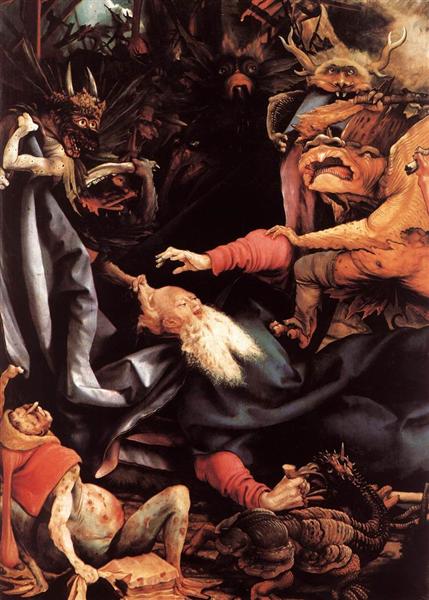
 Torch of Liberty