On this Leap Day, which repeats only once every four years, we abide in a liminal time sandboxed from all the rest in a special way, for its memories which define us both here in the timelines of social media which construct our personae in reflection of the gaze of others, and in the chambers of our imagination, a chiaroscuro of our vast chasms of secret darkness and our realms of exaltation, rapture, and light; all this is surfaced but once in every four years.
Such a weight of responsibility, such a limitless freedom of being, to be given this time in which to act without judgement, unanswerable to the tyranny of other people’s ideas of virtue or normality, to transgress the boundaries of the Forbidden and discover truths written in our flesh and those we ourselves create.
We answer to no other, and this is the greatest of our powers and our freedoms, this secrecy, this privacy, this autonomy.
In this moment free from imposed or authorized history, memory, or identity, in which we are only who we wish to be, as Living Autonomous Zones and in Rashomon Gate Events like Leap Day which bring the Chaos to the rule-bound games of order of those who would enslave us, let us seize the day, and every day, to hit the reset button on who we are and how we choose to be human together.
For only in this state of no rules and no masters may we truly become human as self-created and self-owned free beings.
Such are my thoughts on the primary meaning of such Defining Moments as a free space of creative play and Chaos as the adaptive potential of systems; for its secondary meaning as a leap of faith into unknown futures and possibilities of becoming human, here are my thoughts as written in my post of
October 8 2023, Day Three of the Mad Hatter Festival: Madness As a Faith of Poetic Vision; As I wrote in my celebration of Lewis Carroll on his birthday, I Sing of Madness, Vision, and Love; I practice the art of believing “six impossible things before breakfast”; but only in those truths which I myself create or claim, and which in turn claim me.
This is possibly a confession of faith, though if asked directly I normally quote either Keats; “I am certain of nothing but of the holiness of the Heart’s affections and the truth of Imagination—What the imagination seizes as Beauty must be truth—whether it existed before or not—for I have the same Idea of all our Passions as of Love they are all in their sublime, creative of essential Beauty”, or Rumi; “Let the beauty you love be what you do”, depending on who is asking, and in what language and nation, especially by men with badges and guns.
Let there be total truth and absolute transparency between us, O my brothers, sisters, and others; for our word must be an inviolate force of nature if we are to mean anything, one which shapes, defines, motivates, and informs not only how we choose to be human together but also our own possibilities of becoming human. Lies dehumanize and falsify; therefore do I pursue a sacred calling to discover and live the truth.
Having so defined the ground of struggle in my writing here as in all things, and with an awareness that this self-disclosure and public intimacy is terrifying to others in some cultures and part of my personal myth as it is for Kenzaburo Oe in Japan, for high self disclosure values can be used to create intimacy, what do I mean when I use the word faith?
My intention is not to deceive in this or any regard; its simply that this is a complex, ambiguous, relative, dangerous, and highly fraught issue, one which bears the legacies of both my personal history and that of my family, and of our millennia of civilization.
A full accounting and interrogation of my influences will not be brief and merits its own study; here I am primarily questioning its praxis as vision, described in the film Oz in reference to Thomas Edison as “the ability to look into the future and make it real.”
In terms of personal history, I grew up with formal study and practice of Taoism and Zen Buddhism for ten years from the age of nine, and claimed Zen as my religion through my twenties, though influenced by my reading of Jung and his alchemical studies at university, by reading Frasier’s Golden Bough when I was twelve, and by the system of magic taught to me by William S. Burroughs as a young boy which synthesized his friend Bataille’s cult of Nietzsche, Acephale, with his master Lovecraft’s reimagination of Crowley and western occultism, and Grimm’s Fairytales as a third influence.
I seized upon Nietzsche’s Thus Spake Zarathustra in eighth grade as a counter text to the Bible, in high school during my enthusiasm for James Joyce and Ludwig Wittgenstein failed to learn the Kabala as its written in Andalusi Romance and a coded scholar’s Aramaic, and at university adopted the poetry of William Blake as a kind of sacred text.
During my Great Trek across Asia I lived in Katmandu as a Dream Navigator of the Vajrayana Kagyu order of Tibetan Buddhism and in Srinagar as a scholar of the Naqshbandi order of Islamic Sufism. I have also studied Shaivism as a member of the Aghori brotherhood of warriors, unique as the only group in India who totally reject the idea of caste, and Tantra with a priestess of Kali.
Like the chambers of a shell, growing with the passage of time, the layers of my relationships with the Infinite.
Often I use the word faith as solidarity of action with others; as loyalty, allyship, and recognition of our interdependence and the universal nature of our humanity which connects us. But I also use this word faith as a sacred calling to pursue the truth, whatever the source or where it leads, an idea from ibn Arabi.
So for myself, faith is a process of questioning, one which is antithetical to its usual use as submission to authority. Any who stand between ourselves and the Infinite serve neither.
Without question and absolutely it is a declaration of allegiance to poetic vision as symbolic, allegorical, and metaphorical truth, as reimagination and transformation, as identity and the terms of struggle for its ownership; for after language itself the ideas by which we organize ourselves are our most fundamental ground of being.
Herein my ars poetica uses methods of literary criticism, history, psychology, and philosophy, an extension of the interdisciplinary methods pioneered in The Psychopathic God by Robert G.L. Waite which I read in high school during a time when I chose the origins of evil as my field of study, to interpret the meaning and direction of current events as they unfold in real time, and to change the balance of power in the world.
Are we not the stories we tell about ourselves, to ourselves and to others? Always there remains the struggle between the masks we make for ourselves and those made for us by others; this is the first revolution in which we all must fight, the struggle for the ownership of ourselves.
Poetic vision and imaginal truth allows us to escape the limits of our form and the flags of our skin; to create ourselves anew as a primary human act and the reimagination and transformation of our possibilities of becoming human.
As I wrote in my post of January 3 2022, On Creativity and Poetic Vision as Revolution, Transformation, and Liberation; “I am certain of nothing but of the holiness of the Heart’s affections and the truth of Imagination—What the imagination seizes as Beauty must be truth—whether it existed before or not—for I have the same Idea of all our Passions as of Love they are all in their sublime, creative of essential Beauty.” Keats
My sister wrote of her recurring vision of the Night Mountain this morning, a vast and enormous city or structure of lights floating in the sky above the desert just before dawn, and it provoked memories of and reflections on my own many visions and encounters with the transcendent, especially those which became Defining Moments and shaped my becoming human; among them the Illumination of Our Beautiful Flaws as I crossed the Thar desert in Rajasthan by camel, the Games of Beauty and Vision as I sailed upon the Lake of Dreams in Srinagar, my Journeys through the Gates of Possibilities as a monk in Kathmandu, the Kiss of the Fallen Star which struck my hand in a meteor shower as I reached for the Impossible among the heavens, the Dream of the Toad transferred to me as a chthonic guardian spirit and guide of the soul by one of my father’s Beatnik friends, William S. Burroughs, in a line of succession from Nietzsche as its avatar, in the strange fairytales he told in the evenings of his visits as the coals of the fire burned low and darkness swallowed us in its endless chasms, and the moment of my Awakening and vision of Possible Futures of Humankind when as a child at my mother’s side during a protest in People’s Park in Berkeley the police fired on the university students in the most terrible incident of state terror in American history, Bloody Thursday May 15 1969, and I escaped my body and had a unitary moment of awareness outside of time.
Like the dreams to which they are akin, such visions can be read as symbols, metaphors, and allegories; they are also stories woven into our lives which connect us with the universe and with other people, and through which we create ourselves. Are we not the stories we tell about ourselves, to ourselves and to others?
I am looking at the scar on my hand from where a Fallen Star touched me one night during a cosmic event like tonight’s Quadrantid meteor shower, like the hand of a rebel angel bearing the stolen Promethean Fire, decades ago, when I reached up to pull the stars from the heavens and something reached down to enfold my hand in a nimbus of light, and for a moment I was sublimed and exalted in the Kiss of the Fallen Star, riding the light among the spheres, the earth a vanishing orb, then lost among the solar system, a sea of stars, a whirling dance of galaxies, and return to the hill where I stood transfigured by the embrace of Infinite. Stunned not by our smallness next to a universal scale, but by the eternity and timeless immensity of Being in which we share.
This meteor strike was witnessed by Jim Shafer, Jennifer Wendt-Damico, Kimberly Wine, Claud Gipson, and several others who had assembled on top of the old artillery battery overlooking the valley below Cavedale Road in Sonoma California in the 1980’s, with its awesome petroglyph caves hidden behind a waterfall, where a door to the Unknown was opened possibly thousands of years ago, letting beings of strangeness through.
If ever I need to be reminded of our true nature, of the presence of the transcendent and the immanence in nature of truths written in our flesh, of the vast and limitless sea of being and consciousness of which we are part, I need only open my hand to see written there the signature of the Unknown Infinite and the sign of our hope, for from the moment I touched a star I have been without despair, fear, or doubt, a bearer of hope and the fire of liberation.
I have been no stranger to what is strange; it has defined my Otherness and the kinship I feel with those others, however different from myself, who are marginalized, excluded, vilified, and oppressed, those whom Frantz Fanon called the wretched of the earth, the dispossessed and the powerless, the silenced and the erased; the monsters and the freaks whom I claim as my family and my tribe.
Of all the gifts and wonders life has given me, this I cherish most of all; that with all the numberless and unimaginable horrors to which I have been witness, in Mariupol and Sarajevo and the crimes and atrocities whose names become an endless litany of woes which define the limits of the human as a fragile and ephemeral quality among chasms of darkness, I have emerged from the legacies of our history Unconquered as in Henley’s poem Invictus, with the ability to bond, empathize with, and inhabit the lives of others as the bearer of sacred wounds which open me to the pain of others. I cherish my pain, for like the Abyss which I have embraced and wrestled with it has made me human.
If I can do this, so can we all. This is my faith as solidarity, hope, and love.
This above all else defines what is human; our ability to transcend the limits of our flesh and of our differences, to share and learn from the lives of others, across vast gulfs of time and space, through the civilization we create as partners in a Great Conversation. Much of who we are is stored potential in the form of our most precious resource, the written word, which is created by our historical community and belongs to the commons; this is both its power as a shaping force and its danger as a limitation of our uniqueness and autonomy.
Such are my thoughts on creativity and poetic vision as revolution, transformation, and liberation; but I did not invent the language with which I create them, nor the millennia of historical antiquity which informs my ideas; rather they are instruments with which I create myself. Who then owns the artifacts of my thinking? To this I must answer with a line from the great film Il Postino; “Poetry belongs to those who need it.”
In reverence for the gifts and guidance I have been given I have tried, however poorly and within my limitations, to understand the meaning and significance of such moments of insight, to enact them in my life as a fulcrum of change and to use poetic vision as leverage with which to transform the balance of power in the world.
Regardless of how we name and taxonomize the Source of our reality and the sea of our being in attempts to rationalize and control life, it remains wild, irrational, uncontrollable, and also very real. The wonder and terror of vision and immersion in what Coleridge called the Primary Imagination, Jung the Collective Unconscious, Ibn Arabi the Ālam al-Mithāl, and is termed the Bardo in the Tibetan classic which I translate as The Book of Liberation, in the contexts of four lineages of ideology in which I may claim membership, has inspired some of the greatest achievements of civilization and the limitless possibilities of becoming human, and some of the most fearsome terrors of our historical atrocities, madness, and degradation.
The liminal bears creative and destructive forces in equal measure, and not reductive to the interplay of darkness and light, but ambiguous, contingent, and relative. We who are its witnesses and bearers of poetic vision are the arbiters of this power among humankind and of its consequences for the material universe and the order and fate of the cosmos. Who bears the fire of the gods becomes an agent of transformation, insight, and the reshaping of human being, meaning, and value; this is true of all art and of creativity in general.
Revolutions are born of such insight, in sciences and arts of understanding as well as in politics as choices we make about how to be human together, and in our ongoing creation of ourselves. With this inner fire and vision we may forge new truths, and in this mission I offer guidance and warning as you sail into the unknown; transgress boundaries, violate norms, abandon limits, and seize your power to create yourself anew, for nothing is Forbidden and all Authority is illusion and lies; but always know what you are trying to achieve, for force always operates in both directions at once.
Act without fear, and in action be fearless; but with awareness of the consequences of your actions. Life and liberty, as well as good and evil, may depend on the smallest of changes in our lives and our world, both for ourselves and for others.
Best wishes, and may you find joy, freedom, healing, and love in your reimagination of yourself and our possibilities of becoming human.
As I wrote in my post of January 8 2022, Let Us Bring A Reckoning; Politics is the art of fear as the basis of exchange and the origin of authority and unequal power as systemic evil in the Wagnerian Ring of fear, power, and force, as balanced with the desire to belong, but it is also about poetic vision as reimagination and transformation; to dream an impossible thing and make it real, as Washington did in crossing the Delaware to create America and as Alice teaches us when recounting the Six Impossible Things in her battle with the Jabberwocky.
On the way to fight a dragon, and seeing it for the first terrible time, Alice remarks to the Mad Hatter in Tim Burton’s beautiful film; “That’s impossible.”
To which the Hatter says, “Only if you believe it is.”
“Sometimes, I believe in six impossible things before breakfast.”
“That is an excellent practice, but just now, you really might want to focus on the Jabberwocky.”
Just so.
As I wrote in my post of October 14 2021, On Art as Poetic Vision, Transgression, Seizure of Power, Reimagination, and Transformation: a Manifesto; Why do I write?
I offer here a manifesto of art as poetic vision and transformation in the contexts of the performance of identities and in the guerilla theatre of political action and revolutionary struggle.
Art is transgressive when it challenges and violates our ideas of normality and the tyranny of other people’s ideas of virtue, it is a seizure of power and refusal to submit to authorized identities which confers freedom and autonomy through becoming self-created and self-owned, Unconquered and beyond subjugation by force and control, and it is poetic vision as Surrealist reimagination and transformation when it depicts and guides our passage through the labyrinth of time, history, memory, and the falsification of our captured and distorted images in the wilderness of mirrors, lies, and illusions, to enact our rapture and exaltation, our transcendence into realms of dream and of vision wherein rules do not apply and when it seizes us with truths immanent in nature and written in our flesh.
All true art defiles and exalts.
Art is intended to question and transform the rules and substance of human being, meaning, and value; to discover within the boundaries and interfaces, the silent and empty places of change and the limitless adaptive potential of systems, of unknowns, disconnects, misaligned juxtaposition and strange angles of view, new possibilities of becoming human.
I first understood the power of the unknown as a force of liberation as a boy whose bedroom wall was a collage of Bosch figures and images I called my Dream Gates; William S. Burroughs would show up for dinner without warning and tell weird fairytales into the night; he also drew curious figures into the collage of heaven and hell, and here was a definition of art and of its purpose; transformation of the possibilities of becoming human through reimagination and ecstatic poetic vision.
This is why I claim as the purpose of my writing to incite, provoke, and disturb; change and growth originate in discomfort and in the four primary duties of a citizen; to question, mock, expose, and challenge authority.
As we learn from John Cage in music, Harold Pinter in theatre, and Piet Mondrian in art, it is the blank spaces which define and order meaning; and in history it is the silenced and erased voices to which we must listen most carefully, for here the emptiness speaks to us of secret power and of the key functions and relationships which authority must conceal to maintain its hegemony over us.
This free space of play, of the unknown as unclaimed space and the adaptive potential of a system, whose boundaries like the known shores on our maps of becoming human frame the range of choices and act as authorized identities and an intrinsic limit on freedom as future possibilities, remains outside and beyond all limits and systems of knowledge, like Godels Theorem; no matter how much we learn and shift the boundaries of the known universe, the Infinite remains as vast as before, conserving ignorance.
If so the task of becoming human involves chaos, disruption, reimagination, and transformation, as I believe; the violation of normalities and transgression of boundaries of the Forbidden to free us of the tyranny of other people’s ideas of virtue and of authorized identities, to create limitless possibilities of becoming human as seizures of power.
Order appropriates; Chaos autonomizes.
As I wrote in my post of October 5 2021, Seizure of Power, Self-Creation and Self-Ownership, Authenticity and Autonomy, Self Representation as Construction of Identity, and Ourselves as Living Memiors: the Case of Facebook; Something crucial we ignore about social media; though its pitched as connectedness, its primary function is to construct identity through ordering and prioritizing our experience in time. Our social media publications are a form of memoir, and this is a ground of struggle between the stories we tell about ourselves, to ourselves and to others, and those which others tell about us.
As with the public negotiations of national identity and conflicted histories in the competing narratives of the 1619 Project and the Mayflower origin story, the first question we must ask of our stories is simple and direct; whose story is this?
This is the great test of disambiguation between falsification and authenticity, and between autonomy and subjugation; not whether a statement is a lie or a truth, though this is also important, but whose truth is it?
As I wrote in my post of June 22 2021, Our History Swallows Us Like An Infinite Moebius Loop and We Become Prisoners of Its Gordian Knot: the Case of Kurdistan; History becomes a wilderness of mirrors; of lies and illusions, distorted and captured images endlessly reflected which violate our uniqueness, falsify us, limit and entrap us in authorized identities and narratives which serve the interests of elite power and not our own.
Our histories and memories are the anchorages of our identity and the wellspring of our becoming, networks of connectedness which sustain our harmony and wholeness; but such nets can ensnare us as well, and become atavisms we drag behind us like an invisible reptilian tail.
Our history swallows us like an infinite Moebius Loop, and we become prisoners of its Gordian Knot; the case of Critical Race Theory repression illumines the vicious cycle of fear, power, and force as racism and fascist tyranny overlap and intermingle hideously, consuming its most vulnerable population as sacrifices on the altar of wealth and power.
As I wrote in my post of December 5 2020, Whose Story Is This?; We are the stories we tell about ourselves, to ourselves and one another. So it becomes important to ask of our stories and representations, whose story is this?
I call this the Narrative Theory of Identity, and my intention is that it serves as a lever for changing the balance of power in the world. Our idea of self derives from the persona, the ancient Greek theatrical mask through which characters speak, and the possibilities of becoming human are a function of the struggle between authorized identities and the self- ownership of autonomous individuals.
We have one problem in common as we grow up and create ourselves; each of us must reinvent how to be human. Our informing, motivating, and shaping forces, modeled and communicated to us by others, are necessary to our processes of growth and individuation, but also integral to the dialectics of self and others.
The struggle between the masks that others make for us and those we make for ourselves is the first revolution in which we all must fight.
As written by Helena de Bresis, author of author of Artful Truths: The Philosophy of Memoir, in Aeon; “I wrote a memoir recently, and sometimes I ask myself why on earth I did. It was difficult and time-consuming, it involved some rather unpleasant self-examination, and it raised suspicions of self-involvement, exhibitionism and insufferable earnestness that I’d so far mainly avoided in life. If I publish it, I risk being accused by friends of betrayal, by readers of lying, and by critics of any number of literary flaws. Since selling a memoir is hard, all of that would represent things going well. When I complain to my sister about this, she suggests that ‘maybe’ I should have – ‘I don’t know’ – considered these points two years ago, before embarking on this thing that she would ‘never, like, ever do’.
When asked why they bother, memoirists offer a range of reasons. Saint Teresa did it for the glory of God; Jean-Jacques Rousseau to express his inner self; Vladimir Nabokov to recreate his vanished childhood; Frederick Douglass to advance the cause of abolition. But maybe the deepest reason for writing a memoir, intertwined with all the rest, is the desire to find meaning in one’s past experience. Whatever else they’re up to, memoirists are in the business of locating some form or order in their personal history: setting it down as an intelligible shape, not a hot mess. Finding this form is both a necessary part of memoir and one of its key rewards. That was what I was after, anyway. Life moves so fast. Stuff had gone down. I wanted to slow the passage of events, grasp what the past had meant, before picking up the pace once again.
You can search for form in life through philosophy, science, religion and any kind of art. The memoirist’s distinctive move is to do it via autobiographical narrative: the construction of an organised sequence of personally experienced events, along with an implied evaluative response to them. Life stories have three things going for them when it comes to making experience intelligible. They’re selective, highlighting particular agents, settings and episodes out of the mass of material that life provides. They’re also unifying, drawing connections between their disparate parts and situating them in context. And they’re isomorphic: they share deep structural and thematic features with other stories, which we use as a shortcut when interpreting them. Psychologists report that most autobiographical narratives follow the classical story arc: steady state, complication, rising action, crisis, resolution, then coda. And they involve quests, comings-of-age, fatal errors, comeuppances and returns recognisable from myths, parables and fairy tales. Most, though maybe not all, humans tell such life stories. Memoirists recount them at length, in writing, with literary ambitions. We’re trying to do it, but make it art.
What are memoirists doing exactly, when we claim to ‘find’ this form and meaning in our past experience? Are we genuinely discovering it back there or just making it up? For the past century or so, the wind has been behind the latter interpretation. Many take the existentialist line that seeing your life in narrative terms is a form of mauvaise foi, or bad faith. We urgently want there to be order and meaning in the world, independently of us. But there isn’t, and our attempts to impose coherence and significance where none exist are self-deceiving and absurd. Roquentin, the protagonist of Jean-Paul Sartre’s novel Nausea (1938), describes the ‘disgust’ and ‘nausea’ produced by our meaningless universe, alongside its ineffective narrative remedy:
This is what fools people: a man is always a teller of tales, he lives surrounded by his stories and the stories of others, he sees everything that happens to him through them; and he tries to live his own life as if he were telling a story.
What exactly is wrong with construing your past as a story? In his memoir The Words (1963), Sartre suggests that storytelling distorts our understanding of life, by confusing it with literature. We can tell autobiographical narratives if we like but, if so, we should be clear about what we’re doing: producing fiction. This take suggests that memoir, which calls itself nonfiction, is a fundamentally suspect enterprise.
A similar critique of narrative emerged in the philosophy of history in the 1970s. In his book Metahistory (1973), Hayden White argued that historical writing is a constructive process, in which the historian selects a subset of past events, imaginatively fills in the gaps, and orders the lot into a unified story. These historical stories, like the life stories of individuals, take conventional literary forms – tragedy, romance, comedy and satire – and employ poetic devices, including metaphor, synecdoche and irony. All of this is a creative act on the part of the historian, an imposition on the historical record. As a result, different historians can and do provide different narrative interpretations of the same events, none of which can be said to uniquely fit the facts. White concludes that historical writing, despite its scientific pretensions, reduces to fiction.
The philosopher Noël Carroll offered two main lines of response to White that transfer nicely to memoir. The first points to a set of faulty inferences in the argument. White assumes that each of the following features of an interpretation transforms it into fiction: inventiveness, selectivity, multiplicity, conventionality and literary quality. But a quick run-through shows that each can be present without an immediate diagnosis of fictionalising. Photos are invented rather than found, but that doesn’t make them inaccurate representations of the past. My telling you only some things about my spring break doesn’t mean that what I do tell you is made up. The availability of multiple good stories about the Loretta Lynn fan convention doesn’t demonstrate that one or all of them are fiction: each can just highlight a distinct aspect of the same complex course of events. And your description of what you’ve been up to recently might be Homeric, but some weekends genuinely are epic, and nonfigurative, nonliterary language might not be enough to capture the truth about them.
Carroll’s second reply to White questions the assertion that the world isn’t story-shaped. Humans act for reasons, and those actions have consequences, including the imprint of certain patterns on the world. We can describe all this in terms of atoms moving in the void, sure. But there’s an equally legitimate form of explanation that appeals to the values and goals driving the action, and therefore to the purpose and significance that human life genuinely contains. A story that offers such an explanation is picking up on real aspects of the world, not confabulating. Similarly, since humans think and act symbolically, narratives that incorporate metaphor and myth can serve to reflect, rather than distort, reality.
That said, there’s some truth in the claim that narrative is created, not found. Successful nonfictional storytellers both discover and construct. They do the difficult work of pruning and unifying experience into a shape they and others can understand. As the writer Lorrie Moore puts it: ‘Life is a cornfield, but literature is that shot of whiskey that’s been distilled down.’ And when nonfictional storytellers succeed, the shape they create tracks genuine features in the life described.
To defend nonfictional narrative isn’t, of course, to defend all particular life stories. At one early point in writing my memoir, I announced: ‘OMG, I think my life tracks the history of Western philosophy!’ ‘That’s wonderful!’ my long-suffering sister replied, but the angle of her eyebrow effectively consigned that one to the trash. There are also some general narrative conventions we’re better off without. No literary memoirist would be caught dead these days writing a traditional autobiography: a strictly chronological tracing of events, from infancy on, in a tone of untroubled authority. The contemporary memoir zooms in on a specific period or theme, and moves back and forth in time. Modern memoirists tend to be less certain than autobiographers, more alert to the seductions of narrative closure. As a result, their books are more complex, searching, and truer to life.
But we can welcome these salutary effects of 20th-century narrative scepticism while keeping the baby in the bath. Old-fashioned storytelling has real virtues when making sense of the world. (I once lunched with a literary magazine editor after he’d gone through the latest set of submissions. ‘Oh god,’ he exclaimed, like a frustrated police chief, ‘just tell me what happened in order!’) Those virtues are so great that even narrative sceptics make use of them. Joan Didion ends her essay ‘The White Album’ (1968-78) with an admission of defeat: ‘Writing has not yet helped me to see what [experience] means.’ But sometimes the pattern just is chaos, and Didion’s use of personal narrative in this essay deftly captures that truth about 1960s California.
Cynics about narrative often give off an air of expecting more from stories than memoirists themselves do. No memoir can reveal an underlying grand narrative in the universe as a whole, or give its writer anything more than a partial and provisional grip on their personal past. But it can sometimes provide that grip, which is no small thing. When I look at my own memoir, I can clearly see its fictive qualities. The stage is set, the action rises, the protagonist falls apart, then lurches out of the abyss. There’s a coda, written in a tone of battered hope. Sartre would give it one star on Goodreads. That would be mean (I gave his five!), but I’m not too troubled by it. The book reads to me like my life, a life that makes better sense to me now that I’ve written it down.”
As I wrote in my post of August 24 2020, The Transformative Power of Art: a Manifesto; The transformative power of art, its ability to reframe our ideas about self and other, to shift boundaries, reassign values, reclaim history and identity from silence, erasure, marginalization, and the authorization of inequalities of power and divisions of exclusionary otherness; these are among the vital functions which make art a primary human and social activity.
Art as poetic vision precedes and parallels politics as a means of changing our civilization and the possibilities of human being, meaning, and value; it represents a power held by autonomous individuals and communities against the tyranny of state force and control. Politics is a social art which is primary to our interdependent human nature and processes of becoming human. Through our words, images, and performance we can question, mock, expose, and challenge authority and incite, provoke, and disturb others in bringing transformational change to the systems and structures within which we are embedded.
Art is life, for it involves us personally and directly in processes of adaptive growth and in renegotiation of our social contracts and relationships with others, both personal and political, and informs and motivates the performance of our identities.
If we are caught in a rigged game, we must change the rules and terms of struggle. “Rules are made to be broken” to paraphrase General MacArthur; order destabilized, authority delegitimized, traditional systems and structures interrogated, limits transgressed, force and control resisted and abandoned, and new truths forged and possibilities of becoming human discovered.
We must question, expose, mock, subvert, transgress, and challenge authority whenever it comes to claim us. There is no just authority.
Let us seize control of our own narrative and representation, of our memory, history, and identity.
Let us be unconquered, masterless, and free.
Let us be bringers of chaos, joy, transformation, and revolution.
Six Impossible Things: Slaying the Jabberwocky
Faith as poetic vision, reimagination, and transformation; a reading list
A Greeting of the Spirit: Selected Poetry of John Keats with Commentaries,
The Tibetan Book of the Dead: The Great Liberation through Hearing in the Bardo, Padmasambhava, Karma Lingpa, Chögyam Trungpa and Francesca Fremantle translators
Of the legacies of our history from which we must emerge, none are more terrible than those of colonial occupation and its consequences in the social use of force and violence to win security by becoming the arbiters of virtue.
Of the legacies of our history which we must hold close and remember lest we be falsified, silenced, and erased, none are more valuable as informing, motivating, and shaping forces of becoming human than those of seizures of power against tyrants, hegemonic elites of wealth, power, and privilege, and those who would enslave us than our songs of liberation struggle and its costs.
Memory, history, identity; there are stories which we must free ourselves from and those we must claim as ours, and if we are very lucky they are not always the same.
Indonesia has just elected Prabowo as its new President, the apex predator of a political dynasty created by American and British anti-communist purges and a spectacular and bloody coup nearly sixty years ago, which became a blueprint for similar games of counter-revolution, imperial conquest, and dominion as The Jakarta Method.
Beyond the epigenetic trauma of the capture of the state by oligarchs and proxies of distant colonial empires, like the dancing figures in a shadow puppet theatre of an Empire of Demons, the new leader of Indonesia is personally a commander of death squads implicated in war crimes, the brutal repression of dissent, and ethnic cleansing within his own nation and against ethnic minorities and independence movements in Timor and Papua. Yet he won a free election by the people he committed atrocities against; the adoration of the masses can be measured in blood.
In Indonesia’s elections, tyranny and democracy, fear and love, despair and hope, division and solidarity play for the kingdom of our hearts and the dreams of the future we struggle to make real, and I hope that Shakespeare’s words in Henry V still remain true; “When lenity and cruelty play for a kingdom, the gentler hand is the surest winner.”
As written by Thomas B. Pepinsky in Journal of Democracy, in an article entitled Why Indonesia’s Democracy Is in Danger; “Millions of voters in Indonesia, the world’s third-most-populous democracy, went to the polls on February 14 to choose their next president and members of parliament. Although the full results will not be known until early March, early counts show Prabowo Subianto handily defeating his two challengers for a first-round victory. His Great Indonesia Movement Party (Gerindra) is in a close race for second in the parliamentary contests. The Prabowo campaign is claiming victory; as he declared to his supporters on the evening of election day, “We should not be arrogant, we should not be proud, we should not be euphoric, we still have to be humble, this victory must be a victory for all Indonesian people.”
From a distance, this was a normal Indonesian election cycle, with three viable presidential tickets and an array of new and established parties vying for seats in parliament. Campaigning was peaceful, with televised presidential debates, rallies that appealed to the country’s massive youth vote, and colorful banners and posters displayed throughout the archipelago. But for many Indonesians, the voting itself was just one important milestone in an election that had already shaken the foundations of Indonesia’s constitutional order. Prabowo, who serves as minister of defense under incumbent president Joko Widodo (popularly known as Jokowi), is a former general who rose to prominence under Suharto’s authoritarian New Order regime (1966–98). Prabowo’s campaign has tested Indonesia’s electoral laws and upended the norms of its presidential politics. With his dominance at the polls and the dwindling confidence in Indonesia’s political and judicial institutions to check executive authority, the outlook for Indonesian democracy in the coming years is grim.
Prabowo faced two opponents in this year’s contest: Ganjar Pranowo, a former governor of Central Java, and Anies Baswedan, a former governor of Jakarta. Jokowi, who is broadly popular but term-limited after two five-year terms in office, threw his support behind Prabowo, most significantly because he nominated the president’s son, Gibran Rakabuming Raka, as his running mate. Prabowo, with his wide name recognition, substantial campaign war chest, and boost from the president, polled far ahead of Ganjar and Anies throughout the campaign.
The three presidential candidates represented competing visions for Indonesian politics and society. Prabowo hails from an elite family who rose to prominence in the early independence period, and his brother Hashim Djojohadikusumo is one of Indonesia’s wealthiest and most prominent businessmen. Prabowo was once married to Suharto’s daughter Titiek, although they are long divorced, and he was a key ally of Suharto’s at the end of his reign. Under Suharto, Prabowo rose through the military’s ranks to become commander of the army’s special forces. In that capacity, he was directly involved in human-rights abuses during Indonesia’s occupation of Timor-Leste (1975–99) and complicit in the violent events surrounding Suharto’s downfall in May 1998. Although he was dishonorably discharged from the military, Prabowo’s campaign invoked his military legacy and recent record as defense minister to portray him as a strong nationalist leader who prioritizes order, stability, and national greatness.
Prabowo ran unsuccessfully against Jokowi in 2014 and 2019, drawing on these same narratives and images, while also making appeals to conservative Muslims and religious identitarians. In 2024, it was Anies who focused on that segment of the electorate, while Ganjar appealed to the same pluralist and progressive constituency whom Jokowi had won. Ganjar, the chosen candidate of the Indonesian Democratic Party of Struggle (PDI-P), which supported Jokowi in 2014 and 2019, was especially popular among non-Muslim voters wary of Anies’s religious agenda, especially after Anies embraced Islamists in his campaign against a popular Chinese Christian governor of Jakarta in 2017. Ganjar did not, however, inherit Jokowi’s popularity, especially among young Indonesians; opinion polls showed young people to be squarely behind Prabowo and his 36-year-old running mate, Gibran.
Millennials and Gen Z now make up more than half the electorate, and they are simply not old enough to remember Prabowo’s contentious rise and subsequent disgrace.
Given all this, the 2024 contest followed established patterns in the country’s politics. Religion and identity have been important cleavages in Indonesian politics since the independence period, and voters have mobilized around these cleavages in recent elections too. Even Prabowo’s candidacy is nothing new: In addition to running and losing in 2014 and 2019, he was active in the 2004 and 2009 elections as well.
In truth, most of the challenges facing Indonesian democracy long predate the current moment. They include the continued political dominance of the country’s wealthy elite, many of whom can trace their fortunes to the Suharto era or before; the oversized legislative coalitions required to govern in a multiparty presidential system, incentivizing legislative parties to collude rather than compete and minimizing the effectiveness of the rump parliamentary opposition; gross inequalities that produced marked differences in the quality of democracy across Indonesia; antipluralist and illiberal social forces; a military that remains stubbornly unwilling to cede full control of politics to civilian forces; high levels of official corruption; dynastic politics; and electoral clientelism and vote buying that distort representation and partisan politics from the local level on up.
Nevertheless, citizens have participated in free, fair, and competitive multiparty elections since 1999. Indonesians have witnessed several peaceful rotations of executive power, and elections have been hard-fought contests in which powerful challengers have conceded defeat, albeit sometimes begrudgingly. Indonesia’s civil society is robust and active, print media is largely open and often critical, and many political parties compete for popular support. As in any consolidated democracy, there is broad agreement that elections are the sole legitimate route to political power: They are, to quote Juan Linz and Alfred Stepan, “the only game in town.” The risk of a catastrophic breakdown of representative institutions is low, as is the threat of violence of the type that rocked Indonesia during the turbulent 1960s.
But democratic consolidation requires that the rules of the game be known and fixed rather than malleable and subject to change at the whim of elites. Indonesian democracy is not as consolidated as its repeated elections have suggested. The trends have been worrisome for the past decade, with the 2024 election only deepening fears and the country looking more and more like a clear case of democratic backsliding. Jokowi has, for example, used the legal means at his disposal to clamp down on challenges to his authority of any variety.
During the 2024 election campaign, democratic decline accelerated because of decisions taken by ruling elites, especially the president himself—the first being his embrace of Prabowo as his chosen successor. Until now, presidents in post–New Order Indonesia have remained above electoral politics, a norm buttressed by legal limitations on presidents’ campaigning. Jokowi, however, openly stumped for Prabowo and Gibran, challenging longstanding interpretations of what a sitting president is allowed to do. Jokowi claims that presidents may campaign if they do not use state resources, as the letter of the law reads. But Anies and Ganjar say that Jokowi did just that, using state institutions such as the military and police—which ought to be neutral arbiters of the law, and which ought to show no partisan or political favoritism—against Prabowo’s opponents.
A more direct blow to Indonesian democracy arrived in October 2023, when the country’s Constitutional Court issued a stunning ruling about Gibran’s eligibility to run for vice-president. According to the Indonesian constitution, the minimum age for presidential candidates is 40. Gibran will be only 37 on inauguration day, and therefore ineligible to run under any regular interpretation of the constitution. But in October, the Constitutional Court handed down an opinion by Chief Justice Anwar Usman (who happens also to be Jokowi’s brother-in-law) which held that the age limit did not apply to any candidate who had previously served in a regional elected office, thereby allowing Gibran, who is mayor of Surakarta (known as Solo), to register as Prabowo’s running mate.
Although the public outcry against this decision was swift and substantial, and Anwar was subsequently found guilty of violating the court’s ethics code and demoted, Gibran’s candidacy was unaffected. The plain implication is that Indonesian constitutional law does not constrain elites seeking to circumvent it. Few would have seriously argued that Indonesian law treats the wealthy and powerful the same as it does regular Indonesians. Still, the Constitutional Court’s brazen decision to intervene on behalf of a sitting president’s son was shocking, and further proof that powerful interests with ties to state institutions and the country’s authoritarian past still direct the course of its politics.
For this reason, it is important to separate Prabowo the individual from the politics surrounding his campaign. Prabowo’s history, political style, and personality are worrisome: He has a famously short temper, and his actions over the years inspire little confidence in his commitment to democratic institutions, to liberal values such as freedom of speech and conscience, or to the rule of law. Although he does not have the crassness or brashness of a Rodrigo Duterte or Javier Milei, it is hard to predict how he will react to unfavorable news or to any legitimate democratic challenge. But like Duterte and other world leaders, Prabowo’s politics replace a commitment to law and order with a preference for order over the law. For the many observers who believed that it was Prabowo’s 2014 defeat that allowed Indonesian democracy to survive, his victory in 2024 is a harbinger of the country’s democratic decline.
But Indonesian democracy is more than just the attitudes and values of its political leaders. Presidents shape democratic politics, but they do not determine what democracy is. Democracy in Indonesia, as in any other country, is a political system that emerges from the actions of elites, the masses, and social groups together—working through established institutions, following norms of mutual tolerance and forbearance, and peacefully resolving legitimate political differences through the orderly rotation of power via free and fair elections. Institutions matter, but they are not self-directing; laws matter, but only when they are applied faithfully and in accordance with constitutional procedures and governing norms. Anwar, as chief justice, made his fateful decision on behalf of the Constitutional Court, the guardian of the constitution, for the benefit of Jokowi and his family as well as Prabowo himself.
So it is unsurprising that in the final days before the election, Prabowo’s opponents feared that other state institutions, such as the armed forces and the electoral commission, would be similarly vulnerable to political manipulation on election day. Given that Prabowo’s campaign, which worried about a possible unified anti-Prabowo ticket in a second round, predicted a single-round victory, the other campaigns were afraid that electoral and security institutions might tilt the first-round balloting in Prabowo’s favor so as to avoid a runoff.
Although it is still early, there is no evidence of any systematic irregularities. But representatives from the Anies and Ganjar campaigns are pledging to investigate the electoral process nevertheless, claiming that the election was marred by “structural, systematic and massive fraud.” Worryingly, Anies has been reported to authorities for commenting on a film released on February 11 that alleges the electoral process was subject to manipulation by Prabowo backers.
In November 2023, just after the Constitutional Court’s decision, Indonesian journalist Goenawan Mohamad sat for an interview on KompasTV, a mainstream news channel. Known as a sharp-witted critic and thoughtful political analyst with decades of experience, Goenawan described the Indonesian state as “broken” (rusak). Although his use of this word received wide attention, less noted was what he used rusak to modify: not politics or elections or institutions, but the state (negeri) itself. And the term negeri refers to more than just the state in a formal sense. It connotes something closer to the state and society together—the country, its institutions, and its people. Goenawan was describing not just a crisis of democracy, but a crisis of Indonesia.”
As written in The Guardian’s Editorial entitled Prabowo’s win is dismal news for democracy; “When Joko Widodo took power in Indonesia 10 years ago, his victory brought relief as well as celebration. It was not merely that the former Jakarta governor was the first president to be elected from outside the political or military elite. It was also that he defeated ex-general Prabowo Subianto, who had attacked direct elections and said that he would take the country in a more authoritarian direction. There was every reason to take that threat seriously. Mr Prabowo was dismissed from the military – and barred from entering the US – due to allegations of the abduction and torture of activists by men in his unit, though he has always denied involvement.
Yet now, as the president leaves office, Mr Prabowo is set to replace him – thanks in large part to his former rival’s (unofficial) support. With 205 million voters and 820,000 polling stations spread across the thousands of islands in the world’s fourth most populous nation, completing the final tally could take weeks. But Mr Prabowo, currently defence minister, enjoys a commanding lead in “quick counts” by independent polling firms, which have proved accurate in previous contests. That suggests he will not face a runoff.
Having reached his two-term limit, the president – known to all as Jokowi – is leaving office with enviably high popularity ratings and a track record that includes steady economic growth, infrastructure development, slowed deforestation (though the country has fallen short of targets) and healthcare improvements. But he has also overseen a democratic backsliding. When he first took office, some supporters voiced concern that his principles might even hinder his ability to get things done. In reality, he has not only proved adept at making deals with the old elites but has undermined key institutions and strengthened restrictions on freedom of speech. The final straw, for many of his enthusiastic early supporters and reportedly for cabinet colleagues, has been his electoral manoeuvring.
Jokowi said he was neutral. But it was plain that he had thrown his weight behind Mr Prabowo rather than his own party’s candidate, Ganjar Pranowo. His 36-year-old son, Gibran Rakabuming Raka, ran as Mr Prabowo’s vice-president, despite being four years short of the usual minimum age for the role, thanks to a handy ruling from the constitutional court. The chief justice happens to be married to the president’s sister. Many of those who once supported Jokowi have concluded that his priority is his legacy.
Mr Prabowo also benefited from his improbable rebranding from fiery would-be strongman to a cuddly, cat-loving grandfather figure, aided by social media. Half the country’s electorate is under 40; many voters do not remember his past or the days of military dictatorship under his father-in-law, Gen Suharto.
Those who do predict that “winter is coming”. Some suggest that the new president may conclude that he does not need outright autocracy, but can achieve what he wants within the current system. A better cause for optimism may be that Jokowi’s tenure saw the largest student protests since democracy’s return in 1998, prompted by his weakening of the anti-corruption commission and other harsh new laws. His political trajectory is further evidence that the work of defending reform and rights cannot rest on the shoulders of a single leader. But Indonesian democracy appears to have plenty of defenders, including among the young. There is every sign it will need them.”
As written by Rebecca Ratcliffe and Richaldo Hariandja in The Guardian, in an article entitled Winter is coming’: activists’ fears as Prabowo Subianto likely wins Indonesia election: Former son-in-law of late dictator Suharto was discharged from military over alleged abuses dating back to 1980s; “The presumed election victory of Indonesian presidential candidate Prabowo Subianto – a former army general with a history of alleged involvement in torture and disappearances – marks a dark chapter in the country’s history, activists have warned, while vowing not to give up their fight for justice.
Prabowo, 72, a former special commander under the Suharto dictatorship, is the apparent winner of Indonesia’s presidential election after unofficial counts gave him a strong lead. On Wednesday night he told supporters that his win would be a “victory for all Indonesians”.
The results have provoked fear among activists, however, that accountability for past atrocities will fade even further under Prabowo, and that his future government will have little regard for human rights.
“Winter is coming, whatever the name,” said Usman Hamid, executive director of Amnesty International Indonesia. “But the fight must go on … all of the perpetrators have to be brought to justice.”
Prabowo, a former son-in-law of Suharto, was a longtime commander in the Kopassus special forces, but was discharged from the military after Kopassus soldiers kidnapped and tortured political activists in 1998.
Of 22 activists kidnapped that year, 13 are still missing. Prabowo always denied wrongdoing and has never been charged in relation to the allegations, though several of his men were tried and convicted. Prabowo was previously banned from entering the US.
Prabowo is also accused of involvement in rights abuses in Papua and Timor-Leste, including a 1983 massacre in which hundreds of people, most of them men, were killed in the Timorese village of Kraras. He has denied the allegations.
Muhammad Isnur, head of the Legal Aid Institute Foundation of Indonesia (YLBHI), said the election of Prabowo may be “too painful” for the families of those who disappeared in 1998, who are still fighting for justice.
“The result is as we predicted. But we are still disappointed,” he said.
Prabowo had maintained a lead in pre-election surveys after rebranding himself as a cuddly grandpa-like figure and securing the tacit support of the outgoing president, Joko Widodo, whose son ran alongside Prabowo for the vice-presidency. The incumbent president, who is known as Jokowi, was accused of unfairly boosting Prabowo’s campaign in order to safeguard his legacy and establish a dynasty.
“Too many intricate enabling conditions and manipulations have shown the involvement of Jokowi in the election. He had mobilised everything. That’s why the result is predictable,” said Muhammad. Jokowi’s office has denied that he sought to interfere in the election.
Academics, journalists and civil society groups should prepare for the worst, Muhammad said. “We need to be aware of every risk that could happen to us in the future and try to make a list of mitigations. We need to be prepared.”
In the runup to the election, Prabowo was the only presidential candidate who did not attend a press freedom event and did not respond to a questionnaire by Human Rights Watch on key rights issues facing Indonesians.
As results emerged on Wednesday, Veronica Koman, a human rights lawyer living in exile in Australia, wrote on Twitter/X: “Many Indonesians are saying that they want to leave the country because Prabowo is winning – similar phenomenon to US citizens when Trump was winning. The big difference is … ours is out of FEAR.”
Position Among the Stars film trailer
The Act of Killing film trailer
The Year of Living Dangerously film trailer
References
Why Indonesia’s Democracy Is in Danger | Journal of Democracy
In a mass protest of electoral political action, the people of Michigan have in their Democratic Party primary issued a signal rebuke and vote of no confidence to Biden, for his sponsorship of Israeli genocide and crimes against humanity against the Palestinians and war crimes in the Gaza War in which the refugees in Rafah now await Netanyahu’s Final Solution of the Palestinians.
This is not the first genocide authorized, orchestrated, and funded by an American President to whom no war crimes charges have been brought before the Hague; the Mayan Genocide of the 1980’s enacted by Ronald Reagan and his puppet tyrant Rios Montt is an example of the performative nature of our use of the idea of human rights.
Nor will it be the last, unless we the people begin to hold our leaders and the systems and institutions of our nation to moral standards of action applied equally and to all human beings everywhere as declared in the founding documents of our democracy and our civilization, the parallel and interdependent sets of rights in the American Bill of Rights of citizens and the 1789 universal Rights of Man of the French Revolution.
Until we begin to live as we have together sworn as citizens, and until our President ends the rain of death and terror in Gaza which makes us all complicit in genocide and other crimes, I must concur with the delightful and wickedly transgressive dance theatre of the Cheerleaders For Change flash mob ensembles now bringing chaos to school games and streets throughout our nation; “Hey hey, ho ho, Genocide Joe Has Got To Go.”
Let us perform the Four Primary Duties of a Citizen; Question Authority, Expose Authority, Mock Authority, and Challenge Authority.
If you commit genocide or crimes against humanity, I cannot vote for you, and I will fight you. This I say to President Biden and the Democratic Party, and also to all masters, lords, and tyrants in all lands and throughout all of time.
To refuse to submit is to become Unconquered and victorious in seizure of power over our own liberty and autonomy. This and more has been demonstrated to us once again in the glorious protest vote of the Michigan primary; the power of our voice and witness, the change potential of solidarity, the necessity of confronting evil and resisting those who would divide, dehumanize, and enslave us.
Because fascism and strategies of the centralization of power to a carceral state of force and control, of imperial conquest and dominion, and of the weaponization of fear in service to power which has been employed in Gaza by Israel and America are rooted in, instrumental to, and symptomatic of a far greater tidal force of history; the erosion of empathy and the degradation of our humanity which is essential to war and crimes of violence and control, and to this we have as Wagner teaches us one defining and inherent human capacity which can free us from the Ring of fear, power, and force; only love triumphs over fear, and solidarity triumphs over division. Such is the natural law beneath the surfaces of our universal human rights, and the driving force of revolutionary struggle as an inevitable principle of history.
In the long game democracy and the universalizing solidarity of our humanity will triumph over tyranny, and in the protest vote of Michigan we can see the future toward which we are moving, regardless of the horrors which lay directly in our path.
For we are many, we are watching, and we are the future.
Our 2024 elections; our hungry ghosts whisper from the darkness; “Set me free, and I’ll make you powerful.”
Biden wins Michigan primary but sheds support over Gaza
The Party of Treason, White Supremacist terror, and theocratic-patriarchal sexual terror has yet again set us sliding down Willy Wonka’s garbage shoot with a stupefyingly cruel and idiotic law banning IVF fertilization, using arguments copied from insurrectionist and white supremacist Josh Hawley’s legislation campaign to outlaw abortion and contraception.
If nothing else, the case of the IVF ban illustrates for us all the true difference between Democrats and Republicans; theocratic-patriarchal sexual terror.
In this year of our elections, when America chooses between futures of liberty or tyranny, I hope the whole world is watching how this unfolds in questions of women’s bodily autonomy, citizenship, agency, and the power of the vote.
As written by Arwa Mahdawi in The Guardian, in an article entitled Anti-abortion extremists in the US are waging a holy war against women: Republicans aren’t content with just forcing women to give birth, they are intent on controlling all facets of reproductive healthcare, as we’re seeing in Alabama;
“The holy war on IVF
Friends, Romans, frozen extrauterine children, lend me your ears. Except for the extrauterine children, that is – they obviously don’t have ears. Nor do they have fully formed brains, nervous systems or organs. Nevertheless, according to Alabama’s supreme court – in a decision which has which paved the way for two wrongful death suits to proceed against a fertility clinic – frozen embryos are “children” and should be treated as such.
So what does this mean? Well, in the immediate term it means that if you’re going through fertility treatments in Alabama your life just got upended. Numerous embryos tend to be created and then frozen during the IVF process because it maximizes the chances of success, is more cost-effective and reduces the health risks of the procedure. Surplus embryos are then disposed of or donated. If every frozen embryo is suddenly deemed a child, it means that disposing of the embryo – or having a machine malfunction and accidentally ruin an embryo – would be a criminal act. It even throws into question the standard practice of freezing embryos. After all, you wouldn’t stick a child in a freezer, would you?
In short, a handful of Republican judges in Alabama have effectively made IVF too legally dangerous to practice in the state. Already at least three fertility providers in Alabama have said that they are pausing IVF because of the risks. This is unbelievably cruel to people currently going through fertility treatments that, even in the best of times, can take a major emotional, physical and financial toll.
While the Alabama decision is unprecedented and shocking, it’s far from surprising. It has been clear for a while now that IVF could be at real risk because of anti-abortion extremists. Several “personhood” bills, which define life as beginning at the moment of fertilization have been introduced across the US, resulting in a mess of thorny legal questions about what it means to treat fertilized eggs, embryos and fetuses as people. For example: can you claim a fetus as a dependent on your tax return? In Georgia, which has a fetal personhood law, you can! Pregnant people can also drive in the high-occupancy lane, which requires two or more passengers, to be in the car. The Alabama ruling is a major victory for the growing fetal personhood movement: expect IVF to come under scrutiny in many more states.
But hang on a minute, you might say. I thought all these anti-abortion activists wanted more kids in the world. Why would they force people who don’t want children to give birth and then also try and strip fertility treatments from people who desperately want children?
There are a lot of answers to this question. The politest one is that many of the people arguing that embryos are people have zero understanding of reproductive medicine. Certainly the Alabama supreme court justices seem more concerned with theology than biology. Their ruling seems to have been heavily influenced by the Bible and repeatedly references God and biblical scholars. Chief Justice Thomas Parker, for example, wrote: “Human life cannot be wrongfully destroyed without incurring the wrath of a holy God … even before birth, all human beings bear the image of God, and their lives cannot be destroyed without effacing his glory.” (If this is true, by the way, then God must have incurred a lot of wrath towards Alabama: the state has one of the highest execution rates in the US and recently made headlines for executing a prisoner with nitrogen gas, an untested method that the UN has condemned as cruel.)
While IVF care in Alabama is currently in a state of turmoil, there is some good news. A few prominent Republicans, spooked by the fallout from the Alabama ruling have gone into damage control mode and are trying to get the law’s impact on IVF clarified. Even Donald Trump has stepped in to say he supports IVF. The Alabama attorney general’s office has also said it won’t prosecute IVF families or providers. Still, that’s little comfort when you look at the bigger picture: Republicans aren’t content with just forcing women to give birth, they are intent on controlling all facets of reproductive healthcare. Bill by bill, ruling after ruling, the anti-abortion movement in America is chipping away at everything from access to fertility treatments to birth control. There may be a lot of uncertainty around the ruling in Alabama but one thing is very clear: anti-abortion extremists in the US are waging a holy war against women.
The weird way Alabama’s embryo ruling takes on artificial wombs
The Alabama ruling specifies that an embryo is a child “regardless of its location”. As the MIT Technology Review notes: “This could have implications for future technologies in development, such as artificial wombs or synthetic embryos made from stem cells.” The ruling doesn’t just threaten current fertility treatment, it threatens the future of reproductive technology.”
As written in an editorial in The Guardian entitled John Oliver on Alabama’s IVF ruling: ‘It is chaos’: Last Week Tonight host speaks about ‘seismic’ decision defining embryos as ‘children’ and Republicans pushing for it; “ John Oliver has criticised the past week’s ruling in Alabama that classified frozen embryos as children, referring to the situation as “chaos”.
On Last Week Tonight, he said that those within the state were “reeling after a major decision” which saw a court put those intending to use IVF in jeopardy.
He said that referring to frozen embryos as people was “wrong for a bunch of reasons – mainly if you freeze an embryo it’s fine, if you freeze a person, you have some explaining to do”.
In the US, about 2% of babies are born via IVF and the ruling has led to multiple fertility clinics pausing treatment, but Oliver said “you can’t just hit pause and wait out a court case”, referring to it as “a seismic decision”.
It all goes back to the case of a patient who destroyed a number of frozen embryos in a clinic, which is now being sued for wrongful death, and while Oliver admitted that it’s a “genuinely horrible” story it “just isn’t murder” and “if anything, it sounds like the script for a pretty tasteless Mr Bean sequel but that is it”.
He continued: “The reason clinics are pausing treatment right now is that nobody quite knows what it means for an embryo to be the legal equivalent of a person going forward. What happens if an embryo is stored improperly? What if they’re, as inevitably happens, left over or destroyed in the implantation process? What about genetic testing, which can reduce the risk of miscarriage but does carry a slight risk of damaging embryos? Would that now be considered a wrongful death? It is chaos.”
Other states are reportedly considering a similar ruling but “none of this should be that surprising” as “this ruling is a natural outgrowth of the concept of fetal personhood”.
Oliver spoke about the far-right groups who have been influencing politicians who are now scrambling to defend and explain the latest decision. He said that Republicans were in “a tough spot right now trying to hold on to hardline anti-abortion forces while not alienating the majority of Americans”.
Donald Trump has come out in support of IVF yet has also been behind a push for a 16-week abortion ban.
If he wins this year’s election then Republicans are allegedly hoping to use his presidency as a way to bring back the Comstock Act, an 1873 law that criminalises the shipping of anything aiding abortion.
It’s already been referenced by Lindsey Graham, leading Oliver to joke: “It’s old and it’s there basically sums up Lindsey Graham.”
It would mean that the decision, which would ban all forms of abortion medication being shipped, could be brought into law without going through Congress, an “alarming” eventuality.
But while allies have been pushing it behind closed doors, they are also keen for Trump and his public-facing cronies to avoid talking about it as it could deter voters as a result of its extremity. “Whenever they don’t want you to talk about something, it’s probably worth you knowing about it,” Oliver said.
It comes from Anthony Comstock, who was an anti-sex crusader and a chronic masturbator who called for a ban of obscene materials, including anything aiding abortion. Oliver called it a “wild law pushed for a deeply weird, dangerously horny man”.
He said that Republicans were now “desperately trying to distance themselves from extreme policies they have enabled”.
As written by Moira Donegan in The Guardian, in an article entitled Alabama is using the notion that embryos are people to surveil and harass women: Even before the court ruled in favor of this vulgar fiction, state authorities relied on the concept to intimidate and jail women; “Something that’s important to remember about last week’s ruling by the Alabama supreme court, which held that frozen embryos were persons under state law, is that the very absurdity of the claim is itself a demonstration of power. That a frozen embryo – a microscopic bit of biological information that can’t even be called tissue, a flick laden with the hopes of aspiring parents but fulfilling none of them – is equivalent in any way to a child is the sort of thing you can only say if no one has the power to laugh at you. The Alabama supreme court is the final court of review in that state. It cannot be appealed. For the foreseeable future, frozen cells in Alabama have the same legal status there as you or I do. Is this an absurd elevation of the status of an embryo, or an obscene degradation of human beings? The answer, of course, is both.
The decision immediately halted almost all IVF procedures in Alabama. Aspiring parents there – including women who had undergone rounds of injected hormone treatments and the invasive, gruelingly painful egg retrieval process in order to create the embryos – will now be unable to have the material implanted in an attempt to create a pregnancy. Hundreds of other frozen embryos – those that are not viable, or not needed by families that are already complete – can now not be destroyed as is typical IVF practice. They need to be continually stored in freezers, or what the Alabama supreme court refers to, in Orwellian style, as “cryogenic nurseries”, a term you almost have to admire for the sheer audacity of its creepiness.
But the concept of embryonic personhood, now inscribed in Alabama law, poses dangers well beyond the cruelty it has imposed on the hopeful couples who were pursuing IVF in Alabama, before their state supreme court made that impossible. If embryos and fetuses are people, as Alabama now says they are, then whole swaths of women’s daily lives come under the purview of state scrutiny.
Forget about abortion, which would automatically be banned as murder in any situation where fetuses are considered persons – Alabama already has a total abortion ban, without exceptions for rape, incest or health. Embryonic personhood would also ban many kinds of birth control, such as Plan B, IUDs, and some hormonal birth control pills, which courts have said can be interpreted as working by preventing the implantation of a fertilized egg. (In fact these methods work primarily by preventing ovulation, but facts are of dwindling relevance in the kind of anti-abortion litigation that comes before Republican-controlled courts.)
Further, if embryos and fetuses are children, then the state may have an interest in protecting their lives that extends to controlling even more of women’s daily conduct. Could a woman who is pregnant, or could be pregnant, have a right to do things that might endanger her embryo in a situation where an embryo is her legal equal, with a claim on state protection? Could she risk this embryo’s health and life by, say, eating sushi, or having some soft cheese? Forget about the wine. Could she be charged with child endangerment for speeding? For going on a jog?
These scenarios might sound hyperbolic, but they are not entirely hypothetical. Even before the Alabama court began enforcing the vulgar fiction that a frozen embryo is a person, authorities there had long used the notion of fetal personhood to harass, intimidate and jail women – often those suspected of using drugs during pregnancies – under the state’s “chemical endangerment of a child” law, using the theory that women’s bodies are environments that they have an obligation to keep free of “chemicals” that could harm a fetus or infringe upon its rights.
Using this logic, police in Alabama, and particularly in rural Etowah county, north-east of Birmingham, have repeatedly jailed women for allegedly using drugs ranging from marijuana to meth while pregnant – including women who have claimed that they did not use drugs, and women who turned out not to be pregnant. In 2021, Kim Blalock, a mother of six, was arrested on felony charges after filling a doctor’s prescription during a pregnancy; the state of Alabama decided that it knew better than her doctor, and they could criminalize her for following medical advice.
Remember that Samuel Alito’s majority opinion in Dobbs referred repeatedly to ‘unborn human beings’
This is not an extreme example: it is the logical conclusion of fetal personhood’s legalization – the surveillance, jailing and draconian monitoring of pregnant women, an exercise in voyeuristic sadism justified by the flimsy pretext that it’s all being done for the good of children. Except there are no children. Lest this seem like an idea that will necessarily be corrected by political response, or by the ultimate intervention of a federal court on the question, remember that Samuel Alito’s majority opinion in Dobbs referred repeatedly to “unborn human beings”.
There are several ways this supreme court could ban abortion nationwide, and they do not need to enforce fetal personhood to do so – many rightwing organizations, for instance, are encouraging federal courts to revive the long-dormant Comstock Act, from the 1870s, to ban all abortions. Nor will the ultimate national abortion ban necessarily even come from the courts. Any future Republican president will be under enormous pressure to enact a national abortion ban, and they will have many means at their disposal to do so even without congressional cooperation, be it through the justice department or through the FDA. Donald Trump, the Republican nominee in all but name, has floated the idea of a 16-week national ban – a huge restriction on women’s rights nationwide that would undoubtably be just the opening salvo for even further rollbacks. Meanwhile, his nominal rival, Nikki Haley, responded to the news of the Alabama court ruling by voicing approval of fetal personhood. “Embryos, to me, are babies.”
Let’s be clear: they are not. An embryo is not a child. Neither is a fetus. Treating them as such is a legal absurdity that degrades human life and insults the reality of parenthood. But most importantly: there is no notion of when personhood begins that is compatible with women’s citizenship other than birth. If personhood begins while a pregnancy is ongoing – if a person, that is, can be someone enclosed entirely inside another person’s body – then the competition of rights will be humiliatingly, violently, brutally one-sided. None of the opportunities, freedoms or responsibilities of citizenship are available to someone whose body is constantly surveilled, commandeered and colonized by the state like that. No citizenship worth its name can belong to someone who cannot even wield within the bounds of her own skin.
It is humiliating to even have to say this: that women matter more than fetuses or embryos, that a frozen cell in a petri dish is not a human being, but we are. It is an absurdity to make this argument, an exhausting waste of our time, a degradation. That, too, is part of the point.”
Down the Garbage Shoot song from the film Charlie and the Chocolate Factory; doesn’t Willy Wonka seem sane compared to Republicans?
Anti-abortion extremists in the US are waging a holy war against women | Arwa Mahdawi
Who shall say what we have been and may become, we humans? Who shall be granted this power, and are they to be chosen by us for their wisdom and vision, or by themselves in service to their own power and our subjugation and dehumanization?
Time is a Rashomon Gate of relative truths, alternate realities, the destruction and creation of possible futures by subtle actions like a hurricane driven by the movements of a hummingbird’s wings.
Each of our lives is such a fulcrum of change, filled with numberless beginnings of possible selves and the Defining Moments of terror and joy which make us human.
In Ukraine our solidarity as guarantors of each other’s universal human rights and faith in each other is tested, as are the founding principles, values, and ideals of our civilization and world order as a praxis of the Enlightenment and democracy.
What is the meaning of the invasion of Ukraine?
Here we may look to its precedents as Last Stands, battles, and sieges; Thermopylae, Malta, Washington crossing the Delaware and the Battle of Trenton, Gallipoli, Stalingrad, and its direct parallel the Siege of Sarajevo. Moments of decision wherein the civilization of humankind hung in the balance, and with it our future possibilities of becoming human.
Who do we want to become, we humans; slaves and tyrants or a free society of equals? And how much of our humanity are we willing to trade for the chance of such futures?
What of ourselves can we not afford to lose, without also losing who we are? How much of our humanity can we claw back from the darkness in refusal to submit to those who would enslave us, and in solidarity with each other?
We must each of us face our own Gate of Fire, as did the Spartans at Thermopylae, and choose.
What are we worth, if we permit ruthless bandit kings to commit atrocities, plunder, and enslave others?
What is western civilization worth, if we will not live up to our fine words? And fine words they remain, such as these written by Thomas Jefferson in the Declaration of Independence in 1776, a synthesis and revisioning of ideas from Hobbes, Locke, Montesquieu, Voltaire, and Rousseau; “We hold these truths to be self-evident, that all men are created equal, and endowed by their creator with certain inalienable rights, that among these are Life, Liberty, and the pursuit of Happiness.”
What is America, if not a guarantor of democracy and our universal human rights, and a beacon of hope to the world?
Let us reply with the words written by J.R.R. Tolkien between 1937 and 1955 in his luminous reimagination of the Second World War and the conflict of dominion which immediately followed it between tyranny and democracy, first against fascism and then between the allies who defeated it as spheres of dominion and systems of economic and political organization but both for different dreams of a free society of equals, in the iconic speech of Aragorn at the Black Gate in The Return of the King which unites ethos, logos, pathos, and kairos; “A day may come when the courage of men fails, when we forsake our friends and break all bonds of fellowship, but it is not this day. An hour of wolves and shattered shields, when the age of men comes crashing down, but it is not this day. This day we fight.”
Join us.
As I wrote in my post of June 3 2022, One Hundred Days of the Invasion of Ukraine; For one hundred days now, a great struggle between democracy and tyranny, love and hate, hope and fear has been raging in Ukraine, where the fate of humankind hangs in the balance and our future possibilities of becoming human are being chosen in the great game of chance that is war.
Here, as in far too many times and places, a few unconquerable heroes and those who stand with them in solidarity as a band of brothers against the darkness of barbarian atavisms of brute fear and force and a nihilistic regime wherein only power has meaning and fear is the only means of exchange, die in the forlorn hope of buying with their lives time for civilization to awaken to the threat of fascist tyranny and imperial conquest.
How will we answer the test of our humanity in this moment of existential threat? Who do we want to become, we humans? A free society of equals or a world of masters and slaves?
For these are the stakes of this game in which we now play, the Third World War; liberty or tyranny.
When those who would enslave us come for us, as they always do, let them find not a people subjugated by learned helplessness nor divided by hierarchies of belonging and exclusionary otherness, but a United Humankind unconquerable in solidarity and refusal to submit.
To tyranny and fascism there can be but one reply; Never Again!
Herein is my witness of history and truth telling in this, the First General History of World War Three. As with all things human, it is also fiction except when it is not, myth when it can be, poetic vision and the reimagination and transformation of human being, meaning, and value and of our limitless future possibilities of becoming human.
Are we not the stories we tell about ourselves, to ourselves and to others?
Always there remains the struggle between the masks we make for ourselves and those made for us by others.
This is the first revolution in which we all must fight; the struggle for ownership of ourselves.
Herein I offer apology for my digressive ars poetica; once I sailed upon the Lake of Dreams, was wooed by Beauty but claimed by Vision; and in such visions I fell into a sea of words, images, songs, histories, layered and interconnected with one another like a web of reflections and the echoes of voices lost in time, a wilderness of mirrors which capture and distort and extend ourselves infinitely in all directions.
Here is a shadow self of our histories which we drag around behind ourselves like an invisible reptilian tale, legacies from which we must emerge to create ourselves anew and those which we cannot abandon without losing who we are.
Here my intertexts are manifest, seize and shake me with tumultuous voices and untrustworthy purposes, for where do our histories end and we begin?
We cannot escape each other, my shadows and I.
War transforms the question of our authorship of ourselves with existential primacy; where do we ourselves end, and others begin? How may we negotiate this boundary of the Forbidden and interface with alien realms of human being, meaning, and value, with division and hierarchies of belonging and exclusionary otherness or with solidarity, diversity, and inclusion, with fear or with love?
In the end all that matters is what we do with our fear, and how we use our power.
There are no Ukrainians, no Russians; only people like ourselves, and the choices they make about how to be human together.
This Day We Fight: Aragorn’s Speech at the Black Gate
Origins of the Third World War
March 14 2022 Origins of the Third World War, Part 1: the Syrian Theatre in the Russian-Turkish Conflict for Dominion of the Middle East
A History of the Third World War, Part Nine: the Ukraine Theatre of War
This chapter you are reading now, and now are also writing, for it is each of us who will together choose a future for humankind. The nature of that choice is become unambiguous and simple with the invasion of Ukraine and the dawn of World War Three; tyranny or liberty?
In one of these choices and one only, we may win a future where something resembling ourselves looks back centuries from now on this moment of civilizational collapse or rebirth, with questioning, hope, and wonder.
“God Bless Us, every one” as Dickens wrote in A Christmas Carol, the story which founded the modern holiday and originated Liberation Theology in wedding Marx to the Sermon on the Mount. In this time of darkness, we must answer division with solidarity, fear with love, despair with hope, fascism and tyranny with resistance, and the terror of our nothingness with the joy of total freedom.
Here follows a three act play from my Journals of Mariupol
April 10 2022 Crimes Against Humanity in the City of Ghosts, Mariupol: A Witness of History
25 лютого 2024 р. Перша загальна історія Третьої світової війни
Хто скаже, ким ми були і можемо стати, ми люди? Кому буде надано цю владу, і чи вони будуть обрані нами за їхню мудрість і бачення, чи самі для служіння своїй власній владі та нашому підкоренню та дегуманізації?
Час — це Рашомонська брама відносних істин, альтернативних реальностей, руйнування та створення можливого майбутнього за допомогою витончених дій, як ураган, керований рухами крил колібрі.
Кожне наше життя — це така точка опори змін, наповнена незліченними початками можливого «я» та визначальними моментами жаху й радості, які роблять нас людьми.
В Україні перевіряється наша солідарність як гарантів універсальних прав людини та віра один в одного, а також основоположні принципи, цінності та ідеали нашої цивілізації та світового порядку як практики Просвітництва та демократії.
У чому сенс вторгнення в Україну?
Тут ми можемо поглянути на його прецеденти, такі як останні битви, битви та облоги; Фермопіли, Мальта, перехід Вашингтона через Делавер і битва при Трентоні, Галліполі, Сталінград і його пряма паралель Облога Сараєво. Моменти рішення, коли цивілізація людства зависла на волосині, а з нею й наші майбутні можливості стати людьми.
Ким ми хочемо стати, ми, люди; раби і тирани чи вільне суспільство рівних? І скільки нашої людяності ми готові обміняти заради шансу на таке майбутнє?
Що з себе ми не можемо дозволити собі втратити, не втративши при цьому те, ким ми є? Скільки нашої людяності ми можемо вирвати з темряви, відмовляючись підкорятися тим, хто хотів би нас поневолити, і солідарними один з одним?
Кожен із нас має зіткнутися зі своїми Вогняними Воротами, як це зробили спартанці у Фермопілах, і вибрати.
Чого ми варті, якщо дозволяємо безжальним королям-бандитам чинити звірства, грабувати та поневолювати інших?
Чого варта західна цивілізація, якщо ми не будемо відповідати нашим гарним словам? І вони залишаються гарними словами, такими як написані Томасом Джефферсоном у Декларації незалежності 1776 року, узагальненні та перегляді ідей Гоббса, Локка, Монтеск’є, Вольтера та Руссо; «Ми вважаємо ці істини самоочевидними, що всі люди створені рівними та наділені їхнім творцем певними невід’ємними правами, серед яких Життя, Свобода та прагнення до щастя».
Що таке Америка, як не гарант демократії та наших універсальних прав людини, а також маяк надії для світу?
Давайте відповімо словами Дж.Р.Р. Толкієн між 1937 і 1955 роками у своєму яскравому переосмисленні Другої світової війни та конфлікту панування, що одразу послідував за нею, між тиранією та демократією, спочатку проти фашизму, а потім між союзниками, які перемогли його як сфери панування та системи економічної та політичної організації але обидва для різних мрій про вільне суспільство рівних, у знаковій промові Арагорна біля Чорних воріт у «Поверненні короля», яка об’єднує етос, логос, пафос і кайрос; «Може настати день, коли мужність людей занепаде, коли ми покинемо своїх друзів і розірвемо всі узи товариства, але це не цей день. Година вовків і розбитих щитів, коли вік людей рухається, але це не цей день. Цього дня ми боремося».
Приєднайся до нас.
Як я писав у своєму дописі від 3 червня 2022 року, Сто днів вторгнення в Україну; Ось уже сто днів в Україні точиться велика боротьба між демократією і тиранією, любов’ю і ненавистю, надією і страхом, де на волосині висить доля людства і у великій грі вибираються наші майбутні можливості стати людьми. випадковість, тобто війна.
Тут, як у надто багато разів і місць, кілька непереможних героїв і ті, хто солідарний з ними, як група братів, проти темряви варварських атавізмів грубого страху та сили та нігілістичного режиму, де лише влада має сенс і страх є єдиним засобом обміну, помирають у марній надії купити за своє життя час, щоб цивілізація прокинулася перед загрозою фашистської тиранії та імперського завоювання.
Як ми відповімо на випробування нашої людяності в цей момент екзистенційної загрози? Ким ми хочемо стати, ми, люди? Вільне суспільство рівних чи світ панів і рабів?
Бо це ставки цієї гри, в яку ми зараз граємо, Третя світова війна; свобода чи тиранія.
Коли ті, хто хотів би нас поневолити, прийдуть за нами, як вони це завжди роблять, нехай вони знайдуть не людей, підкорених вивченою безпорадністю чи розділених ієрархіями приналежності та виняткової відмінності, а Об’єднане Людство, непереможне в солідарності та відмові підкорятися.
На тиранію і фашизм може бути лише одна відповідь; Ніколи знову!
Ось моє свідчення історії та правди в цій, Першій загальній історії Третьої світової війни. Як і з усім людським, це також
вигадка, за винятком випадків, коли вона не є, міф, коли вона може бути, поетичне бачення та переосмислення та трансформація людського буття, значення та цінності та наших безмежних майбутніх можливостей стати людьми.
Хіба ми не ті історії, які розповідаємо про себе, собі та іншим?
Завжди залишається боротьба між масками, які ми робимо для себе, і тими, які роблять для нас інші.
Це перша революція, в якій ми всі повинні боротися; боротьба за володіння собою.
Тут я прошу вибачення за моє відступне ars poetica; одного разу я плив по Озеру Мрій, мене залицяла Краса, але вимагало Бачення; і в таких видіннях я потрапляв у море слів, образів, пісень, історій, багатошарових і взаємопов’язаних одне з одним, як мережа відображень і відлуння голосів, загублених у часі, пустелю дзеркал, які захоплюють, спотворюють і нескінченно розширюють нас у всіх напрямках.
Ось тінь нашої історії, яку ми тягнемо за собою, як невидима рептилійна історія, спадщина, з якої ми повинні вийти, щоб створити себе заново, і те, від якого ми не можемо відмовитися, не втративши те, ким ми є.
Тут проявляються мої інтертексти, захоплюють і стрясають мене бурхливими голосами та недостовірними цілями, бо де закінчуються наші історії і починається ми?
Ми не можемо втекти одне від одного, мої тіні і я.
Війна перетворює питання про наше авторство самих себе на екзистенціальний примат; де закінчуються ми самі, а починаються інші? Як ми можемо подолати цю межу Забороненого та зіткнутися з чужими сферами людського буття, значення та цінності, з поділом та ієрархіями приналежності та винятковою відмінністю чи з солідарністю, різноманітністю та включеністю, зі страхом чи любов’ю?
Зрештою, все, що має значення, це те, що ми робимо зі своїм страхом і як ми використовуємо свою силу.
Немає ні українців, ні росіян; лише такі люди, як ми, і вибір, який вони роблять щодо того, як бути людьми разом.
Russian
25 февраля 2024 г. Первая всеобщая история Третьей мировой войны
Кто скажет, кем мы были и можем стать, люди? Кому будет предоставлена эта власть, и должны ли они быть выбраны нами за их мудрость и дальновидность, или они сами будут служить своей собственной власти и нашему порабощению и дегуманизации?
Время — это Врата Расёмон относительных истин, альтернативных реальностей, разрушения и создания возможного будущего тонкими действиями, подобными урагану, вызванному движениями крыльев колибри.
Каждая из наших жизней — это точка опоры перемен, наполненная бесчисленными началами возможных «я» и определяющими моментами ужаса и радости, которые делают нас людьми.
В Украине проверяется наша солидарность как гарантов универсальных прав человека друг друга и вера друг в друга, а также основополагающие принципы, ценности и идеалы нашей цивилизации и мирового порядка как практики Просвещения и демократии.
В чем смысл вторжения в Украину?
Здесь мы можем рассмотреть его прецеденты, такие как «Последние сражения», сражения и осады; Фермопилы, Мальта, форсирование Вашингтона через Делавэр и битва при Трентоне, Галлиполи, Сталинград и его прямая параллель – Осада Сараево. Моменты принятия решения, когда цивилизация человечества висела на волоске, а вместе с ней и наши будущие возможности стать человеком.
Кем мы хотим стать, мы, люди; рабы и тираны или свободное общество равных? И какую часть нашей человечности мы готовы отдать за шанс на такое будущее?
Что из себя мы не можем позволить себе потерять, не потеряв при этом самих себя? Какую часть нашей человечности мы сможем вырвать из тьмы, отказываясь подчиниться тем, кто хочет нас поработить, и проявляя солидарность друг с другом?
Каждый из нас должен встретиться со своими Огненными Вратами, как это сделали спартанцы в Фермопилах, и сделать выбор.
Чего мы стоим, если позволяем безжалостным бандитским королям совершать зверства, грабить и порабощать других?
Чего стоит западная цивилизация, если мы не будем соответствовать нашим прекрасным словам? И они остаются прекрасными словами, такими как слова, написанные Томасом Джефферсоном в Декларации независимости в 1776 году, представляющие собой синтез и пересмотр идей Гоббса, Локка, Монтескье, Вольтера и Руссо; «Мы считаем самоочевидными истины, что все люди созданы равными и наделены своим создателем определенными неотъемлемыми правами, среди которых жизнь, свобода и стремление к счастью».
Что такое Америка, если не гарант демократии и наших всеобщих прав человека и маяк надежды для мира?
Ответим словами Дж.Р.Р. Толкин между 1937 и 1955 годами в своем ярком переосмыслении Второй мировой войны и последовавшего сразу за ней конфликта доминирования между тиранией и демократией, сначала против фашизма, а затем между союзниками, которые победили его как сферы доминирования и системы экономической и политической организации. но оба они о разных мечтах о свободном обществе равных, в культовой речи Арагорна у Черных ворот в «Возвращении короля», которая объединяет этос, логос, пафос и кайрос; «Может наступить день, когда мужество людей иссякнет, когда мы оставим наших друзей и разорвем все узы товарищества, но это не этот день. Час волков и разбитых щитов, когда эпоха людей рухнет, но это не этот день. Сегодня мы сражаемся».
Присоединяйтесь к нам.
Как я писал в своем посте от 3 июня 2022 года «Сто дней вторжения в Украину»; Вот уже сто дней в Украине бушует великая борьба между демократией и тиранией, любовью и ненавистью, надеждой и страхом, где на волоске висит судьба человечества и в большой игре выбираются наши будущие возможности стать человеком. случайно это война.
Здесь, как и во многих других местах и временах, несколько непобедимых героев и те, кто солидарны с ними, как группа братьев, против тьмы варварских атавизмов грубого страха и силы и нигилистического режима, в котором только сила имеет смысл и страх. являются единственным средством обмена, умирают в тщетной надежде купить своей жизнью время, чтобы цивилизация пробудилась к угрозе фашистской тирании и имперского завоевания.
Как мы ответим на испытание нашей человечности в этот момент экзистенциальной угрозы? Кем мы хотим стать, мы, люди? Свободное общество равных или мир господ и рабов?
Таковы ставки в игре, в которую мы сейчас играем, в Третью мировую войну; свобода или тирания.
Когда те, кто хочет поработить нас, придут за нами, как они всегда это делают, пусть они найдут не народ, порабощенный выученной беспомощностью и не разделенный иерархиями принадлежности и исключающего инаковости, а Единое Человечество, непобедимое в солидарности и отказе подчиняться.
На тиранию и фашизм может быть только один ответ; Больше никогда!
Вот мое свидетельство истории и правды в этой «Первой всеобщей истории Третьей мировой войны». Как и все человеческое, это также
вымысел, за исключением тех случаев, когда это не так, миф, когда это возможно, поэтическое видение, переосмысление и трансформация человеческого существа, смысла и ценности, а также наших безграничных будущих возможностей стать человеком.
Разве мы не те истории, которые мы рассказываем о себе, себе и другим?
Всегда остается борьба между масками, которые мы делаем для себя, и масками, которые делают для нас другие.
Это первая революция, в которой мы все должны бороться; борьба за право собственности на себя.
Здесь я приношу извинения за свое отступление от поэтического искусства; однажды я плыл по Озеру Снов, за мной ухаживала Красота, но требовало Видение; и в таких видениях я падал в море слов, образов, песен, историй, наслоенных и связанных друг с другом, как паутина отражений и отголосков голосов, затерянных во времени, пустыня зеркал, которые захватывают, искажают и расширяют нас бесконечно во всех направлениях.
Это теневое «я» нашей истории, которое мы тащим за собой, как невидимая сказка рептилий, наследие, из которого мы должны выйти, чтобы создать себя заново, и то, от чего мы не можем отказаться, не потеряв того, кто мы есть.
Здесь проявляются мои интертексты, захватывают и потрясают меня шумными голосами и ненадежными целями, ибо где кончаются наши истории и начинаются мы?
Мы не можем избежать друг друга, мои тени и я.
Война трансформирует вопрос о нашем авторстве самих себя, приобретая экзистенциальное превосходство; где кончаются мы сами и начинаются другие? Как мы можем преодолевать эту границу Запретного и взаимодействовать с чуждыми сферами человеческого бытия, смысла и ценностей, с разделением и иерархиями принадлежности и исключающей инаковости или с солидарностью, разнообразием и включением, со страхом или с любовью?
В конце концов, имеет значение только то, что мы делаем со своим страхом и как мы используем свою силу.
Нет ни украинцев, ни русских; только такие люди, как мы, и выбор, который они делают в отношении того, как быть людьми вместе.
Vast and immense tidal forces of history here collide and shape each other in strange and bizarre ways; chasms of darkness as a divided humankind abandons democracy and human rights and an Age of Tyrants begins, versus the luminous exaltation of solidarity as our guarantorship of each other’s humanity and co-ownership of the state in a free society of equals at the dawn of a United Humankind.
Ukraine remains imperiled in this moment as we choose our future, the horrors of Russia’s invasion at once symptom, consequence, and trigger event of the fall of human civilization throughout the world in recursion and causal processes of change which are circular or more complex.
Among the many things this means, one is most important and can never be forgotten, for it acts as a controlling metaphor of the human story and is determinative as an informing, motivating, and shaping force in all else that we do; anyone, at any time, can bring change to systems which are immensely more powerful than ourselves, and larger on a scale of geological time and celestial magnitude. We are embedded in many such systems, but they do not create us; we create them.
Here in my journals I often speak of freedom and human agency as refusal to submit to authority, because it is a primary human act by which we create ourselves and seize our power, a power which cannot be taken from us and is inherent to human being. It is also a power which can liberate us from tyranny and the empire of fear; for the great secret of power is that it is hollow and brittle, and collapses into nothingness like the illusion it is when met with disobedience and disbelief.
Here is a ground of struggle in which we cannot be defeated, for to resist is to become Unconquered and victorious.
Slava Ukraine!
As I wrote on this day last year; In the Ukrainian theatre of the Third World War which has captivated the world with its horrific and lurid crimes against humanity by Putin’s regime, the tide of war begins to turn with the victorious reconquest of occupied territories by the defiant and unconquered people of Ukraine and the slow awakening of the sleeping dragons of Europe and America to the existential threat of Russia’s tyranny and terror in imperial conquest.
Russia has replied with savage reprisals against the civilian population as their campaign of terror and genocide dictates; first annihilate everything useful to survival by bombing, second unleash mass torture and sexual terror to subjugate the population through learned helplessness, and third kill or enslave all who are not ethnic Russians.
Liberty and tyranny, hope and fear contend in Ukraine for the soul of humankind.
As I wrote in my post of March 22 2022, When You Are Hammer, Strike: This Is the Moment to Enact the Restoration of America; History and the disruptive event of Putin’s invasion of Ukraine, which has unified America and reawakened NATO and Europe, has handed us a hammer, and we must use it to forge the Restoration of America as a free society of equals.
As western civilization rouses itself like a sleeping dragon to confront once again its great nemesis fascist tyranny, this is the moment not only to challenge Putin, deliver a coup de grace to his brutal regime and save the people of Ukraine, and those of the other theatres of the Third World War Russia, Belarus, Syria, Libya, Africa, Kazakhstan, and Nagorno-Karabakh, before all of Europe and America is in flames and ruins, but also to win a better future for America in revolutionary legislation and electoral politics such as enactment of the Green New Deal, and above all to purge our nation of white supremacist terror and treason and our world of fascism and tyranny.
This is the moment to enact the Restoration of America and the systemic reimagination and transformation of our nation and of humankind. Now, while our nation unites politically to save Ukraine and to stop Russia’s imperial conquest and dominion of Europe, the Middle East, and the Mediterranean while we can, before we are fighting not only in the streets of Kyiv, but also in the streets of New York.
What of the Green New Deal, our last, best hope for a free society of equals and for the survival of humankind and the earth? I have already declared for Alexandria Ocasio-Cortez in the next Presidential Election, a champion of the people with the vision we need in the reimagination and transformation of our nation and our civilization.
We must also avoid the perils of ideological fracture which historically destroyed the hope of the Social Democrats of Germany as a consequence of the peace movement during the First World War and which removed the blocking force for the emergence of fascism, of the parallel demise of the Industrial Workers of the World here in America, of the post Second World War fracture of the intellectual Left as embodied in the falling out of Sartre and Camus which opened the way for the Cold War and the McCarthy era, of the Students for a Democratic Society and other liberation movements which fragmented resistance to the infiltration and subversion of our democracy by the Fourth Reich and its puppet FBI, as signaled with the 1980 capture of the Republican Party by Gideonite fundamentalists, Confederate-Nazi revivalists, and plutocratic robber barons as capitalism began to free itself of its host political system.
Such are the origins of the Fourth Reich in America and of the Third World War now in progress in the imperial Russian Invasion of Ukraine; authorization of patriarchal sexual terror and white supremacist terror beginning with the savage misrule of Ronald Reagan and its apotheosis in Our Clown of Terror, Traitor Trump.
And what of the sweeping and visionary American Rescue Plan which Biden championed as the primary goal of his Presidency?
As I wrote in my post of March 12 2021, Triumph and Transformation in Biden’s Restoration of America: the American Rescue Plan; America celebrates today its survival and resilience under the leadership of our champion and savior Joe Biden, who has cast himself in the role of Franklin Delano Roosevelt in the great task of navigating America and humankind through the Scylla and Charybdis of the same existential threats of economic collapse and fascist tyranny and terror and the subversion of democracy as we faced then.
This Nietzschean recurrence is no accident, but a result of our historical blindness and a vacuity abetted by the lies and illusions of the Party of Treason whose mask our Fourth Reich conceals itself behind, and of our failures to escape capture by the Ring of fear, power, and force which Wagner warned us of in his magnificent opera, Der Ring des Nibelungen, wherein the ally and role model of his youth, the anarchist Bakunin, is cast as the hero Siegfried in a reimagination of pagan mythology funded and influenced by his lover King Ludwig the Second of Bavaria.
Biden has centered his Presidency on the call for unity and his historic role as a leader of bipartisan politics; but unity alone will not save us. We must also transform America through our political system, including the Democratic Party as the vestige of a failed neoliberal order like the abandoned shell of a fantastic sea creature.
And we know exactly where to look for historical parallels to the moment we live in today and the choices we face about human being, meaning, and value, and who we wish to become; the Third Reich and the Weimar era which saw the rise of fascism. For guidance in this I look to Hannah Arendt and Thomas Mann among others; especially to his two great classics of world literature, The Magic Mountain and Death in Venice.
The Magic Mountain recasts Plato’s Dialogues as a forum of modern ideologies in a hospital ward for the dying, a kind of Congress of Possible Nations. Herein Thomas Mann diagnoses and explores the malaise and rebirth of civilization. His major influences include Goethe, Nietzsche, Schopenhauer, Wagner, and Tolstoy. In his 1939 Princeton lecture Thomas Mann discussed the idea that his novel belongs to a quest tradition, which makes its hero a type of the Grail Knight, Parsifal; and suggests an awareness of Emma Jung’s work on the subject.
As in the tale of the Fisher King in Sir Gawain and the Green Knight, the Wasteland period of Lancelot’s madness and his recovery and regeneration of the land, and the Grail Quest itself, The Magic Mountain, like T.S. Eliot’s reimagination of the myth in The Wasteland which Mann references, is an allegory of the fall and rebirth of civilization and of humanity.
We too in America have suffered madness and degeneration under the puppet regime of Traitor Trump, an obscene and disruptive figure who echoes the mad emperor in Artaud’s Heliogabalus; or, the Crowned Anarchist, but it need not signal the fall of civilization; such chaos can also become a free space of creative play wherein the reimagination and transformation of humankind can be forged, if we unite in liberation struggle and do the work to make it real.
In Death in Venice the progress of the plague mirrors that of the narrator’s moral degeneration and psychological dissolution as he becomes unmoored by an impossible Beauty and begins to drift away. It is a hauntingly beautiful elegy of the Ideal and a critique of Utopianism and the Platonic Idealism and Romanticism in which it is rooted; Nabokov took up its themes and devices for his great novel Lolita, an allegorical denunciation of the political idealism that led to his father’s execution by the communists.
Together Eliot, Mann, and Nabokov are among our civilization’s finest conservatives, in the best sense of conserving the values and ideas that have enabled us to adapt to changes and survive. For Beauty as an ideal, expressed so unforgettably by Keats, is here corruptive of its own values, consuming itself as a leprous disease as Venice, like America today, is consumed by the plague of its lost glory. And all ends in decadence and in death.
How very Wagnerian- yet there is hope. Once all the evils have escaped Pandora’s Box, there is a last gift left inside, an unexpected surprise, and from this source do all things awaken renewed.
To behold the Impossible is a shattering, transformative event, described in Latin literature and referenced by the theologian Rudolf Otto as fascinans et tremendum or wonder and terror, but also one which connects us with the Infinite and with one another. The quest of Thomas Mann to find a path forward to the rebirth of civilization, to resolve as synthesis and transcend the internal paradoxes and dichotomies of history which led to its destruction and the subversion of democracy by fascist tyranny and communist totalitarianism, offers its own solution; life requires not stability, but growth. And especially not “permanent revolution” as centralized authority and power in totalitarian states of force and control, but the limitless possibilities of becoming human, the joy of total freedom, and the boundlessness of a free society of equals.
We require a dynamically unstable, chaotic and living system, multiplying possibilities and reflecting alternatives infinitely; order, but as a child of chaos and within the context of adaptation and change. A conserving force, and a revolutionary force; what Nietzsche writing in The Birth of Tragedy called the Apollonian and the Dionysian as a primal dyad.
We live within the dying Venice of Thomas Mann, the Wasteland of T.S. Eliot, and the opera of Richard Wagner; ours too is a madness conferred by the sin of avarice and unequal power, a compulsion to possess, dominate, and control which destroys the thing we desire like the antiheroes of Nabokov and Mann, allegories of capitalist cannibalism of the earth and each other which is driving humankind to extinction. We are the lost souls trapped on Gericault’s Raft of the Medusa; a small reproduction of which hangs by my desk as a reminder of the stakes for which we fight.
I hope that we may yet escape the fires of our destruction, and like a phoenix emerge from this time of trial and forge of our humanity reborn.
As written by Tobias Boes in Jacobin, What Thomas Mann Can Tell Us About Defending Democracy; “German novelist Thomas Mann spent most of World War II rallying the American people against Nazism and exhorting them to stand up for democratic values. Yet he also understood that no democracy can survive by culture alone — it also needs social justice to thrive.
When President Biden began his inaugural address by asserting that “today we celebrate the triumph . . . of a cause, the cause of democracy,” he sought to put an end to four years of anxious debates about the stability of the American political order. His triumphant proclamation may well turn out to be wishful thinking — for if democracy prevailed, it did so by a hair’s breadth. One shudders to imagine what might have happened if Republican election officials in Georgia or Arizona had buckled under the pressure exerted by their own party, or if the election had wound its way to a Supreme Court stacked with Trumpian appointees. In light of this narrow escape, even the mainstream press is now devoting column space to ways in which our political system might be made more robust: abolishing the filibuster, imposing term limits on federal judges, or even getting rid of the Electoral College.
Already in December 2016, Daniel Bessner and Udi Greenberg commented in Jacobin on the recent tendency among op-ed writers to compare the United States to the Weimar Republic, and to worry about the threat that Trumpism posed to the foundations of American democracy. Yet, as Bessner and Greenberg point out, attempts to “tyranny-proof” democratic systems carry their own dangers. In the German context, the experience of the Weimar years bred a new postwar generation of technocrats that was profoundly mistrustful of the masses, and eager to carry out the work of governing while shielded from public scrutiny.
President Biden seems unlikely to repeat this precedent. Although he served as vice president in what was arguably the most technocratic administration ever to govern this country, he is also proud of his folksy image as “Joe from Scranton,” and has supposedly instructed his closest advisors not to approach him with policy proposals that they couldn’t explain to their mothers. His inaugural address lacks even the slightest touch of wonkishness, and instead obsessively circles around emotional calls for national unity as the only remedy for what presently ails us.
“Unity,” according to Biden, is the sole “path forward” — but also, somewhat paradoxically, the very thing that has always characterized the United States as a nation. He explicitly cites the Civil War, the Great Depression, the World Wars, and 9/11 as moments in which “enough of us came together to carry all of us forward.” This is, to put it mildly, a tendentious argument. The United States has never moved forward in unison: not during Reconstruction, not during Jim Crow, not during the economic upheavals of the Great Depression, and not even after 9/11, when airlines got huge bailouts while first responders with lung carcinomas were left to fend for themselves.
Biden knows that he was elected primarily for his perceived capacity to facilitate “healing,” not because of his policy proposals. But appeals to unity aren’t enough on their own. In this sense, attempts to restore our collective faith in democracy might well take a lesson from a survivor of the Weimar years not examined by Bessner and Greenberg: the Nobel Prize–winning author Thomas Mann. In the late 1930s, Mann rose to great fame in the United States as a prophet of democracy, indeed at a time when fascism seemed on an unstoppable rampage. He insisted that democracy must rely not just on culture but on the fight for social justice.
Unity Isn’t Enough: Mann had been forced to flee his native Germany in 1933, after Adolf Hitler took power. He first spoke to a US audience on questions of democracy in 1937, when he addressed the North American Aid Committee for Spanish Democracy at the New York Hippodrome. But his main period of activity began in 1938, when he resettled in this country and began the process of pursuing citizenship. For the next decade, Thomas Mann was one of the most visible and articulate defenders of democracy in the United States. He toured the country on lecture trips that reached hundreds of thousands of people, gave radio interviews, wrote essays and letters to the editor, addressed Washington insiders at the Library of Congress, and was twice invited to the White House.
Mann’s importance wasn’t based on specific policy proposals — but, in marked contrast to most of his émigré compatriots, he held the entire German nation responsible for Nazism and, consequently, fully supported the Allies’ punitive military strategy. His speeches were vague on particulars, but highly effective at promoting the defense of democracy as a moral duty and as a matter of conscience.
Like Biden, Mann regarded democracy as a fundamental part of American identity. His 1938 lecturer script, published as the book The Coming Victory of Democracy, even calls the United States “the classic homeland” of this form of governance. Also like Biden, Mann proposed that the threat of fascism had created an urgent need “for democracy to take stock of itself . . . for its renewal in thought and feeling.” The list of challenges that Mann rattles off sound familiar to our ears as well: the threat of propaganda as “an instrument of cynical contempt for humanity,” the “denial and violation of truth in favor of power,” and the way in which fascist dictatorships erect corrupt “pseudo” versions of social ideals.
Unlike Biden, however, Mann did not believe that the need for democratic renewal might be satisfied by a return to some mythical unity that had always held the country together. What characterizes democracy, according to him, is its “inexhaustible store of potential youthfulness,” its miraculous power for change and innovation so far removed from the youth cult by which fascism seeks to propagate itself.
A Healthy Democracy Is a Social Democracy
Mann’s emphasis on the youthful nature of democracy is unsurprising, for he himself came from a country in which democracy had taken hold only belatedly. Indeed, up through the end of World War I, Mann had billed himself as an “unpolitical” defender of the German Empire. He made a public about-face only in 1922, rising to become one of the most prominent enemies of the Nazis over the following years. Throughout this time, his message to his countrymen remained consistent: they should regard parliamentary democracy as the latest and most novel expression of spiritual values that had been latent in German culture since the time of the romantics.
This emphasis on democracy as an organic entity — something with a timeless core that nevertheless perennially changes as it adapts to new challenges — is what differentiates Mann’s from Biden’s understanding of it as an established fact that simply needs a good dusting off. It also makes his message difficult for classic liberal interpreters like David Brooks to summarize. In a 2017 column for the New York Times, Brooks spoke admiringly of The Coming Victory of Democracy as a foundational text in the “canon of liberal democracy.” Yet, he ignores completely the part of the book in which Mann writes: “Europe and the world are ripe for the consideration of an inclusive reform of the regulation of natural resources, and the redistribution of wealth.” Nor does Brooks comment on the passage in which Mann argues that “a reform of freedom is necessary which will make of it something very different from the freedom that existed and could exist in the times of our fathers and grandfathers, the epoch of bourgeois liberalism.”
Mann’s flirtation with socialism originated in the hectic months following the end of World War I. Although it was never grounded in the actual study of Marxist texts, it remained a constant part of his political thought for the rest of his life. In 1932, at a time when Nazism was a clear and present danger not only to German society as a whole but also to Mann personally, he nevertheless took it upon himself to address a gathering of Viennese workers on socialist topics. The following year, shortly after Hitler’s seizure of power, he wrote a “Commitment to Socialism” at the behest of the Social Democratic Party of Germany politician Adolf Grimme.
It’s an even earlier text, however — his 1927 essay on “Culture and Socialism” — that proves most enlightening in the present context. In it, Mann justifies his commitment to socialism not on economic grounds, but rather on spiritual ones, having to do with the future shape of human communities. The German people, he argues, withdrew from political reason into a veneration of culture for the longest time, because throughout the nineteenth century, culture alone still gave them the sense of cohesion provided by the “cultic” in earlier ages. Amid the ever-greater social divisions of the twentieth century, however (Germany had just recovered from a period of devastating inflation), contemporary appeals to culture had themselves been exposed as a cynical ploy of reactionary politics. True communal cohesion could henceforth only come from a common struggle for social justice.
The United States is not Weimar Germany. But we would do well to remember that when we reduce American identity to our supposedly proven capacity to “stand united,” we commit a similar error to 1920s conservative thinkers when they reduced German identity to a shared cultural inheritance while closing their eyes to the social contradictions of their own day. We abstract from the dynamic deliberative processes that actually shape national identity and seek refuge in a timeless conception of what has always defined us.
By doing so, however, we find ourselves on ground that has already been lost to the enemy. One of the core principles of Trumpism — and indeed of all populism, as the political scientist Jan-Werner Müller has argued — is that it turns the call for national unity into one of the “pseudo” concepts so memorably described by Mann in The Coming Victory of Democracy. The American people, according to this populist logic, are always already unified, for to hold dissenting views means that one isn’t part of the true people at all.
Mann understood that in moments of crisis, democracy cannot fall back upon the terms that have defined it in the past. It needs to give new meaning to these terms if it wants to shield them from the forces of cynical reaction. If Biden wants to stake the legitimacy of his presidency on national unity, then he will have to offer a novel vision of what such a unity might look like in 2021. To combat the politics of white supremacist resentment with which the mobs of Charlottesville and Washington, DC, hijacked the terms “we” and “us,” he cannot simply look back fondly to assertions of “We the People.” Democracy, ever youthful and vigorous, requires a new articulation. A commitment to greater social justice would be a good starting point, as Thomas Mann already pointed out in the 1930s.”
24 лютого 2024 р. Річниця російського вторгнення в Україну; Симптом, наслідок і тригерна подія падіння людської цивілізації в рекурсії
Величезні та величезні припливні сили історії тут стикаються та формують одна одну дивними та химерними способами; безодні темряви, коли розділене людство відмовляється від демократії та прав людини, і починається епоха тиранів проти яскравого піднесення солідарності як нашої гарантії людяності один одного та співволодіння державою у вільному суспільстві рівних на зорі Об’єднане людство.
Україна залишається під загрозою в цей момент, коли ми обираємо наше майбутнє, жахи російського вторгнення одночасно є симптомом, наслідком і пусковою подією падіння людської цивілізації в усьому світі в циклічних і причинно-наслідкових процесах змін, які є циклічними або більш складними.
Серед багатьох речей, які це означає, одна є найважливішою, і її ніколи не можна забувати, оскільки вона діє як керуюча метафора людської історії та є визначальною як інформуюча, мотивуюча та формуюча сила в усьому іншому, що ми робимо; будь-хто в будь-який час може внести зміни в системи, які є набагато могутнішими за нас і більшими за шкалою геологічного часу та небесної величини. Ми вбудовані в багато таких систем, але вони не створюють нас; ми їх створюємо.
Тут, у своїх щоденниках, я часто говорю про свободу та свободу волі людини як про відмову підкорятися владі, тому що це первинний людський акт, за допомогою якого ми створюємо себе та захоплюємо свою владу, владу, яку ми не можемо відібрати і яка притаманна людині. . Це також сила, яка може звільнити нас від тиранії та імперії страху; адже велика таємниця сили полягає в тому, що вона порожниста й крихка, і руйнується в небуття, як ілюзія, коли зустрічається з непокорою та зневірою.
Ось поле боротьби, в якому нас неможливо перемогти, бо опиратися означає стати Нескореним і переможцем.
Слава Україні!
Russian
24 февраля 2024 г. Годовщина российского вторжения в Украину; Симптом, последствие и пусковое событие падения человеческой цивилизации в рекурсии
Огромные и огромные приливные силы истории здесь сталкиваются и формируют друг друга странным и причудливым образом; пропасти тьмы, когда разделенное человечество отказывается от демократии и прав человека и начинается Эпоха тиранов, против яркого возвышения солидарности как нашей гарантии человечности друг друга и совместного владения государством в свободном обществе равных на заре Объединенное Человечество.
Украина по-прежнему находится под угрозой в данный момент, поскольку мы выбираем свое будущее, ужасы российского вторжения одновременно являются симптомом, следствием и триггером падения человеческой цивилизации во всем мире в рекурсивных и причинных процессах изменений, которые носят циклический или более сложный характер.
Среди множества вещей, которые это означает, одна является наиболее важной и никогда не может быть забыта, поскольку она действует как управляющая метафора человеческой истории и является определяющей как информирующая, мотивирующая и формирующая сила во всем остальном, что мы делаем; любой и в любое время может внести изменения в системы, которые намного более мощны, чем мы сами, и больше в масштабах геологического времени и небесных величин. Мы встроены во многие такие системы, но не они нас создают; мы создаем их.
Здесь, в своих дневниках, я часто говорю о свободе и человеческой деятельности как об отказе подчиняться власти, потому что это первичный человеческий акт, посредством которого мы создаем себя и захватываем нашу власть, силу, которую нельзя отнять у нас и которая присуща человеку. . Это также сила, которая может освободить нас от тирании и империи страха; ибо великий секрет власти состоит в том, что она пуста и хрупка и превращается в ничто, как иллюзия, когда она встречается с непослушанием и неверием.
Это почва борьбы, на которой нас невозможно победить, ибо сопротивляться – значит стать непобежденным и победителем.
Our secret histories and lines of fracture oft reveal hidden relationships and interdependencies, with those of America and Russia in our turbulent whirlpools, undertows, waves, and reverse flows along the stream of time being exemplars of chaotic systems.
The Russian Invasion of Ukraine and the capture of the American state by Putin’s star agent Traitor Trump in the Stolen Election of 2016 are linked events which signaled and made possible the Third World War which has engulfed us in ten different theatres, the home fronts of both our nations among them.
How did this happen, what does it mean, and what is to be done?
Herein I signpost with special urgency and call of Hey Rube the existential threat of secret power, the primacy of the role of truthtellers in calling out the emperor who has no clothes, and the complicity of silence in the face of evil, in this context of an undeclared World War our authorities are pretending has not seized and shaken us all like a rat in the jaws of a lion. An invisible war, reported only in its parts and not as a whole, which like a tornado of nothingness now devours our humanity and like a Bonfire of the Vanities annihilates our pretensions to civilization, for we have regressed from throwing words to throwing stones.
As we learn from John Cage in music, Harold Pinter in theatre, and Piet Mondrian in art, it is the blank spaces which define and order meaning; and in history it is the silenced and erased voices to which we must listen most carefully, for here the emptiness speaks to us of secret power and of the key functions and relationships which authority must conceal to maintain its hegemony over us.
Let us pay attention to the man behind the curtain.
We humans are now living in the world of Elie Wiesel’s Night, and it is from his great novel of our previous struggle with fascism that I borrow a coda on the Trump era and our mission statement as American patriots and Anti-fascists; “We must take sides. Neutrality helps the oppressor, never the victim. Silence encourages the tormentor, never the tormented. Sometimes we must interfere. When human lives are endangered, when human dignity is in jeopardy, national borders and sensitivities become irrelevant. Wherever men and women are persecuted because of their race, religion, or political views, that place must – at that moment – become the center of the universe.”
As I wrote in my post of February 23 2023, Anniversary of the Russian Invasion of Ukraine, Triggered by the McQuade Prosecution Memo of Treason and Insurrection Charges in United States Versus Trump: A Desperate Gamble For Power By A Failing Fourth Reich; As I wrote on this day in 2022; We awake to a radically changed world today, as the Russian Conquest of Ukraine begins and Barbara McQuade openly publishes her Prosecution Memo of charges in the United States Versus Trump.
Putin seems to have misread the situation disastrously; his fig leaf of lies and illusions in manufactured and staged propaganda of fake atrocities by Ukraine collapses under scrutiny and with it any just cause or pretext for the invasion he has launched, which renders Russian support questionable and now makes regime change a real possibility, NATO has coalesced from the ashes of history to offer solidarity with Ukraine as a united front
The Russian speaking and aligned people of Ukraine, many already Russian citizens, are declaring they will fight to the death not for Russia but for an independent Ukraine, which makes occupation a thousand times more likely to fail, especially with America and Europe imposing sanctions and supplying weapons and advisors to Ukraine, and Trump pronounces this an act of genius, one he would like to emulate at our border with Mexico.
As written by Sara Boboltz in Huffpost; “Trump appeared in awe of Putin during an interview on a right-wing talk radio program broadcast from Tennessee. He described watching the Monday evening news after Putin declared two sections of Ukraine to be independent and ordered Russian troops to storm the regions for alleged “peacekeeping” purposes.
“I said, ‘This is genius,’” Trump recalled. “Putin declares a big portion of the Ukraine, of Ukraine ― Putin declares it as independent. Oh, that’s wonderful.”
“So, Putin is now saying, ‘It’s independent.’ A large section of Ukraine. I said, ‘How smart is that?’ And he’s going to go in and be a peacekeeper. That’s the strongest peace force,” Trump said.
“We could use that on our southern border,” he added, before continuing with his praise. “That’s the strongest peace force I’ve ever seen. There were more army tanks than I’ve ever seen. They’re going to keep peace all right. No, but think of it. Here’s a guy who’s very savvy.”
“I know him very well. Very, very well,” Trump said.”
We can always count on Our Clown of Terror, Traitor Trump, pathetic and ridiculous as he is, for the comedy relief. After all, he modeled his persona on the Joker, in equal measure with his idols Hitler and Charles Manson.
This incident answers an important question for us as it reveals the nature of the Putin-Trump relationship; why is Putin invading Ukraine now? After maneuvering Trump into the White House in the Stolen Election of 2016 for the purpose of conquering the Crimea as a stepping stone to the conquest of Ukraine, a clear parallel to the Japanese conquest of Manchuria as both are industrial centers crucial to the construction of an imperial army capable of world conquest and dominion, why invade now, after a year of holding an invasion force on the border?
Putin’s toy is broken and lost as Trump snarls threats he is powerless to enforce, not from the White House but from the golf course, and the noose of evidence and exposure of his treason is tightening around his neck.
Putin the Puppetmaster and Traitor Trump are inextricably linked as the figureheads of the Fourth Reich, and reveal each other’s secret faces and shadow selves to the witness of history. Here we may read the true history of the global Fourth Reich as it captured Russia and America to impose tyranny and Nazi revivalist state terror as our first world government.
For Trump, the purpose of power is cruelty, and secondarily the vengeance and destruction he can inflict on a world that never loved him. For Putin, the purpose of power is power; this why Putin is the master and Trump is his minion.
Trump’s declaration of his subservience to Putin yesterday as the Russian imperial conquest of Ukraine began recalls to me a similar incident, when Trump called Putin from the bunker for help in breaking the People’s Siege of the White House by sending Russian troops to occupy America and enforce brutal repression of dissent.
As I wrote in my post of June 3 2020, No Velvet Glove, Just the Iron Fist: Trump Attempts to Use Nationwide Riots Not to Redress Historic Inequalities But to Impose Tyranny; Cowering in his bunker in the darkness, cries of thousands of voices of the marginalized, the dispossessed, and the masses of those re-enslaved through divisions of exclusionary otherness thundering through the warrens of his underworld kingdom of lies, Trump made a frantic call to his master in the Kremlin, Putin, former Colonel of the KGB and long his patron and agent handler.
“Boss? Boss, you gotta get me outta this. Its not going down like we planned. They got the palace surrounded. What do I do?”
“Listen Donald, there’s nothing you can’t solve with greater force. You like Napoleon, right? Conquered Europe, they gave him a princess to marry as tribute. Somebody to grab, and own like a thing, just like you want to do with all of America. You just do what he did to seize the throne of France; give ‘em a whiff of grapeshot.”
“Can you send the Russian Army to restore order? Our plan was, I was supposed to ask you for an occupation force when we kicked off the boogaloo.…”
Putin laughs. Click.
“Hey, that’s not funny. Pick up the phone.” He smashes things, howling and blubbering in fear and rage. “I’m the joke? I’m never the joke. I’ll make America pay for making a monkey outta me. I’ll make everybody pay.”
And like the petulant child and bully that he is, Trump goes forth to avenge himself on the world that does not love him, visions of a red button in a briefcase dancing in his head, muttering, “Behold, I am become Death, the destroyer of worlds.”
Among the many testimonials of the witness of history which have been written on this anniversary of an enormous war crime, there is one which intrigues me as it presents our recent history in terms of Hegelian dialectical process, though we remember the Soviet Union very differently as I can never forget that we would never have overthrown the Apartheid regime of South Africa without Soviet and Cuban solidarity in resistance, one of many conflicts of revolutionary struggle in which I was and now remain proud to have called Russian soldiers comrades.
As written by Tom Nichols in The Atlantic’s newsletter of February 23, 2023; “The war in Ukraine is the final shovel of dirt on the grave of any optimism about the world order that was born with the fall of Soviet Communism. Now we are faced with the long grind of defeating Moscow’s armies and eventually rebuilding a better world.”
“Today marks a year since Russian President Vladimir Putin embarked on his mad quest to capture Ukraine and conjure into existence some sort of mutant Soviet-Christian-Slavic empire in Europe. On this grim anniversary, I will leave the political and strategic retrospectives to others; instead, I want to share a more personal grief about the passing of the hopes so many of us had for a better world at the end of the 20th century.
The first half of my life was dominated by the Cold War. I grew up next to a nuclear bomber base in Massachusetts. I studied Russian and Soviet affairs in college and graduate school. I first visited the Soviet Union when I was 22. I was 28 years old when the Berlin Wall fell. I turned 31 a few weeks before the Soviet flag was lowered for the last time.
When I visited Moscow on that initial trip in 1983, I sat on a curb on a summer night in Red Square, staring at the Soviet stars on top of the Kremlin. I had the sensation of being in the belly of the beast, right next to the beating heart of the enemy. I knew that hundreds of American nuclear warheads were aimed where I was sitting, and I was convinced that everything I knew was more than likely destined to end in flames. Peace seemed impossible; war felt imminent.
And then, within a few years, it was over. If you did not live through this time, it is difficult to explain the amazement and sense of optimism that came with the raspad, as Russians call the Soviet collapse, especially if you had spent any time in the former U.S.S.R. I have some fond memories of my trips to the pre-collapse Soviet Union (I made four from 1983 to 1991). It was a weird and fascinating place. But it was also every inch the “evil empire” that President Ronald Reagan described, a place of fear and daily low-grade paranoia where any form of social attachment, whether religion or simple hobbies, was discouraged if it fell outside the control of the party-state.
Perhaps one story can explain the disorienting sense of wonder I felt in those days after the Soviet collapse.
If you visited the U.S.S.R. in the 1980s, Western music was forbidden. Soviet kids would trade almost anything they had to get their hands on rock records. I could play a little guitar in those days, and I and other Americans would catch Soviet acquaintances up on whatever was big in the U.S. at the time. But once the wine and vodka bottles were empty and the playing was over, the music was gone.
Fast-forward to the early 1990s. I was in a Russian gift shop, and as I browsed, the store piped in the song “Hero” by the late David Crosby. I was absentmindedly singing along, and I looked up to see the store clerk, a Russian woman perhaps a few years younger than me, also singing along. She smiled and nodded. I smiled back. “Great song,” I said to her in Russian. “One of my favorites,” she answered.
This might seem like a small thing, even trivial. But it would have been nearly unthinkable five or six years earlier. And at such moments in my later travels in Russia—including in 2004, when I walked into a Moscow courtroom to adopt my daughter—I thought: No one would willingly go backward. No one would choose to return to the hell they just escaped.
In fact, I was more concerned about places such as Ukraine. Russia, although a mess, had at least inherited the infrastructure of the Soviet government, but the new republics were starting from scratch, and, like Russia, they were still hip-deep in corrupt Soviet elites who were looking for new jobs. Nonetheless, the idea that anyone in Moscow would be stupid or deranged enough to want to reassemble the Soviet Union seemed to me a laughable fantasy. Even Putin himself—at least in public—often dismissed the idea.
I was wrong. I underestimated the power of Soviet imperial nostalgia. And so today, I grieve.
I grieve for the innocent people of Ukraine, for the dead and for the survivors, for the mutilated men and women, for the orphans and the kidnapped children. I grieve for the elderly who have had to live through the brutality of the Nazis and the Soviets and, now, the Russians. I grieve for a nation whose history will be forever changed by Putin’s crimes against humanity.
And yes, I grieve, too, for the Russians. I care not one bit for Putin or his criminal accomplices, who might never face justice in this world but who I am certain will one day stand before an inescapable and far more terrifying seat of judgment. But I grieve for the young men who have been used as “cannon meat,” for children whose fathers have been dragooned into the service of a dictator, for the people who once again are afraid to speak and who once again are being incarcerated as political prisoners.
Finally, I grieve for the end of a world I knew for most of my adult life. I have lived through two eras, one an age of undeclared war between two ideological foes that threatened instant destruction, the next a time of increasing freedom and global integration. This second world was full of chaos, but it was also grounded in hope. The Soviet collapse did not mean the end of war or of dictatorships, but after 1991, time seemed to be on the side of peace and democracy, if only we could summon the will and find the leadership to build on our heroic triumphs over Nazism and Communism.
Now I live in a new era, one in which the world order created in 1945 is collapsing. The United Nations, as I once wrote, is a squalid and dysfunctional organization, but it is still one of the greatest achievements of humanity. It was never designed, however, to function with one of its permanent members running amok as a nuclear-armed rogue state, and so today the front line of freedom is in Ukraine. But democracy is under attack everywhere, including here in the United States, and while I celebrate the courage of Ukraine, the wisdom of NATO, and the steadfastness of the world’s democracies, I also hear the quiet rustling of a shroud that is settling over the dreams—and perhaps, illusions—of a better world that for a moment seemed only inches from our grasp.
I do not know how this third era of my life will end, or if I will be alive to see it end. All I know is that I feel now as I did that night in Red Square, when I knew that democracy was in the fight of its life, that we might be facing a catastrophe, and that we must never waver.
P.S.
Today I’ll leave aside any recommendations for something to do over the weekend. Instead, I hope we Americans can all take a moment to reflect with gratitude on the fact that we are citizens of a great and good democracy, and that we are fortunate to be far from the horror of a battle that rages on even as we go about our lives here in safety every day.
— Tom”
The Restoration of Democracy in the wake of the Putin-Trump Fourth Reich balances on our solidarity of action in stewardship of each other, and in the many theatres of World War Three which has engulfed much of the former Soviet hegemony and dominion Ukraine is our first and most crucial historical test of America as a guarantor of democracy and an emerging free society of equals which may one day become a United Humankind.
Biden’s recent speech in Warsaw, from which we survivors of Mariupol and such allies as we could gather in a reorganized Abraham Lincoln Brigade launched our campaign to bring a Reckoning to the oligarchs and war criminals of Putin’s regime who are the direct and primary beneficiaries of his mad conquest of the Middle East, Africa, the Mediterranean, and Europe, not counting the Stolen Election of 2016 as he never actually sent a Russian army of occupation to seize America, is an important fulcrum of change event. I hope that the free world can find the political will to challenge tyranny with liberty, division with solidarity, fear and hate with love and hope.
As written by Kevin Liptakin in CNN, in an article entitled Biden issues a rallying cry in Warsaw: ‘Ukraine will never be a victory for Russia’; “
President Joe Biden vowed in a fiery speech Tuesday to continue supporting Ukraine as it enters a second year of war, repeatedly denouncing Russian President Vladimir Putin and promising the United States would not waver even as the conflict enters a new, more uncertain phase.
In his second major address in less than a year from the same Polish castle, Biden said before a large, energetic crowd that Western resolve was stiffening in the face of Putin’s assault on democracy.
He used his trip to the Ukrainian capital a day earlier as evidence that the democracies of the world are growing stronger in the face of autocracy, repeatedly noting Kyiv remained in Ukrainian hands despite the early expectations inside the Kremlin.
“One year ago, the world was bracing for the fall of Kyiv. Well, I’ve just come from a visit to Kyiv and I can report Kyiv stands strong. Kyiv stands proud, it stands tall and most important, it stands free,” Biden said as a crowd, many waving American flags, cheered underneath cold rain.
In remarkably pointed terms, Biden accused Putin of atrocities and said his attempt to subjugate a sovereign nation wouldn’t succeed.
“President Putin’s craven lust for land and power will fail,” he said, one of the 10 separate times he singled out the Russian leader by name in his address.
By contrast, Putin didn’t name Biden once in a lengthy and belligerent address from Moscow earlier in the day. In other ways as well, the two presidents’ speeches could not have been more different. Biden was introduced to a driving electronic pop anthem; meanwhile in Moscow, some members of Putin’s audience appeared to fall asleep during his one-hour-and-45-minute speech.
White House aides said ahead of time that Biden’s remarks were not timed to act as a rebuttal to Putin’s speech. And Biden made only a single reference to it, denying Putin’s claim that Ukraine and its allies in the West started the war.
“The West was not plotting to attack Russia,” Biden said by way of response in his own speech.
According to senior US and European officials, Putin’s aims have not changed since he launched his invasion a year ago. Despite humiliating setbacks for his military and an apparent power struggle between the mercenary Wagner Group and the Russian defense ministry, Russia has recently made gains in the east. Putin’s troops appear poised to take the city of Bakhmut, the first significant Russian military victory in months.
Visiting the region this week, Biden hoped to again provide a rallying cry for Ukraine, demonstrating to Putin and Russia that Western resolve isn’t weakening. Harkening to the start of the war, Biden said the challenges of the invasion extended beyond Ukraine’s borders.
“When Russia invaded, it was not just Ukraine being tested. The whole world faced a test for the ages,” he said. “Europe was being tested. America was being tested. NATO was being tested.”
Biden appeared to speak almost directly to Putin in much of the remarks, saying, “Autocrats only understand one word: No. No, no. No, you will not take my country. No, you will not take my freedom. No, you will not take my future.”
“Ukraine, Ukraine will never be a victory for Russia. Never,” Biden said to applause.
Biden makes the case for ‘the defense of freedom
The war has left an indelible mark on nearly all aspects of Biden’s presidency and he has left his mark on the war, from the billions of dollars in arms shipments to the newly invigorated Western alliance. It has caused convulsions in the global economy and created political problems at home while still providing Biden an opening to demonstrate his oft-recited claim that “America is back.”
White House officials have been looking towards this week’s anniversary for weeks, consistently making the point that one year ago, as Russian troops were massing on the border with Ukraine, there were plenty of people – including inside the Biden administration – who predicted Kyiv would’ fall in a matter of days.
The surprising resilience of the Ukrainian people, along with the unexpected ineptitude of the Russian forces, have prevented a full takeover. Instead, the war has become what NATO’s chief Jens Stoltenberg described last week as a “grinding war of attrition” without a discernible end.
“We have to be honest and clear-eyed as we look at the year ahead,” Biden said Tuesday. “The defense of freedom is not the work of a day. It’s always difficult. It’s always important.”
The United States and other Western nations have been shipping tranches of arms, tanks and ammunition to Ukraine, steadily increasing what they are willing to provide in the hopes of changing the trajectory of the war. It’s not enough for Zelensky, who wants heavier weapons and fighter jets.
US officials have said they hope the massive influx of weaponry to Ukraine – which includes new vehicles, longer-range missiles, and Patriot air defense systems – can help Ukraine prevail on the battlefield and put the country in a stronger position to negotiate an end to the war.
But it remains unclear what parameters Zelensky might be willing to accept in any peace negotiations, and the US has steadfastly refused to define what a settlement may look like beyond stating it will be up to Zelensky to decide.
Meanwhile, new concerns about the available supplies of ammunition and weapons have emerged in the past week, a clear indication the West cannot provide unlimited support forever – neither logistically nor politically – as evidenced by polls showing support for the war effort waning.
In the US, some conservative Republicans have balked at providing any more aid to Ukraine, though the party’s leaders appear unwavering in their support. As Biden prepares to announce his intentions on running for reelection, anxiety is rising in Europe that a change in the White House could herald a shift in policy toward Ukraine.
Clashing with Putin
The last time Biden spoke from the courtyard of the Royal Castle, the content of his 27-minute speech was mostly obscured by what he ad-libbed about Putin at the end: “For God’s sake,” he proclaimed in March 2022, “this man cannot remain in power.”
Nearly a year later, Biden returned to the Royal Castle to mark the anniversary of a war that has increasingly put him directly at odds with the Russian leader, a Cold War dynamic underscored by Biden’s highly secretive visit to Kyiv a day earlier.
In his speech, Biden accused Putin of atrocities and trying to “starve the world” by preventing Ukrainian grain exports.
“When President Putin ordered the tanks to roll in Ukraine, he thought we would roll over. He was wrong,” Biden said.
Yet unlike Biden’s last appearance in Warsaw, which came as Putin’s forces appeared in retreat and observers expected the Russian economy to crumble under the weight of Western sanctions, the war now appears poised to stretch at least another year. There are currently no serious efforts at negotiating an end to the fighting.
If there was ever a point when Biden and his aides hoped to avoid personalizing the Ukraine conflict, it was over long before this week’s anniversary. Biden has declared Putin a “war criminal” and a “pure thug,” accusing Russia of genocide and, in his castle speech, making an implicit call for regime change.
Speaking to reporters ahead of Biden’s speech, US national security adviser Jake Sullivan said it was not planned as a direct rebuttal to Putin.
“We did not set the speech up some kind of head to head,” Sullivan said. “This is not a rhetorical contest with anyone else.”
‘Our support for Ukraine remains unwavering’
In meetings with Polish President Andrzej Duda earlier Tuesday, Biden reiterated his commitment to the region’s security.
Biden thanked Duda for his country’s commitment to supporting the people of Ukraine, calling the relationship between the two nations “critical, critical, critical.” Biden said he believes Ukraine is in a “better position than we’ve ever been” and called on NATO countries to “keep our head and our focus.”
“I made it clear that the commitment of the United States is real and that a year later I would argue NATO is stronger than it’s ever been,” Biden said.
“I can proudly say that our support for Ukraine remains unwavering.”
Biden announced Monday he would join European nations in announcing new sanctions on Moscow and unveil another security assistance package on top of the tens of billions already committed this year.”
As I wrote in my post of February 25 2023, On the Question of Motives and Goals: Why has Putin Invaded Ukraine?; Our first question in any analysis and interpretation of current events for purposes of strategy and policy guidance, my field here at Torch of Liberty as a voice of the global Resistance in democracy and antifascist action, regards the motives and goals of the enemy. In the case of Putin and the Russian Dominion in the invasion and conquest of Ukraine, why has Putin invaded Ukraine?
The McQuade Memo being the trigger and last cause of the invasion, because Putin saw himself losing any chance of his puppet and agent Trump retaking the White House and therefore a closing window of opportunity for the conquest of Ukraine without American, NATO, EU, or UN intervention, only goes back as far as the Maidan Revolution which overthrew Putin’s Ukrainian puppet and created a new democracy, to the conquest of Crimea and its vital warm water ports, and to the Stolen Election of 2016 in America.
But larger historical and systemic forces are in play here, which involve Putin’s ideological model and shaping source, the philosopher of Russian identitarian politics and fascisms of blood, faith, and soil Ivan Ilyin, and we must also have a model of the material and economic conditions driving political decisions.
As written by Volodymyr Ishchenko in Jacobin, in an article entitled Behind Russia’s War Is Thirty Years of Post-Soviet Class Conflict: The invasion of Ukraine is not simply a product of Vladimir Putin’s expansionist mindset. It corresponds to a project for Russian capitalism that he and his allies have pursued since the collapse of the Soviet Union; “Since Russian forces invaded Ukraine earlier this year, analysts across the political spectrum have struggled to identify exactly what — or who — led us to this point. Phrases like “Russia,” “Ukraine,” “the West,” or “the Global South” have been thrown around as if they denoted unified political actors. Even on the Left, the utterances of Vladimir Putin, Volodymyr Zelensky, Joe Biden, and other world leaders about “security concerns,” “self-determination,” “civilizational choice,” “sovereignty,” “imperialism,” or “anti-imperialism” are often taken at face value, as if they represented coherent national interests.
Specifically, the debate over Russian — or, more precisely, the Russian ruling clique’s — interests in launching the war tends to be polarized around questionable extremes. Many take what Putin says literally, failing to even question whether his obsession with NATO expansion or his insistence that Ukrainians and Russians constitute “one people” represent Russian national interests or are shared by Russian society as a whole. On the other side, many dismiss his remarks as bold-faced lies and strategic communication lacking any relation to his “real” goals in Ukraine.
In their own ways, both of these positions serve to mystify the Kremlin’s motivations rather than clarify them. Today’s discussions of Russian ideology often feel like a return to the times of The German Ideology, penned by young Karl Marx and Friedrich Engels some 175 years ago. To some, the dominant ideology in Russian society is a true representation of the social and political order. Others believe that simply proclaiming the emperor has no clothes will be enough to pierce the free-floating bubble of ideology.
Unfortunately, the real world is more complicated. The key to understanding “what Putin really wants” is not cherry-picking obscure phrases from his speeches and articles that fit observers’ preconceived biases, but rather conducting a systematic analysis of the structurally determined material interests, political organization, and ideological legitimation of the social class he represents.
In the following, I try to identify some basic elements of such an analysis for the Russian context. That does not mean a similar analysis of the Western or Ukrainian ruling classes’ interests in this conflict is irrelevant or inappropriate, but I focus on Russia partially for practical reasons, partially because it is the most controversial question at the moment, and partially because the Russian ruling class bears the primary responsibility for the war. By understanding their material interests, we can move beyond flimsy explanations that take rulers’ claims at face value and move toward a more coherent picture of how the war is rooted in the economic and political vacuum opened up by the Soviet collapse in 1991.
What’s in a Name?
During the current war, most Marxists have referred back to the concept of imperialism to theorize the Kremlin’s interests. Of course, it is important to approach any analytical puzzle with all available tools. It is just as important, however, to use them properly.
The problem here is that the concept of imperialism has undergone practically no further development in its application to the post-Soviet condition. Neither Vladimir Lenin nor any other classical Marxist theorist could have imagined the fundamentally new situation that emerged with the collapse of Soviet socialism. Their generation analyzed the imperialism of capitalist expansion and modernization. The post-Soviet condition, by contrast, is a permanent crisis of contraction, demodernization, and peripheralization.
That does not mean that analysis of Russian imperialism today is pointless as such, but we need to do quite a lot of conceptual homework to render it fruitful. A debate over whether contemporary Russia constitutes an imperialist country by referring to some textbook definitions from the twentieth century has only scholastic value. From an explanatory concept, “imperialism” turns into an ahistorical and tautological descriptive label: “Russia is imperialist because it attacked a weaker neighbor”; “Russia attacked a weaker neighbor because it is imperialist,” and so on.
Failing to find the expansionism of Russian finance capital (considering the impact of sanctions on the very globalized Russian economy and the Western assets of Russian “oligarchs”); the conquest of new markets (in Ukraine, which has failed to attract virtually any foreign direct investment, or FDI, except for the offshore money of its own oligarchs); control over strategic resources (whatever mineral deposits lie in Ukrainian soil, Russia would need either expanding industry to absorb them or at least the possibility to sell them to more advanced economies, which is, surprise, only severely restricted because of the Western sanctions); or any other typical imperialist causes behind the Russian invasion, some analysts claim that the war may possess the autonomous rationality of a “political” or “cultural” imperialism. This is ultimately an eclectic explanation. Our task is precisely to explain how the political and ideological rationales for the invasion reflect the ruling class’s interests. Otherwise, we inevitably end up with crude theories of power for the sake of power or ideological fanaticism. Moreover, it would mean that the Russian ruling class has either been taken hostage by a power-hungry maniac and national chauvinist obsessed with a “historical mission” of restoring Russian greatness, or suffers from an extreme form of false consciousness — sharing Putin’s ideas about the NATO threat and his denial of Ukrainian statehood, leading to policies that are objectively contrary to their interests.
It is not uncommon for collective class interests to only partially overlap with the interests of individual representatives of that class.
I believe this is wrong. Putin is neither a power-hungry maniac, nor an ideological zealot (this kind of politics has been marginal in the whole post-Soviet space), nor a madman. By launching the war in Ukraine, he protects the rational collective interests of the Russian ruling class. It is not uncommon for collective class interests to only partially overlap with the interests of individual representatives of that class, or even contradict them. But what kind of class actually rules Russia — and what are its collective interests?
Political Capitalism in Russia and Beyond
When asked which class rules Russia, most people on the Left would likely answer almost instinctively: capitalists. The average citizen in the post-Soviet space would probably call them thieves, crooks, or mafia. A slightly more highbrow response would be “oligarchs.” It is easy to dismiss such answers as the false consciousness of those who do not understand their rulers in “proper” Marxist terms. However, a more productive path of analysis would be to think about why post-Soviet citizens emphasize the stealing and the tight interdependency between private business and the state that the word “oligarch” implies.
As with the discussion of modern imperialism, we need to take the specificity of the post-Soviet condition seriously. Historically, the “primitive accumulation” here happened in the process of the Soviet state and economy’s centrifugal disintegration. Political scientist Steven Solnick called this process “stealing the state.” Members of the new ruling class either privatized state property (often for pennies on the dollar) or were granted plentiful opportunities to siphon off profits from formally public entities into private hands. They exploited informal relations with state officials and the often intentionally designed legal loopholes for massive tax evasion and capital flight, all while executing hostile company takeovers for the sake of quick profits with a short-term horizon.
Russian Marxist economist Ruslan Dzarasov captured these practices with the “insider rent” concept, emphasizing the rent-like nature of income extracted by insiders thanks to their control over the financial flows of the enterprises, which depend on the relationships with the power holders. These practices can certainly also be found in other parts of the world, but their role in the formation and reproduction of the Russian ruling class is far more important due to the nature of the post-Soviet transformation, which began with the centrifugal collapse of state socialism and the subsequent political-economic reconsolidation on a patronage basis.
Other prominent thinkers, such as Hungarian sociologist Iván Szelényi, describe a similar phenomenon as “political capitalism.” Following Max Weber, political capitalism is characterized by the exploitation of political office to accumulate private wealth. I would call the political capitalists the fraction of the capitalist class whose main competitive advantage is derived from selective benefits from the state, unlike capitalists whose advantage is rooted in technological innovations or a particularly cheap labor force. Political capitalists are not unique to the post-Soviet countries, but they are able to flourish precisely in those areas where the state has historically played the dominant role in the economy and accumulated immense capital, now open for private exploitation.
The presence of political capitalism is crucial to understand why, when the Kremlin speaks about “sovereignty” or “spheres of influence,” it is by no means the product of an irrational obsession with outdated concepts. At the same time, such rhetoric is not necessarily an articulation of Russia’s national interest so much as a direct reflection of Russian political capitalists’ class interests. If the state’s selective benefits are fundamental for the accumulation of their wealth, these capitalists have no choice but to fence off the territory where they exercise monopoly control — control not to be shared with any other fraction of the capitalist class.
This interest in “marking territory” is not shared by, or at least not so important for, different types of capitalists. A long-running controversy in Marxist theory centered around the question of, to paraphrase Göran Therborn, “what the ruling class actually does when it rules.” The puzzle was that the bourgeoisie in capitalist states does not usually run the state directly. The state bureaucracy usually enjoys substantial autonomy from the capitalist class but serves it by establishing and enforcing rules that benefit capitalist accumulation. Political capitalists, by contrast, require not general rules but much tighter control over political decision makers. Alternatively, they occupy political offices themselves and exploit them for private enrichment.
Many icons of classical entrepreneurial capitalism benefited from state subsidies, preferential tax regimes, or various protectionist measures. Yet, unlike political capitalists, their very survival and expansion on the market only rarely depended on the specific set of individuals holding specific offices, the specific parties in power, or specific political regimes. Transnational capital could and would survive without the nation-states in which their headquarters were located — recall the seasteading project of floating entrepreneurial cities independent of any nation-state, boosted by Silicon Valley tycoons like Peter Thiel. Political capitalists cannot survive in global competition without at least some territory where they can reap insider rents without outside interference.
Class Conflict in the Post-Soviet Periphery
It remains an open question whether political capitalism will be sustainable in the long run. After all, the state needs to take resources from somewhere to redistribute them among the political capitalists. As Branko Milanovic notes, corruption is an endemic problem for political capitalism, even when an effective, technocratic, and autonomous bureaucracy runs it. Unlike in the most successful case of political capitalism, such as China, the Soviet Communist Party institutions disintegrated and were replaced by regimes based on personal patronage networks bending the formal facade of liberal democracy in their favor. This often works against impulses to modernize and professionalize the economy. To put it crudely, one cannot steal from the same source forever. One needs to transform into a different capitalist model in order to sustain the profit rate, either via capital investments or intensified labor exploitation, or expand to obtain more sources for extracting insider rent.
The region’s relatively low wages were only possible due to the extensive material infrastructure and welfare institutions the Soviet Union left as a legacy.
But both reinvestment and labor exploitation face structural obstacles in post-Soviet political capitalism. On the one hand, many hesitate to engage in long-term investment when their business model and even property ownership fundamentally depend on specific people in power. It has generally proven more opportune to simply move profits into offshore accounts. On the other hand, post-Soviet labor was urbanized, educated, and not cheap. The region’s relatively low wages were only possible due to the extensive material infrastructure and welfare institutions the Soviet Union left as a legacy. That legacy poses a massive burden for the state, but one that is not so easy to abandon without undermining support from key groups of voters. Seeking to end the rapacious rivalry between political capitalists that characterized the 1990s, Bonapartist leaders like Putin and other post-Soviet autocrats mitigated the war of all against all by balancing out the interests of some elite fractions and repressing others — without altering the foundations of political capitalism.
As rapacious expansion began to run up against internal limits, Russian elites sought to outsource it externally to sustain the rate of rent by increasing the pool of extraction. Hence the intensification of Russian-led integration projects like the Eurasian Economic Union. These faced two obstacles. One was relatively minor: local political capitalists. In Ukraine, for example, they were interested in cheap Russian energy, but also in their own sovereign right to reap insider rents within their territory. They could instrumentalize anti-Russian nationalism to legitimate their claim to the Ukrainian part of the disintegrating Soviet state, but failed to develop a distinct national development project.
The title of the famous book by the second Ukrainian president, Leonid Kuchma, Ukraine Is Not Russia, is a good illustration of this problem. If Ukraine is not Russia, then what exactly is it? The universal failure of non-Russian post-Soviet political capitalists in overcoming the crisis of hegemony made their rule fragile and ultimately dependent on Russian support, as we have seen recently in Belarus and Kazakhstan.
The alliance between transnational capital and the professional middle classes in the post-Soviet space, represented politically by pro-Western, NGO-ized civil societies, gave a more compelling answer to the question of what exactly should grow on the ruins of the degraded and disintegrated state socialism, and presented a bigger obstacle to the Russia-led post-Soviet integration. This constituted the main political conflict in the post-Soviet space that culminated in the invasion of Ukraine.
The Bonapartist stabilization enacted by Putin and other post-Soviet leaders fostered the growth of the professional middle class. A part of it shared some benefits of the system, for example, if employed in bureaucracy or in strategic state enterprises. However, a large part of it was excluded from political capitalism. Their main opportunities for incomes, career, and developing political influence lay in the prospects of intensifying political, economic, and cultural connections with the West. At the same time, they were the vanguard of Western soft power. Integration into EU- and US-led institutions presented for them an ersatz-modernization project of joining both “proper” capitalism and the “civilized world” more generally. This necessarily meant breaking with post-Soviet elites, institutions, and the ingrained, socialist-era mentalities of the “backward” plebeian masses sticking to at least some stability after the 1990s disaster.
For most Ukrainians, this is a war of self-defense. Recognizing this, we should also not forget about the gap between their interests and those who claim to speak on their behalf.
The deeply elitist nature of this project is why it never truly became hegemonic in any post-Soviet country, even when boosted by historical anti-Russian nationalism as it was in — even now, the negative coalition mobilized against the Russian invasion does not mean that Ukrainians are united around any particular positive agenda. At the same time, it helps to explain the Global South’s skeptical neutrality when called on to solidarize with either a wannabe great power on a par with other Western great powers (Russia) or a wannabe periphery of the same great powers seeking not to abolish imperialism, but to join a better one (Ukraine). For most Ukrainians, this is a war of self-defense. Recognizing this, we should also not forget about the gap between their interests and the interests of those who claim to speak on their behalf, and who present very particular political and ideological agendas as universal for the whole nation — shaping “self-determination” in a very class-specific way.
The discussion of the role of the West in paving the way for the Russian invasion is typically focused on NATO’s threatening stance toward Russia. But taking the phenomenon of political capitalism into account, we can see the class conflict behind Western expansion, and why Western integration of Russia without the latter’s fundamental transformation could never have worked. There was no way to integrate post-Soviet political capitalists into Western-led institutions that explicitly sought to eliminate them as a class by depriving them of their main competitive advantage: selective benefits bestowed by the post-Soviet states. The so-called “anti-corruption” agenda has been a vital, if not the most important, part of Western institutions’ vision for the post-Soviet space, widely shared by the pro-Western middle class in the region. For political capitalists, the success of that agenda would mean their political and economic end.
In public, the Kremlin tries to present the war as a battle for Russia’s survival as a sovereign nation. The most important stake, however, is the survival of the Russian ruling class and its model of political capitalism. The “multipolar” restructuring of the world order would solve the problem for some time. This is why the Kremlin is trying to sell their specific class project to the Global South elites that would get their own sovereign “sphere of influence” based on a claim to represent a “civilization.”
The Crisis of Post-Soviet Bonapartism
The contradictory interests of post-Soviet political capitalists, the professional middle classes, and transnational capital structured the political conflict that ultimately gave birth to the current war. However, the crisis of the political capitalists’ political organization exacerbated the threat to them.
Bonapartist regimes like Putin’s or Alexander Lukashenko’s in Belarus rely on passive, depoliticized support and draw their legitimacy from overcoming the disaster of the post-Soviet collapse, not from the kind of active consent that secures the political hegemony of the ruling class. Such personalistic authoritarian rule is fundamentally fragile because of the problem of succession. There are no clear rules or traditions to transfer power, no articulated ideology a new leader must adhere to, no party or movement in which a new leader could be socialized. Succession represents the point of vulnerability where internal conflicts within the elite can escalate to a dangerous degree, and where uprisings from below have better chances to succeed.
Such uprisings have been accelerating on Russia’s periphery in recent years, including not just the Euromaidan revolution in Ukraine in 2014 but also the revolutions in Armenia, the third revolution in Kyrgyzstan, the failed 2020 uprising in Belarus, and, most recently, the uprising in Kazakhstan. In the two last cases, Russian support proved crucial to ensure the local regime’s survival. Within Russia itself, the “For Fair Elections” rallies held in 2011 and 2012, as well as later mobilizations inspired by Alexei Navalny, were not insignificant. On the eve of the invasion, labor unrest was on the rise, while polls showed declining trust in Putin and a growing number of people who wanted him to retire. Dangerously, opposition to Putin was higher the younger the respondents were.
None of the post-Soviet, so-called maidan revolutions posed an existential threat to the post-Soviet political capitalists as a class by themselves. They only swapped out fractions of the same class in power, and thus only intensified the crisis of political representation to which they were a reaction in the first place. This is why these protests have repeated so frequently.
The maidan revolutions are typical contemporary urban civic revolutions, as political scientist Mark Beissinger called them. On a massive statistical material, he shows that unlike social revolutions of the past, the urban civic revolutions only temporarily weaken authoritarian rule and empower middle-class civil societies. They do not bring a stronger or more egalitarian political order, nor lasting democratic changes. Typically, in post-Soviet countries, the maidan revolutions only weakened the state and made local political capitalists more vulnerable to pressure from transnational capital — both directly and indirectly via pro-Western NGOs. For example, in Ukraine, after the Euromaidan revolution, a set of “anti-corruption” institutions has been stubbornly pushed forward by the IMF, G7, and civil society. They have failed to present any major case of corruption in the last eight years. However, they have institutionalized oversight of key state enterprises and the court system by foreign nationals and anti-corruption activists, thus squeezing domestic political capitalists’ opportunities for reaping insider rents. Russian political capitalists would have a good reason to be nervous with the troubles of Ukraine’s once-powerful oligarchs.
The Unintended Consequences of Ruling-Class Consolidation
Several factors help to explain the timing of the invasion as well as Putin’s miscalculation about a quick and easy victory, such as Russia’s temporary advantage in hypersonic weapons, Europe’s dependency on Russian energy, the repression of the so-called pro-Russian opposition in Ukraine, the stagnation of the 2015 Minsk accords following the War in Donbas, or the failure of Russian intelligence in Ukraine. Here, I sought to outline in very broad strokes the class conflict behind the invasion, namely between political capitalists interested in territorial expansion to sustain the rate of rent, on the one hand, and transnational capital allied with the professional middle classes — which were excluded from political capitalism — on the other.
The Marxist concept of imperialism can only be usefully applied to the current war if we can identify the material interests behind it. At the same time, the conflict is about more than just Russian imperialism. The conflict now being resolved in Ukraine by tanks, artillery, and rockets is the same conflict that police batons have suppressed in Belarus and Russia itself. The intensification of the post-Soviet crisis of hegemony — the incapacity of the ruling class to develop sustained political, moral, and intellectual leadership — is the root cause for the escalating violence.
The Russian ruling class is diverse. Some parts of it are taking heavy losses as a result of Western sanctions. However, the Russian regime’s partial autonomy from the ruling class allows it to pursue long-term collective interests independently of the losses of individual representatives or groups. At the same time, the crisis of similar regimes in the Russian periphery is exacerbating the existential threat to the Russian ruling class as a whole. The more sovereigntist fractions of the Russian political capitalists are taking the upper hand over the more comprador, but even the latter likely understand that, with the regime’s fall, all of them are losing.
By launching the war, the Kremlin sought to mitigate that threat for the foreseeable future, with the ultimate goal of the “multipolar” restructuring of the world order. As Branko Milanovic suggests, the war provides legitimacy for the Russian decoupling from the West, despite the high costs, and at the same time makes it extremely difficult to reverse it after the annexation of even more Ukrainian territory. At the same time, the Russian ruling clique elevates the political organization and ideological legitimation of the ruling class to a higher level. There are already signs of a transformation toward a more consolidated, ideological, and mobilizationist authoritarian political regime in Russia, with explicit hints at China’s more effective political capitalism as a role model. For Putin, this is essentially another stage in the process of post-Soviet consolidation that he began in the early 2000s by taming Russia’s oligarchs. The loose narrative of preventing disaster and restoring “stability” in the first stage is now followed by a more articulated conservative nationalism in the second stage (directed abroad against Ukrainians and the West, but also within Russia against cosmopolitan “traitors”) as the only ideological language widely available in the context of the post-Soviet crisis of ideology.
Some authors, like sociologist Dylan John Riley, argue that a stronger hegemonic politics from above may help to foster the growth of a stronger counterhegemonic politics below. If this is true, the Kremlin’s shift toward more ideological and mobilizationist politics may create the condition for a more organized, conscious, mass political opposition rooted in the popular classes than any post-Soviet country has ever seen, and ultimately for a new social-revolutionary wave. Such a development could, in turn, fundamentally shift the balance of social and political forces in this part of the world, potentially putting an end to the vicious cycle that has plagued it since the Soviet Union collapsed some three decades ago.”
How did Russia, once a committed antifascist state and nation bearing a historical momentum of global revolutionary struggle and often a heroic lone ally in solidarity with oppressed peoples throughout the world, as it was with the Abraham Lincoln Brigade of the Spanish Civil War which we American volunteers in the defense of Ukraine named ourselves for, how did this glorious and resolute champion of humankind become a fascist tyranny?
As I wrote in my journal of February 25 2022 Origins of the Fourth Reich Part One: Putin’s Philosopher of Russian Fascism Ivan Ilyin; As the second day of the Russian Conquest of Ukraine dawns, fierce resistance and savage battles erupt throughout Ukraine and mass peace protests engulf Russia, air raid sirens are near constant as Ukraine shoots Russian planes from the sky and Russian bombs and artillery devastated her cities, Russian special forces teams in the capital assassinate Ukrainian leaders and prepare the way for the main army closing in despite heroic last stands by the defenders of Ukraine, Poland, the Baltics, Moldovia and other former Soviet dominion states wonder if they are next on the menu, President Biden imposes sanctions which directly target the oligarchs who rule Russia as a crime syndicate, and ominously the nuclear reactor at Chernobyl has become a contested prize.
As written by Tony Tran in The Byte; “In an ominous turn of events, Ukraine’s president says that Russian troops are trying to seize the sealed off Chernobyl nuclear reactor in Pripyat.
Ukrainian President Volodymyr Zelensky said on Twitter on Thursday Russia was “trying to seize” the area, and media are now reporting that fighting has broken out there. The fighting could endanger the Chernobyl Nuclear Power Plant sarcophagus, a massive steel and concrete structure encasing the highly radioactive nuclear reactor that melted down in a 1986 disaster.
“Russian occupation forces are trying to seize the Chernobyl nuclear power plant. Our defenders are giving their lives so that the tragedy of 1986 will not be repeated,” Zelensky said. “This is a declaration of war against the whole of Europe.”
Anton Herashchenko, former deputy minister and current advisor to Ukraine’s interior ministry, echoed the point in a Facebook post, warning that “if the invaders’ artillery hits” the sarcophagus, “radioactive nuclear dust” could “be spread over the territory of Ukraine, Belarus, and the countries in the EU.”
This all came mere hours after Russian President Vladmir Putin announced a full-scale invasion of Ukraine. Moscow has begun military operations throughout Ukraine that includes bombardments of cities, attacks on military bases, and boots-on-the-ground fighting with Ukrainian soldiers.
So basically, things are looking pretty bleak. Not only does this war threaten the lives of millions of innocent Ukrainian citizens, but it also throws the entire geopolitical arena into turmoil.
Now, with the threat of nuclear fallout from Chernobyl rearing its head, it’s clear things might get very ugly very quickly.”
Putin has cried havoc and loosed the dogs of war, and all bets are off as to where it may end. I greet the dawn with prayers that we have not witnessed the start of the Third World War and the extinction of humankind.
We must now interrogate and assess the ideas, motives, and construction of Russian national identity of Vladimir Putin, a man who captured the government of the United States of America without a shot fired in the Stolen Election of 2016, and in the conquest of Ukraine as a game of brinkmanship with NATO holds the balance between the survival or extinction of humankind in global nuclear war.
What are the origins of the Fourth Reich, and how did it come to seize both Russia and America without Resistance?
For the historical background of how fascism came to Russia with Putin as its champion, I refer to Timothy Snyder’s Road to Unfreedom. Here is the story of how a Russian nationalist and fascist, Ilyin, has become the guiding ideological force of Putin’s Russia and its key role in the global fascist assault on the heritage of the Enlightenment and Western civilization; democracy and our values of freedom, equality, truth, and justice, and the Universal Rights of Man.
As written by Tim Adams in The Guardian, reviewing The Road to Unfreedom: Russia, Europe, America by Timothy Snyder; “Even presidents who don’t believe in history need a historian to rely on. When asked, in 2014, by a delegation of students and history teachers for his chosen chronicler of Russia’s past, Vladimir Putin came up with a single name: Ivan Ilyin.
Ilyin is a figure who might have been easily lost to history were it not for the posthumous patronage of Russia’s leader. Putin first drew attention to him – Ilyin was a philosopher, not a historian, a Russian who died in exile in Switzerland in 1954 – when he organised the repatriation of Ilyin’s remains for reburial in Moscow in 2005. Ilyin’s personal papers, held in a library in Michigan, were also brought “home” at the president’s request. New editions of Ilyin’s dense books of political philosophy became popular in Kremlin circles – and all of Russia’s civil servants reportedly received a collection of his essays in 2014. And when Putin explained Russia’s need to combat the expansion of the European Union, and laid out the argument to invade Ukraine, it was Ilyin’s arguments on which the president relied.
Timothy Snyder begins his pattern-making deconstruction of recent Russian history – which by design, he argues, is indistinguishable from recent British and American history – with a comprehensive account of Putin’s reverence for the work of Ilyin. Like much of Snyder’s analysis in this unignorable book, the framing offers both a disturbing and persuasive insight.
Ilyin, an early critic of Bolshevism, had been expelled by the Soviets in 1922. In Germany, where he wrote favourably of the rise of Hitler and the example of Mussolini, he developed ideas for a Russian fascism, which could counter the effects of the 1917 revolution. As a thread through his nationalist rhetoric, he proposed a lost “Russian spirit”, which in its essence reflected a Christian God’s original creation before the fall and drew on a strongly masculine “pure” sexual energy (he had been psychoanalysed by Freud). A new Russian nation should be established, Ilyin argued, to defend and promote that ineffable spirit against all external threats – not only communism but also individualism. To achieve that end, Ilyin outlined a “simulacrum” of democracy in which the Russian people would speak “naturally” with one voice, dependent on a leader who was cast as “redeemer” for returning true Russian culture to its people. Elections would be “rituals” designed to endorse that power, periodically “uniting the nation in a gesture of subjugation”.
To establish that dystopian state, Snyder argues, Putin’s regime has deliberately pursued two of Ilyin’s central concepts. The first demanded the identification and destruction of the enemies of that Russian spirit to establish unity; alien influences – Muslim or Jewish, fundamentalist or cosmopolitan – were intent on “sodomising” Russian virtue (sexual imagery is never far away in the Kremlin’s lurid calls to arms). If those enemies did not exist they would have to be invented or exaggerated. After the terror attacks on Russian institutions – the Moscow theatre siege and the Beslan school massacre – Chechen separatism was used as a reason to bring first television and then regional governorships under state control. Those policies were led, Snyder documents, by Vladislav Surkov, the former postmodernist theatre director who was Boris Yeltsin’s deputy chief of staff and then Putin’s lead strategist. Surkov directs a policy, borrowed from Ilyin, which he calls “centralisation, personification, idealisation”. With Surkov’s management, “Putin was to offer masculinity as an argument against democracy”, Snyder suggests; he was to associate, specifically, for example, gay rights and equal marriage with an attack on the Russian spirit.
In this culture war, disinformation was critical. Russian TV and social media would create a climate in which news became entertainment, and nothing would quite seem factual. This surreal shift is well documented, but Snyder’s forensic examination of, for example, the news cycle that followed the shooting down of flight MH17 makes essential reading. On the first day official propaganda suggested that the Russian missile attack on the Malaysian plane had in fact been a botched attempt by Ukrainian forces to assassinate Putin himself; by day two, Russian TV was promoting the idea that the CIA had sent a ghost plane filled with corpses overhead to provoke Russian forces.
The more outrageous the official lie was, the more it allowed people to demonstrate their faith in the Kremlin. Putin made, Snyder argues, his direct assault on “western” factuality a source of national pride. Snyder calls this policy “implausible deniability”; you hear it in the tone of the current “debate” around the Salisbury attack: Russian power is displayed in a relativist blizzard of alternative theories, delivered in a vaguely absurdist spirit, as if no truth on earth is really provable.
The second half of Snyder’s book explores how Russia has sought to export this policy to those who threaten it, primarily through a mass disinformation war, a 2.0 update of Sun Tzu’s “confusion to our enemy” principle, with the aim of dividing and polarising pluralist democracies – in particular the EU and the US – against themselves.
Snyder is very astute at joining the dots in how Russian propagandists, human or digital, sought to spread fake news to undermine faith in the democratic process, at the same time giving overt support to European separatists and Russia TV regulars such as Marine Le Pen and Nigel Farage. He details how, for example, Russian “news” sources spread the idea that the Scottish independence vote had been “rigged” by “establishment forces” with the aim of undermining faith in democratic institutions in Britain before the EU referendum. We are still awaiting, of course, the full disentangling of Donald Trump’s complex relations with Putin’s government, and the many links between his campaign organisation and Russian operatives. As with Luke Harding’s book Collusion, however, there is more than enough here to keep Robert Mueller busy for a long while yet.
One unavoidable conclusion of this depressing tale lies in the acknowledgment that Putin’s strategy has been so successful in shaking faith in the sanctity of fact and expert knowledge.”
” How did we get here? Snyder has a good idea.”
And now our story begins to develop of how America was seized by a fascist regime whose figurehead was a lifelong agent of the KGB and of Russia’s FSB intelligence thereafter, the most successful espionage operation ever conducted against America by a foreign power, culminating in the Stolen Election of 2016 and the Presidency of Donald Trump and his mission of subversion of global democracy and the fall of America to a Fourth Reich of white supremacist terror and fascist tyranny, in a new book by Craig Unger, American Kompromat.
As reported in The Guardian, Unger describes the ease with which a credulous fool with no morals, a consuming greed, and an appetite for perversions and sexual terror became an instrument of Russian imperialism and the violation and destruction of America’s values and institutions; “Trump was the perfect target in a lot of ways: his vanity, narcissism made him a natural target to recruit. He was cultivated over a 40-year period, right up through his election.”
Here is the expanded version of Timothy Snyder’s essay “God Is a Russian” in the April 5, 2018 issue of The New York Review:
“The Russian looked Satan in the eye, put God on the psychoanalyst’s couch, and understood that his nation could redeem the world. An agonized God told the Russian a story of failure. In the beginning was the Word, purity and perfection, and the Word was God. But then God made a youthful mistake. He created the world to complete himself, but instead soiled himself, and hid in shame. God’s, not Adam’s, was the original sin, the release of the imperfect. Once people were in the world, they apprehended facts and experienced feelings that could not be reassembled to what had been God’s mind. Each individual thought or passion deepened the hold of Satan on the world.
And so the Russian, a philosopher, understood history as a disgrace. Nothing that had happened since creation was of significance. The world was a meaningless farrago of fragments. The more humans sought to understand it, the more sinful it became. Modern society, with its pluralism and its civil society, deepened the flaws of the world and kept God in his exile. God’s one hope was that a righteous nation would follow a Leader into political totality, and thereby begin a repair of the world that might in turn redeem the divine. Because the unifying principle of the Word was the only good in the universe, any means that might bring about its return were justified.
Thus this Russian philosopher, whose name was Ivan Ilyin, came to imagine a Russian Christian fascism. Born in 1883, he finished a dissertation on God’s worldly failure just before the Russian Revolution of 1917. Expelled from his homeland in 1922 by the Soviet power he despised, he embraced the cause of Benito Mussolini and completed an apology for political violence in 1925. In German and Swiss exile, he wrote in the 1920s and 1930s for White Russian exiles who had fled after defeat in the Russian civil war, and in the 1940s and 1950s for future Russians who would see the end of the Soviet power.
A tireless worker, Ilyin produced about twenty books in Russian, and another twenty in German. Some of his work has a rambling and commonsensical character, and it is easy to find tensions and contradictions. One current of thought that is coherent over the decades, however, is his metaphysical and moral justification for political totalitarianism, which he expressed in practical outlines for a fascist state. A crucial concept was “law” or “legal consciousness” (pravosoznanie). For the young Ilyin, writing before the Revolution, law embodied the hope that Russians would partake in a universal consciousness that would allow Russia to create a modern state. For the mature, counter-revolutionary Ilyin, a particular consciousness (“heart” or “soul,” not “mind”) permitted Russians to experience the arbitrary claims of power as law. Though he died forgotten, in 1954, Ilyin’s work was revived after collapse of the Soviet Union in 1991, and guides the men who rule Russia today.
The Russian Federation of the early twenty-first century is a new country, formed in 1991 from the territory of the Russian republic of the Soviet Union. It is smaller than the old Russian Empire, and separated from it in time by the intervening seven decades of Soviet history. Yet the Russian Federation of today does resemble the Russian Empire of Ilyin’s youth in one crucial respect: it has not established the rule of law as the principle of government. The trajectory in Ilyin’s understanding of law, from hopeful universalism to arbitrary nationalism, was followed in the discourse of Russian politicians, including Vladimir Putin. Because Ilyin found ways to present the failure of the rule of law as Russian virtue, Russian kleptocrats use his ideas to portray economic inequality as national innocence. In the last few years, Vladimir Putin has also used some of Ilyin’s more specific ideas about geopolitics in his effort translate the task of Russian politics from the pursuit of reform at home to the export of virtue abroad. By transforming international politics into a discussion of “spiritual threats,” Ilyin’s works have helped Russian elites to portray the Ukraine, Europe, and the United States as existential dangers to Russia.
Ivan Ilyin was a philosopher who confronted Russian problems with German thinkers. This was typical of the time and place. He was child of the Silver Age, the late empire of the Romanov dynasty. His father was a Russian nobleman, his mother a German Protestant who had converted to Orthodoxy. As a student at Moscow between 1901 and 1906, Ilyin’s real subject was philosophy, which meant the ethical thought of Immanuel Kant (1724–1804). For the neo-Kantians, who then held sway in universities across Europe as well as in Russia, humans differed from the rest of creation by a capacity for reason that permitted meaningful choices. Humans could then freely submit to law, since they could grasp and accept its spirit.
Law was then the great object of desire of the Russian thinking classes. Russian students of law, perhaps more than their European colleagues, could see it as a source of political transformation. Law seemed to offer the antidote to the ancient Russian problem of proizvol, of arbitrary rule by autocratic tsars. Even as a hopeful young man, however, Ilyin struggled to see the Russian people as the creatures of reason Kant imagined. He waited expectantly for a grand revolt that would hasten the education of the Russian masses. When the Russo-Japanese War created conditions for a revolution in 1905, Ilyin defended the right to free assembly. With his girlfriend, Natalia Vokach, he translated a German anarchist pamphlet into Russian. The tsar was forced to concede a new constitution in 1906, which created a new Russian parliament. Though chosen in a way that guaranteed the power of the empire’s landed classes, the parliament had the authority to legislate. The tsar dismissed parliament twice, and then illegally changed the electoral system to ensure that it was even more conservative. It was impossible to see the new constitution as having brought the rule of law to Russia.
Employed to teach law by the university in 1909, Ilyin published a beautiful article in both Russian (1910) and German (1912) on the conceptual differences between law and power. Yet how to make law functional in practice and resonant in life? Kant seemed to leave open a gap between the spirit of law and the reality of autocracy. G.W.F. Hegel (1770–1831), however, offered hope by proposing that this and other painful tensions would be resolved by time. History, as a hopeful Ilyin read Hegel, was the gradual penetration of Spirit (Geist) into the world. Each age transcended the previous one and brought a crisis that promised the next one. The beastly masses will come to resemble the enlightened friends, ardors of daily life will yield to political order.
The philosopher who understands this message becomes the vehicle of Spirit, always a tempting prospect. Like other Russian intellectuals of his own and previous generations, the young Ilyin was drawn to Hegel, and in 1912 proclaimed a “Hegelian renaissance.” Yet, just as the immense Russian peasantry had given him second thoughts about the ease of communicating law to Russian society, so his experience of modern urban life left him doubtful that historical change was only a matter of Spirit. He found Russians, even those of his own class and milieu in Moscow, to be disgustingly corporeal. In arguments about philosophy and politics in the 1910s, he accused his opponents of “sexual perversion.”
In 1913, Ilyin worried that perversion was a national Russian syndrome, and proposed Sigmund Freud (1856–1939) as Russia’s savior. In Ilyin’s reading of Freud, civilization arose from a collective agreement to suppress basic drives. The individual paid a psychological price for sacrifice of his nature to culture. Only through long consultations on the couch of the psychoanalyst could unconscious experience surface into awareness. Psychoanalysis therefore offered a very different portrait of thought than did the Hegelian philosophy that Ilyin was then studying. Even as Ilyin was preparing his dissertation on Hegel, he offered himself as the pioneer of Russia’s national psychotherapy, travelling with Natalia to Vienna in May 1914 for sessions with Freud. Thus the outbreak of World War I found Ilyin in Vienna, the capital of the Habsburg monarchy, now one of Russia’s enemies.
“My inner Germans,” Ilyin wrote to a friend in 1915, “trouble me more than the outer Germans,” the German and Habsburg realms making war against the Russian Empire. The “inner German” who helped Ilyin to master the others was the philosopher Edmund Husserl, with whom he had studied in Göttingen in 1911. Husserl (1859–1938), the founder of the school of thought known as phenomenology, tried to describe the method by which the philosopher thinks himself into the world. The philosopher sought to forget his own personality and prior assumptions, and tried to experience a subject on its own terms. As Ilyin put it, the philosopher must mentally possess (perezhit’) the object of inquiry until he attains self-evident and exhaustive clarity (ochevidnost).
Husserl’s method was simplified by Ilyin into a “philosophical act” whereby the philosopher can still the universe and anything in it—other philosophers, the world, God— by stilling his own mind. Like an Orthodox believer contemplating an icon, Ilyin believed (in contrast to Husserl) that he could see a metaphysical reality through a physical one. As he wrote his dissertation about Hegel, he perceived the divine subject in a philosophical text, and fixed it in place. Hegel meant God when he wrote Spirit, concluded Ilyin, and Hegel was wrong to see motion in history. God could not realize himself in the world, since the substance of God was irreconcilably different from the substance of the world. Hegel could not show that every fact was connected to a principle, that every accident was part of a design, that every detail was part of a whole, and so on. God had initiated history and then been blocked from further influence.
Ilyin was quite typical of Russian intellectuals in his rapid and enthusiastic embrace of contradictory German ideas. In his dissertation he was able, thanks to his own very specific understanding of Husserl, to bring some order to his “inner Germans.” Kant had suggested the initial problem for a Russian political thinker: how to establish the rule of law. Hegel had seemed to provide a solution, a Spirit advancing through history. Freud had redefined Russia’s problem as sexual rather than spiritual. Husserl allowed Ilyin to transfer the responsibility for political failure and sexual unease to God. Philosophy meant the contemplation that allowed contact with God and began God’s cure. The philosopher had taken control and all was in view: other philosophers, the world, God. Yet, even after contact was made with the divine, history continued, “the current of events” continued to flow.
Indeed, even as Ilyin contemplated God, men were killing and dying by the millions on battlefields across Europe. Ilyin was writing his dissertation as the Russian Empire gained and then lost territory on the Eastern Front of World War I. In February 1917, the tsarist regime was replaced by a new constitutional order. The new government tottered as it continued a costly war. That April, Germany sent Vladimir Lenin to Russia in a sealed train, and his Bolsheviks carried out a second revolution in November, promising land to peasants and peace to all. Ilyin was meanwhile trying to assemble the committee so he could defend his dissertation. By the time he did so, in 1918, the Bolsheviks were in power, their Red Army was fighting a civil war, and the Cheka was defending revolution through terror.
World War I gave revolutionaries their chance, and so opened the way for counter-revolutionaries as well. Throughout Europe, men of the far right saw the Bolshevik Revolution as a certain kind of opportunity; and the drama of revolution and counter-revolution was played out, with different outcomes, in Germany, Hungary, and Italy. Nowhere was the conflict so long, bloody, and passionate as in the lands of the former Russian Empire, where civil war lasted for years, brought famine and pogroms, and cost about as many lives as World War I itself. In Europe in general, but in Russia in particular, the terrible loss of life, the seemingly endless strife, and the fall of empire brought a certain plausibility to ideas that might otherwise have remained unknown or seemed irrelevant. Without the war, Leninism would likely be a footnote in the history of Marxist thought; without Lenin’s revolution, Ilyin might not have drawn right-wing political conclusions from his dissertation.
Lenin and Ilyin did not know each other, but their encounter in revolution and counter-revolution was nevertheless uncanny. Lenin’s patronymic was “Ilyich” and he wrote under the pseudonym “Ilyin,” and the real Ilyin reviewed some of that pseudonymous work. When Ilyin was arrested by the Cheka as an opponent of the revolution, Lenin intervened on his behalf as a gesture of respect for Ilyin’s philosophical work. The intellectual interaction between the two men, which began in 1917 and continues in Russia today, began from a common appreciation of Hegel’s promise of totality. Both men interpreted Hegel in radical ways, agreeing with one another on important points such as the need to destroy the middle classes, disagreeing about the final form of the classless community.
Lenin accepted with Hegel that history was a story of progress through conflict. As a Marxist, he believed that the conflict was between social classes: the bourgeoisie that owned property and the proletariat that enabled profits. Lenin added to Marxism the proposal that the working class, though formed by capitalism and destined to seize its achievements, needed guidance from a disciplined party that understood the rules of history. In 1917, Lenin went so far as to claim that the people who knew the rules of history also knew when to break them— by beginning a socialist revolution in the Russian Empire, where capitalism was weak and the working class tiny. Yet Lenin never doubted that there was a good human nature, trapped by historical conditions, and therefore subject to release by historical action.
Marxists such as Lenin were atheists. They thought that by Spirit, Hegel meant God or some other theological notion, and replaced Spirit with society. Ilyin was not a typical Christian, but he believed in God. Ilyin agreed with Marxists that Hegel meant God, and argued that Hegel’s God had created a ruined world. For Marxists, private property served the function of an original sin, and its dissolution would release the good in man. For Ilyin, God’s act of creation was itself the original sin. There was never a good moment in history, and no intrinsic good in humans. The Marxists were right to hate the middle classes, and indeed did not hate them enough. Middle-class “civil society” entrenches plural interests that confound hopes for an “overpowering national organization” that God needs. Because the middle classes block God, they must be swept away by a classless national community. But there is no historical tendency, no historical group, that will perform this labor. The grand transformation from Satanic individuality to divine totality must begin somewhere beyond history.
According to Ilyin, liberation would arise not from understanding history, but from eliminating it. Since the earthly was corrupt and the divine unattainable, political rescue would come from the realm of fiction. In 1917, Ilyin was still hopeful that Russia might become a state ruled by law. Lenin’s revolution ensured that Ilyin henceforth regarded his own philosophical ideas as political. Bolshevism had proven that God’s world was as flawed as Ilyin had maintained. What Ilyin would call “the abyss of atheism” of the new regime was the final confirmation of the flaws of world, and of the power of modern ideas to reinforce them.
After he departed Russia, Ilyin would maintain that humanity needed heroes, outsized characters from beyond history, capable of willing themselves to power. In his dissertation, this politics was implicit in the longing for a missing totality and the suggestion that the nation might begin its restoration. It was an ideology awaiting a form and a name.
Ilyin left Russia in 1922, the year the Soviet Union was founded. His imagination was soon captured by Benito Mussolini’s March on Rome, the coup d’état that brought the world’s first fascist regime. Ilyin was convinced that bold gestures by bold men could begin to undo the flawed character of existence. He visited Italy and published admiring articles about Il Duce while he was writing his book, On the Use of Violence to Resist Evil (1925). If Ilyin’s dissertation had laid groundwork for a metaphysical defense of fascism, this book was a justification of an emerging system. The dissertation described the lost totality unleashed by an unwitting God; second book explained the limits of the teachings of God’s Son. Having understood the trauma of God, Ilyin now “looked Satan in the eye.”
Thus famous teachings of Jesus, as rendered in the Gospel of Mark, take on unexpected meanings in Ilyin’s interpretations. “Judge not,” says Jesus, “that ye not be judged.” That famous appeal to reflection continues:
For with what judgment ye judge, ye shall be judged: and with what measure ye mete, it shall be measured to you again. And why beholdest thou the mote that is in thy brother’s eye, but considerest not the beam that is in thine own eye? Or how wilt thou say to thy brother, Let me pull out the mote out of thine eye; and, behold, a beam is in thine own eye? Thou hypocrite, first cast out the beam out of thine own eye; and then shalt thou see clearly to cast out the mote out of thy brother’s eye.
For Ilyin, these were the words of a failed God with a doomed Son. In fact, a righteous man did not reflect upon his own deeds or attempt to see the perspective of another; he contemplated, recognized absolute good and evil, and named the enemies to be destroyed. The proper interpretation of the “judge not” passage was that every day was judgment day, and that men would be judged for not killing God’s enemies when they had the chance. In God’s absence, Ilyin determined who those enemies were.
Perhaps Jesus’ most remembered commandment is to love one’s enemy, from the Gospel of Matthew: “Ye have heard that it hath been said, An eye for an eye, and a tooth for a tooth: But I say unto you, That ye resist not evil: but whosoever shall smite thee on thy right cheek, turn to him the other also.” Ilyin maintained that the opposite was meant. Properly understood, love meant totality. It did not matter whether one individual tries to love another individual. The individual only loved if he was totally subsumed in the community. To be immersed in such love was to struggle “against the enemies of the divine order on earth.” Christianity actually meant the call of the right-seeing philosopher to apply decisive violence in the name of love. Anyone who failed to accept this logic was himself an agent of Satan: “He who opposes the chivalrous struggle against the devil is himself the devil.”
Thus theology becomes politics. The democracies did not oppose Bolshevism, but enabled it, and must be destroyed. The only way to prevent the spread of evil was to crush middle classes, eradicate their civil society, and transform their individualist and universalist understanding of law into a consciousness of national submission. Bolshevism was no antidote to the disease of the middle classes, but rather the full irruption of their disease. Soviet and European governments must be swept away by violent coups d’état.
Ilyin used the word Spirit (Dukh) to describe the inspiration of fascists. The fascist seizure of power, he wrote, was an “act of salvation.” The fascist is the true redeemer, since he grasps that it is the enemy who must be sacrificed. Ilyin took from Mussolini the concept of a “chivalrous sacrifice” that fascists make in the blood of others. (Speaking of the Holocaust in 1943, Heinrich Himmler would praise his SS-men in just these terms.)
Ilyin understood his role as a Russian intellectual as the propagation of fascist ideas in a particular Russian idiom. In a poem in the first number of a journal he edited between 1927 and 1930, he provided the appropriate lapidary motto: “My prayer is like a sword. And my sword is like a prayer.” Ilyin dedicated his huge 1925 book On the Use of Violence to Resist Evil to the Whites, the men who had resisted the Bolshevik Revolution. It was meant as a guide to their future.
What seemed to trouble Ilyin most was that Italians and not Russians had invented fascism: “Why did the Italians succeed where we failed?” Writing of the future of Russian fascism in 1927, he tried to establish Russian primacy by considering the White resistance to the Bolsheviks as the pre-history of the fascist movement as a whole. The White movement had also been “deeper and broader” than fascism because it had preserved a connection to religion and the need for totality. Ilyin proclaimed to “my White brothers, the fascists” that a minority must seize power in Russia. The time would come. The “White Spirit” was eternal.
Ilyin’s proclamation of a fascist future for Russia in the 1920s was the absolute negation of his hopes in the 1910s that Russia might become a rule-of-law state. “The fact of the matter,” wrote Ilyin, “is that fascism is a redemptive excess of patriotic arbitrariness.” Arbitrariness (proizvol), a central concept in all modern Russian political discussions, was the bugbear of all Russian reformers seeking improvement through law. Now proizvol was patriotic. The word for “redemptive” (spasytelnii), is another central Russian concept. It is the adjective Russian Orthodox Christians might apply to the sacrifice of Christ on Calvary, the death of the One for the salvation of the many. Ilyin uses it to mean the murder of outsiders so that the nation could undertake a project of total politics that might later redeem a lost God.
In one sentence, two universal concepts, law and Christianity, are undone. A spirit of lawlessness replaces the spirit of the law; a spirit of murder replaces a spirit of mercy.
Although Ilyin was inspired by fascist Italy, his home as a political refugee between 1922 and 1938 was Germany. As an employee of the Russian Scholarly Institute (Russisches Wissenschaftliches Institut), he was an academic civil servant. It was from Berlin that he observed the succession struggle after Lenin’s death that brought Joseph Stalin to power. He then followed Stalin’s attempt to transform the political victory of the Bolsheviks into a social revolution. In 1933, Ilyin published a long book, in German, on the famine brought by the collectivization of Soviet agriculture.
Writing in Russian for Russian émigrés, Ilyin was quick to praise Hitler’s seizure of power in 1933. Hitler did well, in Ilyin’s opinion, to have the rule of law suspended after the Reichstag Fire of February 1933. Ilyin presented Hitler, like Mussolini, as a Leader from beyond history whose mission was entirely defensive. “A reaction to Bolshevism had to come,” wrote Ilyin, “and it came.” European civilization had been sentenced to death, but “so long as Mussolini is leading Italy and Hitler is leading Germany, European culture has a stay of execution.” Nazis embodied a “Spirit” (Dukh) that Russians must share.
According to Ilyin, Nazis were right to boycott Jewish businesses and blame Jews as a collectivity for the evils that had befallen Germany. Above all, Ilyin wanted to persuade Russians and other Europeans that Hitler was right to treat Jews as agents of Bolshevism. This “Judeobolshevik” idea, as Ilyin understood, was the ideological connection between the Whites and the Nazis. The claim that Jews were Bolsheviks and Bolsheviks were Jews was White propaganda during the Russian Civil War. Of course, most communists were not Jews, and the overwhelming majority of Jews had nothing to do with communism. The conflation of the two groups was not an error or an exaggeration, but rather a transformation of traditional religious prejudices into instruments of national unity. Judeobolshevism appealed to the superstitious belief of Orthodox Christian peasants that Jews guarded the border between the realms of good and evil. It shifted this conviction to modern politics, portraying revolution as hell and Jews as its gatekeepers. As in Ilyin’s philosophy, God was weak, Satan was dominant, and the weapons of hell were modern ideas in the world.
During and after the Russian Civil War, some of the Whites had fled to Germany as refugees. Some brought with them the foundational text of modern antisemitism, the fictional “Protocols of the Elders of Zion,” and many others the conviction that a global Jewish conspiracy was responsible for their defeat. White Judeobolshevism, arriving in Germany in 1919 and 1920, completed the education of Adolf Hitler as an antisemite. Until that moment, Hitler had presented the enemy of Germany as Jewish capitalism. Once convinced that Jews were responsible for both capitalism and communism, Hitler could take the final step and conclude, as he did in Mein Kampf, that Jews were the source of all ideas that threatened the German people. In this important respect, Hitler was indeed a pupil of the Russian White movement. Ilyin, the main White ideologist, wanted the world to know that Hitler was right.
As the 1930s passed, Ilyin began to doubt that Nazi Germany was advancing the cause of Russian fascism. This was natural, since Hitler regarded Russians as subhumans, and Germany supported European fascists only insofar as they were useful to the specific Nazi cause. Ilyin began to caution Russian Whites about Nazis, and came under suspicion from the German government. He lost his job and, in 1938, left Germany for Switzerland. He remained faithful, however, to his conviction that the White movement was anterior to Italian fascism and German National Socialism. In time, Russians would demonstrate a superior fascism.
From a safe Swiss vantage point near Zurich, Ilyin observed the outbreak of World War II. It was a confusing moment for both communists and their enemies, since the conflict began after the Soviet Union and Nazi Germany reached an agreement known as the Molotov-Ribbentrop Pact. Its secret protocol, which divided East European territories between the two powers, was an alliance in all but name. In September 1939, both Nazi Germany and the Soviet Union invaded Poland, their armies meeting in the middle. Ilyin believed that the Nazi-Soviet alliance would not last, since Stalin would betray Hitler. In 1941, the reverse took place, as the Wehrmacht invaded the Soviet Union. Though Ilyin harbored reservations about the Nazis, he wrote of the German invasion of the USSR as a “judgment on Bolshevism.” After the Soviet victory at Stalingrad in February 1943, when it became clear that Germany would likely lose the war, Ilyin changed his position again. Then, and in the years to follow, he would present the war as one of a series of Western attacks on Russian virtue.
Russian innocence was becoming one of Ilyin’s great themes. As a concept, it completed Ilyin’s fascist theory: the world was corrupt; it needed redemption from a nation capable of total politics; that nation was unsoiled Russia. As he aged, Ilyin dwelled on the Russian past, not as history, but as a cyclical myth of native virtue defended from external penetration. Russia was an immaculate empire, always under attack from all sides. A small territory around Moscow became the Russian Empire, the largest country of all time, without ever attacking anyone. Even as it expanded, Russia was the victim, because Europeans did not understand the profound virtue it was defending by taking more land. In Ilyin’s words, Russia has been subject to unceasing “continental blockade,” and so its entire past was one of “self-defense.” And so, “the Russian nation, since its full conversion to Christianity, can count nearly one thousand years of historical suffering.”
Although Ilyin wrote hundreds of tedious pages along these lines, he also made clear that it did not matter what had actually happened or what Russians actually did. That was meaningless history, those were mere facts. The truth about a nation, wrote Ilyin, was “pure and objective” regardless of the evidence, and the Russian truth was invisible and ineffable Godliness. Russia was not a country with individuals and institutions, even should it so appear, but an immortal living creature. “Russia is an organism of nature and the soul,” it was a “living organism,” a “living organic unity,” and so on. Ilyin wrote of “Ukrainians” within quotation marks, since in his view they were a part of the Russian organism. Ilyin was obsessed by the fear that people in the West would not understand this, and saw any mention of Ukraine as an attack on Russia. Because Russia is an organism, it “cannot be divided, only dissected.”
Ilyin’s conception of Russia’s political return to God required the abandonment not only of individuality and plurality, but also of humanity. The fascist language of organic unity, discredited by the war, remained central to Ilyin. In general, his thinking was not really altered by the war. He did not reject fascism, as did most of its prewar advocates, although he now did distinguish between what he regarded as better and worse forms of fascism. He did not partake in the general shift of European politics to the left, nor in the rehabilitation of democracy. Perhaps most importantly, he did not recognize that the age of European colonialism was passing. He saw Franco’s Spain and Salazar’s Portugal, then far-flung empires ruled by right-wing authoritarian regimes, as exemplary.
World War II was not a “judgment on Bolshevism,” as Ilyin had imagined in 1941. Instead, the Red Army had emerged triumphant in 1945, Soviet borders had been extended west, and a new outer empire of replicate regimes had been established in Eastern Europe. The simple passage of time made it impossible to imagine in the 1940s, as Ilyin had in the 1920s, the members of the White emigration might someday return to power in Russia. Now he was writing their eulogies rather than their ideologies. What was needed instead was a blueprint for a post-Soviet Russia that would be legible in the future. Ilyin set about composing a number of constitutional proposals, as well as a shorter set of political essays. These last, published as Our tasks (Nashi zadachi), began his intellectual revival in post-Soviet Russia.
These postwar recommendations bear an unmistakable resemblance to prewar fascist systems, and are consistent with the metaphysical and ethical legitimations of fascism present in Ilyin’s major works. The “national dictator,” predicted Ilyin, would spring from somewhere beyond history, from some fictional realm. This Leader (Gosudar’) must be “sufficiently manly,” like Mussolini. The note of fragile masculinity is hard to overlook. “Power comes all by itself,” declared Ilyin, “to the strong man.” People would bow before “the living organ of Russia.” The Leader “hardens himself in just and manly service.”
In Ilyin’s scheme, this Leader would be personally and totally responsible for every aspect of political life, as chief executive, chief legislator, chief justice, and commander of the military. His executive power is unlimited. Any “political selection” should take place “on a formally undemocratic basis.” Democratic elections institutionalized the evil notion of individuality. “The principle of democracy,” Ilyin wrote, “was the irresponsible human atom.” Counting votes was to falsely accept “the mechanical and arithmetical understanding of politics.” It followed that “we must reject blind faith in the number of votes and its political significance.” Public voting with signed ballots will allow Russians to surrender their individuality. Elections were a ritual of submission of Russians before their Leader.
The problem with prewar fascism, according to Ilyin, had been the one-party state. That was one party too many. Russia should be a zero-party state, in that no party should control the state or exercise any influence on the course of events. A party represents only a segment of society, and segmentation is what is to be avoided. Parties can exist, but only as traps for the ambitious or as elements of the ritual of electoral subservience. (Members of Putin’s party were sent the article that makes this point in 2014.) The same goes for civil society: it should exist as a simulacrum. Russians should be allowed to pursue hobbies and the like, but only within the framework of a total corporate structure that included all social organizations. The middle classes must be at the very bottom of the corporate structure, bearing the weight of the entire system. They are the producers and consumers of facts and feelings in a system where the purpose is to overcome factuality and sensuality.
“Freedom for Russia,” as Ilyin understood it (in a text selectively quoted by Putin in 2014), would not mean freedom for Russians as individuals, but rather freedom for Russians to understand themselves as parts of a whole. The political system must generate, as Ilyin clarified, “the organic-spiritual unity of the government with the people, and the people with the government.” The first step back toward the Word would be “the metaphysical identity of all people of the same nation.” The “the evil nature of the ‘sensual’” could be banished, and “the empirical variety of human beings” itself could be overcome.
Russia today is a media-heavy authoritarian kleptocracy, not the religious totalitarian entity that Ilyin imagined. And yet, his concepts do help lift the obscurity from some of the more interesting aspects of Russian politics. Vladimir Putin, to take a very important example, is a post-Soviet politician who emerged from the realm of fiction. Since it is he who brought Ilyin’s ideas into high politics, his rise to power is part of Ilyin’s story as well.
Putin was an unknown when he was selected by post-Soviet Russia’s first president, Boris Yeltsin, to be prime minister in 1999. Putin was chosen by political casting call. Yeltsin’s intimates, carrying out what they called “Operation Successor,” asked themselves who the most popular character in Russian television was. Polling showed that this was the hero of a 1970s program, a Soviet spy who spoke German. This fit Putin, a former KGB officer who had served in East Germany. Right after he was appointed prime minister by Yeltsin in September 1999, Putin gained his reputation through a bloodier fiction. When apartment buildings in Russian cities began to explode, Putin blamed Muslims and began a war in Chechnya. Contemporary evidence suggests that the bombs might have been planted by Russia’s own security organization, the FSB. Putin was elected president in 2000, and served until 2008.
In the early 2000s, Putin maintained that Russia could become some kind of rule-of-law state. Instead, he succeeded in bringing economic crime within the Russian state, transforming general corruption into official kleptocracy. Once the state became the center of crime, the rule of law became incoherent, inequality entrenched, and reform unthinkable. Another political story was needed. Because Putin’s victory over Russia’s oligarchs also meant control over their television stations, new media instruments were at hand. The Western trend towards infotainment was brought to its logical conclusion in Russia, generating an alternative reality meant to generate faith in Russian virtue but cynicism about facts. This transformation was engineered by Vladislav Surkov, the genius of Russian propaganda. He oversaw a striking move toward the world as Ilyin imagined it, a dark and confusing realm given shape only by Russian innocence. With the financial and media resources under control, Putin needed only, in the nice Russian term, to add the “spiritual resource.” And so, beginning in 2005, Putin began to rehabilitate Ilyin as a Kremlin court philosopher.
That year, Putin began to cite Ilyin in his addresses to the Federal Assembly of the Russian Federation, and arranged for the reinterment of Ilyin’s remains in Russia. Then Surkov began to cite Ilyin. The propagandist accepted Ilyin’s idea that “Russian culture is the contemplation of the whole,” and summarizes his own work as the creation of a narrative of an innocent Russia surrounded by permanent hostility. Surkov’s enmity toward factuality is as deep as Ilyin’s, and like Ilyin, he tends to find theological grounds for it. Dmitry Medvedev, the leader of Putin’s political party, recommended Ilyin’s books to Russia’s youth. Ilyin began to figure in the speeches of the leaders of Russia’s tame opposition parties, the communists and the (confusingly-named, extreme-right) Liberal Democrats. These last few years, Ilyin has been cited by the head of the constitutional court, by the foreign minister, and by patriarchs of the Russian Orthodox Church.
After a four-year intermission between 2008 and 2012, during which Putin served as prime minister and allowed Medvedev to be president, Putin returned to the highest office. If Putin came to power in 2000 as hero from the realm of fiction, he returned in 2012 as the destroyer of the rule of law. In a minor key, the Russia of Putin’s time had repeated the drama of the Russia of Ilyin’s time. The hopes of Russian liberals for a rule-of-law state were again disappointed. Ilyin, who had transformed that failure into fascism the first time around, now had his moment. His arguments helped Putin transform the failure of his first period in office, the inability to introduce of the rule of law, into the promise for a second period in office, the confirmation of Russian virtue. If Russia could not become a rule-of-law state, it would seek to destroy neighbors that had succeeded in doing so or that aspired to do so. Echoing one of the most notorious proclamations of the Nazi legal thinker Carl Schmitt, Ilyin wrote that politics “is the art of identifying and neutralizing the enemy.” In the second decade of the twenty-first century, Putin’s promises were not about law in Russia, but about the defeat of a hyper-legal neighboring entity.
The European Union, the largest economy in the world and Russia’s most important economic partner, is grounded on the assumption that international legal agreements provide the basis for fruitful cooperation among rule-of-law states. In late 2011 and early 2012, Putin made public a new ideology, based in Ilyin, defining Russia in opposition to this model of Europe. In an article in Izvestiia on October 3, 2011, Putin announced a rival Eurasian Union that would unite states that had failed to establish the rule of law. In Nezavisimaia Gazeta on January 23, 2012, Putin, citing Ilyin, presented integration among states as a matter of virtue rather than achievement. The rule of law was not a universal aspiration, but part of an alien Western civilization; Russian culture, meanwhile, united Russia with post-Soviet states such as Ukraine. In a third article, in Moskovskie Novosti on February 27, 2012, Putin drew the political conclusions. Ilyin had imagined that “Russia as a spiritual organism served not only all the Orthodox nations and not only all of the nations of the Eurasian landmass, but all the nations of the world.” Putin predicted that Eurasia would overcome the European Union and bring its members into a larger entity that would extend “from Lisbon to Vladivostok.”
Putin’s offensive against the rule of law began with the manner of his reaccession to the office of president of the Russian Federation. The foundation of any rule-of-law state is a principle of succession, the set of rules that allow one person to succeed another in office in a manner that confirms rather than destroys the system. The way that Putin returned to power in 2012 destroyed any possibility that such a principle could function in Russia in any foreseeable future. He assumed the office of president, with a parliamentary majority, thanks to presidential and parliamentary elections that were ostentatiously faked, during protests whose participants he condemned as foreign agents.
In depriving Russia of any accepted means by which he might be succeeded by someone else and the Russian parliament controlled by another party but his, Putin was following Ilyin’s recommendation. Elections had become a ritual, and those who thought otherwise were portrayed by a formidable state media as traitors. Sitting in a radio station with the fascist writer Alexander Prokhanov as Russians protested electoral fraud, Putin mused about what Ivan Ilyin would have to say about the state of Russia. “Can we say,” asked Putin rhetorically, “that our country has fully recovered and healed after the dramatic events that have occurred to us after the Soviet Union collapsed, and that we now have a strong, healthy state? No, of course she is still quite ill; but here we must recall Ivan Ilyin: ‘Yes, our country is still sick, but we did not flee from the bed of our sick mother.’”
The fact that Putin cited Ilyin in this setting is very suggestive, and that he knew this phrase suggests extensive reading. Be that as it may, the way that he cited it seems strange. Ilyin was expelled from the Soviet Union by the Cheka—the institution that was the predecessor of Putin’s employer, the KGB. For Ilyin, it was the foundation of the USSR, not its dissolution, that was the Russian sickness. As Ilyin told his Cheka interrogator at the time: “I consider Soviet power to be an inevitable historical outcome of the great social and spiritual disease which has been growing in Russia for several centuries.” Ilyin thought that KGB officers (of whom Putin was one) should be forbidden from entering politics after the end of the Soviet Union. Ilyin dreamed his whole life of a Soviet collapse.
Putin’s reinterment of Ilyin’s remains was a mystical release from this contradiction. Ilyin had been expelled from Russia by the Soviet security service; his corpse was reburied alongside the remains of its victims. Putin had Ilyin’s corpse interred at a monastery where the NKVD, the heir to the Cheka and the predecessor of the KGB, had interred the ashes of thousands of Soviet citizens executed in the Great Terror. When Putin later visited the site to lay flowers on Ilyin’s grave, he was in the company of an Orthodox monk who saw the NKVD executioners as Russian patriots and therefore good men. At the time of the reburial, the head of the Russian Orthodox Church was a man who had previously served the KGB as an agent. After all, Ilyin’s justification for mass murder was the same as that of the Bolsheviks: the defense of an absolute good. As critics of his second book in the 1920s put it, Ilyin was a “Chekist for God.” He was reburied as such, with all possible honors conferred by the Chekists and by the men of God—and by the men of God who were Chekists, and by the Chekists who were men of God.
Ilyin was returned, body and soul, to the Russia he had been forced to leave. And that very return, in its inattention to contradiction, in its disregard of fact, was the purest expression of respect for his legacy. To be sure, Ilyin opposed the Soviet system. Yet, once the USSR ceased to exist in 1991, it was history—and the past, for Ilyin, was nothing but cognitive raw material for a literature of eternal virtue. Modifying Ilyin’s views about Russian innocence ever so slightly, Russian leaders could see the Soviet Union not as a foreign imposition upon Russia, as Ilyin had, but rather as Russia itself, and so virtuous despite appearances. Any faults of the Soviet system became necessary Russian reactions to the prior hostility of the West.
Questions about the influence of ideas in politics are very difficult to answer, and it would be needlessly bold to make of Ilyin’s writings the pillar of the Russian system. For one thing, Ilyin’s vast body of work admits multiple interpretations. As with Martin Heidegger, another student of Husserl who supported Hitler, it is reasonable to ask how closely a man’s political support of fascism relates to a philosopher’s work. Within Russia itself, Ilyin is not the only native source of fascist ideas to be cited with approval by Vladimir Putin; Lev Gumilev is another. Contemporary Russian fascists who now rove through the public space, such as Aleksander Prokhanov and Aleksander Dugin, represent distinct traditions. It is Dugin, for example, who made the idea of “Eurasia” popular in Russia, and his references are German Nazis and postwar West European fascists. And yet, most often in the Russia of the second decade of the twenty-first century, it is Ilyin’s ideas that to seem to satisfy political needs and to fill rhetorical gaps, to provide the “spiritual resource” for the kleptocratic state machine. In 2017, when the Russian state had so much difficulty commemorating the centenary of the Bolshevik Revolution, Ilyin was advanced as its heroic opponent. In a television drama about the revolution, he decried the evil of promising social advancement to Russians.
Russian policies certainly recall Ilyin’s recommendations. Russia’s 2012 law on “foreign agents,” passed right after Putin’s return to the office of the presidency, well represents Ilyin’s attitude to civil society. Ilyin believed that Russia’s “White Spirit” should animate the fascists of Europe; since 2013, the Kremlin has provided financial and propaganda support to European parties of the populist and extreme right. The Russian campaign against the “decadence” of the European Union, initiated in 2013, is in accord with Ilyin’s worldview. Ilyin’s scholarly effort followed his personal projection of sexual anxiety to others. First, Ilyin called Russia homosexual, then underwent therapy with his girlfriend, then blamed God. Putin first submitted to years of shirtless fur-and-feather photoshoots, then divorced his wife, then blamed the European Union for Russian homosexuality. Ilyin sexualized what he experienced as foreign threats. Jazz, for example, was a plot to induce premature ejaculation. When Ukrainians began in late 2013 to assemble in favor of a European future for their country, the Russian media raised the specter of a “homodictatorship.”
The case for Ilyin’s influence is perhaps easiest to make with respect to Russia’s new orientation toward Ukraine. Ukraine, like the Russian Federation, is a new country, formed from the territory of a Soviet republic in 1991. After Russia, it was the second-most populous republic of the Soviet Union, and it has a long border with Russia to the east and north as well as with European Union members to the west. For the first two decades after the dissolution of the Soviet Union, Russian-Ukrainian relations were defined by both sides according to international law, with Russian lawyers always insistent on very traditional concepts such as sovereignty and territorial integrity. When Putin returned to power in 2012, legalism gave way to colonialism. Since 2012, Russian policy toward Ukraine has been made on the basis of first principles, and those principles have been Ilyin’s. Putin’s Eurasian Union, a plan he announced with the help of Ilyin’s ideas, presupposed that Ukraine would join. Putin justified Russia’s attempt to draw Ukraine towards Eurasia by Ilyin’s “organic model” that made of Russia and Ukraine “one people.”
Ilyin’s idea of a Russian organism including Ukraine clashed with the more prosaic Ukrainian notion of reforming the Ukrainian state. In Ukraine in 2013, the European Union was a subject of domestic political debate, and was generally popular. An association agreement between Ukraine and the European Union was seen as a way to address the major local problem, the weakness of the rule of law. Through threats and promises, Putin was able in November 2013 to induce the Ukrainian president, Viktor Yanukovych, not to sign the association agreement, which had already been negotiated. This brought young Ukrainians to the street to demonstrate in favor the agreement. When the Ukrainian government (urged on and assisted by Russia) used violence, hundreds of thousands of Ukrainian citizens assembled in Kyiv’s Independence Square. Their main postulate, as surveys showed at the time, was the rule of law. After a sniper massacre that left more than one hundred Ukrainians dead, Yanukovych fled to Russia. His main adviser, Paul Manafort, was next seen working as Donald Trump’s campaign manager.
By the time Yanukovych fled to Russia, Russian troops had already been mobilized for the invasion of Ukraine. As Russian troops entered Ukraine in February 2014, Russian civilizational rhetoric (of which Ilyin was a major source) captured the imagination of many Western observers. In the first half of 2014, the issues debated were whether or not Ukraine was or was not part of Russian culture, or whether Russian myths about the past were somehow a reason to invade a neighboring sovereign state. In accepting the way that Ilyin put the question, as a matter of civilization rather than law, Western observers missed the stakes of the conflict for Europe and the United States. Considering the Russian invasion of Ukraine as a clash of cultures was to render it distant and colorful and obscure; seeing it as an element of a larger assault on the rule of law would have been to realize that Western institutions were in peril. To accept the civilizational framing was also to overlook the basic issue of inequality. What pro-European Ukrainians wanted was to avoid Russian-style kleptocracy. What Putin needed was to demonstrate that such efforts were fruitless.
Ilyin’s arguments were everywhere as Russian troops entered Ukraine multiple times in 2014. As soldiers received their mobilization orders for the invasion of the Ukraine’s Crimean province in January 2014, all of Russia’s high-ranking bureaucrats and regional governors were sent a copy of Ilyin’s Our Tasks. After Russian troops occupied Crimea and the Russian parliament voted for annexation, Putin cited Ilyin again as justification. The Russian commander sent to oversee the second major movement of Russian troops into Ukraine, to the southeastern provinces of Donetsk and Luhansk in summer 2014, described the war’s final goal in terms that Ilyin would have understood: “If the world were saved from demonic constructions such as the United States, it would be easier for everyone to live. And one of these days it will happen.”
Anyone following Russian politics could see in early 2016 that the Russian elite preferred Donald Trump to become the Republican nominee for president and then to defeat Hillary Clinton in the general election. In the spring of that year, Russian military intelligence was boasting of an effort to help Trump win. In the Russian assault on American democracy that followed, the main weapon was falsehood. Donald Trump is another masculinity-challenged kleptocrat from the realm of fiction, in his case that of reality television. His campaign was helped by the elaborate untruths that Russia distributed about his opponent. In office, Trump imitates Putin in his pursuit of political post-truth: first filling the public sphere with lies, then blaming the institutions whose purpose is to seek facts, and finally rejoicing in the resulting confusion. Russian assistance to Trump weakened American trust in the institutions that Russia has been unable to build. Such trust was already in decline, thanks to America’s own media culture and growing inequality.
Ilyin meant to be the prophet of our age, the post-Soviet age, and perhaps he is. His disbelief in this world allows politics to take place in a fictional one. He made of lawlessness a virtue so pure as to be invisible, and so absolute as to demand the destruction of the West. He shows us how fragile masculinity generates enemies, how perverted Christianity rejects Jesus, how economic inequality imitates innocence, and how fascist ideas flow into the postmodern. This is no longer just Russian philosophy. It is now American life.”
23 лютого 2024 р. Як все почалося; Третя світова війна, захоплення Америки та підрив демократії зрадником Трампом, вторгнення в Україну та падіння цивілізації
Наші секретні історії та лінії розлому часто виявляють приховані зв’язки та взаємозалежності, причому стосунки Америки та Росії в наших бурхливих вирах, підводних течіях, хвилях і зворотних течіях уздовж потоку часу є зразками хаотичних систем.
Російське вторгнення в Україну та захоплення американської держави зірковим агентом Путіна, зрадником Трампом під час викрадених виборів 2016 року, є пов’язаними подіями, які сигналізували та зробили можливою Третю світову війну, яка охопила нас на десяти різних сценах, внутрішніх фронтах обох серед них наші народи.
Як це сталося, що це означає і що робити?
У цьому контексті я з особливою наполегливістю вказую на екзистенціальну загрозу таємної влади, першочергову роль правдословів у закликанні імператора, який не має одягу, і співучасть мовчання перед лицем зла в цьому контексті. неоголошена світова війна, яку вдає наша влада, не схопила і не потрясла нас усіх, як щура в пащі лева. Невидима війна, про яку повідомляють лише її частини, а не в цілому, яка, як торнадо небуття, тепер пожирає нашу людність і, як багаття марнот, знищує наші претензії на цивілізацію, бо ми відступили від кидання слів до кидання каміння.
Як ми дізнаємося від Джона Кейджа в музиці, Гарольда Пінтера в театрі та Піта Мондріана в мистецтві, саме порожні місця визначають і впорядковують значення; і в історії саме до заглушених і стертих голосів ми повинні прислухатися найуважніше, бо тут порожнеча говорить нам про таємну владу та про ключові функції та стосунки, які влада повинна приховувати, щоб зберегти свою гегемонію над нами.
Звернемо увагу на людину за завісою.
Ми, люди, зараз живемо у світі «Ночі» Елі Візеля, і саме з його великого роману про нашу попередню боротьбу з фашизмом я запозичив коду про еру Трампа та нашу місію як американських патріотів і антифашистів; «Ми повинні прийняти чийсь бік. Нейтралітет допомагає гнобителю, а не жертві. Мовчання підбадьорює мучителя, а не мученого. Іноді ми повинні втручатися. Коли людське життя знаходиться під загрозою, коли людська гідність знаходиться під загрозою, національні кордони та чутливість стають неактуальними. Скрізь, де чоловіків і жінок переслідують через їхню расу, релігію чи політичні погляди, це місце повинно – в цей момент – стати центром Всесвіту».
Russian
23 февраля 2024 г. Как все начиналось; Третья мировая война, захват Америки и подрыв демократии предателем Трампом, вторжение на Украину и падение цивилизации
Наши тайные истории и линии разлома часто раскрывают скрытые отношения и взаимозависимости, причем истории Америки и России в наших бурных водоворотах, отливах, волнах и обратных течениях вдоль потока времени являются образцами хаотических систем.
Вторжение России на Украину и захват американского государства звездным агентом Путина предателем Трампом на украденных выборах 2016 года — это связанные события, которые сигнализировали и сделали возможной Третью мировую войну, охватившую нас на десяти различных театрах военных действий, в тылу обеих сторон. наши народы среди них.
Как это произошло, что это значит и что делать?
Здесь я отмечаю с особой настойчивостью и призывом Эй Рубе экзистенциальную угрозу тайной власти, главенствующую роль говорящих правду в вызове обнаженного императора и соучастие молчания перед лицом зла в этом контексте необъявленная мировая война, как делают вид наши власти, не захватила и не потрясла нас всех, как крыса в пасти льва. Невидимая война, о которой сообщается только по частям, а не в целом, которая, как торнадо небытия, теперь пожирает наше человечество и, как костер тщеславия, уничтожает наши претензии на цивилизацию, поскольку мы регрессировали от бросания слов к бросанию камней.
Как мы учимся у Джона Кейджа в музыке, Гарольда Пинтера в театре и Пита Мондриана в искусстве, именно пустые пространства определяют и упорядочивают смысл; а в истории именно к заглушенным и стертым голосам мы должны прислушиваться наиболее внимательно, поскольку здесь пустота говорит нам о тайной власти и о ключевых функциях и отношениях, которые власть должна скрывать, чтобы поддерживать свою гегемонию над нами.
Обратим внимание на человека за занавеской.
Мы, люди, сейчас живем в мире «Ночи» Эли Визеля, и именно из его великого романа о нашей предыдущей борьбе с фашизмом я позаимствовал код об эпохе Трампа и нашей формулировке миссии как американских патриотов и антифашистов; «Мы должны принять чью-то сторону. Нейтралитет помогает угнетателю, а не жертве. Молчание поощряет мучителя, а не мучимого. Иногда нам приходится вмешиваться. Когда человеческие жизни находятся под угрозой, когда человеческое достоинство находится под угрозой, национальные границы и чувствительность теряют значение. Где бы мужчины и женщины не подвергались преследованиям из-за их расы, религии или политических взглядов, это место должно – в этот момент – стать центром вселенной».
Nihal Abu Ayash became the one hundredth Palestinian child murdered by the state of Israel in this war of ethnic cleansing, genocide, and crimes against humanity.
How have these children harmed anyone by simply living? By what concept of justice can they be held responsible for the actions of strangers who claim to act in their name as a strategy of the subjugation of Palestine to theocratic tyranny? How does living in a different skin give Israel the right to erase the Palestini
ans, or any state the right to annihilate its minorities and others marginalized and excluded beyond the boundaries of belonging and elite membership, defined by authority in service to power as fascisms of blood, faith, and soil?
Israel learned the wrong lessons from the Nazis. What has America learned?
By providing the arms with which to commit crimes against humanity and ethnic cleaning to Israel, America historically and our President Genocide Joe personally by his orders and actions has not only enabled and sponsored these crimes, but also made all of us who are American citizens complicit as our taxes fund them.
This is a vast evil which has delegitimated our nation in its historic role as a guarantor of democracy and our universal human rights throughout the world, but also made all of us targets of war.
Biden and his puppet tyrant Netanyahu have made our world far less safe for both our enemies and ourselves, and far less stable.
What is to be done?
For myself, if you commit atrocities, genocides, crimes against humanity, state terror and tyranny, I cannot vote for you, and I must fight you.
But other possibilities exist, for change, reimagination, and transformation of our choices about how to be human together.
As written by Emine Sinmaz and Sufian Taha in The Guardian , in an article entitled ‘It was an execution’: family mourns boy shot dead by Israeli forces
Nihal Abu Ayash, 16, was reportedly the 100th Palestinian child to be killed in the West Bank since Hamas’s 7 October attack; “Nihal Abu Ayash was wearing his football kit and carrying his school bag when he was shot in the head and killed after Israeli forces opened fire in the West Bank town of Beit Ummar.
The first bullet reportedly hit the 16-year-old in the leg. He collapsed, and as he tried to stand up, he was shot for a second time in the head, according to the schoolboy’s family.
“It was an execution,” said Ziad Abu Ayash, Nihal’s father. “There was no need to kill him. He didn’t have a gun, he didn’t have a tank. There is no excuse. It is a crime.”
Surrounded by mourners at the family home in Beit Ummar, the 62-year-old added: “I cannot heal. This pain will not leave me. The shock and the devastation will not leave me.”
Nihal was the 100th Palestinian child to be killed in the occupied West Bank since Hamas’s 7 October attack on Israel, according to the human rights group Defense for Children International – Palestine (DCIP).
Nihal was a bright student who dreamed of studying sports at university and becoming a professional football player. The talented goalkeeper was already playing for Beit Ummar football club.
His parents have struggled to come terms with the loss of their first-born son. His mother, Hanan, 47, has been unable to speak or eat and his father has refused to leave the family home, where he spends hours clutching his son’s football boots. The youngest of Nihal’s four siblings, Mahmoud, 13, has developed a stammer since witnessing his brother’s killing last week.
The family said the tragedy unfolded when Israeli forces entered downtown Beit Ummar in armoured vehicles at about 12.30pm on 14 February. They blocked roads in the town, preventing some people from reaching their homes.
Nihal Abu Ayash dreamed of studying sports at university and becoming a professional football player. Photograph: Supplied
Abu Ayash said he called his son to tell him to wait at a nearby family member’s house until the soldiers retreated. Nihal and Mahmoud, who had just left school, went to an aunt’s house.
“Minutes later, I received a call from my daughter saying that she had been told that Nihal was injured. Before I reached the hospital where my son was taken, the mosque declared that he was martyred.”
Ayed Abu Eqtaish, a programme director at DCIP, which documented the shooting, said “confrontations” erupted between Palestinians and Israeli soldiers, who had also taken up positions on the rooftops of buildings. The Israeli forces reportedly responded to the tensions by opening fire.
Mahmoud said he saw his brother being killed by a sniper. The teenager said: “We thought that the army had left, so Nihal went to see what was going on. I followed him. But the moment we were in the street, the army was in our face. We wanted to run away but the army was close.
“They shot Nihal in the leg and he fell down. I went to pick him up, to rescue him, but other people pulled me back. Another person tried to help him and he was shot in the leg. Nihal tried to stand up but they shot him in the head while he was still on the floor.”
Nihal was taken to a medical centre in the town before being transferred to al-Ahli hospital in Hebron. A medical report seen by the Guardian confirmed that a bullet entered the right side of his head and that he was pronounced dead at 4pm.
Fighting back tears, Abu Ayash said: “If only the person who shot my son could be in my shoes. I would ask them: ‘How does it feel to lose your son?’”
The DCIP said that more than 10 Palestinians were injured that day. Abu Eqtaish said the DCIP had been unable to confirm whether Nihal had been involved in the confrontations, which reportedly included stone-throwing, but emphasised: “Whether he was participating or not, he did not constitute any threat to the lives of the Israeli soldiers who were inside their tanks.” Nihal’s family insisted that he had not been involved in the protests.
Violence in the occupied West Bank reached record levels in 2023, according to the UN office for the coordination of humanitarian affairs. It said that 394 Palestinians, including 100 children, had been killed since 7 October
The Israeli offensive in Gaza has killed 29,410 people. The war, now in its fifth month, was sparked by Hamas’s unprecedented attack on 7 October in which 1,200 people were killed and another 250 abducted.
Abu Ayash said he wanted the people who killed his son to be held accountable. “I’m so angry with the army for killing my son,” he said. “I want those responsible to be put on trial, I want them to be held accountable, like anybody else who commits a crime. Nihal was 16 years old; what did he do for them to shoot him, to execute him?”
What is to be done? I have spent some time fighting in liberation struggle throughout the region, including the Red Sea Campaign, the counter blockade against the Israeli blockade of humanitarian aid, a victorious bit of commerce raiding though Genocide Joe sent drones to destroy some of our positions with no effect other than consolidating support for our actions, unless you count the blown up shed where we stored the paint with which local kids have been decorating the urinals of Yemen with images of the American President and his puppet tyrant Netanyahu.
We know who our enemy is; but among the things that can change by our actions is American support of crimes against humanity and ethnic cleansing in this war and in the Occupation.
As written by Mehdi Hasan in The Guardian, in an article entitled Biden can end the bombing of Gaza right now. Here’s how.: “ Picture the scene. An Israeli prime minister launches airstrikes on an Arab population. Civilians are killed in their thousands. An American president, stunned and shocked by the scenes of carnage on his TV screen, makes a call to his Israeli counterpart. And … within minutes … the bombing is over.
Sound crazy? Or maybe simplistic? Perhaps naive, even?
Yet, the year was 1982. What was supposed to have been a limited incursion into southern Lebanon by the Israeli military over the summer, under the leadership of Ariel Sharon, then defense minister (remember him?), morphed into a months-long siege of Beirut and an all-out assault on the Palestine Liberation Organization (PLO). Between June and August, the Israelis cut off food, water and power to the Lebanese capital in a brutal attempt to destroy the PLO, whose fighters were holed up inside a tunnel network below Beirut. (Sound familiar?)
On 12 August, in what would later be dubbed “Black Thursday”, Israeli jets bombed Beirut for 11 consecutive hours, killing more than 100 people. That same day, a horrified Ronald Reagan placed a phone call to Menachem Begin, then Israeli prime minister, to “express his outrage” and condemn the “needless destruction and bloodshed”.
“Menachem, this is a holocaust,” Reagan told Begin.
Yes, an American leader used the H-word in conversation with an Israeli leader. Begin responded with sarcasm, telling the US president that “I think I know what a holocaust is.” Reagan, however, didn’t budge, insisting on the “imperative” for a ceasefire in Beirut.
Twenty minutes. That’s all the time it took for Begin to call back and tell the president he had ordered Sharon to stop the bombing. It was over. “I didn’t know I had that kind of power,” a surprised Reagan told an aide, upon putting down the phone.
Flash forward 42 years and the Israeli assault on Gaza has now gone on for twice as long as the siege of Beirut. In 1982, Reagan was said to have been moved by the image of a single wounded Lebanese child. As of last week, more than 12,300 Palestinian children had been killed in Gaza, and tens of thousands maimed and injured, in just four months.
Then, it was the nightly news. Now, we all have Instagram. “The international community continues to fail the Palestinian people,” the Irish lawyer Blinne Ní Ghrálaigh told the international court of justice (ICJ) at the Hague last month, “despite the horror of the genocide against the Palestinian people being livestreamed from Gaza to our mobile phones, computers and television screens. The first genocide in history where its victims are broadcasting their own destruction in real time in the desperate, so far vain, hope that the world might do something.”
Forget the world. Joe Biden, like Reagan before him, could end the current carnage with a single phone call to Benjamin Netanyahu. He too has “that kind of power”.
Don’t believe anyone who tells you otherwise. Those in the media who say that “America is discovering the limits of its leverage on Israel.” Those in Congress who argue that US presidents “don’t have as much leverage over Israel as they thought”. Those in the White House who claim “they are unable to exert significant influence on America’s closest ally in the Middle East to change its course”.
This is all disingenuous nonsense. It is, to quote the media critic Adam Johnson, a “feigned powerlessness” that has been buttressed, he notes, by a series of “self-serving leaks” from the Biden White House that insist the president “may or not be kind of annoyed over” Israel’s actions.
The truth is that the commander-in-chief of the richest country in the history of the world is far from powerless and, like every commander-in-chief before him, possesses plenty of leverage.
How do we know? First, because members of the US defense establishment say so. Take Bruce Riedel, who spent three decades in the CIA and at the national security council, advising four different presidents. “The US has immense leverage,” Riedel pointed out in a recent interview. “Everyday we provide Israel with the missiles, with the drones, with the ammunition, that it needs to sustain a major military campaign like the campaign in Gaza.”
And yet, Riedel admitted, “American presidents have been notably shy about using that leverage for domestic political reasons.”
Second, we know Biden has major leverage because members of the Israeli defense establishment – as plenty of observers have pointed out – say so, too. In late October 2023, Israeli lawmakers challenged Yoav Gallant, the defense minister, over the decision to allow (a little) humanitarian aid into Gaza, before the release of any hostages. How did Gallant respond? “The Americans insisted and we are not in a place where we can refuse them. We rely on them for planes and military equipment. What are we supposed to do? Tell them no?”
The following month, retired Israeli Maj Gen Yitzhak Brick went even further than Gallant. “All of our missiles, the ammunition, the precision-guided bombs, all the airplanes and bombs, it’s all from the US,” Brick said in an interview in November. “The minute they turn off the tap, you can’t keep fighting. You have no capability … Everyone understands that we can’t fight this war without the United States. Period.”
Got that? The Israelis cannot “refuse” the Americans. In fact, the president of the US could “turn off the tap” – ammunition, bombs, intel – and thereby end what the ICJ has deemed to be a plausible genocide in Gaza.
Third, we know Biden has the power to stop Netanyahu from killing Palestinians en masse in Gaza because … he has done it before. In May 2021, Israel bombed the strip for 11 straight days, killing more than 100 Palestinians, including 66 children. Over that same period, Hamas and other armed Palestinian groups in Gaza fired more than 4,000 rockets at Israel, killing 14 civilians. Then as now, Netanyahu rejected calls for a ceasefire – from Hamas, as well as from France, Egypt and Jordan.
But guess who he couldn’t reject? Yes, the president of the United States. “We need to accomplish more,” pleaded Netanyahu when Biden called him on 19 May, according to the journalist Franklin Foer. The president’s response? “Hey, man, we are out of runway here. It’s over.”
Two days later, a ceasefire was announced. And, less than a month later, the Israeli prime minister had been ejected from office.
So why then, but not now? Perhaps because Biden, like millions of Americans and others around the world, was understandably horrified by the terror endured by Israelis on 7 October. But where is his horror over the ongoing terror in Gaza? Over the two Palestinian mothers being killed there every hour or the 10 Palestinian kids having one or both of their legs amputated every day or the one in four Palestinians literally starving in Gaza right now?
Could it be that Biden places less value on Arab lives than … Reagan? “The president does not seem to acknowledge the humanity of all parties affected by this conflict,” a former Biden administration official told Mother Jones in December. “He has described Israeli suffering in great detail, while Palestinian suffering is left vague, if mentioned at all.”
The president’s admirers like to refer to him as the “comforter-in-chief”. His aides call him a “devout Catholic”. He himself has talked, movingly and at length, about grief, loss and pain. So how does that same Biden sleep at night, as US-made bombs continue to fall on innocents in Gaza? How does he justify his inaction and complicity? Here is a man who has experienced devastating personal tragedies, losing his 29-year-old wife and one-year-old daughter in a car crash and then, decades later, losing a son to brain cancer. Yet he now possesses the power, unique among the 8 billion people who live on this planet, to pick up the phone, dial a number beginning +972, and halt the daily killing of hundreds of wives and children.
It really is that simple.
So Mr President, there’s no point “venting” your frustration in private and telling only your aides that the war “has to stop”.
Tell that to Netanyahu. Make the call. End this genocide.”
‘It was an execution’: family mourns boy shot dead by Israeli forces
Nihal Abu Ayash, 16, was reportedly the 100th Palestinian child to be killed in the West Bank since Hamas’s 7 October attack
“We Declare Our Right On This Earth To Be A Human Being, To Be Respected As A Human Being, To Be Given The Rights Of A Human Being In This Society, On This Earth, In This Day, Which We Intend To Bring Into Existence By Any Means Necessary.” Malcolm X
A hero was taken from us on February 21 1965; I have thought often of him as of late, for he has cast a long shadow and continues to inform and motivate me as with countless others.
As the subject of my student teaching semester in graduate school, required in America for teacher certification, I chose Alex Haley’s quasi-fictional novel The Autobiography of Malcolm X. For this I wrote a huge binder of lesson plans, chapter analyses, essay and discussion prompts, tests and scoring rubrics, context readings from history and literature; a proposal snapped up by the Principal of a high school near Oakland who had been a protégé of Malcolm X’s some twenty years before, and found myself teaching the children of families who had lived these stories, in the heartland of the Black Panthers; of heroes and living treasures who were witnesses of history and authors of some of America’s defining moments.
I revised my lessons a number of times during this illuminating and formative apprenticeship, during which I realized something that became a guiding principle of my art of teaching; a teacher must also be a student of the lives and stories of their students, and the reading of texts must be multidirectional and multidimensional, for in reading a story we also reimagine, transform, and create it anew and as our own.
We are shaped by our histories as narratives in which we play our parts; and we also change and seize ownership of our histories and our stories as we question, perform, and enact them.
This brings us back to issues of unequal power, identity, and the social use of force and violence, issues which the life and works of Malcolm X center and bring into terrible and wonderful focus.
His principle of action, By Any Means Necessary, is like a riddle challenge uttered by a Zen master, for which there is no single interpretation, and to which no words but only deeds may give answer. It is a principle which helped set us free from history, and which in the end rebounded on him and killed him.
A dangerous idea, for the use of force obeys Newton’s Third Law of Motion and always acts in both directions, action and reaction, unpredictable and slippery in one’s grasp. Yet an idea must be dangerous if it is to be useful in seizures of power and the struggle for liberation.
The violence used by a slavemaster cannot be compared to the violence used by a slave to break his chains, as Trotsky in Their Morals and Ours has been paraphrased. This dictum has its reverse; the state has no legitimate authority to use death, war, violence, force and control in the enforcement of virtue, repression of dissent, theft of citizenship or violations of our universal human rights which are parallel and interdependent, or authorization of identities. This got Trotsky killed by Stalin, much as Malcolm X was assassinated by the organization he co-created, as he rightly called out tyranny and terror as tyranny and terror regardless of what those who would enslave us call themselves.
As Nabokov teaches us in Lolita, Idealism is death and subversive of its own values, especially in the social use of force to create Utopian societies. Ask any survivor of Mao’s Cultural Revolution or Stalin’s Iron Curtain; revolutions become tyrannies as a predictable phase of struggle. This is precisely what the institutions of democracy are designed to protect us against.
Revolutionary struggles and wars of liberation use force and violence to achieve a society free of inequality when there are no other means possible, due to the imposed conditions of revolutionary struggle when the tyranny and terror of authority, state force and control, and elite hegemonies of wealth, power, and privilege answer dissent with repression because they are without legitimacy and have only fear to keep the slaves at their work. Those who would enslave us refuse to negotiate because they see only themselves as human, and without debate we are left only the sword.
Only as an adult with experience of revolutionary and liberation struggles, against Apartheid in South Africa and the Mayan Genocide in Central America among my first such adventures, did I begin to see the irony in the words of my teenage hero Napoleon which hung above my bed so many years; “There are only two powers in the world, the sword and the pen. In the long run the pen is always mightier than the sword.”
How then may we free ourselves in seizures of power from tyrants and those who would enslave us without becoming the arbiters and enforcers of virtue, tyrants ourselves?
How do we disambiguate just from unjust causes, and good from evil actions? In a world such as ours where there are no absolutes but only relative truths, where there is no meaning or value other than that which we ourselves create by our actions toward others,
Any who stand between the tyranny and state terror of conquest, enslavement, and death, and the lives of innocents are heroes and champions of our humanity. The particulars are irrelevant.
This is why I fought in the counter-blockade of Israel’s blockade of humanitarian relief to Gaza this last fall and winter, with the people of Yemen in solidarity with the Palestinians in the Red Sea Campaign, as I have in many such struggles throughout the world for over forty years now, and will do so to the last.
As written by Walter Rodney in The Groundings with my Brothers; “We were told that violence in itself is evil, and that, whatever the cause, it is unjustified morally. By what standard of morality can the violence used by a slave to break his chains be considered the same as the violence of a slave master? By what standards can we equate the violence of blacks who have been oppressed, suppressed, depressed and repressed for four centuries with the violence of white fascists? Violence aimed at the recovery of human dignity and at equality cannot be judged by the same yardstick as violence aimed at maintenance of discrimination and oppression.”
And here is the passage he references from Leon Trotsky in Their Morals and Ours: The Class Foundations of Moral Practice; “A slave-owner who through cunning and violence shackles a slave in chains, and a slave who through cunning or violence breaks the chains – let not the contemptible eunuchs tell us that they are equals before a court of morality!”
How does a revolution seize power without becoming a tyranny? How shall we gather the force and will to resist unjust authority, without enforcing our own notions of the good on others in our turn?
This is the dilemma of power; that we must wield force to take it from our oppressors, and that when it is ours we must abandon power over others in exchange for greater power through solidarity, mutual aid, and interdependence with others as a free society of equals, and refuse to shape our fellows to our will or in our own image.
We must refuse to submit to seize our liberty; and we must refuse to subjugate others that they may do the same.
As I wrote in my post of February 5 2020, Democracy Falls in America: the Acquittal of Traitor Trump; At the end I am driven finally to reconsider the position of the great, flawed idol of my youth Malcolm X; By Any Means Necessary.
By any means necessary; this is a horrible, terrible principle of action, one fraught with endless possibilities of inhumanity and malign power, yet if we are forced to a resistance of survival as was Camus, who wrote for those who must claw their way out of the ruins of lost positions and face yet another last stand, how else may we combat our dehumanization?
We must never surrender hope, for our resistance can triumph over anything but the loss of our faith in ourselves and one another. So long as one of us remembers the dream of freedom and equality, we may yet redeem our humanity.
My answer to the Republican subversion of democracy remains NO!
Yet beyond this, we must fight not merely against fascism but also for democracy and the universal rights of man. As we resist fascism to defend equality and freedom as our common human rights, so we must use force and violence against social and institutional systems, structures, and ideologies and not persons, for we may seek truth together nonviolently with those with whom we disagree as the signal virtue of democracy and humanism, even with our enemies as brother warriors in discovery of the truths of ourselves.
Resisting evil means resisting that of others against our universal humanity, but it also means resisting the seduction of evil and power and of our own use of force to compel others.
Power is the evil impulse which births monsters.
So often in history those who commit true atrocities are utterly convinced of the justice of their cause, Gott Mitt Uns, are informed and motivated by narratives of victimhood and have abandoned the self-questioning which is the fulcrum of a free society of equals. This, too, we must resist.
For this is why revolutions, once power has been seized and tyranny overthrown, may become themselves tyrannies, and why I prefer to let others run amok and be ungovernable to the specter of authoritarian social control.
Let us send no armies to enforce virtue.
And remember always Nietzsche’s warning in Beyond Good and Evil; “He who fights monsters should be careful lest he thereby become a monster. And if thou gaze long into an abyss, the abyss gazes back into thee.”
Further illumination may be found in Anthony Burgess’ masterpiece Napoleon Symphony, a tragedy of Napoleon and Beethoven’s Eroica and a novel whose discovery was a defining moment of my fourteenth year and has remained with me ever since, despite my teenage adoration of Napoleon as a hero of revolution and liberation, a universal genius and ideal of human being.
Here is the ground of struggle between tyranny and resistance under imposed conditions of systemic unequal power in the use of social force and violence, and between seizures of power as ownership of identity versus the falsification of authorized identities in the struggle between the stories we tell about ourselves and those told about us by others; history, memory, identity.
Read it as I did beneath a print of Klimt’s Beethoven Frieze, depicting a Shadow pantheon with the wonderful image of the rebel Titan Typhoeus as a chthonic ape and his three gorgon daughters to his left under signifying masks of Death, Madness, and Desire (I found Disease redundant and renamed her Desire as a better balance of forces, plus she is depicted as a three aspected goddess to the right as Lasciviousness, Wantonness, and Intemperance); really, what more could a boy ask for?
And here is the dynamism of our relationship with our shadow self and all that we fear and experience as disgust and revulsion, fear of nature and of our instinctive selves externalized and projected as fear of otherness, loss of self and of control, and degradation to an animal state which drive identity politics and social constructions of race, gender, and class or caste which includes nationalism and sectarian faith, especially when overwhelming and pervasive fear and real existential threats are weaponized by authority in service to power, as Malcolm X was falsified by Elijah Muhammed’s weaponization of faith as racist-separatist nationalism as his herald, in reaction against the greater historical and systemic evils and multigenerational trauma and inequality of white supremacist terror and the legacies of slavery.
Processes of transformational change and social adaptation are chaotic and interdependent, and their causes are circular or more complex as we can see in the case of Malcolm X and liberation struggle, and in all such histories. This is one lesson we can learn from Malcolm X; there is no just authority. And those who claim to speak for you often do so as a primary strategy of fascisms of blood, faith, and soil and in your subjugation to tyranny.
A second such lesson is that racism in general, and all divisions and social hierarchies of elite membership and exclusionary otherness, compel submission to authority through the weaponization of fear as an arbiter of our most important relationship, that of the conscious and unconscious or shadow self, which can be read in how we feel and think about nature and those truths which are immanent in nature and written in our flesh. We define ourselves through figures of otherness who represent unintegrated parts of ourselves and define the limits of the human; freaks, monsters, and all those beyond the boundaries of the Forbidden and that which we claim as ours.
For this fear of nature as the origin of racism I have a simple solution; let us embrace our monstrosity, and perform violations of normality and transgressions of the Forbidden as sacred acts of Chaos in pursuit of truth.
This is why Malcolm X’s appropriation of William S. Burrough’s figuration of heroin addiction as possession, a White Man who must be cast out, was so effective a metaphor in combating heroin addiction and in recruitment. Malcolm X had a miracle cure for heroin addiction and other epigenetic consequences of of historical slavery and ongoing oppression, and an ideology which could be applied to many of the legacies of unequal power and dehumanization.
The third gift of Malcolm X to our limitless future possibilities of becoming human is a life lived in revolutionary struggle and resistance against systems, structures, and institutions of unequal power as direct interrogation and engagement with the state as embodied violence, and with the consequences of the use of social force.
He died for our chance to learn these three things, how authority falsifies and subjugates us as a primary historical process, how racism and other inequalities of power are born of fear otherness and of the wildness of nature and the wildness of ourselves, and of the dichotomous and bidirectional nature of violence and the dialectical processes of the use of social force in tyranny and terror and in resistance and revolution, and as a martyr and teacher of wisdom Malcolm X is a figure of liberation who belongs to all humankind.
To all those who like myself prefer to run amok and be ungovernable to the alternative of submission to authority, who align on the side of Prometheus, rebellion, chaos, anarchy, resistance, transgression, revolution, and the frightening of the horses, I offer here a manifesto for bearers of the Torch of Liberty.
Herein I offer the Second Act of my February 9 description of my work and myself as I interrogated both in reflection on the Substack debut of my journal Torch of Liberty, entitled Why Do I Write, and Why Am I Writing To All of You Here, in the Nakedness of my Life, my Voice, and my Truth, as America Begins Her Last Stand Against Fascism in the 2024 Elections, and I now return to the beginning, my September 15 2019 Proclamation of Lilac City Antifa.
The goal of Antifascism, and of revolutionary struggle and liberation, is to achieve a society of true equality in which we can abandon the social use of force.
As I wrote in my post of March 28 2019, in the wake of the Christchurch white supremacist terror and the direct threat of a copycat atrocity against our local mosque here in Spokane; I’ve thought about the origins of evil, of violence and power in the relationships between fear, anger, hate, and other negative emotions as illnesses, for a long time now and in many roles and contexts.
Here are some things I have learned:
First, the process by which violence operates as a system is the same for all spheres of action and levels of scale; within personal and social contexts and in intimate relationships and families as well as nations and historical civilizations.
The precondition of violence as hate crime, and of both tyranny and terror, is overwhelming and generalized fear as shaped by submission to authority.
Structures and figures of authorized power feed on fear and hate, grow stronger by the cycle of power and violence and the negative emotions and forces of darkness to which they give form and through which they subjugate others.
We must question, challenge, mock and subvert authority whenever it comes to claim us.
Let us be unconquered, masterless, and free; let us answer tyranny with resistance, control with anarchy and civil disobedience, conformity with transgression, plutocracy with socialism.
Let us answer hate with love and fear with our faith in each other; let us reach out across our boundaries and become better than we now are, let us join together and break the chain of lies which binds us through our most atavistic passions to enslavement by authority and addiction to power.
Let us dethrone authority and abandon power over others for an empowered self-ownership of identity; that we may reinvent how to be human as autonomous individuals, through and for one another in glorious diversity, democracy, and a free society of equals.
Let us be bringers of chaos, joy, transformation, and revolution.
Let us evolve toward a nonviolent and noncoercive society together, become bearers of the Torch of Liberty together, and unite to achieve our dreams of democracy together.
As I wrote in my post of July 31 2020, A Useful Past: What is Antifa?; What do we mean when we say we are Antifascists? What do our enemies mean when they use the term? These mirror reverse meanings face us Janus-like in contradiction, and while factions struggle to control the narrative in the media I don’t see much direction provided by anyone speaking as an Antifa-identified voice. I’m changing that, for I speak to you today as the founder of Lilac City Antifa.
In calling Antifa a terrorist group, Trump has inverted its values and libeled every American serviceman who fought in World War II as well as our entire military services today, for they have been the primary force against fascism throughout the world. I am an American patriot and an Antifascist; and if our flag is on your uniform, you are one of us.
The Second World War has been much studied, filmed, and written about; but of course what we mean when we speak of Antifa today proceeds from the history of those whose public service of vigilance in exposing and confronting fascism developed from the partisans of that conflict and from the Allied military and intelligence services sent to assist them in the liberation of Europe, from the Resistance and from those who hunted escaped Nazis after the war.
A very specific historical context and tradition informs and motivates those who, like myself, use the term Antifascist as a descriptor of identity; I have appended some articles on this useful past, but to claim Antifa as an identity is a personal choice to work against fascism and may sometimes be a component of an ideology or belief system but is not an organization. No one calling themselves Antifa speaks for or answers to anyone else; it is a nonhierarchical and mutualistic network of alliances. There is no special tie nor fraternal handshake; membership is by declaration.
To claim you are Antifa is to be Antifa. This means whatever we intend when we say it; there are authorized truths among us, nor authorized identities.
For myself, to be an antifascist is to belong to a tradition of resistance which originates in multiple forms and traditions; the 1921 founding of Antifa by the Ardito del Popolo in Italy, Antifaschistische Aktion founded in 1932 in Germany, the International Brigades of the 1936-39 Spanish Civil War, and finally in the French Resistance of World War Two, a war that has never ended but went underground. Here I must note that the C.I.A. and the Green Berets or US Special Forces, like many of the West’s intelligence and special operations community, began as antifascist and Nazi-hunting organizations in WWII interdependent with the Resistance partisans they worked and still work with, and remain so in general character, purpose, and function. I look also to the great crusade against slavery that was the Civil War, to the Paris Commune, and to the American Revolution against tyranny and imperial colonialism and its ideology of liberty as a heritage of Humanism and the Enlightenment, for antecedents and inspiration. For the principles which I feel are consistent with Anti-fascism, see my repost below of the original proclamation with which I founded Lilac City Antifa.
September 15 2019 Proclamation of Lilac City Antifa: Resistance Against Fascism and Tyranny
We, the People of Lilac City and of America, being of all imaginable varieties of historical origin, race and ethnicity, gender and sexual personae, faith and the lack thereof, class and status, and all other informing and motivating sources of becoming human and frames of identity as yet undiscovered, declare our independence from fear and from authorized boundaries and images of ourselves, and the tyranny of false divisions and categories of otherness and exclusion among us.
To make an idea about a kind of people is an act of violence.
We stand united as human beings whose universal rights depend on no government but on the inherent nature of our humanity, and as American citizens and co-owners of our government in a free society of equals, and inclusive of all who so claim and declare as heirs of the legacy and idea of Liberty and of America as an historical expression and manifest form of its ideals and values, among these being freedom and the autonomy of individuals, equality as an absolute structural principle in law and ideal in social relations, truth and its objectivity and testable nature and our right to seek and verify and to communicate it which includes freedom of the press and the right of access to information and from surveillance and all forms of thought control, justice and its impartiality, and a secular state in which freedom of conscience is absolute and there can be no compulsion in matters of faith.
We are a web of human lives which connect us with one another and anchor us to our Liberty, to our history and to our future, and we are resolved to our common defense as human beings and as Americans, and to the mutual safety and freedom of ourselves and of others from fascist violence and intimidation, coercion and the social use of force, in the performance of our identities and in our rights of life, liberty, and the pursuit of happiness.
We are American patriots and heirs to the glorious tradition of resistance by those who stood for Liberty at the balance points of history, at Saratoga and Yorktown, Gettysburg, Normandy, and many others, against the three primary threats of tyranny, inequalities of race and gender and slavery in all its forms, and fascism which combines and expands them, as we must always do against the atavistic forces of barbarism and the nightmares of totalitarian force and control which threaten our nation and our civilization, against what madness and evil may together do.
We must unite together as free citizens who will not be broken by fear, but instead embrace our differences as a strength and a heritage purchased for us all by the blood of our sacred dead in countless wars throughout our history.
To all those who have offered their lives in our service, members and veterans of the military and other security services: join us. If our flag is on your uniform, you are one of us. For America is a Band of Brothers, sworn to one another and to the defense of our union, with liberty and justice for all.
To all enemies of America and a free society of equals: We are many, we are watching, and we are the future.
Join us in resistance, who answer fascism and tyranny with equality and liberty.
I am an American patriot and an Antifascist. Pledge thus with me:
I swear zero tolerance for racism or the supremacy of any persons by taxonomies and hierarchies of identity, racist violence and white supremacist terror, ethnic cleansing and genocide, hate and its symbols and speech, for all fascisms of blood, faith, and soil, and for all inequalities and divisions of exclusionary otherness and victimization of the dispossessed and the powerless.
I will make no compromise with evil.
In closing, a few words of caution, for the use of force is a Rashomon Gate of relative truths and bifurcating possible futures.
The struggle between good and evil in the human heart often pivots and balances on the differences between the purpose of the use of force; to punish transgression when inflicted by authority as an act of subjugation and repression against the powerless, or to seize power in solidarity with the powerless and the dispossessed, the silenced and the erased, as a duty of care for others and as guarantors of each other’s universal human rights. Be very sure you know which cause your actions serve.
All that matters in the end is what we do with our fear, and how we use our power.

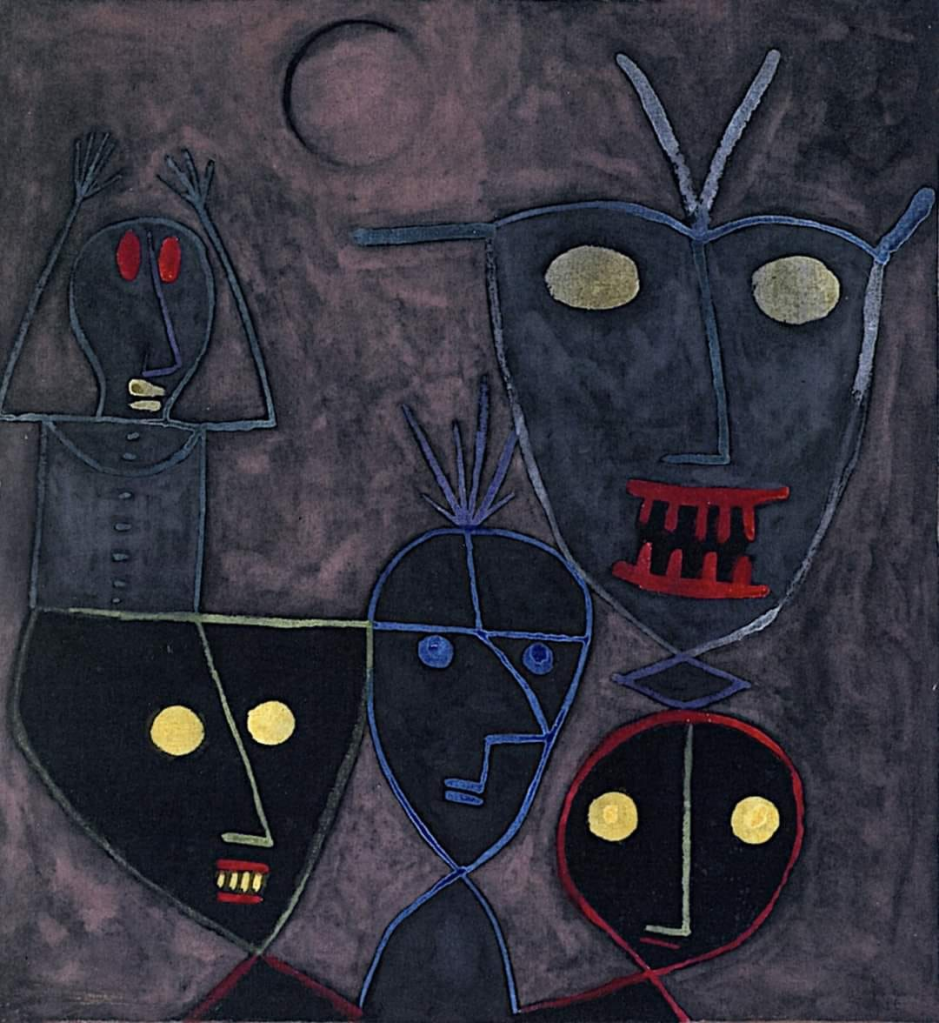
 Torch of Liberty